TL;DR

Get travel and outdoor gear delivered free with Prime
- Fast, free delivery on millions of items
- Prime Video, Amazon Music and more included
- Member-only deals all year
Spooky outdoor string lights are decorative lights used to give porches, patios, gardens, and paths a Halloween mood. Choose an outdoor-rated set, measure before buying, and match its power source and effects to your space; LEDs, steady colors, and secure clips make a practical, atmospheric setup.
One purple bulb caught in a tree branch can make an ordinary front yard look like the entrance to a haunted house. But the best spooky outdoor string lights do more than glow: they fit the space, survive the conditions they’re designed for, and don’t sag over the walkway.
These lights are decorative lights used to give porches, patios, gardens, and paths a Halloween atmosphere. You’ll find orange or purple bulbs, color-changing LEDs, ghost-shaped covers, and warm-white strands that look eerie beside a few well-placed decorations. This guide helps you choose a look, estimate the length, pick a power source, and hang the lights with less guesswork.
Start with a simple rule: check the product’s outdoor-use instructions before you buy or plug it in. “Weather-resistant” doesn’t mean every set can sit in heavy rain, and features vary from one product to the next.
Measure the full route, including outlet distance, attachment points, and drape, before choosing a strand length.
Check the product’s outdoor-use directions; weather-resistant labeling does not mean every set suits every exposure.
Choose plug-in, battery, or solar lights based on outlet access, placement flexibility, and available daylight.
Use outdoor-rated clips instead of staples or nails, and keep strands clear of paths, gutters, and snag points.
Inspect lights before reuse, follow the maker’s care instructions, and store them dry and loosely coiled.
What Makes String Lights Look Spooky Without Overdoing It?
Spooky outdoor string lights are decorative strands that use color, shape, or changing effects to give an outdoor space a Halloween mood. Orange feels familiar and festive, purple casts an eerie glow, and green, red, or blue can make a porch feel more theatrical. You don’t need all of them at once.
Think of the light as the background music for your decorations: a steady purple strand behind a paper ghost reads as mysterious, while fast flashing bulbs can steal the whole scene. A warm-white strand can also feel spooky when you weave it through bare branches or pair it with dark fabric. The effect comes from the combination, not just the bulb color.
For example, imagine a small porch with a pumpkin by the door and two planters. A single orange strand along the railing gives the scene a welcoming Halloween look; adding purple lights around the doorway might make the same porch feel more like a haunted entrance. Try one main color, then add a second only if it improves the scene.
Modern sets may include LED bulbs, dimming, color changes, timers, or fading and flashing modes, but don’t assume every strand has every feature. LEDs use less electricity and produce less heat than traditional incandescent bulbs. If flashing effects might bother your guests or household, select a steady or gently fading mode instead.
Key point: Pick a lighting mood first—festive, eerie, or theatrical—then choose colors and effects that support it.
Products Worth Considering

Kindle Paperwhite Signature Edition 32GB (2024) – Auto-adjusting front light, wireless charging, weeks battery life – Metallic Jade

GoPro MAX2 Waterproof 360 and Traditional Action Camera with Touch Screen

Amazon Kindle Paperwhite (12th Generation, 2024), 16 GB, 7-inch Display, Jade
As an affiliate, we earn on qualifying purchases.
How Do You Choose a Power Source and Weather Rating?
Choose plug-in lights for steady illumination near an outlet, battery-powered lights where flexibility matters, and solar lights where their panel can collect enough daylight. The choice affects not just where the lights can go, but how consistently they’ll shine and how much maintenance they need. Before deciding, check the label for outdoor-use instructions; a product described as weather-resistant isn’t automatically suited to every exposure or every rainy night.
Plug-in sets work well along a porch roof or fence close to a protected outlet. They provide a dependable power source, but the cord route becomes part of your layout: it must reach without crossing a walkway or creating a trip hazard, and plugs and connections need protection as the manufacturer directs. Battery sets avoid that long cord, so they can reach a distant tree or fence, but their convenience comes with upkeep. Batteries may need checking or replacing, and dimming or shorter run time can become more noticeable as they lose charge.
Solar sets avoid a nearby outlet and ongoing battery changes, but their evening performance depends on how much daylight reaches the panel. That tradeoff matters in autumn: a panel mounted under a dense porch roof may receive little direct sun, and several cloudy days can leave the strand glowing for less time at night. Put the panel in a sunnier spot if the design allows. Solar is a useful flexible choice, not a guarantee of identical brightness every evening.
Read the product’s IP or weather-resistance information and installation directions rather than relying on a broad marketing phrase. The rating helps you judge whether the set is suited to its intended exposure, while the instructions explain how to arrange the connections. Keep electrical connections away from standing water, and use only extension cords and accessories approved for the conditions and setup. For a real-world example, a plug-in set at a covered entrance still needs its connection arranged according to its instructions; a roof overhead doesn’t change the product’s rating.
Rain check: Use the lights only in the locations and conditions listed by the manufacturer. “Outdoor” and “waterproof” don’t always mean the same thing.
How Much Light Do You Need for a Porch, Fence, or Tree?
Measure the route the lights will follow, not just the straight-line width of the space. Add the path to the outlet, the distance between attachment points, and enough slack for the drape you want. That gives you a more useful estimate than buying a strand based only on the porch’s width. Getting the length right matters because a short strand can force awkward placement, while excess cord may be difficult to hide and can create loops that snag or droop.
For example, suppose a railing is 12 feet long, but you want the strand to dip gently between four hooks. The cord needs extra length for those curves, and a plug-in version also needs to reach its power source. A second strand may be needed, but check whether the manufacturer allows sets to connect and follow the stated limit—never assume you can link them just because their plugs fit. Planning for the full route can also help you decide where the display should start and end, so the lead cord doesn’t become an unintended part of the decoration.
Use this quick measuring process before shopping:
- Sketch the route. Mark the railing, doorway, tree, or fence sections you want to light.
- Measure each run. Follow the planned route, including turns and the path to the outlet or panel.
- Add slack. Allow for a gentle drape and the distance between hooks.
- Check the set length and connection limit. Confirm that the product fits your plan without exceeding its instructions.
It helps to separate lit length from the total cord length when product details provide both. A long lead cord can make it easier to reach an outlet, but it leaves less of the strand for visible bulbs. For a tree, sketch a loose spiral and allow space between passes; wrapping the trunk tightly can create a cluttered look instead of a soft, floating glow. A loose layout also makes the lights easier to remove and reduces the chance that the strand will be pulled or trapped as the tree moves.
How Can You Hang Lights Without Damaging Your Home?
Hang outdoor string lights with outdoor-rated clips or hooks that suit the surface, and keep the strand clear of walkways, gutters, and anything that could snag or pull it down. The attachment method matters because a strand under tension can tug at a weak point; a secure, surface-appropriate clip supports the wire without puncturing its insulation. Avoid staples and nails, which can damage wires and create trouble when you remove or reuse the lights.
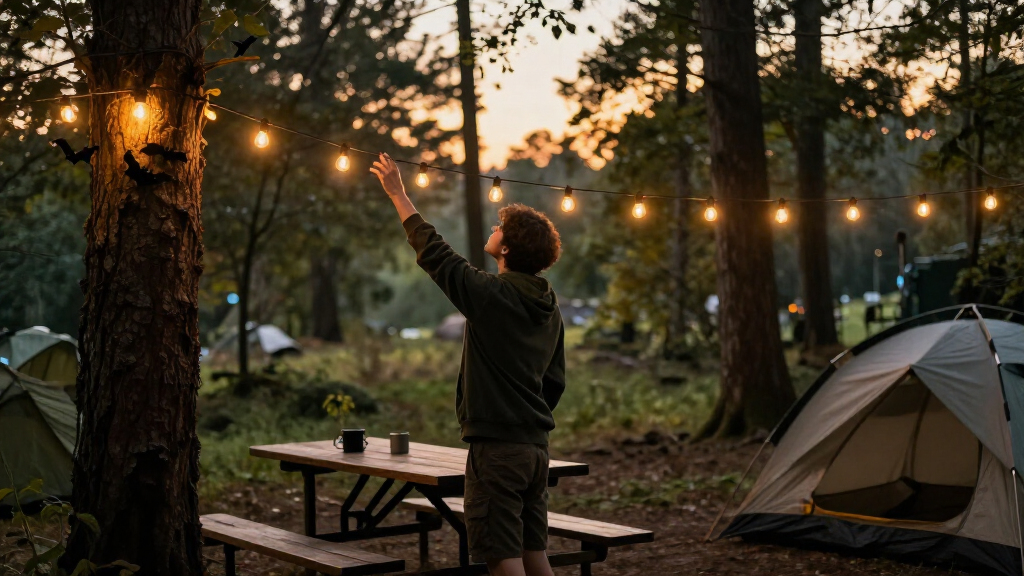
On a porch, space clips along the railing or approved attachment points so the wire doesn’t droop into the path. A little consistent support keeps the strand from forming one heavy low loop, which can catch a person or decoration. On a fence, plan the route before climbing a ladder; a strand that looks tidy from the ground can snag on a gate when someone opens it. For a tree, use a loose route that doesn’t scrape or tightly cinch the trunk, since branches and trunks move and the lights should not be trapped against them.
Keep lights away from moving doors, sharp edges, and areas where decorations or cords could get tugged. These points are easy to overlook because a display may look still once installed, but doors, gates, wind, and nearby decorations can pull on it during use. If you add an inflatable nearby, check that the light strand can’t rub against it or interfere with its movement. A quick walk-through after installation can catch a low loop or loose hook before guests arrive.
Families with children should keep cords and dangling strands out of reach and away from play areas. If the display includes a fountain, pool, or other water feature, follow both the light and water-feature instructions and keep electrical connections away from water. Supervise children closely around water; barriers, close supervision, and clear access rules help prevent drowning, but no decoration makes a poolside area risk-free.
Which Colors and Effects Create the Best Halloween Mood?
Orange gives a classic Halloween welcome, purple makes corners and branches feel eerie, and green, red, or blue can create a more theatrical scene. A steady glow usually feels atmospheric, while rapid flashing grabs attention and can be uncomfortable for some viewers. Choosing an effect is also a practical decision: flashing can compete with other decorations or make steps harder to read, while steady light lets the color and shadows create the mood.
Use the house and yard as your palette. If your porch already has bright orange pumpkins, purple lights can add contrast without making the whole entrance look like one block of color. If you’re decorating a bare hedge, a steady green strand can make it feel strange and shadowy, especially beside a warm-white porch bulb. Limiting the number of strong colors helps each one remain distinct instead of blending into a visually busy display.
Try this simple arrangement: run steady orange lights along a railing, place a short purple strand in a nearby shrub, and leave the walkway itself plainly lit. The contrast gives the display depth while keeping the path easier to see. A timer or remote can simplify switching modes and avoid having to reach an outlet each evening, but check what the specific set supports rather than assuming color changes or smart-home control come standard.
For a neighborhood gathering, test the display from the sidewalk and from the front door. A rapid flash may look fun in isolation but distract from steps or bother a guest who is sensitive to flashing. Choosing a steady or slow-fade setting can make the display comfortable for more people; you can still make the scene memorable with color, shadows, and a few shaped covers. The best effect is one that reads clearly from a distance without making the entrance difficult to use.
Design tip: Keep one area bright enough to see clearly, and let the spooky color do its work around the edges.
What Should You Check Before Reusing or Storing Lights?
Before reusing a Halloween strand, inspect the wires, sockets, plugs, and any signs of damage, then follow the manufacturer’s instructions for use and care. This check matters because damage can affect how the strand operates and whether it remains suitable for use; a light that worked last year is not automatically ready after months in storage. After the season, take lights down or secure them before severe weather when the product directions call for it, and store them dry and untangled.
Picture unrolling last year’s lights on a cool October evening: one strand has a crushed section from a storage bin, and another is wrapped so tightly around itself that the cord catches. A quick inspection before hanging lets you spot wear before the display goes up. Don’t use a set that appears damaged; check the maker’s guidance for what to do next rather than trying an improvised repair.
To make next year easier, coil each strand loosely around a piece of cardboard or a purpose-made reel and keep it in a dry container. Loose coiling reduces tangles and makes it easier to notice a problem when you unroll the lights. Add a small label such as “porch—purple” or “tree—warm white.” That simple note saves you from testing every box while the dusk air gets colder and the porch is already full of pumpkins.
Also check the product details when you buy: a set’s connection limits, timers, colors, and care instructions can differ from another strand that looks almost identical. Knowing those limits helps prevent an incompatible setup and makes it easier to plan how many strands you need. Store accessories with their lights, and don’t leave a set outdoors through harsh conditions unless its instructions allow that use. A little care preserves the strand and makes the next Halloween setup quicker.
Frequently Asked Questions
Can spooky outdoor string lights stay outside in the rain?
Only use them in the conditions allowed by the product’s outdoor-use instructions and rating. Weather-resistant does not mean every set is waterproof or suitable for heavy rain, so protect plugs and connections as directed.
Are LED Halloween string lights safer or cheaper to run?
LEDs use less electricity and produce less heat than traditional incandescent bulbs. Exact operating costs depend on the set, how long you run it, and your electricity rate; check the product specifications for its power use.
How many feet of lights do I need for a porch or tree?
Measure the route the strand will follow, then account for turns, attachment points, the outlet path, and the drape you want. Check the listed lit length and lead-cord length separately when the product provides both.
Are solar Halloween lights reliable in fall and winter?
Solar lights can work well when their panel receives enough daylight, but cloudy weather, shorter days, or a shaded placement can shorten their nighttime glow. Place the panel where it can collect more sun if the product design allows.
Can I connect multiple string-light sets?
Connect sets only if the product is listed as connectable, and stay within its stated connection limit. Similar-looking strands may have different limits, so check each product’s instructions before linking them.
Conclusion
A memorable Halloween glow doesn’t need a yard full of effects. Measure your route, choose a strand rated for its intended use, and let one or two colors shape the mood.
Hang the lights securely, keep paths clear, and inspect them before each season. Then let a steady purple branch or a ribbon of orange along the porch do what the best decorations do: make someone pause at the gate.