
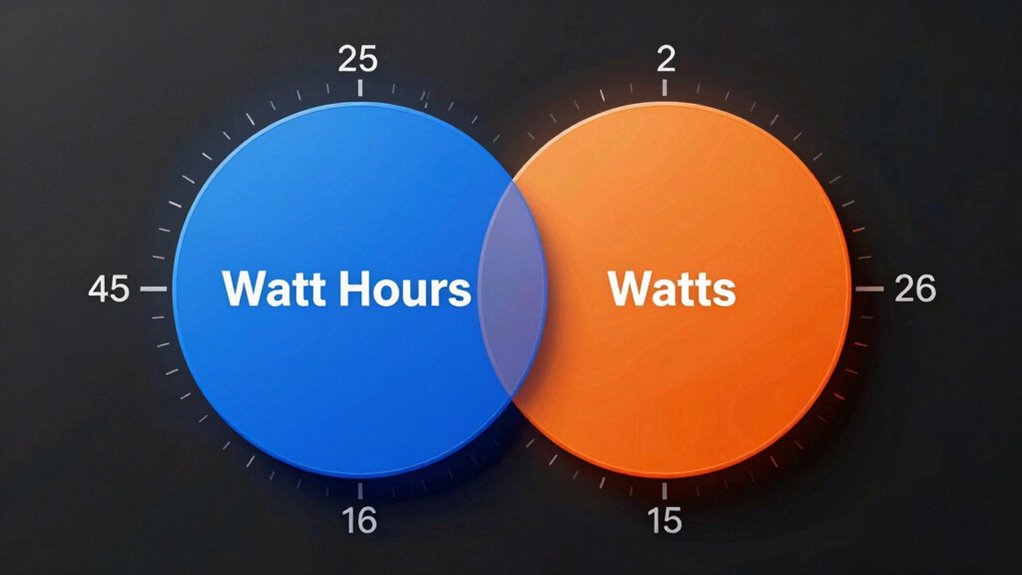

Watt hours (Wh) and watts (W) serve different but related purposes: watts measure the real-time power your devices use, like how fast they consume energy at a specific moment. Watt-hours show the total energy used over time, such as hours of operation. Think of watts as speed and watt-hours as distance traveled. To truly understand energy use and save money, it’s important to grasp their differences. Keep exploring to see a simple chart that makes it all click.
Key Takeaways
- Watts measure real-time power flow, like a speedometer, while watt-hours track total energy used over time, like miles traveled.
- The chart visually compares instantaneous power (watts) to accumulated energy (watt-hours), clarifying their relationship.
- Understanding both units helps optimize energy use, reduce costs, and make informed appliance choices.
- Watt-hours quantify total energy consumption, whereas watts indicate how quickly energy is used at any moment.
- Clear visualization links the concepts, making it easier to grasp how power and energy over time interact.
What Are Watts and Watt-Hours? Understanding the Basics
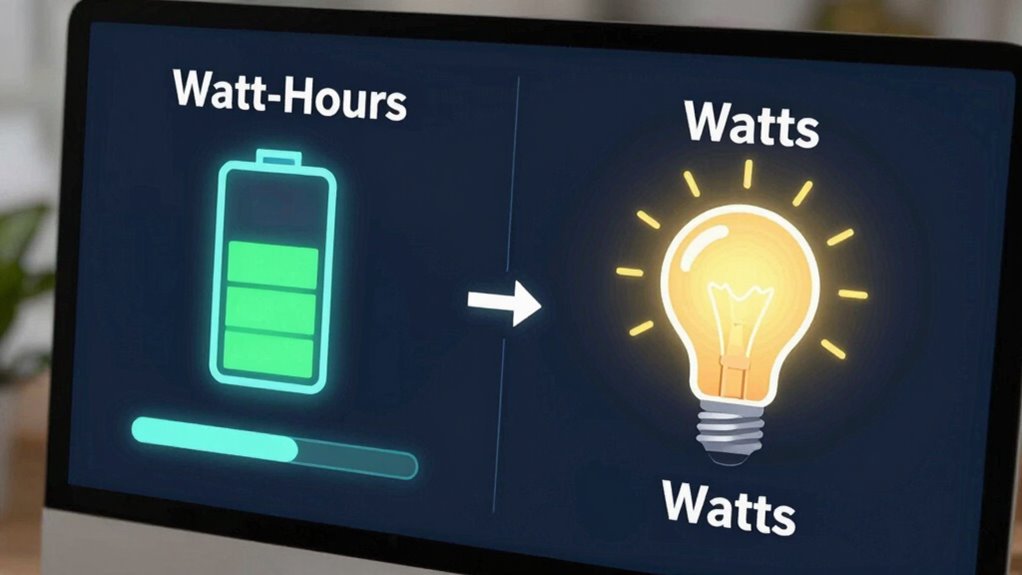
Watts and watt-hours are units that measure different aspects of electrical energy and power. Watts are used in electricity measurement to express power, or how quickly energy is used or generated at a given moment. Think of watts as the rate at which electricity flows or is consumed. On the other hand, watt-hours measure energy over time, representing the total amount of work done or energy used. This is why watt-hours are common in billing electricity consumption, as they reflect how much energy you use over hours or days. Understanding these energy units helps you grasp how devices operate and how energy consumption is calculated. While watts give you a snapshot of power, watt-hours provide a complete picture of energy use over a period. Additionally, power consumption can be better understood by considering both units together.
How Do Watts Measure Power in Real-Time?
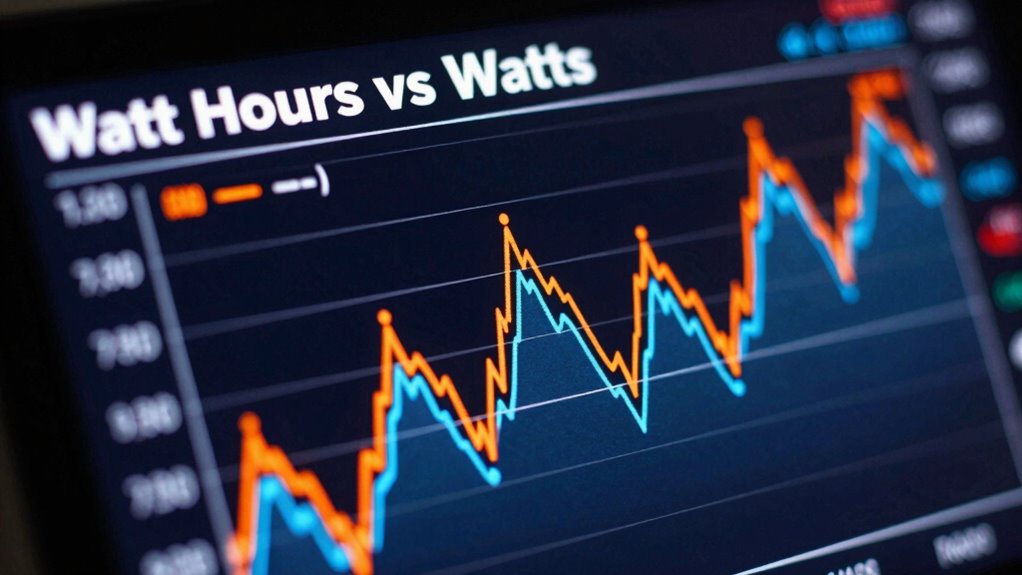
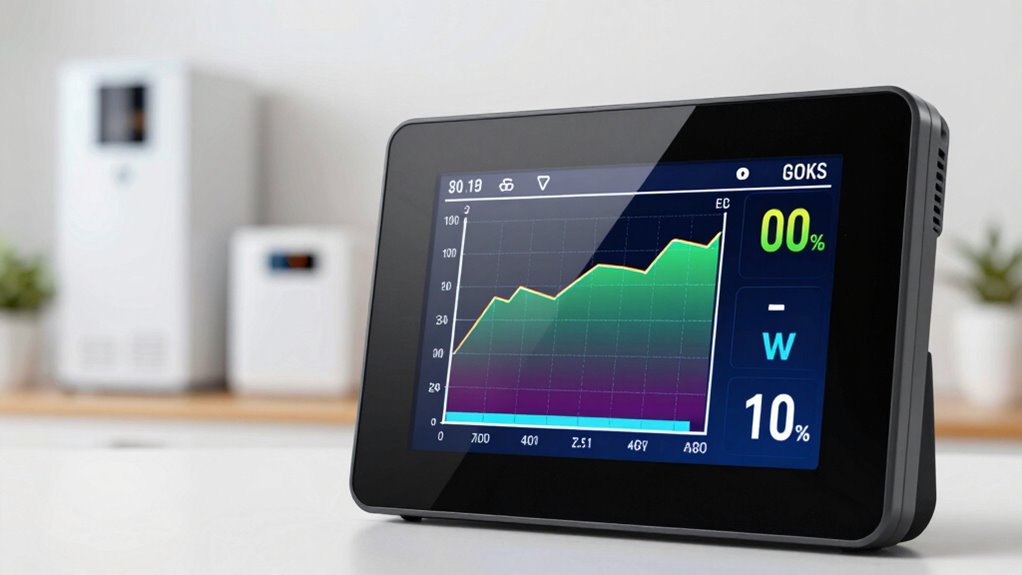
Understanding how power is measured in real-time helps you see how devices use electricity moment by moment. Power measurement in real time relies on devices called wattmeters or smart meters, which track the instantaneous rate of energy flow. These tools convert electrical signals into real-time data, showing you the current power consumption in watts. When you plug in a device, these meters instantly record the power draw, providing a live feed of how much energy is being used at that exact moment. This real-time data helps you identify high-energy appliances and optimize usage. Additionally, instantaneous power measurement allows for more accurate energy monitoring and management. By understanding how watts are measured live, you gain a clearer picture of your energy habits and can make smarter decisions to save electricity and money.
What Is Watt-Hours, and Why Do They Matter for Your Energy Use?
Watt-hours are a measure of energy that tells you how much electricity a device uses over a period of time. This measurement helps you understand your energy efficiency and manage electricity billing better. For example, a 100-watt bulb running for 10 hours consumes 1,000 watt-hours, or 1 kilowatt-hour (kWh). Knowing watt-hours allows you to compare devices’ energy use directly. The table below summarizes key points:
| Aspect | Explanation |
|---|---|
| Energy Efficiency | How well a device converts electricity into useful work |
| Usage Measurement | Watt-hours show total energy consumption over time |
| Cost Calculation | Electricity bills are based on kilowatt-hours used |
| Device Comparison | Watt-hours help you identify the most efficient appliances |
Additionally, understanding energy efficiency can help you reduce overall electricity costs and minimize environmental impact.
What Are the Main Differences Between Watts and Watt-Hours?
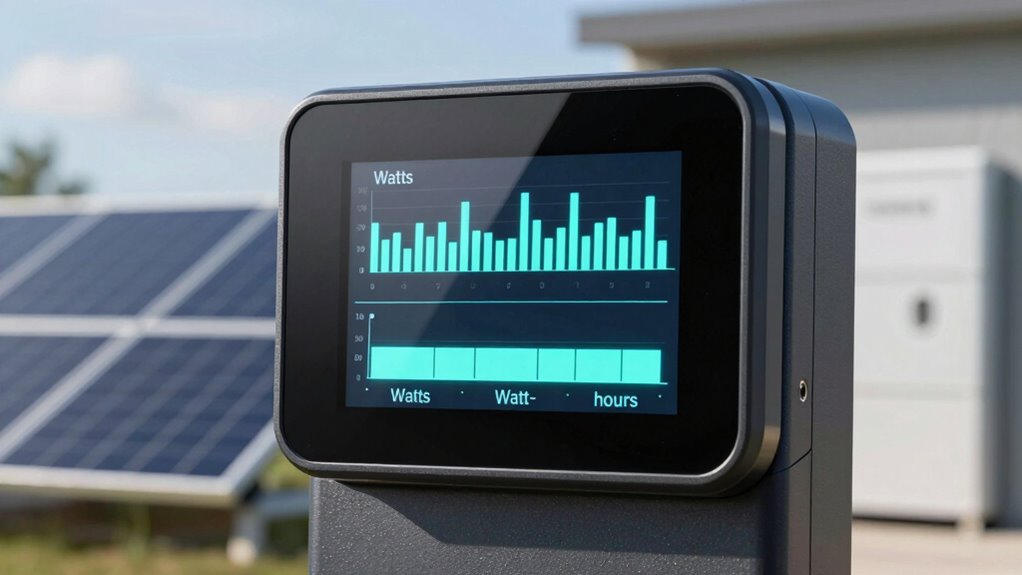
Have you ever wondered how power and energy differ when it comes to electricity? The main differences lie in their energy units and measurement types. Watts measure power, which is the rate at which electricity is used or produced at a specific moment. Think of it as the speed of a car. Watt-hours, on the other hand, measure energy, representing the total amount used over time—like the total miles traveled. The measurement differences are vital: watts tell you how quickly energy is being consumed, while watt-hours show the overall energy used. Understanding this distinction helps you interpret energy labels, calculate usage, and choose the right appliances or batteries. Basically, watts and watt-hours serve different purposes but work together to give a complete picture of your energy consumption. Contrast ratio can also influence how efficiently your home’s electrical system operates, especially when considering energy-intensive devices.
Here’s a Simple Chart to Help You Understand Watt Hours and Watts

A simple chart can make understanding watt hours and watts much clearer. It helps you visualize how power and energy relate without getting lost in details. Using visuals, you’ll see these concepts become much easier to grasp. Battery capacity is a key factor when selecting the right inverter generator for your needs.
Visualizing Power and Energy
To truly grasp the difference between power and energy, visualizing them side by side can make things much clearer. Think of energy units like watt-hours as a way to measure total energy stored or used, while measurement tools help you see how quickly that energy is consumed or produced. A simple chart can illustrate this: imagine a bar representing watt-hours, showing the total energy, and an arrow indicating watts, the rate at which that energy flows. This visual helps you understand that watt-hours depend on both power and time, whereas watts alone show how fast energy is being used. By comparing these, you see how energy accumulates and how power influences consumption, making complex concepts easier to understand at a glance.
Simplifies Complex Concepts
Understanding watt-hours and watts can seem tricky at first, but a simple chart can make it much clearer. This visual aid breaks down complex ideas into easy-to-understand energy units, showing how power and energy relate. Instead of getting lost in technical jargon, you see how measurement tools use watts to gauge power and watt-hours to measure total energy over time. The chart clarifies these concepts by highlighting key points:
- Watts measure the rate of energy use at a specific moment.
- Watt-hours measure the total energy consumed over time.
- Power (watts) and energy (watt-hours) are connected but serve different purposes.
- Visualizing these units simplifies decision-making about appliances and energy consumption.
This straightforward approach helps you grasp the essentials without confusion.
How Can Using Watts and Watt-Hours Help You Save Energy and Money?
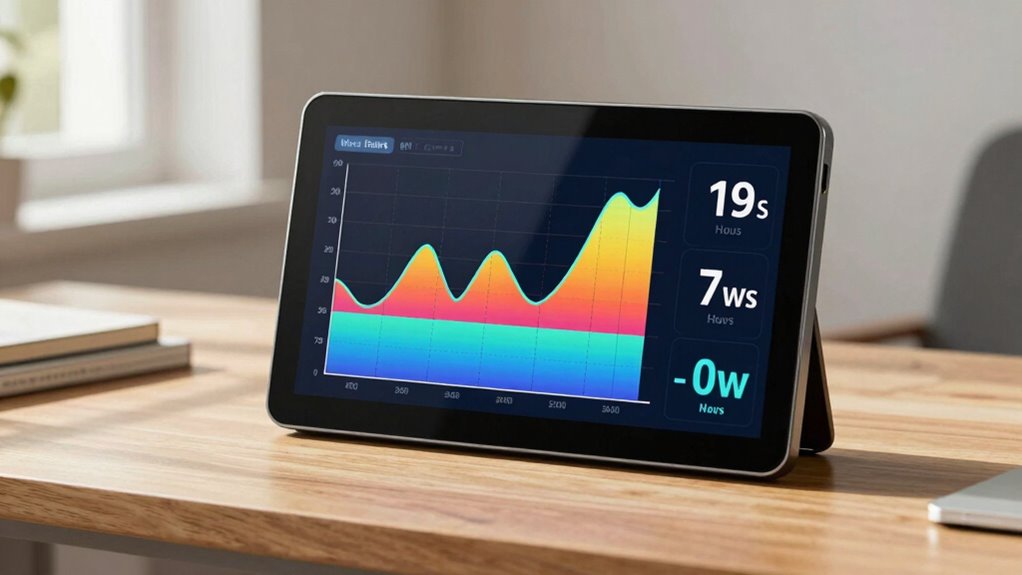
Ever wonder how knowing the difference between watts and watt-hours can help you cut energy costs? Understanding these measurements boosts your energy conservation efforts and assures you’re using appliances efficiently. By tracking watt-hours, you see how much energy your devices consume over time, helping you identify high-energy users. Using watt data, you choose appliances with better efficiency, reducing unnecessary power use. Proper safety precautions when using electrical devices like portable oil radiators are essential to prevent accidents. Here’s a simple way to compare:
| Appliance | Power (Watts) | Usage (Hours) |
|---|---|---|
| Refrigerator | 150 | 24 |
| LED Bulb | 10 | 4 |
| Space Heater | 1500 | 3 |
| Laptop | 60 | 8 |
Knowing this info helps you make smarter choices, save money, and contribute to energy conservation.
Common Mistakes When Interpreting Watt and Watt-Hour Data

Many people misinterpret watt and watt-hour data because they overlook the context in which these measurements are used. Common mistakes include confusing units, like mistaking watt-hours for watts, which leads to inaccurate energy assessments. You might also fall into meter mistakes, such as reading the wrong scale or misinterpreting device displays. Additionally, failing to consider the time factor when looking at wattage can cause misunderstandings about energy consumption. In the end, neglecting the importance of proper unit conversion can result in overestimating or underestimating energy costs. To avoid these errors, double-check your meter readings, understand the difference between power and energy, and always pay attention to units. Recognizing the differences between watt and watt-hour is crucial for accurate energy management. Clear comprehension of these aspects prevents costly misunderstandings and promotes better energy management.
Practical Examples: Watts vs Watt-Hours in Daily Life

In daily life, the difference between watts and watt-hours becomes clear when you consider how we use electrical devices. For example, an appliance’s rating in watts tells you how much power it consumes at any moment, which impacts energy efficiency. If a 60-watt light bulb runs for 10 hours, it uses 600 watt-hours of energy. Knowing this helps you compare devices and estimate running costs. Energy efficiency varies; a more efficient appliance might use fewer watts for the same performance. Watt-hours provide the total energy used over time, while watts indicate immediate power consumption. By understanding both, you can better manage your energy use, choose efficient appliances, and optimize your electricity bills. Additionally, understanding regional differences, such as those highlighted in Northeast – These Fifty States, can influence energy savings strategies based on local climate and infrastructure.
Frequently Asked Questions
How Do I Convert Watt-Hours to Kilowatt-Hours?
To convert watt-hours to kilowatt-hours, you divide the watt-hours by 1,000. For example, if your battery capacity is 5,000 watt-hours, it equals 5 kilowatt-hours. This conversion helps you understand energy efficiency and compare battery capacities more easily. Remember, larger numbers indicate more stored energy, so knowing how to convert watt-hours to kilowatt-hours makes tracking your energy use and efficiency simpler.
Can Watt-Hours Help Me Compare Energy Consumption Between Devices?
Think of watt-hours as your energy detective, revealing how much energy each device consumes. They help you compare energy efficiency directly, showing which device uses less power over time. By understanding watt-hours, you can make smarter choices that extend device lifespan and save money. It’s like tuning into your device’s performance, ensuring you’re efficient and eco-friendly in your energy habits.
What Tools Are Best for Measuring Real-Time Watts?
You should consider using a plug-in energy monitor or a clamp meter for real-time watt measurement. These tools excel in energy monitoring and power measurement, giving you instant readings of how much power your devices consume. Plug-in monitors are simple to use for household appliances, while clamp meters are ideal for more advanced power analysis. Both help you understand your energy usage accurately and make more informed decisions.
How Do Watt-Hours Relate to Electricity Billing?
Your electricity bill is based on the total watt-hours you consume over a billing period, reflecting your energy use. This relates to energy storage and renewable energy, as storing excess renewable energy in batteries adds watt-hours to your overall consumption. When you use stored energy or renewable sources, you’re effectively managing watt-hours, which helps control your costs and supports sustainable energy practices.
Is Higher Wattage Always Better for Appliances?
Higher wattage isn’t always better for appliances. While it can mean faster performance, it doesn’t guarantee better energy efficiency or longer appliance lifespan. Often, lower wattage models are more energy-efficient and cost-effective over time. You should consider how the wattage aligns with the appliance’s purpose, energy consumption, and durability. Choosing the right wattage helps balance performance, energy savings, and longevity, ensuring you get the best value for your needs.
Conclusion
Understanding watts and watt-hours is like learning to read a map—you’ll navigate your energy use with confidence. Remember, watts tell you how fast energy is used at any moment, while watt-hours show the total energy consumed over time. By grasping the difference, you can make smarter choices, saving money and energy. Once it clicks, it’s as clear as day—and you’ll be in control of your energy habits like a seasoned driver steering through familiar streets.