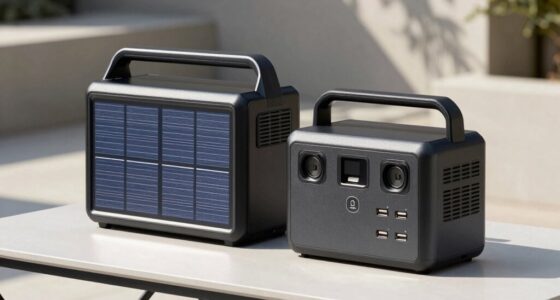
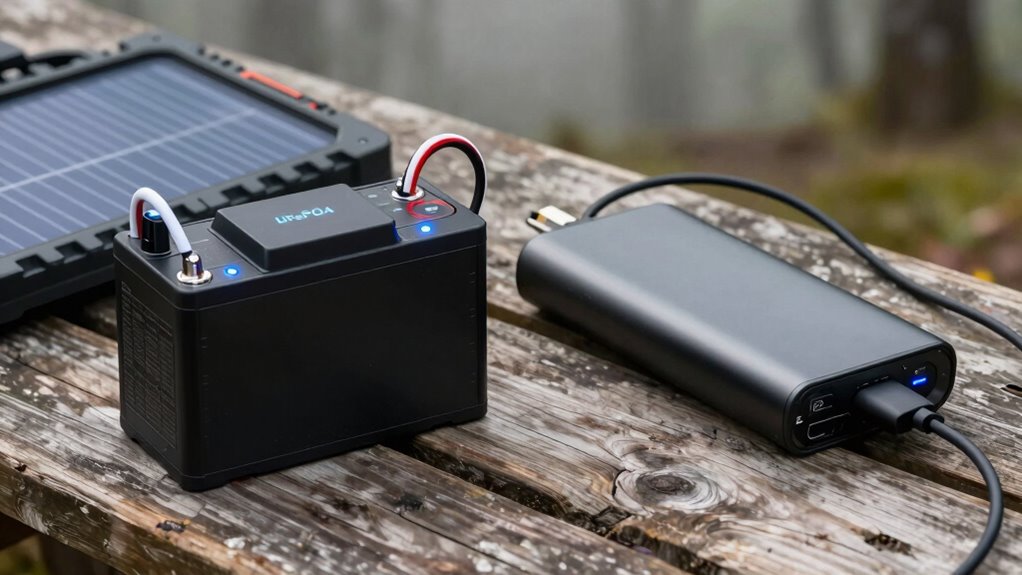

If you’re choosing between LiFePO4 and lithium-ion batteries for camping, consider safety, lifespan, cold-weather performance, and size. LiFePO4 batteries are safer, more durable, and handle cold better, making them ideal for outdoor use despite higher upfront costs. Lithium-ion batteries are lighter and more compact but may need replacing sooner, especially in cold conditions. To find the best fit for your camping needs, explore the details that follow.

Get travel and outdoor gear delivered free with Prime
- Fast, free delivery on millions of items
- Prime Video, Amazon Music and more included
- Member-only deals all year
Key Takeaways
- LiFePO4 offers longer cycle life, better cold-weather performance, and higher safety, making it ideal for long-term camping use.
- Lithium-ion batteries are lighter and more compact, suitable for weight-sensitive camping setups but require more frequent replacements.
- LiFePO4 has a higher upfront cost but lower maintenance and longer lifespan, offering better long-term value for frequent campers.
- Both types benefit from proper charging, storage, and recycling; LiFePO4’s eco-friendly chemistry enhances sustainability.
- The best choice depends on camping duration, power needs, weight considerations, and budget priorities.
As an affiliate, we earn on qualifying purchases.
Which Battery Is Best for Camping? LiFePO4 vs Lithium-Ion
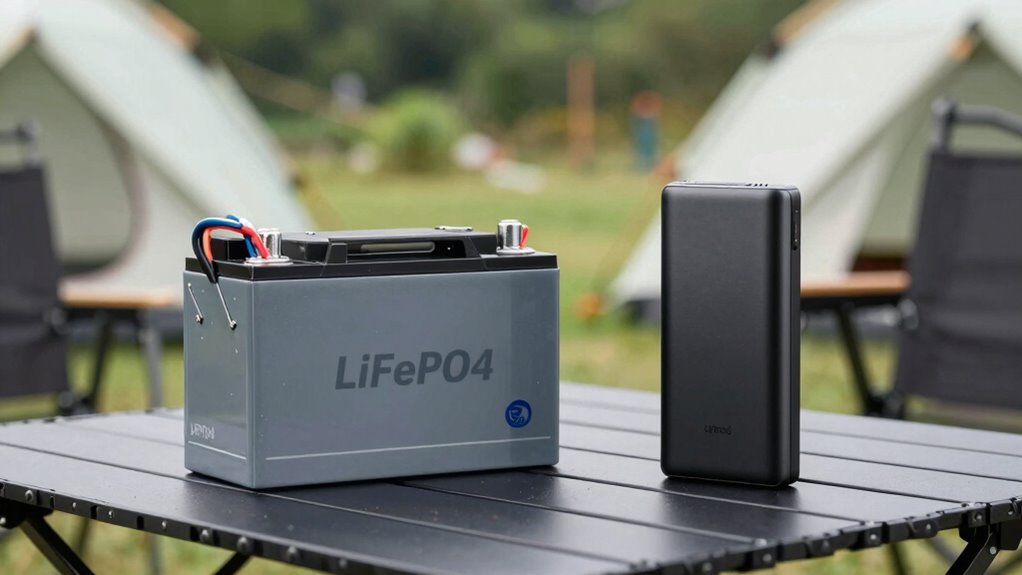
When choosing a battery for camping, understanding the differences between LiFePO4 and lithium-ion options is essential. Battery weight plays a significant role, especially if you plan to carry it over long distances. LiFePO4 batteries tend to be heavier but offer a more stable and safer option. On the other hand, lithium-ion batteries usually have a higher energy density, meaning they pack more power into a lighter package. This makes lithium-ion batteries ideal if you prioritize portability and compactness. However, their safety considerations and lifespan differ from LiFePO4. Additionally, battery safety considerations are crucial when selecting a power source. Ultimately, your choice depends on whether you value lightweight design and high energy density or prefer a heavier but more durable and stable battery for your camping adventures.
What Are LiFePO4 and Lithium-Ion Batteries? Basic Differences Explained
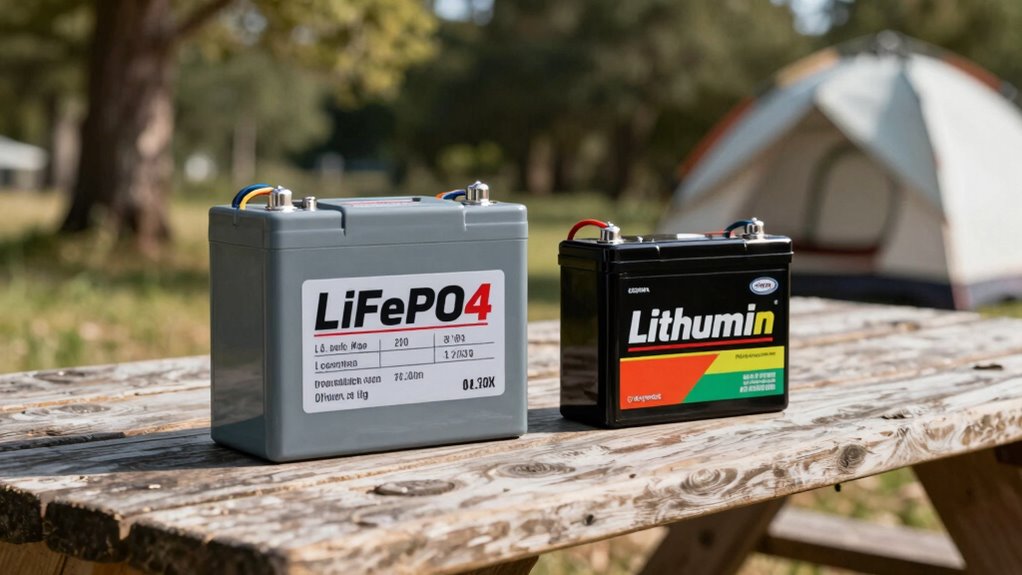
LiFePO4 and lithium-ion batteries are two common types of rechargeable batteries used in portable power applications. Their main difference lies in their battery chemistry, which impacts performance and safety. LiFePO4 batteries use lithium iron phosphate, offering a stable chemical structure that enhances longevity and thermal stability. Lithium-ion batteries typically use cobalt or manganese-based chemistries, providing higher energy density. Energy density measures how much power a battery can store relative to its size, making lithium-ion batteries more compact and lightweight. Additionally, cycle life is generally longer for LiFePO4 batteries, making them a durable choice for repeated use. However, LiFePO4 batteries tend to be larger but are safer, with less risk of overheating. Understanding these basic differences helps you decide which type suits your camping needs, balancing capacity, safety, and portability.
Are Lithium Batteries Safe for Camping? Safety Features Compared
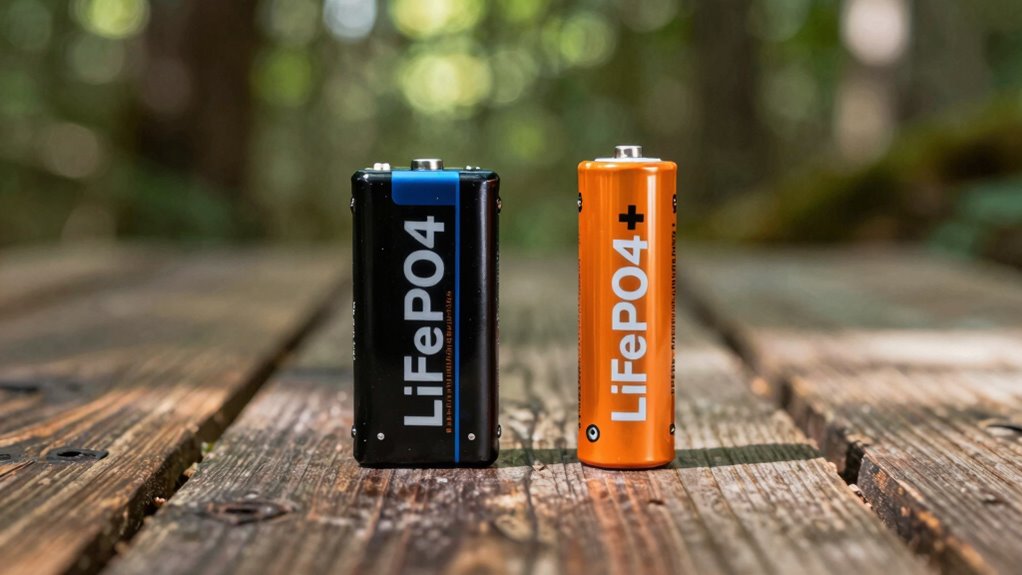
Considering the safety features of lithium-ion batteries is important for anyone using them during camping trips. Modern lithium batteries include several safety measures to prevent accidents. Here are four key features:
- Built-in thermal management systems to control heat and reduce fire risk.
- Battery management systems (BMS) that monitor voltage, current, and temperature for ideal safety.
- Overcharge and over-discharge protection to prevent damage and potential fire hazards.
- Automatic shutoff mechanisms that activate if unsafe conditions are detected, enhancing fire prevention.
Additionally, many lithium batteries now incorporate fire-resistant materials to further improve safety during use. These safety features make lithium batteries a reliable choice for camping, but always follow manufacturer guidelines to guarantee safe use and minimize risks.
How Do These Batteries Perform in Cold Weather? Outdoor Performance Insights
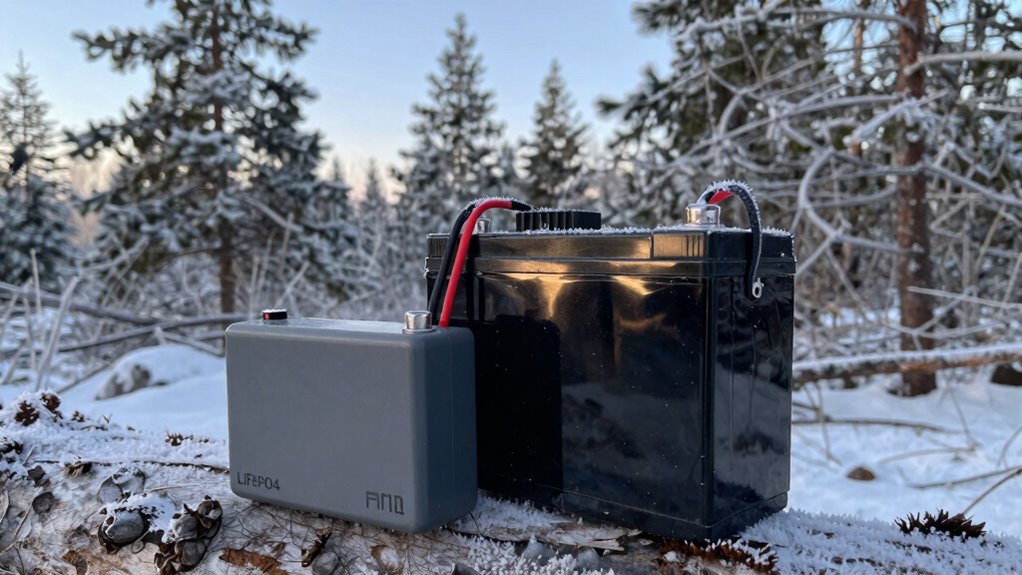
Cold weather can profoundly impact the performance of lithium-ion and LiFePO4 batteries, often causing a drop in voltage and capacity. Your batteries’ thermal performance is essential in cold conditions, as low temperatures hinder chemical reactions, reducing cold weather efficiency. Lithium-ion batteries tend to lose charge quickly and deliver less power in freezing temperatures, making them less reliable off-grid. In contrast, LiFePO4 batteries generally handle cold better, thanks to their stable chemistry and better thermal performance, maintaining more consistent voltage and capacity. Additionally, thermal management techniques can significantly improve their cold-weather reliability. However, both types benefit from insulation or heating solutions to optimize outdoor performance. If you’re camping in cold climates, understanding these differences helps you choose batteries that will perform reliably, even when temperatures drop significantly.
How to Charge and Maintain Your Battery While Camping
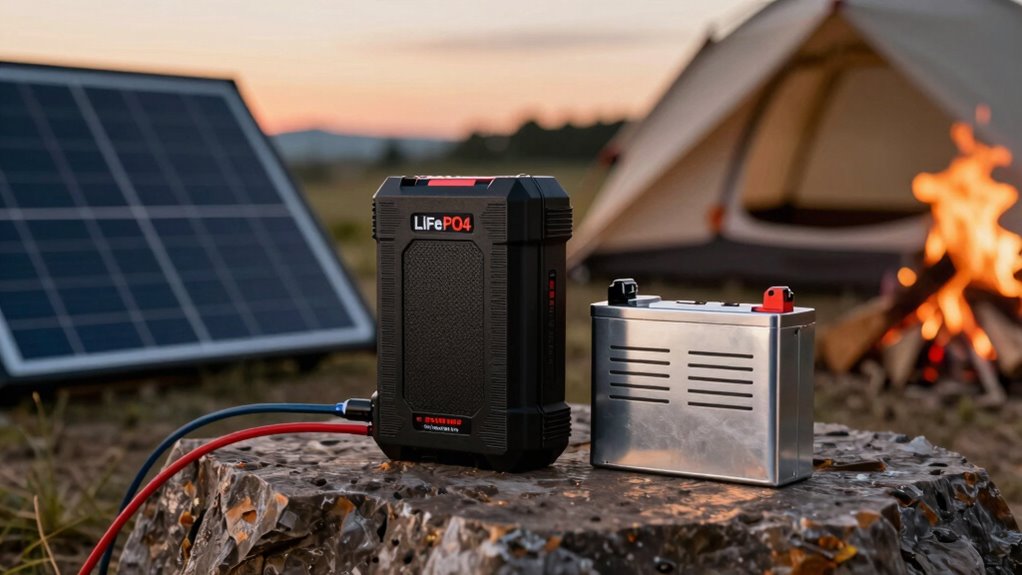
When camping, it’s crucial to use proper charging techniques to keep your battery in top shape. Regular maintenance tips can extend its lifespan and ensure reliable power when you need it most. Keep an eye on your battery’s health to avoid surprises and maximize its performance during your trip. Additionally, monitoring your battery’s charger settings and adhering to recommended voltage levels can prevent overcharging and undercharging, which are key to maintaining optimal performance.
Proper Charging Techniques
To keep your battery in ideal condition while camping, it’s essential to follow proper charging techniques. First, verify correct battery installation to prevent damage and optimize performance. Second, use portable charging options suited to your battery type, avoiding overcharging. Third, monitor voltage levels regularly to prevent deep discharges, which can harm lithium batteries. Fourth, always charge your battery to around 80-90% rather than full capacity to prolong lifespan. When camping, stick to manufacturer-recommended charging methods, and avoid using incompatible chargers. Properly managing your charging habits helps maintain battery health, ensuring reliable power when you need it most. Additionally, understanding the Free Floating concept can help you optimize your energy use and reduce unnecessary strain on your batteries. Following these steps ensures your battery stays efficient and ready for your outdoor adventures.
Maintenance Tips for Longevity
Properly maintaining your battery during camping trips helps guarantee it stays reliable and lasts longer. To maximize battery capacity and charging efficiency, avoid deep discharges and recharge before it drops too low. Keep the battery in a cool, dry place to prevent overheating and degradation. Use a quality charger compatible with your battery type, ensuring it delivers the correct voltage and current. Regularly check connections for corrosion or looseness, as poor contacts can reduce charging efficiency. If possible, disconnect the battery when not in use for extended periods to preserve its capacity. Monitoring these practices helps maintain ideal performance, so your battery remains dependable throughout your camping trip and beyond. Proper battery maintenance is key to extending your battery’s lifespan and ensuring it’s ready when you need it.
Monitoring Battery Health
Monitoring your battery’s health while camping is vital to guarantee it performs reliably throughout your trip. Keeping an eye on battery capacity helps make certain you don’t overuse or underuse it, extending its lifespan. Temperature management is equally important; extreme heat or cold can damage the battery and reduce efficiency. To stay on top of your battery health:
- Regularly check the battery capacity via your charger or monitor.
- Avoid charging or discharging the battery in extreme temperatures.
- Use a portable thermometer to track ambient temperature around your battery.
- Disconnect or store the battery in a cool, dry place when not in use.
These steps help maintain peak performance, prevent damage, and prolong your battery’s lifespan for worry-free camping.
How Long Do They Last? Durability and Lifespan of Camping Batteries
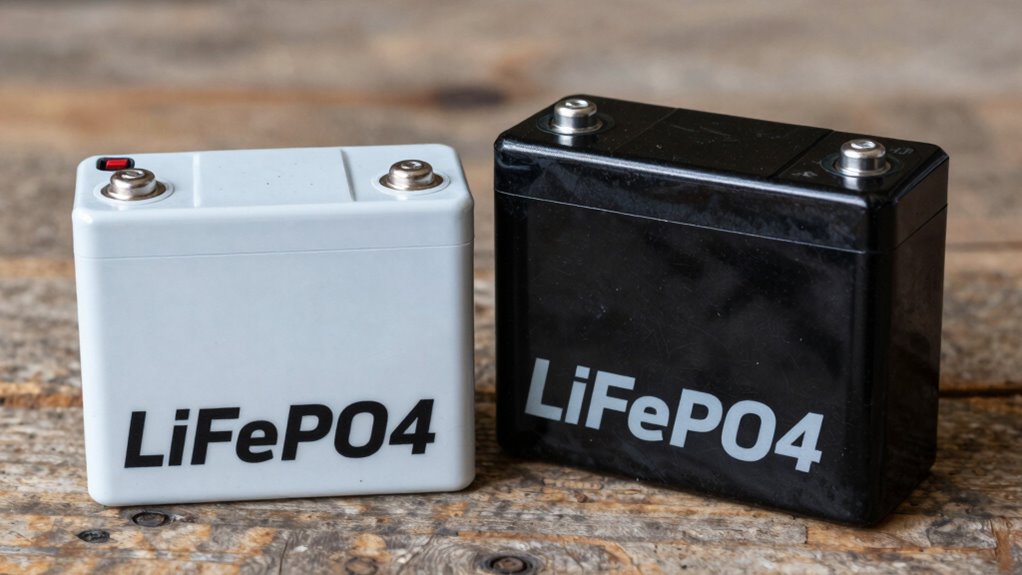
Understanding how long your camping batteries last is key to making the right choice. You’ll want to take into account their expected lifespan, how many charge cycles they can handle, and how well they stand up to environmental conditions. Additionally, considering the energy efficiency of each battery type can help optimize your camping setup. Let’s explore these factors to determine which battery type offers the best durability for your adventures.
Battery Life Expectancy
When choosing between LiFePO4 and lithium-ion batteries for camping, knowing how long they last is essential. Battery manufacturing quality and energy density influence their lifespan appreciably. Generally, LiFePO4 batteries tend to last longer due to their robust chemistry. Here’s what impacts their durability:
- Cycle life: LiFePO4 batteries often handle 2,000+ cycles, while lithium-ion batteries typically range around 500-1,000 cycles.
- Manufacturing quality: Better construction extends lifespan regardless of type.
- Usage patterns: Proper charging/discharging methods preserve battery health.
- Environmental factors: Extreme temperatures can shorten lifespan for both types.
- Battery maintenance: Regular maintenance and proper storage can significantly extend the usable life of camping batteries.
Ultimately, LiFePO4 batteries usually outlast lithium-ion options, offering more durability over time thanks to their stable chemistry and high energy density.
Charge Cycle Durability
Both LiFePO4 and lithium-ion batteries are designed to withstand numerous charge cycles, but their durability can vary considerably. LiFePO4 batteries typically last longer, often exceeding 2,000 cycles, thanks to their stable chemistry. Lithium-ion batteries usually endure around 500-1,000 cycles before capacity drops markedly. The battery weight influences durability—lighter batteries may degrade faster if not built robustly. Charging speed also impacts lifespan; faster charging can stress batteries, reducing cycle life. Here’s a quick comparison:
| Feature | LiFePO4 | Lithium-Ion |
|---|---|---|
| Typical cycles | 2,000+ | 500-1,000 |
| Battery weight | Heavier, but durable | Lighter, more compact |
| Charging speed | Moderate, prolongs life | Faster, may reduce life |
| Lifespan | Longer-lasting | Shorter lifespan |
| Durability | High | Moderate |
Environmental Resilience
Environmental conditions profoundly influence the durability and lifespan of camping batteries. Extreme temperatures, humidity, and exposure to elements can shorten their effectiveness. To maximize longevity, consider these factors:
- Store batteries in a cool, dry place to prevent overheating and degradation.
- Avoid frequent deep discharges, which can reduce cycle life.
- Choose batteries made from eco-friendly materials to minimize environmental impact.
- Properly recycle batteries through battery recycling programs to reduce waste and support sustainability.
- Using high-quality performance parts like specialized batteries can also enhance durability and lifespan.
Both LiFePO4 and lithium-ion batteries vary in resilience, but well-maintained units last longer with proper care. Eco-friendly materials and responsible battery recycling help extend their lifespan while reducing environmental harm, making your camping experience more sustainable.
How Much Do They Cost? Budget Considerations for Outdoor Power

Wondering how much you’ll need to spend on outdoor power batteries? The cost comparison between LiFePO4 and lithium-ion batteries plays a big role in your budget planning. Generally, LiFePO4 batteries tend to be more expensive upfront but offer longer lifespan and better safety, which can save you money over time. Lithium-ion batteries usually cost less initially but may need replacement sooner, affecting your long-term budget. To make the best choice, consider your camping frequency and power needs. While the initial investment is important, factoring in durability and maintenance costs helps you determine which type provides better value. Balancing your budget with your power requirements ensures you get the most reliable, cost-effective solution for your outdoor adventures.
What Is Their Environmental Impact? Recycling and Sustainability
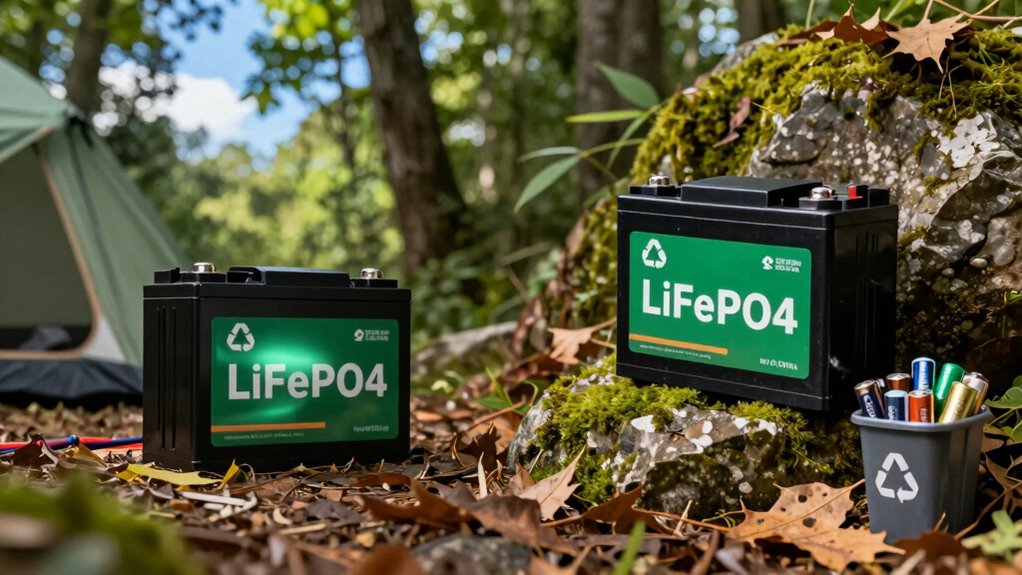
When considering the long-term value of LiFePO4 and lithium-ion batteries, their environmental impact becomes an important factor. Recycling programs play a key role in reducing waste and recovering valuable materials. You should consider:
- How recycling helps prevent hazardous waste from ending up in landfills.
- The differences in material sustainability between the two battery types.
- LiFePO4 batteries generally contain fewer toxic metals, making recycling easier.
- The importance of choosing batteries from manufacturers committed to sustainable practices.
Both batteries can be recycled, but LiFePO4’s simpler chemistry often makes recycling more efficient. By supporting recycling programs and prioritizing material sustainability, you help minimize environmental harm and promote responsible battery use.
Which Battery Should You Pick for Your Camping Adventures?

Choosing the right battery for your camping adventures depends on your power needs, ease of use, and environmental priorities. If you plan to rely on solar panels, a battery with high solar compatibility, like LiFePO4, can be a smart choice because it handles frequent cycling and deep discharges better. Weight considerations also matter; lighter batteries like lithium-ion options are easier to carry into remote sites, but may offer less durability over time. Think about how much power you’ll need daily and whether portability or sustainability is your top priority. For extended trips, a heavier, more durable LiFePO4 might pay off. Ultimately, balancing solar compatibility, weight considerations, and your specific energy demands will help you pick the best battery for your camping adventures.
Frequently Asked Questions
Can These Batteries Handle High Power Surges During Camping?
Yes, these batteries can handle high power surges during camping. Both LiFePO4 and lithium-ion batteries offer good power surge resilience, meaning they can manage sudden spikes in demand. However, it’s important to take into account their surge capacity limits, as exceeding these can damage the battery or cause it to shut down. Always check the surge capacity ratings before powering devices that draw high current, ensuring your setup remains safe and reliable.
Are There Size or Weight Differences Impacting Portability?
Like packing for an adventure, you’ll notice that battery weight and size considerations matter. LiFePO4 batteries tend to be lighter and more compact, making them easier to carry and fit into tight spaces. Lithium-ion batteries are generally larger and heavier, which could weigh you down on your camping trips. Choosing a lighter, more portable option means less hassle and more freedom to enjoy your outdoor experience.
How Do Temperature Fluctuations Affect Battery Efficiency?
Temperature fluctuations can substantially impact your battery’s efficiency, especially if thermal stability isn’t maintained. You might notice reduced capacity or faster degradation when it’s too hot or cold. To keep your batteries performing well, prioritize proper temperature management, such as storing them in insulated containers or avoiding extreme environments. This helps guarantee consistent power output and prolongs their lifespan, making your camping experience smoother and more reliable.
Can I Use Solar Panels to Recharge These Batteries?
Yes, you can use solar panels to recharge these batteries. Just guarantee your solar panel compatibility matches your battery’s voltage and capacity for efficient charging. Many batteries support various battery charging methods, including solar, so choose a system with a compatible charge controller. This way, you can harness solar energy effectively, providing a reliable, eco-friendly power source for your camping needs without worrying about running out of power.
What Are the Warranty Options for Camping-Specific Batteries?
You should verify the warranty coverage offered by the manufacturer, which typically varies based on battery lifespan and usage conditions. Many camping-specific batteries come with warranties ranging from 2 to 10 years, giving you peace of mind. Look for extensive coverage that includes defects and performance issues. This way, you guarantee your investment is protected, and you can rely on your battery during extended camping trips.
Conclusion
Choosing between LiFePO4 and lithium-ion batteries depends on your camping needs. If you want a safer, more durable option that can withstand cold nights and rough handling, LiFePO4 is the way to go. Imagine waking up to a chilly morning, knowing your battery won’t fail you. While it might cost a bit more upfront, its longevity and safety make it a smart investment for worry-free adventures.
Columbus Day / Indigenous Peoples' Day Picks
long weekend sales
As an affiliate, we earn on qualifying purchases.