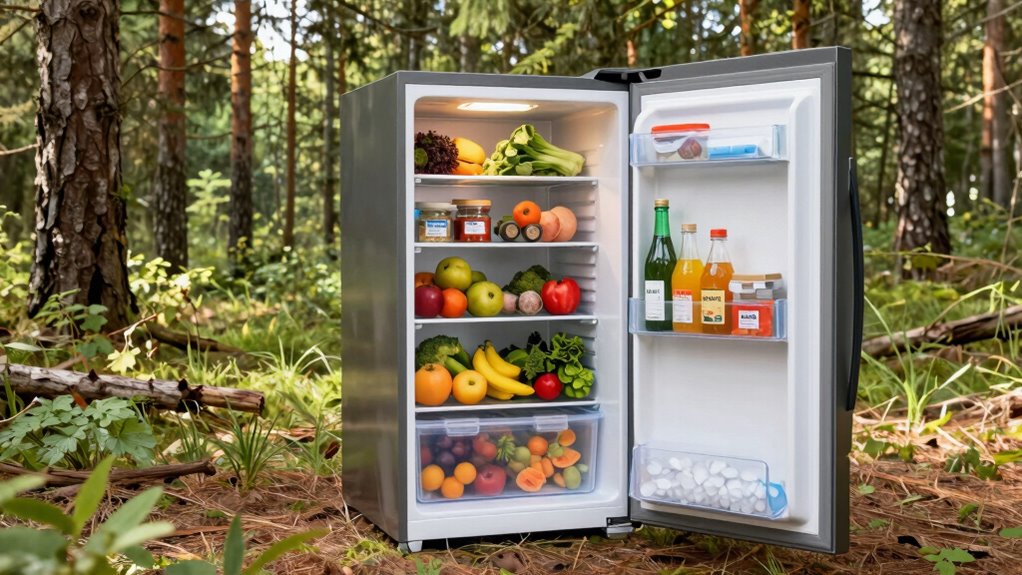

To make your camping fridge work better, always pre-chill all foods and drinks before packing. Keep perishables like dairy and meats near cold packs and store raw meats at the bottom to prevent drips. Organize foods in separate sections to avoid cross-contamination, and keep the fridge closed as much as possible to maintain temperature. Regularly check and replenish ice and monitor the temperature. Sticking to these habits will help your fridge run efficiently and keep food safe—more tips are just ahead.

Get travel and outdoor gear delivered free with Prime
- Fast, free delivery on millions of items
- Prime Video, Amazon Music and more included
- Member-only deals all year
Key Takeaways
- Pre-chill all foods and drinks before packing to maintain low temperatures longer.
- Organize foods by type, placing perishables near ice or cold packs for optimal cooling.
- Keep coolers tightly sealed and minimize open-door time to preserve cold air.
- Replenish ice and cold packs regularly to sustain consistent low temperatures.
- Use separate compartments to prevent cross-contamination and improve overall organization.
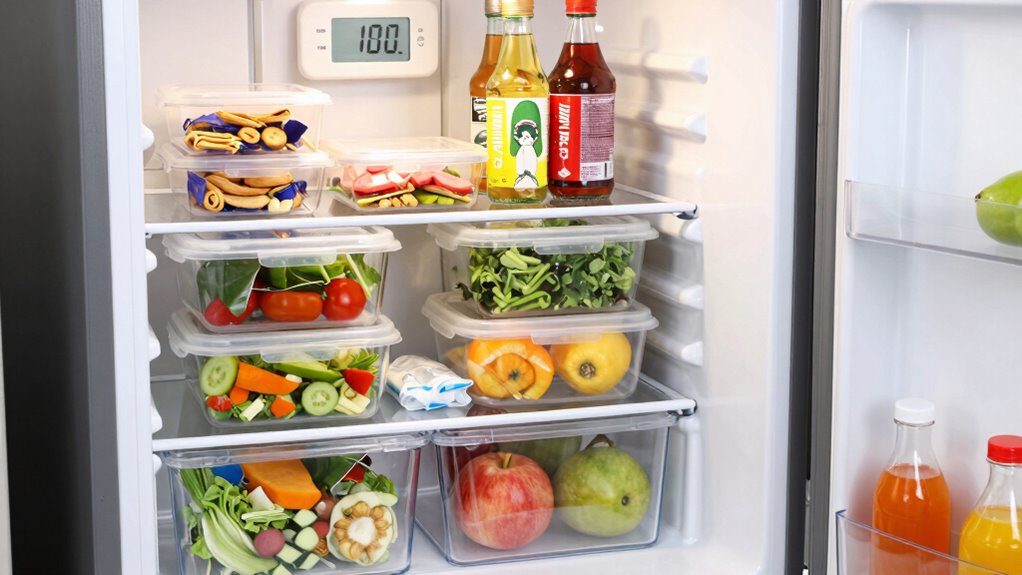
When camping, proper food storage in your fridge is crucial to keep your meals fresh and safe. Whether you’re using outdoor refrigeration or relying on portable coolers, how you manage your food can make a big difference in keeping everything fresh and preventing spoilage. Outdoor refrigeration systems are designed to handle the challenges of camping environments, but they still require careful planning. Portable coolers, on the other hand, are convenient but need proper packing techniques to maximize their efficiency. No matter what you use, the key is to organize your food properly and keep it at the right temperature.
Start by packing your cooler or fridge with cold packs or ice to keep the temperature consistently low. With portable coolers, it’s best to pre-chill everything you plan to store, including drinks and perishable foods. When you load your cooler, place the most perishable items—like dairy, meat, and seafood—closest to the ice or cold packs, so they stay colder longer. Keep these items sealed tightly in containers or bags to prevent contamination and leaks that could spoil other foods. For outdoor refrigeration, verify your unit is functioning properly before heading out, and check the temperature settings regularly. Maintaining a temperature below 40°F (4°C) is crucial to inhibit bacterial growth. Proper food safety techniques are essential for preventing illness and ensuring your food remains safe. Implementing temperature monitoring can help you quickly identify if your food is at risk, which is vital in remote camping conditions.
Pre-chill foods and keep perishable items near ice to stay fresh and safe during your camping trip.
Organization is another essential aspect. Use separate compartments or sections within your cooler to segment different types of food. This prevents cross-contamination and helps you locate items quickly. Keep raw meats at the bottom to avoid drips onto other foods, and store cooked or ready-to-eat items on top. When using outdoor refrigeration, avoid opening it more than necessary to keep the internal temperature stable. With portable coolers, open them briefly and quickly, then reseal tightly to preserve cold air. Additionally, understanding food safety guidelines is vital to prevent foodborne illnesses during your trip. Incorporating proper packing techniques can significantly improve the efficiency and longevity of your cooling system. A well-maintained cooling system is also key to keeping your food at safe temperatures throughout your trip. Regular maintenance, such as cleaning the cooling units and checking for proper operation, can also extend the lifespan of your equipment and ensure optimal performance.
Lastly, monitor your food throughout your camping trip. Regularly check the ice levels in your cooler and replenish as needed. For outdoor refrigeration, verify the unit’s temperature periodically to ensure it stays within safe limits. If any food looks or smells off, discard it immediately. Practicing these habits—such as strategic packing, organized storage, and consistent temperature checks—helps your camping fridge work better, extending the freshness of your food and reducing waste. Good food storage habits don’t just keep your meals safe; they make your entire camping experience more enjoyable and worry-free.
portable camping cooler with ice packs
As an affiliate, we earn on qualifying purchases.
As an affiliate, we earn on qualifying purchases.
Frequently Asked Questions
How Often Should I Defrost My Camping Fridge?
You should defrost your camping fridge whenever you notice significant ice buildup, usually every few weeks or as needed. Ice buildup reduces power efficiency, making your fridge work harder and draining more battery. Regular defrosting prevents this, helping it run smoothly and efficiently. Keep an eye on the ice levels, and defrost when the buildup reaches about a quarter inch thick to maintain peak performance during your camping trip.
What Temperature Should My Camping Fridge Be Set To?
Think of your camping fridge as the guardian of freshness; set it to a temperature between 35°F and 40°F for ideal performance. This range ensures your food stays fresh and safe, while maintaining cooling efficiency. Proper temperature control prevents spoilage and conserves energy, making your fridge a reliable protector of your provisions. Keep it steady within this zone, and your camping experience stays enjoyable and worry-free.
Can I Use Regular Household Containers in a Camping Fridge?
Yes, you can use regular household containers in your camping fridge. Opt for sturdy, leak-proof container types like plastic, glass, or BPA-free options to keep your food fresh and prevent spills. Follow storage tips by labeling containers, organizing items to maximize space, and keeping raw meats separate. Using the right container types guarantees your camping fridge stays clean, efficient, and safe for all your food storage needs.
How Do I Prevent Odors in My Camping Fridge?
Imagine your camping fridge as a tiny fortress, fighting off pesky odors. To prevent odors, practice odor control with regular deodorizing techniques like baking soda or activated charcoal bags. Keep food covered, wipe spills immediately, and clean the fridge regularly. This keeps your fridge fresh, like a cool, breezy hideaway. By staying vigilant with these habits, you’ll keep unwanted smells at bay and enjoy fresh-tasting food on your adventure.
What’s the Best Way to Organize Food in a Small Camping Fridge?
To organize food in a small camping fridge, start with meal prep to portion out meals, keeping everything neat and accessible. Use clear containers and label them for quick identification, which also promotes food safety. Place frequently used items at the front and keep raw meats on the bottom to prevent cross-contamination. Maximize space by stacking items vertically and using small containers for leftovers, ensuring your fridge stays organized and safe.
Conclusion
By mastering these food storage habits, you turn your camping fridge into a loyal guardian of freshness, a trusty ship sailing smoothly through the chilly seas. Keep your perishables nestled safely, organized like treasures in a chest, and your fridge will serve as a steadfast companion on your adventure. With every careful step, you craft a symphony of coolness, ensuring your food stays vibrant and your trip remains flavorful and stress-free. Happy camping!
Fall Picks
fall essentials
As an affiliate, we earn on qualifying purchases.