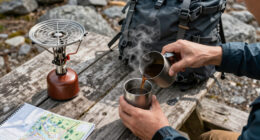
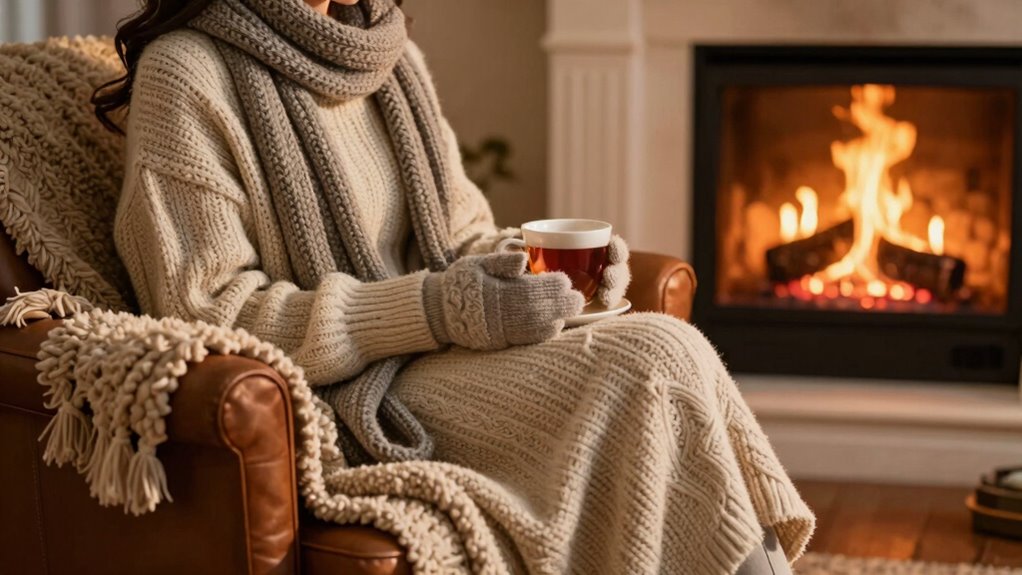

A smart warmth layering strategy beats just adding more blankets by trapping heat efficiently and managing moisture. Start with a moisture-wicking base layer that keeps sweat away and stays dry. Add a middle insulating layer, like fleece or down, to retain warm air close to your body. Finish with an outer shell that blocks wind and rain while letting moisture escape. Combining these layers ensures better warmth, comfort, and style. Explore how each layer works together for all-day cozy warmth.

Get travel and outdoor gear delivered free with Prime
- Fast, free delivery on millions of items
- Prime Video, Amazon Music and more included
- Member-only deals all year
Key Takeaways
- Layering allows customizable warmth without bulk, adapting easily to changing temperatures throughout the day.
- Using moisture-wicking base layers keeps skin dry and prevents chills, outperforming multiple blankets.
- Insulating middle layers trap warm air efficiently, providing better heat retention than adding more blankets.
- A protective outer layer shields against wind and moisture, maintaining warmth and dryness in various weather conditions.
- Combining well-chosen materials and versatile designs creates an effective, stylish insulation system that beats piling blankets.

Ever wondered how to stay warm without sacrificing style? The secret lies in a smart layering strategy, which leverages the right combination of clothing materials and thermal insulation to keep you comfortable without needing endless blankets. Instead of piling on layers or relying solely on bulky clothing, you can create an effective insulation system that traps heat efficiently while remaining fashionable. The key is understanding how each layer works and choosing the right pieces to maximize warmth without sacrificing your look. Incorporating layering techniques can further enhance your ability to adapt to changing temperatures throughout the day. Start with a base layer made of moisture-wicking fabrics like merino wool or synthetic fibers designed for thermal insulation. These materials pull sweat away from your skin, keeping you dry and preventing chills caused by dampness. Your base layer should fit snugly but comfortably, providing a foundation that helps regulate your body temperature. This layer is essential because it sets the tone for how well your body maintains warmth throughout the day. The middle layer acts as your primary insulator. Here, clothing materials like fleece, down, or thicker wool become your best friends. These materials have excellent thermal insulation properties, trapping a layer of warm air close to your body. When selecting this layer, consider its ability to retain heat without adding excessive bulk. Fleece, for example, is lightweight but provides significant warmth, making it perfect for everyday wear. Down jackets or vests are also superb choices, especially in colder climates, because their packed-down insulation offers high thermal efficiency without overwhelming your silhouette. Additionally, choosing thermal insulation materials that are lightweight and compressible can make layering more comfortable and versatile. Finally, your outer layer needs to shield you from wind, rain, or snow without compromising breathability. Opt for a waterproof, windproof shell that allows moisture to escape while blocking external elements. This keeps your inner layers dry and prevents heat loss. A good outer shell should be both functional and stylish, offering a sleek look that complements your outfit. Remember, the outer layer isn’t meant to be heavily insulated but to protect the thermal insulation provided by your inner layers.
moisture-wicking base layer for cold weather
As an affiliate, we earn on qualifying purchases.
As an affiliate, we earn on qualifying purchases.
Frequently Asked Questions
How Do I Choose the Right Materials for Layering?
To choose the right materials for layering, focus on fabric combinations that optimize moisture management and insulation. Start with a moisture-wicking base layer to keep sweat away from your skin, then add insulating layers like wool or fleece for warmth. Avoid cotton, which traps moisture. Consider lightweight, breathable fabrics that dry quickly. This strategic mix guarantees you stay dry and comfortable, no matter the weather.
Can Layering Help Reduce Energy Bills?
Layering acts like a thermal insulation shield, helping you reduce energy bills by trapping heat more effectively. When you add multiple layers, you improve your home’s energy efficiency, much like a well-insulated fortress. This strategy minimizes heat loss, so your heating system doesn’t work as hard. By consciously layering with suitable materials, you can stay warm and cut costs, making every degree count in your quest for comfort and savings.
What Are Common Mistakes When Layering for Warmth?
You might make mistakes like wearing bulky fashion accessories that hinder thermal insulation, trapping less heat. Also, layering improperly—such as wearing too many thin layers instead of a few well-insulated ones—can reduce warmth. Avoid combining incompatible fabrics that don’t insulate well together. Stick to strategic layering with thermal insulation in mind, and choose accessories that add warmth without adding bulk, ensuring your layers work together efficiently.
How Do I Prevent Overheating When Layering?
You might think adding more layers keeps you warm, but it can lead to overheating if you neglect thermal regulation. To prevent this, choose moisture-wicking materials that help regulate your body temperature and wick away sweat. Start with a breathable base layer, add insulating layers as needed, and remove them if you feel too warm. This balanced approach ensures comfort, maintains thermal regulation, and keeps moisture management in check during your outdoor adventures.
Is Layering Effective for Outdoor Winter Activities?
Layering is highly effective for outdoor winter activities like snowshoeing and winter hiking, because it allows you to adjust your warmth levels easily. You can add or remove layers to maintain comfort and prevent overheating. Focus on using moisture-wicking base layers, insulating middle layers, and waterproof outer shells. This approach enhances your snowshoeing comfort and keeps you warm without overheating, making your winter hikes more enjoyable and safe.
Conclusion
By mastering the warmth layering strategy, you can stay cozy without piling on more blankets. Remember, layering efficiently can save you up to 25% on heating costs while keeping you comfortable all night. So next time you’re cold, focus on adding the right layers—think thermal wear, a snug sweater, and a good-quality blanket. It’s a simple, effective way to beat the chill and enjoy restful, warm nights without overdoing it.
Fall Picks
fall essentials
As an affiliate, we earn on qualifying purchases.