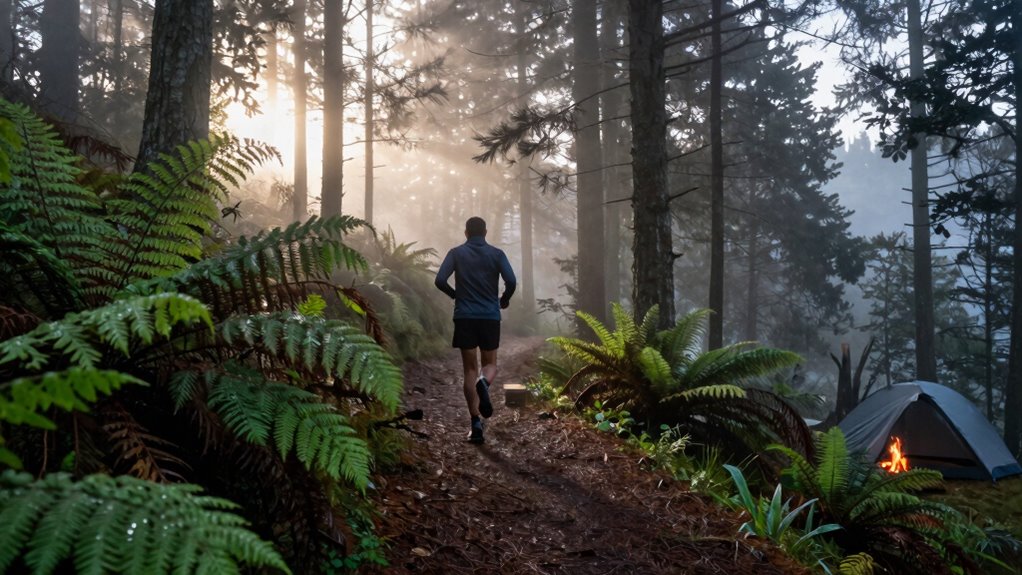
To start trail running while camping without pressure, pick easy, scenic loops near your site, and keep it relaxed—walking or jogging as you feel. Focus on having fun and soaking in nature, not on pace or distance. Pack lightweight snacks and stay hydrated to boost energy, and wear comfortable shoes for uneven terrain. Use simple tech tools like GPS apps to stay on track. Keep it simple and enjoyable, and you’ll discover a rewarding way to connect with nature.

Get travel and outdoor gear delivered free with Prime
- Fast, free delivery on millions of items
- Prime Video, Amazon Music and more included
- Member-only deals all year
Key Takeaways
- Choose short, scenic routes that loop back to camp to keep it relaxed and manageable.
- Focus on enjoyment and exploration rather than pace or distance to reduce pressure.
- Pack lightweight snacks and hydrate often to maintain energy without overexertion.
- Wear comfortable, suitable gear and take breaks as needed to listen to your body.
- Incorporate flexibility by walking or running, making the activity fun and stress-free.
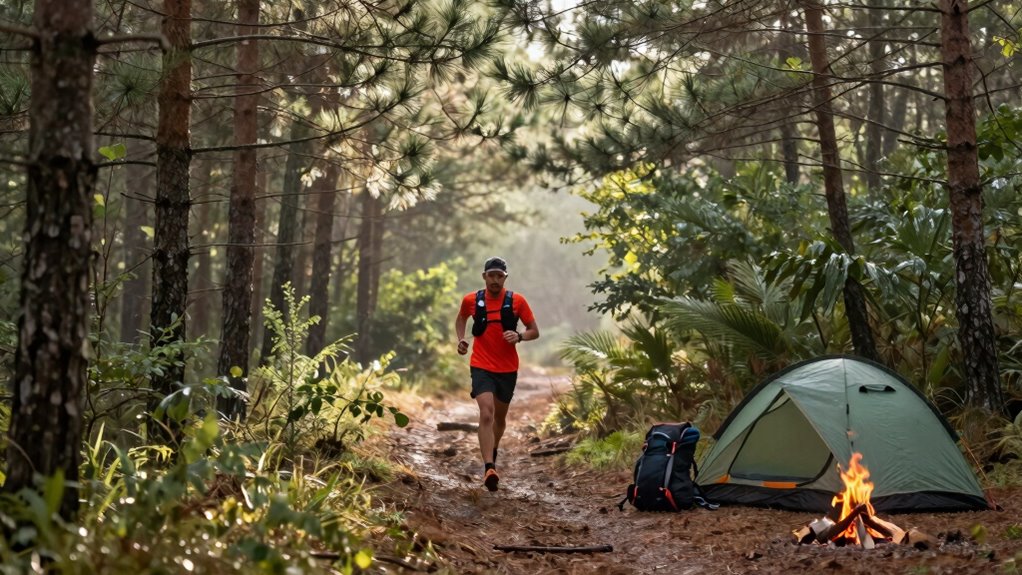
Looking to introduce trail running into your camping trip without feeling overwhelmed? It’s a great way to experience the outdoors more intimately, but the idea of jumping into intense routines can seem intimidating. Instead, keep it simple and low-pressure. Start with a relaxed approach by choosing a trail that offers stunning mountain scenery. When you’re surrounded by towering peaks, lush forests, and clear streams, it’s easier to stay motivated and enjoy the run rather than focusing on pace or distance. You don’t need to run fast or far; just enough to get your legs moving and your mind refreshed.
Start trail running with scenic routes, focusing on enjoyment and exploration rather than speed or distance.
Bring along some trail snacks to keep your energy steady. Lightweight, portable snacks like nuts, energy bars, or dried fruit work perfectly. They’re easy to pack and won’t weigh you down. Eating a bit during your run helps prevent fatigue and keeps your spirits high, especially when you’re soaking in mountain views. Don’t worry about sticking to a strict schedule—listen to your body and take breaks whenever you need them. Trail running during camping isn’t about performance; it’s about exploration and enjoyment.
You can start with short, easy routes that loop back to your campsite. This way, you won’t feel committed to a long run, and it’s low-pressure to cut it short if you’re not feeling up to it. Remember, the goal is to integrate running naturally into your trip, not to turn it into a race. Feel free to walk when you need to, especially when climbing steeper sections or marveling at the scenery. The beauty of trail running during camping is that it’s flexible—you set the pace, and you decide how much you want to explore.
Make sure you’re dressed comfortably, with proper shoes that grip well on uneven terrain. Hydrate frequently, especially if you’re running in warm weather or high altitudes, and keep your trail snacks handy for quick energy boosts. As you get more comfortable, you might find yourself looking forward to these little adventures that connect you to nature in a more active way. Incorporating tech tips like a GPS watch can help you track your routes and motivate you to try new trails. Additionally, using a trail app can help you discover scenic routes and ensure you don’t get lost. Being aware of trail safety tips can enhance your confidence and enjoyment during these outings. The key is to keep it fun and stress-free. Trail running in mountain scenery combined with nourishing trail snacks can become a favorite part of your camping routine—an easy, satisfying way to enjoy the outdoors without any pressure.
Frequently Asked Questions
What Are the Best Trail Running Shoes for Beginners?
As a beginner, look for trail running shoes that combine durability and breathability. Shoes with strong trail shoe durability handle rough terrains, while breathable features keep your feet cool and dry during runs. Opt for lightweight models with good grip and supportive soles to prevent slipping. Brands like Salomon, Merrell, and Brooks offer excellent options. Prioritize comfort and fit to build confidence, making your trail running experience enjoyable and safe.
How Do I Prevent Wildlife Encounters While Trail Running?
Ever wondered how to avoid wildlife encounters while trail running? You can do this by understanding wildlife behavior and practicing good trail etiquette. Make noise to alert animals of your presence, stay on designated paths, and avoid sudden movements. Carrying a whistle or bells also helps. Respect wildlife space, don’t feed animals, and stay alert—these steps keep both you and the creatures safe during your run.
What Safety Gear Should I Carry During Trail Runs?
You should carry essential safety gear like a hydration pack to stay hydrated and maintain your hydration strategies during your trail run. Bring a map or GPS device for trail marking, so you don’t get lost. Include a whistle for emergencies, a small first aid kit, and a flashlight if you’ll be out near dusk. These items keep you safe, help you navigate, and guarantee you’re prepared for unexpected situations.
How Do I Stay Motivated to Run During Camping Trips?
Imagine the early morning sun filtering through towering trees as you lace up your shoes, feeling the crisp air energize you. To stay motivated, focus on the scenic beauty around you and the sense of adventure. Keep camping hydration and trail running nutrition in mind to fuel your runs, making each step rewarding. Visualize the peacefulness of the trail, and let that inspire you to explore further, turning each run into a memorable experience.
What Are Common Trail Running Injuries and Prevention Tips?
Common trail running injuries include ankle sprains, strains, and blisters. To prevent these, you should focus on proper trail running nutrition and hydration strategies, ensuring your muscles stay fueled and hydrated. Wear well-fitting shoes for stability, and warm up before running. Listen to your body, take breaks when needed, and maintain good form. These steps help reduce injury risk and keep you enjoying your trail adventures safely.
Conclusion
Remember, trail running while camping isn’t about perfect technique or speed; it’s about embracing the journey. Like a gentle stream carving its path through rocks, your progress will shape your confidence and love for the outdoors. Each step, no matter how small, helps you carve your own trail—one that’s uniquely yours. So, lace up, breathe in the wild air, and let the trail be your canvas for growth and discovery.
Halloween Picks
halloween
As an affiliate, we earn on qualifying purchases.