
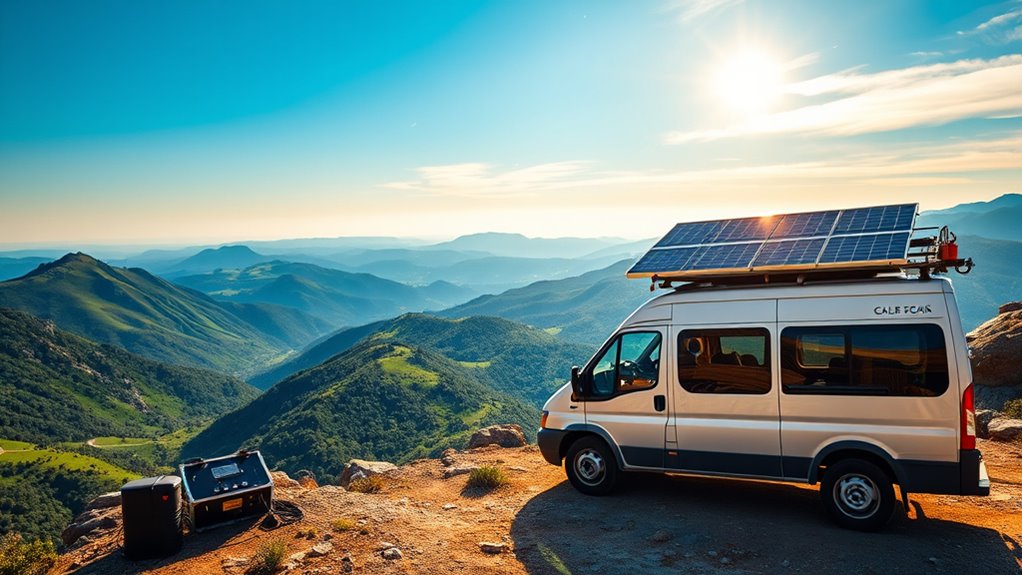

To power your campervan off-grid, install a solar system with appropriately sized monocrystalline or polycrystalline panels, paired with a high-quality MPPT charge controller for maximum efficiency. Regularly clean your panels and monitor your battery voltage to prevent overcharging or deep discharges, using lithium-ion batteries for minimal maintenance. Proper wiring, fusing, and system integration guarantee safety and durability, maximizing energy output. Continue exploring to discover detailed setup tips and optimization strategies for reliable solar performance.

Get travel and outdoor gear delivered free with Prime
- Fast, free delivery on millions of items
- Prime Video, Amazon Music and more included
- Member-only deals all year
Key Takeaways
- Choose the right solar panel type (monocrystalline, polycrystalline, or thin-film) based on roof space, budget, and efficiency needs.
- Properly size your solar array and battery system to meet your energy consumption for off-grid independence.
- Regularly clean panels and inspect system components to maintain optimal solar energy absorption and system performance.
- Use a high-quality MPPT charge controller to maximize energy transfer and prevent battery overcharging.
- Consider lithium-ion batteries for low maintenance, higher capacity, and longer lifespan in your campervan setup.
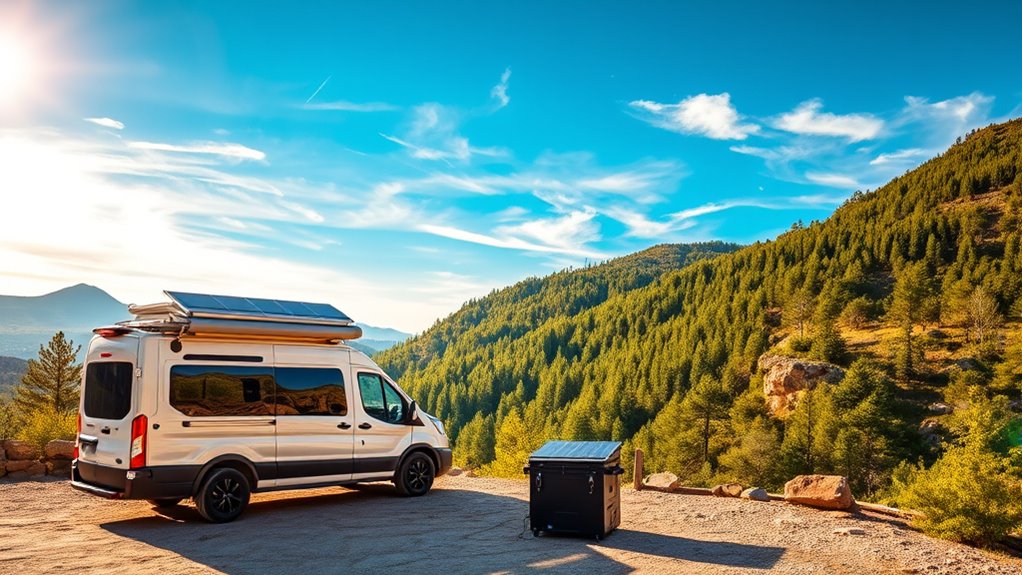
Installing solar power in your campervan provides a reliable, renewable energy source that can substantially enhance off-grid capabilities. To maximize efficiency, understanding the nuances of battery maintenance and the different solar panel types is essential. Your battery system acts as the energy reservoir, storing excess power generated during peak sunlight hours, so maintaining its health is critical for consistent performance. Regular inspection of the battery terminals for corrosion and ensuring proper electrolyte levels in lead-acid batteries prolongs lifespan. Additionally, monitoring voltage and capacity through a battery management system helps prevent overcharging or deep discharging, which can diminish battery life. Lithium-ion batteries, while more expensive upfront, require less maintenance and offer higher energy density, making them ideal for sustainable campervan setups. Proper wiring, fusing, and installing a reliable charge controller further safeguard your batteries, optimizing charging cycles and preventing damage.
Choosing the right solar panel type is equally crucial. Monocrystalline panels, recognized for their high efficiency and sleek appearance, perform well in limited space but tend to be more costly. Polycrystalline panels, slightly less efficient, are more affordable and still provide solid energy output, making them suitable for larger roof areas where space isn’t as constrained. Thin-film solar panels, though less efficient per unit area, are lightweight, flexible, and easier to install on curved surfaces, offering versatile options for unconventional van roofs. Each type comes with distinct advantages and trade-offs involving efficiency, cost, weight, and installation complexity. Your choice depends on your van’s available roof space, budget, and energy needs.
Integrating your solar panels with your battery system involves selecting a compatible charge controller—preferably a MPPT (Maximum Power Point Tracking) model—since it maximizes power extraction from your panels. Properly sizing your system is essential; oversizing can lead to unnecessary expense, while undersizing might leave you short of power during cloudy days. Regularly cleaning your solar panels to remove dirt and debris ensures a maximum sunlight absorption. Additionally, installing a monitoring system provides real-time data on energy production and consumption, enabling you to make informed decisions about your off-grid power management.
monocrystalline solar panels for campervan
As an affiliate, we earn on qualifying purchases.
As an affiliate, we earn on qualifying purchases.
Frequently Asked Questions
How Do I Maintain and Clean Campervan Solar Panels?
To maintain and clean your campervan solar panels, regularly inspect for dirt, dust, or debris that can reduce efficiency, and gently wash with a soft brush or sponge using water and mild soap. Guarantee your charge controllers and battery storage systems are functioning properly by checking connections and voltages. Clean panels in the early morning or late afternoon to avoid hotspots, and perform routine checks to sustain peak energy conversion.
Can Solar Power Run All My Campervan Appliances Simultaneously?
Yes, solar power can run all your campervan appliances simultaneously if you optimize your system. A typical 200W panel produces around 1.2 kWh daily, which, with proper battery storage and high inverter efficiency (above 90%), handles essential appliances. Guarantee your battery bank has sufficient capacity and that your inverter can handle peak loads. Proper system design balances solar input, storage, and appliance power needs, making full simultaneous operation feasible.
What Are the Best Portable Solar Panel Options for Camping?
You should consider portable panels like foldable monocrystalline or polycrystalline options, which offer high efficiency and durability. Flexible options, such as fabric or thin-film panels, provide lightweight, adaptable solutions ideal for uneven surfaces or limited space. These portable solar panels are easy to set up, transport, and store, making them perfect for camping. Look for models with high wattage output, robust build quality, and weather-resistant features to maximize off-grid energy performance.
How Does Weather Affect My Solar Power System’s Performance?
Weather can turn your solar panel’s performance into a fickle friend. Overcast skies dim sunlight, reducing energy production and testing your solar panel durability. Heavy rain or snow can cause physical stress, while temperature fluctuations impact battery storage capacity. To stay resilient, guarantee your system’s components are rated for weather conditions, and optimize angles during cloudy days. Proper maintenance keeps your off-grid setup efficient, even when weather tries to throw a wrench in your plans.
What Is the Lifespan of a Typical Campervan Solar Setup?
A typical campervan solar setup lasts around 25 years, but battery degradation can reduce overall lifespan to about 10-15 years for the batteries. The system’s durability depends heavily on mounting quality; robust mounting ensures panels withstand weather and vibrations. Regular maintenance and quality components extend your system’s efficiency and longevity, with durable mounting systems and high-quality batteries being vital for maximizing lifespan over years of off-grid use.
Conclusion
By integrating solar panels, optimizing energy storage, and monitoring system performance, you guarantee reliable, sustainable power for your campervan adventures. Embrace the technology that maximizes efficiency, minimizes downtime, and reduces reliance on external sources. Prioritize proper installation, regular maintenance, and system upgrades to sustain off-grid independence. With meticulous planning and technical understanding, you harness solar energy that powers your journey, safeguards your comfort, and enhances your freedom—making your campervan truly self-sufficient and environmentally responsible.
Fall Picks
fall essentials
As an affiliate, we earn on qualifying purchases.