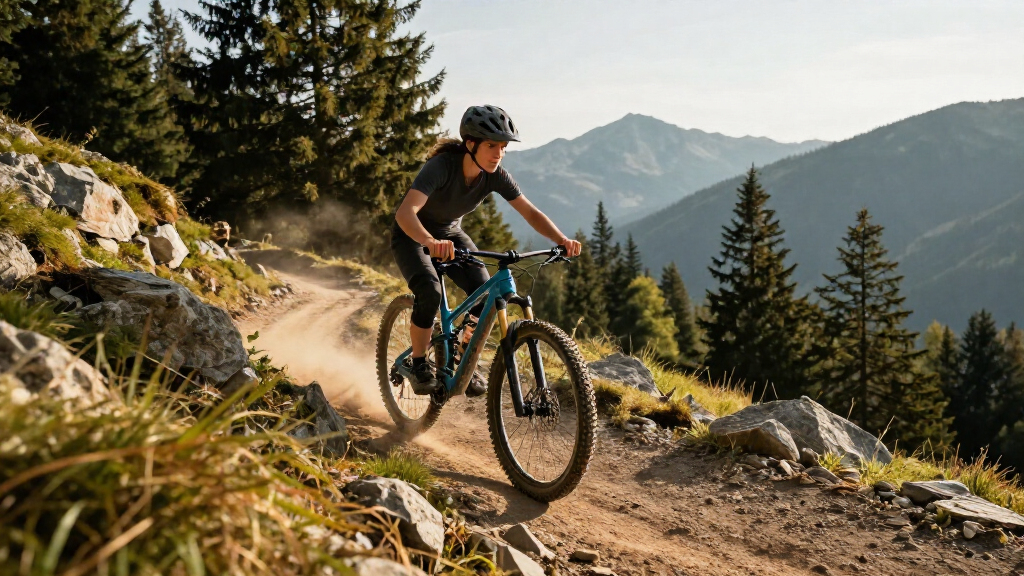

The best cross-country mountain bikes balance efficient climbing, steady handling, and enough control for rough trails. I’d put the ROCKBROS MT600 29-Inch Hardtail first for its 29-inch wheels and Shimano Deore 12-speed drivetrain, while the ROCKBROS MT400 is a simpler hardtail alternative and the Mongoose Impasse 3.0 suits riders who prefer dual suspension. The main tradeoff is efficiency versus comfort: hardtails are generally simpler and more direct on climbs, while full-suspension bikes can add comfort and control but also weight and maintenance. Several bikes here use broad recreational specifications rather than dedicated XC components, so intended use matters. Read on for the full breakdown and help matching a bike to your trails and riding style.

Get travel and outdoor gear delivered free with Prime
- Fast, free delivery on millions of items
- Prime Video, Amazon Music and more included
- Member-only deals all year
Complete the kit


Key Takeaways
- The ROCKBROS MT600 29-Inch Hardtail leads this comparison because its Deore 12-speed setup and 29-inch wheels are the clearest fit for efficient cross-country riding.
- Hardtail models dominate the practical XC choices; the lineup’s dual-suspension bikes may suit riders prioritizing comfort, but add mechanical complexity and are not automatically faster.
- Wheel size and fit matter as much as the gear count: 29-inch wheels can roll steadily over trail obstacles, while 26- and 27.5-inch options may be easier to handle for some riders.
- Many bikes in this roundup are recreational models, with 21-speed or 8-speed gearing that may work for casual paths but offers less specific XC capability than the MT600’s 12-speed drivetrain.
- Product names can describe different configurations, so confirm frame size, wheel size, suspension, and drivetrain on the exact listing before choosing.
| QARSWA Full Suspension Mountain Bike, 21-Speed |  | Best for Casual, Bumpy-Road Riding | Frame material: High-carbon steel | Wheel sizes: 24, 26, or 27.5 inches | Drivetrain: 21-speed chain drive with twist-grip shifter | VIEW LATEST PRICE | See Our Full Breakdown |
| ROCKBROS MT600 29-Inch Hardtail Mountain Bike, Shimano Deore 12-Speed |  | Best Overall for Cross-Country Trail Capability | Frame material: Aluminum | Wheel size: 29 inches | Fork: 140 mm adjustable air fork with hydraulic damping and crown lockout | VIEW LATEST PRICE | See Our Full Breakdown |
| ROCKBROS MT400 29-Inch Mountain Bike |  | Best for Tall Riders Wanting a Simpler Hardtail | Frame material: Aluminum | Frame size and fit range: 21 in; riders 5’9″–6’6″ | Wheel and tire size: 29-inch wheels; 2.1-inch tires | VIEW LATEST PRICE | See Our Full Breakdown |
| Mongoose Impasse 3.0 Dual-Suspension Mountain Bike |  | Best for Riders Prioritizing Rear Suspension | Frame material and size: Aluminum; 17 in | Recommended rider height: 5’7″–5’10” | Wheel size: 29 inches | VIEW LATEST PRICE | See Our Full Breakdown |
| QARSWA Mountain Bike, 26/27.5-Inch Aluminum Frame, 21-Speed |  | Best for Riders Seeking Disc Brakes and Flexible Wheel Options | Frame and wheel material: Aluminum | Wheel sizes: 26 or 27.5 inches | Drivetrain: 21-speed chain drive with trigger shifters | VIEW LATEST PRICE | See Our Full Breakdown |
| ROCKBROS MT600 29-Inch Trail Mountain Bike, 12-Speed |  | Best for Fast, Technical Cross-Country Trails | Frame: Aluminum, 16 inches | Rider height: 5’3″–5’9″ | Wheels and tires: 29-inch wheels; 29×2.2-inch tires | VIEW LATEST PRICE | See Our Full Breakdown |
| Huffy Stone Mountain 26-Inch Mountain Bike |  | Best for Beginner-Friendly Casual Riding | Frame: Alloy steel | Wheels and tires: 26-inch wheels; 1.95-inch tires | Drivetrain: 21-speed chain drive with rear derailleur | VIEW LATEST PRICE | See Our Full Breakdown |
| ROCKBROS MT200 27.5-Inch Mountain Bike, 8-Speed |  | Best for Taller Riders on Light Trails | Frame: Aluminum, 21 inches | Rider height: 5’9″–6’6″ | Wheels and tires: 27.5-inch wheels; 27.5×1.95-inch tires | VIEW LATEST PRICE | See Our Full Breakdown |
| HILAND Adult Mountain Bike, 21-Speed, Aluminum Frame, Dual Disc Brakes, 26 or 27.5-Inch Wheels |  | Best for Size Choice and Everyday Versatility | Frame: Aluminum alloy | Wheel and frame options: 26-inch wheels with 17-inch frame; 27.5-inch wheels with 18-inch frame | Drivetrain: 21-speed chain drive | VIEW LATEST PRICE | See Our Full Breakdown |
| AVASTA Thrax Mountain Bike, 21-Speed, Front Suspension, Dual Disc Brakes |  | Best for Multiple Wheel-Size Options | Frame: High-tensile carbon steel | Wheel sizes: 24, 26, and 27.5 inches; 26 inches listed as the standard size | Drivetrain: 21-speed chain drive | VIEW LATEST PRICE | See Our Full Breakdown |
| cross-country mountain bike | Drivetrain | Brakes | Suspension | Frame |
|---|---|---|---|---|
| QARSWA Full Suspension Mountai | 21-speed chain drive with twist-grip shifter | V-brakes | Dual | — |
| ROCKBROS MT600 29-Inch Hardtai | Shimano Deore M6100, 1×12 | Shimano MT200 hydraulic disc | — | — |
| ROCKBROS MT400 29-Inch Mountai | 1×10-speed | Hydraulic disc | — | — |
| Mongoose Impasse 3.0 Dual-Susp | Microshift 1×9 | Front and rear hydraulic disc | Dual suspension; RST Blaze front fork with 100 mm travel and lockout | — |
| QARSWA Mountain Bike | 21-speed chain drive with trigger shifters | Dual mechanical disc | Front suspension | — |
| ROCKBROS MT600 29-Inch Trail M | 1×12 chain drive; 11–50T cassette | Hydraulic disc | — | Aluminum, 16 inches |
| Huffy Stone Mountain 26-Inch M | 21-speed chain drive with rear derailleur | Dual linear pull | Front and rear | Alloy steel |
| ROCKBROS MT200 27.5-Inch Mount | Shimano 8-speed | Mechanical disc, front and rear | Adjustable front fork with lockout | Aluminum, 21 inches |
| HILAND Adult Mountain Bike | 21-speed chain drive | Mechanical disc | Front suspension fork | Aluminum alloy |
| AVASTA Thrax Mountain Bike | 21-speed chain drive | Dual disc | Front suspension | High-tensile carbon steel |
More Details on Our Top Picks
QARSWA Full Suspension Mountain Bike, 21-Speed
I’d place this QARSWA among the more casual options in this roundup: its front and rear suspension and fenders suit neighborhood paths, paved roads, and light trails better than fast, sustained cross-country riding. The 21-speed drivetrain gives riders more gear choices than the Mongoose Impasse 3.0’s 1×9 setup, but the listed specs don’t identify a modern wide-range cassette or trail-focused components. Its 38.4-pound steel frame is a notable tradeoff, making the bike less appealing when climbs, carrying, or quick changes of pace are part of the ride. V-brakes also offer a simpler setup than the hydraulic discs on the Mongoose and ROCKBROS MT400. I’d pick this for comfort and splash protection on easy routes, not for a rider prioritizing efficient cross-country performance.
Pros:- Front and rear suspension help soften bumps on casual, uneven routes.
- 21-speed drivetrain offers a broad choice of gears for mixed everyday riding.
- Front and rear fenders help reduce spray on wet roads and paths.
- Quick-release front wheel and included tools support setup and storage.
Cons:- Listed 38.4-pound weight and high-carbon steel frame make it a heavy choice for climbing and carrying.
- V-brakes lack the hydraulic disc setup found on the Mongoose Impasse 3.0 and ROCKBROS MT400.
- Its stated use for light trails is a weaker fit for demanding cross-country riding.
Best for: Casual riders who split time between paved paths and light, uneven trails and want dual suspension plus fenders.
Not ideal for: Cross-country riders seeking a light bike, hydraulic disc braking, or efficient climbing on long trail rides.
- Frame material:High-carbon steel
- Wheel sizes:24, 26, or 27.5 inches
- Drivetrain:21-speed chain drive with twist-grip shifter
- Suspension:Dual
- Brakes:V-brakes
- Listed weight:38.4 lb
- Maximum weight recommendation:265 lb
- Assembly:90% pre-assembled; tools included
Our verdict“Choose this QARSWA for casual routes where dual suspension and fenders matter more than low weight or trail-ready braking.”
ROCKBROS MT600 29-Inch Hardtail Mountain Bike, Shimano Deore 12-Speed
Among these five, I’d rank the ROCKBROS MT600 first for cross-country riding because its 29-inch wheels, 140 mm air fork, and Shimano Deore 1×12 drivetrain form the clearest trail-oriented package. The wide 11–50T cassette gives riders a low climbing gear without adding a front derailleur, while the fork’s adjustable air spring and lockout let them tune comfort or firm it up on smoother sections. Compared with the dual-suspension Mongoose Impasse 3.0, the MT600 has no rear shock, so rough descents will feel less forgiving; the hardtail layout also keeps the focus on front-end control and simpler pedaling. Hydraulic disc brakes and thru-axles add trail-ready control and wheel security. Check the three-size fit range carefully, and note the 220-pound maximum system weight.
Pros:- Adjustable 140 mm air fork has hydraulic damping and crown-mounted lockout.
- Shimano Deore 1×12 drivetrain and 11–50T cassette provide a broad climbing range.
- Hydraulic disc brakes support controlled braking on varied trails.
- 29-inch wheels, 2.2-inch tires, and front and rear thru-axles suit trail riding.
Cons:- Hardtail design has no rear suspension to soften repeated impacts.
- Three frame sizes require careful fit checking before purchase.
- The 220-pound maximum system weight may rule it out for some riders or loaded setups.
Best for: Riders seeking a trail-capable hardtail for cross-country loops, varied climbs, and descents who fit one of its three frame sizes.
Not ideal for: Riders who need rear suspension for rough terrain, fall outside the stated fit range, or exceed the 220-pound maximum system weight.
- Frame material:Aluminum
- Wheel size:29 inches
- Fork:140 mm adjustable air fork with hydraulic damping and crown lockout
- Drivetrain:Shimano Deore M6100, 1×12
- Cassette and crank:11–50T cassette; 34T crank
- Brakes:Shimano MT200 hydraulic disc
- Tires:Kenda 29 x 2.2 inches
- Weight and system limit:32 lb; maximum system weight 220 lb
- Frame sizes and rider height:S/16 in: 5 ft 3 in–5 ft 9 in; M/18 in: 5 ft 7 in–6 ft 1 in; L/21 in: 5 ft 9 in–6 ft 6 in
Our verdict“Choose the MT600 for the strongest cross-country-ready component package here if you fit its sizing and want a hardtail rather than rear suspension.”
ROCKBROS MT400 29-Inch Mountain Bike
The ROCKBROS MT400 is a more straightforward cross-country hardtail than the MT600: its 1×10 drivetrain and 29-inch wheels suit riders who want uncomplicated gearing and steady rollover on gravel and trails. The 11–50T cassette still provides a useful climbing range, while hydraulic disc brakes offer more trail-focused stopping than the V-brakes on the QARSWA Full Suspension. Its oil-spring fork has preload adjustment and a remote lockout, giving riders a way to firm the front end for smoother stretches. The tradeoff is a fixed 21-inch frame listed for riders 5’9″–6’6″, so fit flexibility is limited; unlike the Mongoose Impasse 3.0, it also has no rear suspension. I’d choose it over the MT600 when a 10-speed setup is enough, but not if its fit or front-only suspension is a mismatch.
Pros:- 29-inch wheels and 2.1-inch tires support rollover and traction on varied surfaces.
- 1×10 drivetrain with an 11–50T cassette offers a wide gear range without a front derailleur.
- Hydraulic disc brakes provide trail-ready braking control.
- Fork preload adjustment and remote lockout let riders adapt the front end to changing terrain.
Cons:- Only front suspension is provided, unlike the dual-suspension Mongoose Impasse 3.0.
- The single 21-inch frame is listed for riders 5’9″–6’6″, limiting fit options.
- The MT600 offers a 12-speed Deore drivetrain and adjustable air fork for riders seeking a higher-spec setup.
Best for: Taller riders within the stated fit range who want a 29-inch hardtail for gravel, everyday rides, and cross-country trails.
Not ideal for: Riders under 5’9″, those needing multiple frame-size choices, or anyone who wants rear suspension or a 12-speed drivetrain.
- Frame material:Aluminum
- Frame size and fit range:21 in; riders 5’9″–6’6″
- Wheel and tire size:29-inch wheels; 2.1-inch tires
- Drivetrain:1×10-speed
- Cassette and crankset:11–50T cassette; 36T crankset
- Fork:Oil-spring front fork with preload adjustment and remote lockout
- Brakes:Hydraulic disc
- Rims:Double-wall alloy
- Warranty:1 year
Our verdict“Pick the MT400 if you’re a taller rider who wants a simpler 29-inch hardtail with hydraulic brakes and a broad-range 10-speed drivetrain.”
Mongoose Impasse 3.0 Dual-Suspension Mountain Bike
The Mongoose Impasse 3.0 fills a different role from the ROCKBROS hardtails: its dual suspension is the draw for riders who want more comfort over rough ground, while the 100 mm fork with lockout gives some flexibility on smoother climbs and paths. A 1×9 Microshift drivetrain keeps shifting simpler than the QARSWA 21-speed options, and its front and rear hydraulic disc brakes are a stronger match for trail riding than the V-brakes on the QARSWA Full Suspension. The tradeoff is that the available information does not specify rear-shock travel or an adjustable rear shock, making suspension performance harder to compare with the fork. At 16.4 kg, it is also heavier than the MT600’s listed 32 pounds. Its 17-inch frame is intended for a narrow height range, and 80% assembly means more setup is required.
Pros:- Dual suspension offers rear as well as front cushioning on uneven terrain.
- 100 mm RST Blaze fork includes lockout for smoother sections.
- Front and rear hydraulic disc brakes provide trail-focused stopping control.
- 1×9 drivetrain and 11–46 cassette avoid the complexity of a front derailleur.
Cons:- Listed weight of 16.4 kg is heavier than the ROCKBROS MT600’s 32 lb.
- The 17-inch frame is specified only for riders 5’7″–5’10”.
- Arrives 80% assembled, requiring more setup than the 90%-assembled QARSWA Full Suspension.
Best for: Riders 5’7″–5’10” who put rear-suspension comfort ahead of a lighter, more efficient hardtail setup.
Not ideal for: Riders outside the stated height range or cross-country riders focused on low weight, efficient climbing, and a broader fit selection.
- Frame material and size:Aluminum; 17 in
- Recommended rider height:5’7″–5’10”
- Wheel size:29 inches
- Drivetrain:Microshift 1×9
- Cassette and chainring:11–46 cassette; 30T narrow-wide chainring
- Suspension:Dual suspension; RST Blaze front fork with 100 mm travel and lockout
- Brakes:Front and rear hydraulic disc
- Weight:16.4 kg
- Assembly and warranty:80% assembled; limited 5-year frame warranty, 1-year parts warranty, 30-day wearable-parts warranty
Our verdict“Choose the Impasse 3.0 if you fit its narrow height range and value rear suspension more than lower weight or hardtail efficiency.”
QARSWA Mountain Bike, 26/27.5-Inch Aluminum Frame, 21-Speed
This QARSWA offers a more trail-oriented starting point than the steel QARSWA Full Suspension: it pairs an aluminum frame and front suspension with mechanical disc brakes and trigger shifting. Those brakes give it a useful advantage over the steel model’s V-brakes, but the 44-pound listed weight undercuts the benefit of the aluminum frame for riders facing frequent climbs. Its 21-speed drivetrain has more gear steps than the ROCKBROS MT400’s 1×10, though the product data doesn’t specify the cassette range, so I can’t treat that as proof of better climbing gearing. Front suspension only also means less comfort than the dual-suspension Mongoose Impasse 3.0 on rough terrain. The 26- and 27.5-inch options offer some wheel-size choice, but check sizing closely: the stated minimum user height is 5.2 feet.
Pros:- Aluminum frame and wheels are specified alongside a front suspension fork.
- 21-speed drivetrain uses trigger shifters.
- Dual mechanical disc brakes provide a more trail-suited setup than the V-brakes on the other QARSWA model.
- Available in 26- and 27.5-inch wheel sizes.
Cons:- Listed 44-pound weight is a significant drawback for climbs and bike carrying.
- Front suspension only provides less cushioning than the Mongoose Impasse 3.0’s dual suspension.
- Mechanical disc brakes are a simpler setup than the hydraulic brakes on the ROCKBROS MT400 and MT600.
Best for: Riders at least 5.2 feet tall who want front suspension, trigger shifters, and mechanical disc brakes for mixed everyday and light-trail use.
Not ideal for: Cross-country riders seeking a light bike, rear suspension, or hydraulic disc brakes for more demanding trail descents.
- Frame and wheel material:Aluminum
- Wheel sizes:26 or 27.5 inches
- Drivetrain:21-speed chain drive with trigger shifters
- Suspension:Front suspension
- Brakes:Dual mechanical disc
- Listed weight:44 lb
- Maximum weight recommendation:350 lb
- Minimum user height:5.2 ft
- Assembly and warranty:85% pre-assembled; 1-year warranty
Our verdict“Choose this QARSWA for a basic front-suspension bike with disc brakes and wheel-size options, but skip it if low weight or demanding cross-country performance is the priority.”
ROCKBROS MT600 29-Inch Trail Mountain Bike, 12-Speed
The ROCKBROS MT600 is the most trail-capable choice in this group for riders who want a cross-country bike that can also handle rougher descents. Its 140 mm adjustable air fork offers more travel and tuning than the shorter-travel front forks on the ROCKBROS MT200 and HILAND Adult Mountain Bike, helping absorb bigger hits; the lockout is useful when climbing or riding smoother ground. A 1×12 drivetrain with an 11–50T cassette gives a broad gear range without front-shifter complexity, while hydraulic brakes offer stronger, more controlled stopping than the mechanical discs on those alternatives. The tradeoff is that this remains a front-suspension hardtail, not a full-suspension bike, and its 16-inch frame is specified only for riders 5’3″–5’9″. It makes the most sense for riders prioritizing terrain capability over a broad fit range.
Pros:- 140 mm air fork with adjustable pressure, hydraulic damping, and lockout
- 1×12 gearing and 11–50T cassette offer a wide range for climbs and faster sections
- Hydraulic disc brakes provide stronger braking control than mechanical discs
- 29-inch wheels, 2.2-inch tires, and thru-axle hubs suit varied trail terrain
Cons:- Front suspension only, so the rear wheel and rider absorb trail impacts directly
- 16-inch frame is specified for a limited 5’3″–5’9″ rider-height range
Best for: Riders 5’3″–5’9″ who want a hardtail for varied cross-country routes with technical sections, adjustable suspension, and a wide gear range.
Not ideal for: Riders outside the stated height range or those seeking rear suspension for sustained rough descents; consider a full-suspension option in the broader roundup.
- Frame:Aluminum, 16 inches
- Rider height:5’3″–5’9″
- Wheels and tires:29-inch wheels; 29×2.2-inch tires
- Drivetrain:1×12 chain drive; 11–50T cassette
- Fork:140 mm air suspension; hydraulic damping, adjustable air pressure, and lockout
- Brakes:Hydraulic disc
- Hubs and rims:Thru-axle hubs; double-wall alloy rims
- Warranty:1 year
Our verdict“Choose the MT600 if you fit its stated frame range and want more suspension and gearing capability than the MT200 or HILAND, without moving to full suspension.”
Huffy Stone Mountain 26-Inch Mountain Bike
The Huffy Stone Mountain is aimed at newer riders who value a cushioned, approachable setup over cross-country speed. Its front and rear suspension can take the sting out of bumps on gravel paths and uneven roads, a comfort advantage over the front-only ROCKBROS MT200 and HILAND. The 21-speed Shimano drivetrain and twist shifters give beginners several gear choices without requiring trigger-shifter technique, and the included kickstand is handy for everyday stops. For dedicated cross-country riding, though, the 35.3-pound weight is a clear disadvantage on climbs and when carrying the bike. Its linear-pull brakes are also a less capable choice than the disc brakes found on the other listed models. I’d treat it as a recreational starter bike, not a fast or demanding trail machine.
Pros:- Front and rear suspension add comfort over bumps on casual routes
- 21-speed Shimano drivetrain offers a range of gearing choices
- Twist-grip shifters suit riders who prefer a straightforward control style
- Kickstand is included for convenient stops
Cons:- At 35.3 pounds, it is heavy for repeated climbs or carrying
- Dual linear-pull brakes are less suited to demanding trail braking than disc brakes
- 26-inch wheels and a beginner-oriented setup are less focused on fast cross-country riding
Best for: Newer riders at least 5 feet tall who want a comfort-focused bike for gentle trails, gravel paths, and mixed everyday riding.
Not ideal for: Cross-country riders who prioritize low weight, efficient climbing, or stronger disc braking, and riders under the stated minimum height.
- Frame:Alloy steel
- Wheels and tires:26-inch wheels; 1.95-inch tires
- Drivetrain:21-speed chain drive with rear derailleur
- Shifters:Twist grip
- Suspension:Front and rear
- Brakes:Dual linear pull
- Weight:35.3 pounds
- Rider fit and limit:Minimum user height 60 inches; maximum recommended weight 225 pounds
Our verdict“Pick the Stone Mountain for casual beginner rides and extra bump comfort, but choose a lighter disc-brake model for serious cross-country routes.”
ROCKBROS MT200 27.5-Inch Mountain Bike, 8-Speed
For taller riders wanting an aluminum bike for paths and light trails, the ROCKBROS MT200 keeps the setup simpler than the MT600. Its 27.5-inch wheels offer a middle ground between the MT600’s 29-inch wheels and the Huffy Stone Mountain’s 26-inch wheels, while the adjustable front fork can be locked out on smoother stretches. The Shimano 8-speed drivetrain is less expansive than the MT600’s 12-speed gearing or the 21-speed HILAND’s setup, so it gives up some gear choices on steep or varied routes in exchange for a straightforward range. Mechanical disc brakes are a step below the MT600’s hydraulic system in braking feel and power. The listed 21-inch frame suits riders 5’9″–6’6″ only, making fit the main limitation for anyone outside that range.
Pros:- Aluminum frame keeps the build lighter than the steel Huffy Stone Mountain
- Adjustable front suspension fork includes a lockout for smoother terrain
- 27.5-inch wheels offer a middle size between the 26-inch and 29-inch options here
- Mechanical disc brakes are fitted at the front and rear
Cons:- Eight speeds provide fewer gear choices than the HILAND and Huffy 21-speed models
- Mechanical disc brakes lack the hydraulic system fitted to the ROCKBROS MT600
- 21-inch frame is specified for riders 5’9″–6’6″, limiting fit options
Best for: Taller adults, 5’9″–6’6″, who want an aluminum bike for city paths and light cross-country trails with a lockout fork.
Not ideal for: Shorter riders, or riders who need a broad climbing gear range, hydraulic braking, or equipment suited to demanding technical trails.
- Frame:Aluminum, 21 inches
- Rider height:5’9″–6’6″
- Wheels and tires:27.5-inch wheels; 27.5×1.95-inch tires
- Drivetrain:Shimano 8-speed
- Suspension:Adjustable front fork with lockout
- Brakes:Mechanical disc, front and rear
- Rims:Double-wall aluminum
- Warranty:1 year
Our verdict“Choose the MT200 if you are in its tall rider range and mostly ride light trails; the MT600 is better equipped for steep, rough, or more demanding routes.”
HILAND Adult Mountain Bike, 21-Speed, Aluminum Frame, Dual Disc Brakes, 26 or 27.5-Inch Wheels
The HILAND Adult Mountain Bike earns its place as a versatile, straightforward option for riders who want more gearing and a choice of wheel size. Unlike the tall-rider-only ROCKBROS MT200, it offers two configurations: 26-inch wheels with a 17-inch frame or 27.5-inch wheels with an 18-inch frame. Its 21-speed drivetrain gives more gear steps than the MT200’s 8-speed setup, which can help riders find a comfortable cadence across changing gradients. The aluminum frame and mechanical disc brakes make it a more practical cross-country starting point than the heavier Huffy Stone Mountain, but this is still a front-suspension bike with no listed fork travel or lockout. Buyers should also plan for assembly: it arrives 85% pre-assembled, with the front wheel, handlebar, pedals, and seat still needing installation.
Pros:- Two wheel-and-frame combinations offer more configuration choice than the MT200
- Aluminum alloy frame is lightweight and rust resistant
- 21-speed drivetrain provides more gear choices than the MT200’s 8-speed system
- Mechanical disc brakes are fitted at both wheels
Cons:- Requires installation of the front wheel, handlebar, pedals, and seat
- Only two wheel and frame combinations are specified, with no rider-height guidance supplied
- Front suspension has no listed travel or lockout details
Best for: Adult riders seeking a practical aluminum bike for pavement and moderate trails who want a choice between 26- and 27.5-inch wheel configurations.
Not ideal for: Riders seeking a ready-to-ride bike with minimal assembly, a specified fit range, or suspension and gearing tuned for demanding cross-country terrain.
- Frame:Aluminum alloy
- Wheel and frame options:26-inch wheels with 17-inch frame; 27.5-inch wheels with 18-inch frame
- Drivetrain:21-speed chain drive
- Shifter:Trigger
- Suspension:Front suspension fork
- Brakes:Mechanical disc
- Assembly:85% pre-assembled
- Intended terrain:Mountain
Our verdict“Choose the HILAND for a versatile aluminum bike with two wheel-size configurations, provided you are comfortable completing its remaining assembly.”
AVASTA Thrax Mountain Bike, 21-Speed, Front Suspension, Dual Disc Brakes
The AVASTA Thrax stands out for giving buyers three listed wheel sizes—24, 26, and 27.5 inches—rather than the two configurations offered by the HILAND. That range can make it easier to find a size suited to a rider or riding style, though the supplied details do not pair each wheel size with a frame size or height recommendation. Its 21-speed gearing and dual disc brakes provide a familiar all-round setup for mixed routes, but the drivetrain and front suspension are less specifically equipped for cross-country performance than the ROCKBROS MT600’s 1×12 gearing and 140 mm air fork. The Thrax uses a high-tensile carbon steel frame, so riders should not expect the lighter feel associated with the aluminum HILAND. It arrives 75% pre-assembled, and its warranty excludes wear parts.
Pros:- Three listed wheel sizes provide more choice than the HILAND’s two configurations
- 21-speed gearing offers multiple gear options for mixed terrain
- Dual disc brakes provide disc braking at both wheels
- Includes a kickstand, reflectors, and tool kit
Cons:- Carbon steel frame is a less weight-focused choice than the aluminum HILAND or ROCKBROS models
- 75% pre-assembly means buyers must complete more setup than with the HILAND
- Warranty excludes wear parts, and no rider-height or frame-size mapping is supplied
Best for: Riders who value having 24-, 26-, or 27.5-inch wheel options and want a general-purpose bike for mixed riding.
Not ideal for: Cross-country riders focused on low weight, detailed fit guidance, or a suspension and drivetrain setup built for demanding climbs and technical trails.
- Frame:High-tensile carbon steel
- Wheel sizes:24, 26, and 27.5 inches; 26 inches listed as the standard size
- Drivetrain:21-speed chain drive
- Suspension:Front suspension
- Brakes:Dual disc
- Assembly:75% pre-assembled
- Included components:Kickstand, reflectors, tool kit, quick start guide, and user manual
- Warranty:Lifetime frame warranty; 2 years on other parts; wear parts excluded
Our verdict“Pick the Thrax if its range of wheel sizes is your priority, but choose an aluminum model with clearer fit details for more focused cross-country riding.”
How We Picked
I ranked these bikes by how closely their stated build aligns with cross-country riding: efficient pedaling, useful gearing for climbs, predictable trail handling, and a practical balance of weight and suspension. I also considered frame and wheel options, braking claims, and how much maintenance a rider may take on. The ROCKBROS MT600 29-Inch Hardtail ranks first because its named Deore 12-speed drivetrain and 29-inch wheels make the clearest XC-oriented package in this lineup.
After that, ranking reflects the balance between XC suitability and likely use case, not a claim that every model is a dedicated race bike. Simpler hardtails place ahead of recreational or dual-suspension options when climbing efficiency and straightforward ownership are priorities; suspension-focused models remain relevant for riders who value comfort. Since the supplied product details do not establish geometry, component quality beyond named specifications, or fit across sizes, I treat those as items buyers should verify rather than assume.
| cross-country mountain bike | Suspension | Frame |
|---|---|---|
| QARSWA Full Suspension Mountai | Dual | — |
| ROCKBROS MT600 29-Inch Hardtai | — | — |
| ROCKBROS MT400 29-Inch Mountai | — | — |
| Mongoose Impasse 3.0 Dual-Susp | Dual suspension; RST Blaze front fork with 100 mm travel and lockout | — |
| QARSWA Mountain Bike | Front suspension | — |
| ROCKBROS MT600 29-Inch Trail M | — | Aluminum, 16 inches |
| Huffy Stone Mountain 26-Inch M | Front and rear | Alloy steel |
| ROCKBROS MT200 27.5-Inch Mount | Adjustable front fork with lockout | Aluminum, 21 inches |
| HILAND Adult Mountain Bike | Front suspension fork | Aluminum alloy |
| AVASTA Thrax Mountain Bike | Front suspension | High-tensile carbon steel |
Factors to Consider When Choosing Best Cross-country Mountain Bikes
Cross-country bikes are built around covering distance over varied terrain, but the right choice depends on where and how you ride. I’d start with fit and trail conditions, then weigh drivetrain range, suspension, wheel size, and the support available for setup and repairs. Those decisions can matter more than a long feature list.
Match Suspension to Your Trails
A front-suspension hardtail is often a sensible starting point for smooth singletrack, gravel connectors, and climbing-focused rides. It has fewer suspension parts to maintain and typically puts more of the bike’s effort into forward motion. Full suspension can improve comfort and traction over repeated roots or rocky descents, but it adds parts that need setup and service. A common mistake is choosing dual suspension simply because it sounds more capable, even when most rides are on smooth paths. Consider how much rough terrain you actually ride and whether comfort outweighs simplicity. If you are unsure, a well-fitting hardtail can be easier to live with while you learn your local trails.
Choose Gearing for Your Climbs
Count the range of useful gears, not just the total number printed in a listing. A wide-range drivetrain can help maintain a comfortable cadence on steep climbs and still provide speed on flatter sections. More gears do not automatically mean better shifting or more range, so check the cassette and chainring details when available. Riders in hilly areas should prioritize an easy climbing gear; riders on flatter routes may care more about smooth steps between gears. Also account for maintenance: a simpler drivetrain can be easier to adjust, while more specialized parts may require compatible replacements. Avoid buying based only on a headline gear count.
Get the Frame and Wheel Size Right
A bike that fits poorly can feel slow and difficult to control, even if its parts look suitable on paper. Use the maker’s size chart and compare standover height, reach, and recommended rider height where those details are provided. Larger wheels can roll over trail obstacles smoothly and carry speed, while smaller wheels may feel more manageable for some riders or tighter routes. Wheel size alone does not determine fit: frame geometry and your proportions matter too. If you fall between sizes, check the return policy and ask whether a local shop can help with setup. Do not assume one wheel size suits every rider simply because it is common on XC bikes.
Separate XC Needs from General Trail Use
Cross-country riding usually rewards efficient climbing and sustained pedaling, while general trail riding can place more emphasis on descending comfort and ruggedness. A bike marketed for mountain biking may be intended for casual paths rather than demanding singletrack. Check the manufacturer’s intended-use guidance, frame and fork specifications, and any limits on terrain or rider weight. If your rides include technical descents, prioritize control and suitable components over a low gear count or a race-like label. If you mainly ride dirt paths and fitness loops, a simpler recreational bike may be enough. This distinction prevents paying for suspension or capability that your routes rarely use.
Account for Setup and Ongoing Service
Many bikes arrive requiring assembly or adjustment, and poor setup can affect braking, shifting, and safety. Plan for a competent initial inspection, especially if you are not familiar with headset, brake, and drivetrain adjustments. Suspension also needs settings suited to rider weight and terrain; a fork or shock that is poorly adjusted can feel harsh or waste energy. Before buying, check whether replacement parts and service are available locally. Disc brakes, gears, and suspension all need occasional maintenance, even when a bike is used casually. Include this ownership effort in your choice rather than comparing purchase specifications alone.
Pay More for Useful Upgrades, Not Labels
Higher-spec components can be worthwhile when they solve a real riding problem, such as limited climbing range or frequent rough-trail use. A named drivetrain group can make a listing easier to evaluate, but it does not tell the whole story about the wheels, fork, brakes, or frame. Check which components are included on the exact size and model year, since listings can combine several configurations. New riders may gain more from a correct fit and professional setup than from a premium component they cannot yet use fully. Experienced riders can focus spending on the parts that affect their routes most. Treat broad claims such as “trail” or “mountain” as a prompt to verify specifications, not as proof of performance.
Frequently Asked Questions
Is a hardtail or full-suspension bike the better choice for cross-country riding?
For many cross-country routes, a hardtail is the more direct choice because it is simpler and generally favors efficient pedaling on climbs and smoother trails. Full suspension can make rough terrain more comfortable and help maintain control when the trail is broken or rocky. It also adds components that need setup and maintenance, and the bike may feel less efficient on smooth climbs. Choose based on the surfaces you ride most often, not on which design sounds more advanced. If your routes are mixed, compare suspension quality and intended use rather than assuming any dual-suspension bike is suited to technical XC riding.
Are these bikes suitable for racing cross-country events?
Some stated features in this roundup point more clearly toward XC riding than others, but the product names alone do not confirm race readiness. Before entering an event, check frame geometry, total weight, fork performance, wheel and tire specifications, and the manufacturer’s intended-use guidance. The ROCKBROS MT600 Hardtail has the clearest XC-oriented drivetrain and wheel details among these options, but buyers should still verify its complete build and fit. Several 21-speed recreational models may be more appropriate for casual trail use than competitive racing. A local bike shop can help assess whether a specific configuration suits the event’s terrain.
How much should I prioritize a 12-speed drivetrain over 21-speed gearing?
The number of speeds does not show the full range or quality of a drivetrain. A 12-speed setup can provide a broad, useful range with fewer overlapping gears, while a 21-speed system may have different gear steps and a more basic component package. Look for the actual cassette and chainring sizes, especially if you ride steep climbs. If those details are missing, ask the seller or manufacturer before treating the speed count as a performance advantage. The MT600’s named Deore 12-speed setup gives it a clearer specification signal than the generic 21-speed listings, but fit and the rest of the build still matter.
What should I verify before ordering a bike with several wheel-size options?
Confirm the exact wheel size included in the selected configuration, along with the frame size and the recommended rider-height range. Listings may group multiple sizes or versions under one product name, and the photos may not show the configuration you receive. Ask whether the fork, tires, and drivetrain also change between sizes or versions. Check the assembly requirements and return terms in case the bike does not fit. If you can, compare the maker’s geometry chart with a bike that already fits you well. A correct fit is more useful than choosing a wheel size based on a general rule.
When does full suspension justify the extra maintenance for a beginner?
Full suspension can be a good fit for a beginner whose local trails are consistently rough, where added comfort and rear-wheel control may help build confidence. On smoother paths, the extra suspension may not add much practical benefit and can make setup more involved. New riders should consider whether they have access to service for the rear shock and linkage, as well as the fork. A hardtail offers a simpler way to learn handling and basic bike care. Choose dual suspension for the terrain and comfort it provides, not because it removes the need to learn riding skills.
Conclusion
Best overall: I’d choose the ROCKBROS MT600 29-Inch Hardtail for riders seeking the clearest XC-focused mix of 29-inch wheels and a named Deore 12-speed drivetrain. Best value-minded pick: the ROCKBROS MT400 is worth comparing if you want a more straightforward hardtail, though confirm its exact components and fit before buying. Best premium-leaning choice: the MT600 is the strongest specification-led option here, but I would verify the complete build rather than assume its name guarantees a high-end package. Best for beginners: a simpler hardtail such as the ROCKBROS MT400 may be easier to maintain than a dual-suspension model. Best for comfort on rougher routes: consider the Mongoose Impasse 3.0 or another dual-suspension option, provided its intended use and service needs match your trails. Across the lineup, prioritize fit, verified specifications, and realistic terrain over labels or gear counts.
Fall Picks

DJI Osmo Action 5 Pro Essential Combo Waterproof 4K Action Camera
As an affiliate, we earn on qualifying purchases.