
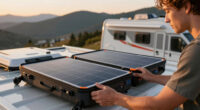
When planning solar panel placement on your van or RV, focus on maximizing sunlight exposure while protecting your investment from weather and debris. Keep panels away from roof features like vents or antennas to prevent shading, and choose flat or smoothly contoured roofs for streamlined installation. Consider the vehicle’s aerodynamics and heat management to boost efficiency and reduce wind resistance. By balancing these factors, you’ll guarantee peak energy production—and if you keep exploring, you’ll discover even more tips to enhance your setup.

Get travel and outdoor gear delivered free with Prime
- Fast, free delivery on millions of items
- Prime Video, Amazon Music and more included
- Member-only deals all year
Key Takeaways
- Prioritize maximizing sunlight exposure by positioning panels away from roof obstructions and during peak sun hours.
- Consider roof features like vents and antennas to prevent shading and ensure optimal panel placement.
- Ensure panels are mounted at angles suitable for the vehicle’s typical travel direction and sun path.
- Balance aerodynamic design with heat management to reduce wind resistance and prevent overheating.
- Regularly inspect and adjust panel positions to maintain efficiency and accommodate environmental or roof changes.
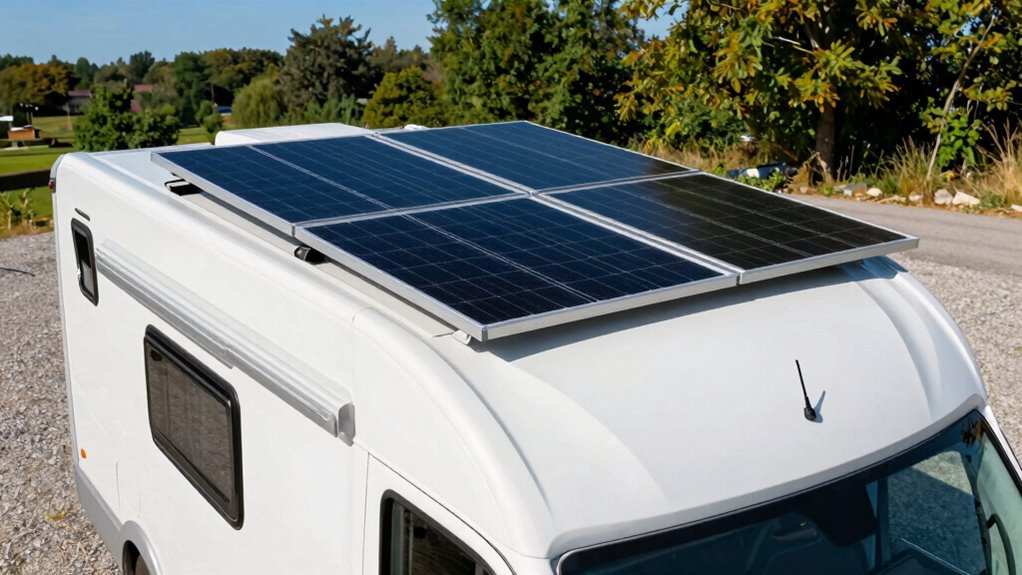
When planning to install solar panels on your van or RV, careful placement is vital to maximize energy production and guarantee durability. The position of your panels can greatly influence how much power you generate, impacting your overall battery efficiency. To get the most out of your setup, you need to consider both the angle and location of the panels, making sure they catch the maximum sunlight throughout the day. Proper placement isn’t just about efficiency; it also involves protecting your investment from potential damage caused by weather or road debris. Think about mounting your panels where they’re least likely to be shaded by roof features like vents, antennas, or air conditioning units, as shading can drastically reduce their output. Additionally, understanding solar panel placement principles can help you optimize your setup for long-term performance. Roof aerodynamics plays an essential role in this decision-making process. A flat or smoothly contoured roof allows for easier, more streamlined panel installation, which can improve your van’s overall aerodynamics. Better aerodynamics means less wind resistance while driving, leading to improved fuel efficiency and a smoother ride. When panels are mounted flush with the roof or tilted at an ideal angle, they create less drag, making your travels more efficient and comfortable. Avoiding bulky or uneven mounting setups helps maintain your vehicle’s aerodynamic profile, reducing wind noise and turbulence that could otherwise affect driving stability. You also want to guarantee your panels are positioned where they’re less likely to be exposed to excessive heat, which can lower their performance. Hot roofs can cause panels to overheat, diminishing their ability to produce power efficiently. Proper ventilation and heat management considerations are critical here, especially if you’re parked for extended periods. Incorporating solar system maintenance practices can further enhance the longevity and efficiency of your setup. It’s also important to consider roof shape as it influences available mounting options and angles, which can significantly affect sunlight capture. Additionally, understanding biodiversity can inform choices that minimize environmental impact and promote sustainable practices when installing and maintaining solar systems. When installing, aim for the highest point of sun exposure during your typical travel hours, often mid-morning to late afternoon, to keep your battery efficiency at its peak. The placement process involves balancing these factors: maximizing sunlight, maintaining roof aerodynamics, and protecting your panels. Take your time to plan the layout and, if possible, test different positions before final installation. Doing so ensures you’re making the most of the sunlight while preserving your vehicle’s performance and longevity. Proper placement makes a notable difference, helping you stay powered up on the road and making your solar investment worthwhile.
solar panel mounting brackets for RV
As an affiliate, we earn on qualifying purchases.
As an affiliate, we earn on qualifying purchases.
Frequently Asked Questions
How Do Weather Conditions Affect Solar Panel Efficiency on RVS?
Weather impact greatly affects your RV solar panel efficiency. Cloudy, rainy, or snowy conditions reduce sunlight exposure, decreasing energy production. Extreme heat can also lower efficiency by causing panels to overheat. To optimize performance, you should monitor weather conditions closely, understand efficiency factors like shading and angle, and consider installing panels with cooling features or flexible designs that adapt to changing weather. This proactive approach keeps your system running smoothly.
Can Solar Panels Be Installed on Curved Surfaces of Vans?
Yes, you can install solar panels on curved surfaces of vans, but expect some mounting challenges. Visualize the gentle bend of a wave—adapting flat panels to fit that curve requires flexible or specially designed mounts. You might need custom brackets or flexible solar panels to guarantee a snug fit. While it’s doable, paying attention to the curved surface’s contour helps maximize efficiency and keeps your setup secure during travel.
What Maintenance Is Required for RV Solar Panels?
You should regularly clean your RV solar panels with a soft cloth and mild soap to maintain efficiency. Follow a consistent cleaning schedule, especially after dusty or rainy days. Check for dirt, bird droppings, or debris that can reduce power output. Proper maintenance helps extend the panel lifespan and keeps your system running smoothly. Also, inspect for any damage or loose connections to guarantee peak performance during your travels.
How Do Shading and Obstructions Impact Solar Energy Production?
Shading and obstructions reduce solar energy production, diminishing your panels’ efficiency. Shadow impact creates uneven sunlight exposure, causing parts of your panels to generate less power or none at all. Obstruction effects, like trees or nearby structures, block sunlight, leading to decreased energy output. To maximize your solar gains, position your panels where shadow impact is minimal and obstructions are absent, ensuring consistent, ideal sunlight for your system.
What Are the Cost Considerations for Different Solar Panel Types?
You should consider the cost comparison and panel durability when choosing solar panels for your van or RV. Monocrystalline panels tend to be more expensive but offer higher efficiency and longer durability, making them cost-effective over time. Polycrystalline panels are cheaper but slightly less durable and efficient. Thin-film panels are affordable but usually less durable and less efficient, so weigh your budget against longevity to find the best fit for your travel needs.
Conclusion
Think of your van’s solar panels like a sunflower turning to the sun — the more direct sunlight they catch, the more energy they produce. I once saw a camper position theirs on a slight tilt, maximizing afternoon rays, and it powered their fridge all week without a hitch. Remember, strategic placement isn’t just about convenience; it’s about capturing every ray possible. With a little planning, your solar setup can truly brighten every adventure.
Fall Picks
fall essentials
As an affiliate, we earn on qualifying purchases.