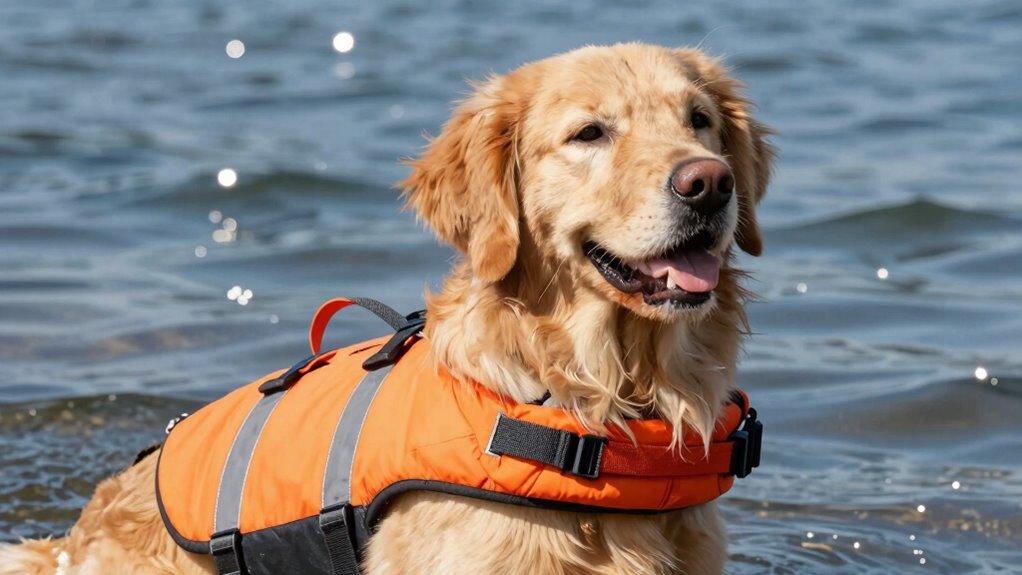
To fit your dog’s life jacket correctly, start by measuring around the broadest part of their chest and from the base of the neck to the tail. Choose a size based on breed and body shape, guaranteeing straps are snug but not tight. Adjust straps around the chest, belly, and shoulders for a secure fit, and test by gently tugging. Proper adjustment boosts safety and comfort—keep your dog confident by mastering these steps, and you’ll discover more ways to ensure a perfect fit.
Key Takeaways
- Measure your dog’s chest at the broadest part and from neck to tail for accurate sizing.
- Ensure the jacket fits snugly around the chest and belly without restricting movement or causing discomfort.
- Adjust straps securely, but not too tight, to prevent slipping while allowing natural movement.
- Test buoyancy and stability in water before full use, checking that the jacket keeps the dog balanced and comfortable.
- Regularly inspect and maintain the jacket for wear, proper fit, and secure closures to ensure continued safety.
Why a Proper Fit Is Critical for Your Dog’s Safety
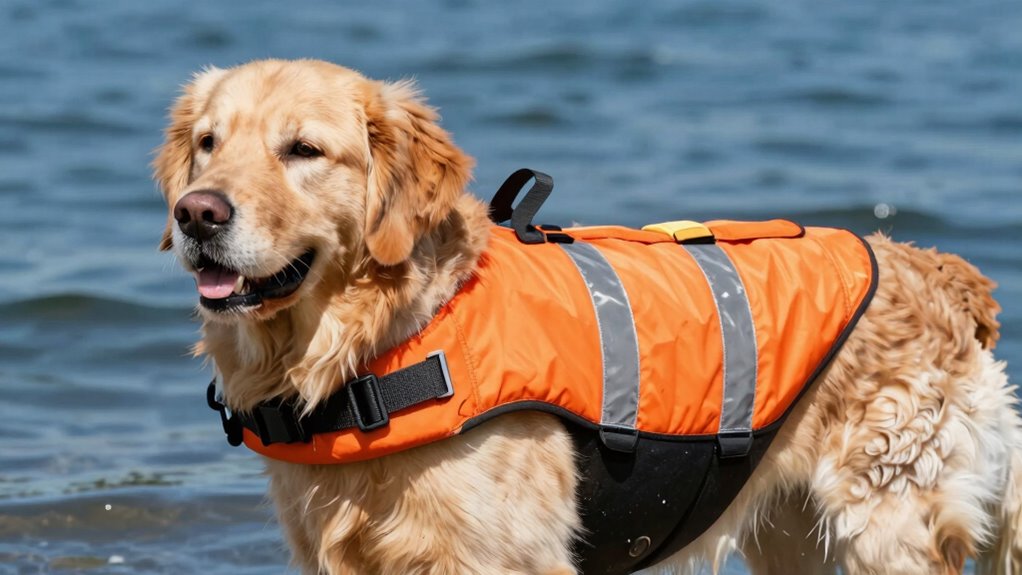
A proper fit is essential because an ill-fitting life jacket can slip off or restrict your dog’s movement, putting them at risk during water activities. When your dog feels secure in their life jacket, they’re more confident, which improves dog park safety and helps prevent accidents. A snug fit ensures the life jacket stays in place, especially during active play or leash training near water. If it’s too loose, your dog might wriggle out or become uncomfortable, leading to panic or hesitation. Proper fitting also encourages better control during leash training, allowing you to guide your dog safely without worrying about slipping free. Ensuring the right fit is your first step to keeping your dog safe and comfortable in water and on land.
How to Measure Your Dog Accurately for the Perfect Life Jacket Fit
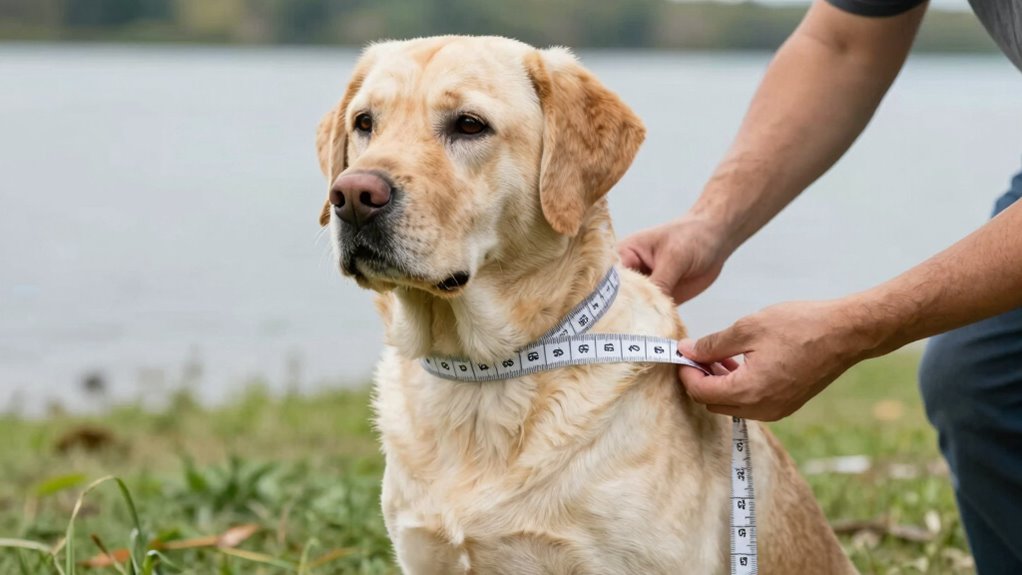
To guarantee your dog’s life jacket fits perfectly, accurate measurements are essential. Start by measuring around the broadest part of your dog’s chest, just behind the front legs, ensuring the tape is snug but not tight. Next, measure from the base of the neck to the base of the tail for length. Keep in mind that dog breed compatibility plays a role, as different breeds have unique body shapes requiring tailored fits. Always check the safety certification standards of the life jacket to verify it meets safety requirements. Proper measurements help you select a size that provides ideal buoyancy and comfort, reducing the risk of slipping or chafing. Taking precise measurements ensures your dog stays safe and secure during water adventures. Additionally, considering the horsepower of electric dirt bikes can give you an idea of the power and performance levels that might be relevant if you’re also interested in outdoor activities involving bikes.
Choosing the Right Size Based on Your Dog’s Breed and Body Shape
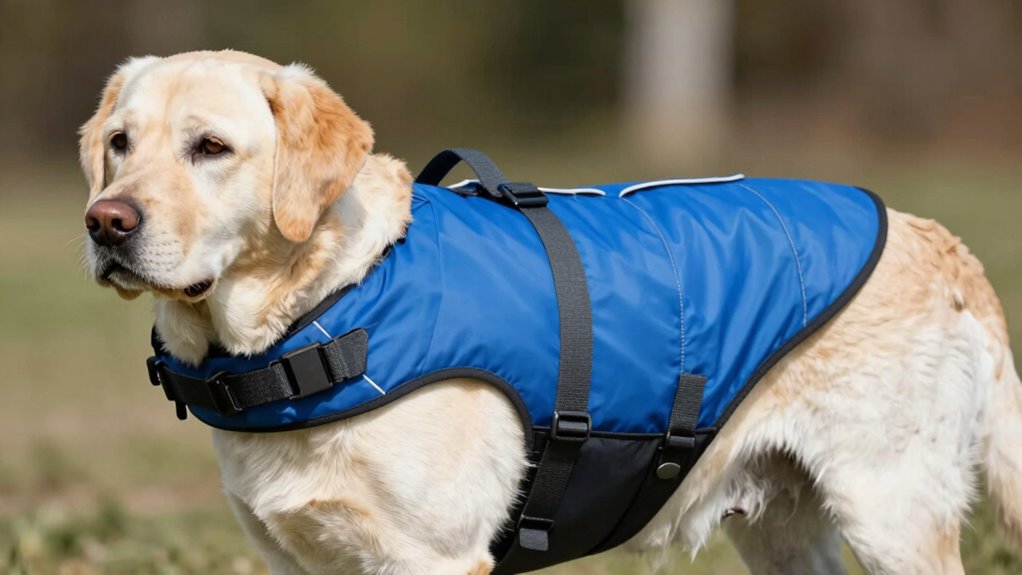
Choosing the right size for your dog’s life jacket depends heavily on its breed and body shape. Different dog breeds have varying trunk lengths, chests, and overall builds, so a jacket that fits one breed may not suit another. For example, a stocky Bulldog needs a different fit than a slim Greyhound. To ensure proper sizing, consider your dog’s body shape—whether it’s barrel-chested, slender, or muscular. Measure your dog’s chest and length carefully, and compare these dimensions to the manufacturer’s sizing chart. Avoid relying solely on weight, as it doesn’t account for body shape differences. Selecting the correct size based on breed and body shape helps verify a snug, secure fit that won’t slip or chafe during water activities. Additionally, understanding the fit and adjustability features of the life jacket can greatly improve safety and comfort.
How to Adjust Straps for a Snug, Secure Fit
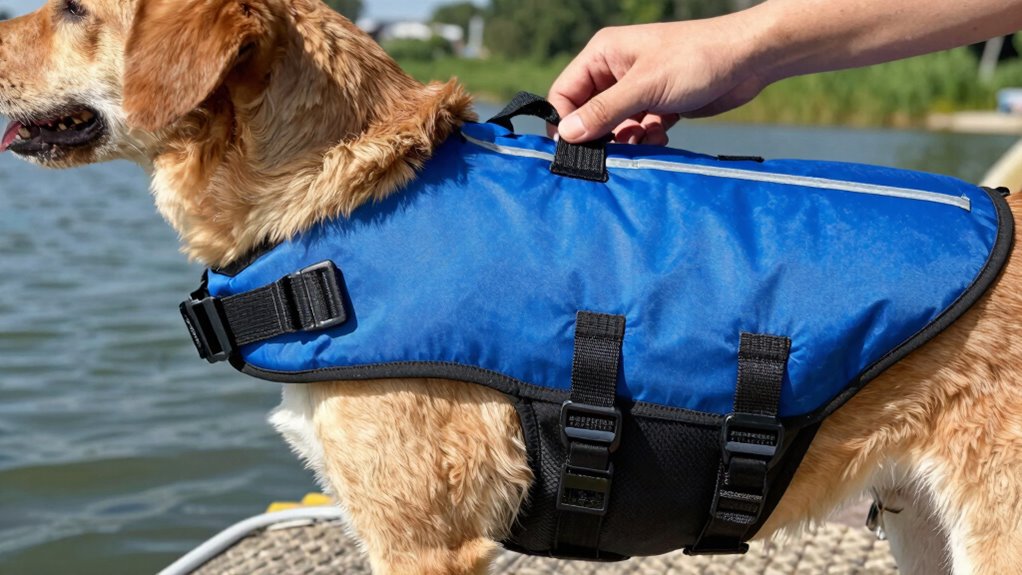
Ensuring your dog’s life jacket fits snugly and securely requires careful adjustment of the straps. Start by checking the harness fit—make sure the jacket isn’t too tight or loose around the chest and belly. Once the fit feels right, focus on the straps:
- Tighten the shoulder straps so the jacket sits comfortably without restricting movement.
- Adjust the side straps to ensure the jacket stays in place, especially around the leash attachment point.
- Confirm the leash attachment is secure and positioned correctly to prevent slipping or chafing.
A proper harness fit allows your dog to move freely while staying protected. Remember, a secure life jacket with well-adjusted straps ensures safety and comfort during water adventures.
Common Fit Mistakes to Avoid When Fitting a Dog Life Jacket
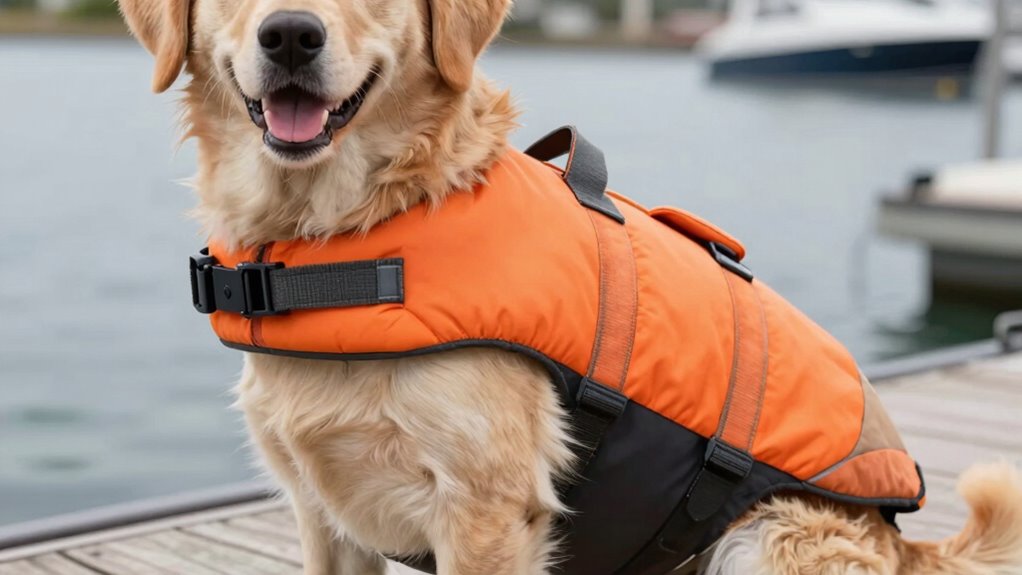
Even small mistakes in fitting your dog’s life jacket can compromise safety and comfort during water activities. One common mistake is using incorrect sizing, which can leave your dog too loose or too tight. An ill-fitting jacket may slip off or restrict movement, defeating its purpose. Additionally, improper fastening can cause the jacket to shift or come undone when your dog moves or swims. Always double-check that the straps are securely fastened and adjusted to fit snugly without restricting breathing or causing discomfort. Avoid assuming a size based solely on weight; measure your dog carefully. Proper fit is essential for the jacket to work effectively, so take the time to ensure all fastenings are correct and the size is appropriate. Considering the Free Floating nature of many water gear items, ensuring your dog’s life jacket is properly fitted helps prevent accidental slips or unintentional submersion.
How to Test if Your Dog’s Life Jacket Fits Comfortably and Safely
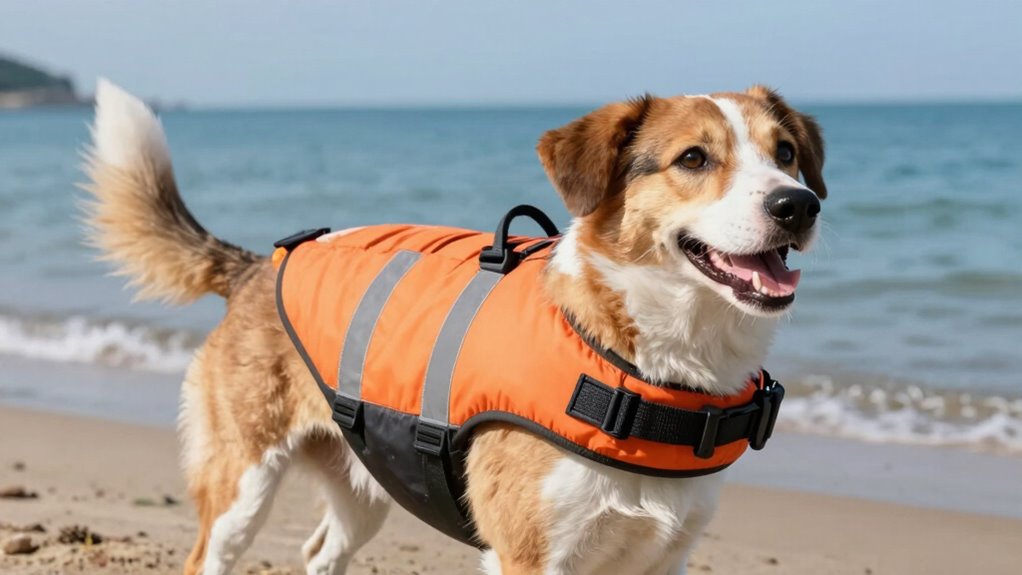
To guarantee your dog’s life jacket fits well, start by checking that it’s snug without causing discomfort. Watch how your dog moves; they should be able to walk, sit, and swim freely. Also, make sure the jacket offers enough buoyancy to keep them afloat safely.
Check for Snug Fit
A proper fit is essential for your dog’s safety and comfort when wearing a life jacket. To check if it’s snug enough, consider these points:
- Ensure the jacket doesn’t slide over your dog’s head or off their back when gently tugged. It should stay securely in place.
- Check for material considerations—look for a jacket made from durable, breathable fabrics that won’t cause chafing or restrict movement.
- Consider style preferences—opt for a design that fits well without cutting into your dog’s skin or limiting natural movement, especially around the chest and neck.
Observe Comfortable Movement
When fitting your dog with a life jacket, observing how they move naturally is essential to guarantee comfort and safety. Watch their dog posture as they walk, sit, and turn to see if the jacket restricts movement or causes discomfort. A properly fitted jacket should allow unrestricted leg movement and not hinder their ability to shift or adjust their stance. Attach the leash to the designated attachment point and gently pull to ensure it doesn’t cause any tugging or chafing. Your dog should move confidently without signs of strain or awkwardness. If they seem uncomfortable or restricted, readjust the fit, ensuring the jacket stays secure yet allows free, natural movement. Comfort during activity is key to your dog’s safety on the water.
Ensure Proper Buoyancy
Wondering if your dog’s life jacket provides the right buoyancy? To verify water safety, test its flotation technology effectively. First, gently lift your dog in the water to see if they stay afloat comfortably without strain. Second, observe if their head remains above water, especially when resting or moving naturally. Third, check if the jacket keeps your dog’s body upright and balanced. If your dog struggles to stay buoyant or tilts excessively, the flotation might be inadequate. Proper buoyancy ensures your dog can swim confidently and stay safe in the water. Additionally, understanding personal finance planning can help you allocate resources for quality safety gear. Remember, a well-fitting life jacket with effective flotation technology is essential for water safety, giving you peace of mind during water adventures.
Helping Your Dog Feel Comfortable Wearing a Life Jacket
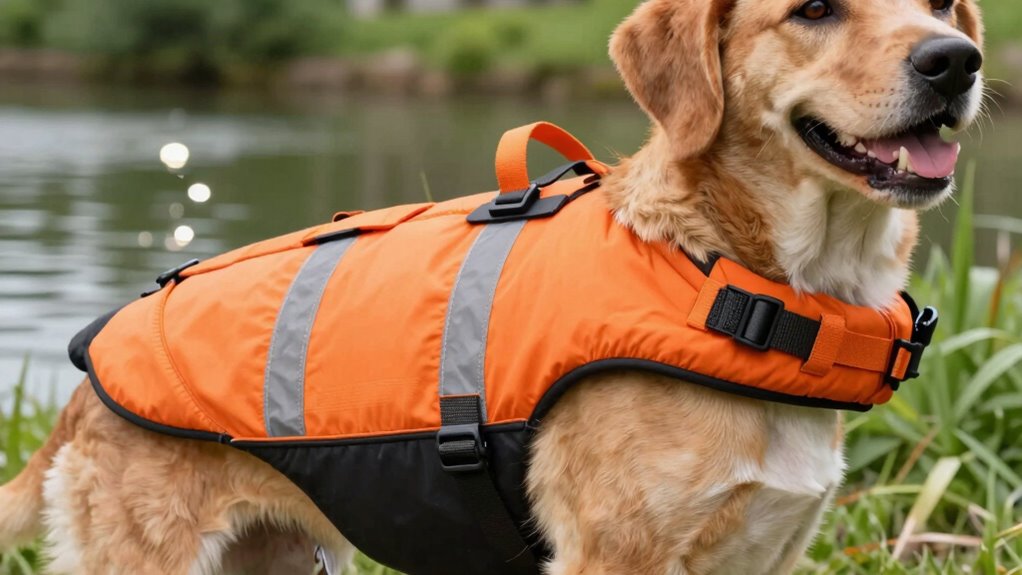
Ensuring your dog feels comfortable in a life jacket starts with choosing one that fits well. Take your time to introduce the jacket gradually, allowing your dog to get used to it at their own pace. With patience and proper adjustments, your furry friend will feel more at ease during water adventures. Additionally, selecting a top-quality gear designed specifically for dogs can make a significant difference in comfort and durability.
Comfortable Fit Matters Most
A comfortable fit is essential because your dog won’t enjoy wearing a life jacket if it’s too tight or loose. When the fit is right, your dog can move freely without discomfort, supporting paw pad health and preventing chafing. Make certain the jacket isn’t restricting nose moisture, which can cause irritation. To achieve this, consider these tips:
- Adjust straps so they sit snug but don’t dig into the skin, allowing natural movement.
- Check that the jacket doesn’t press against the nose or interfere with breathing.
- Observe your dog’s behavior and comfort level, making sure they don’t paw at or try to remove the jacket.
- Remember that a proper fit also relates to the dream symbolism of balance and harmony, emphasizing the importance of well-fitting gear for your dog’s confidence and safety.
A well-fitting jacket boosts confidence and keeps your dog safe, all while feeling comfortable.
Gradual Adjustment Tips
Getting your dog accustomed to wearing a life jacket takes patience and a gradual approach. Start by introducing the jacket during calm, positive moments, following simple training protocols to prevent stress. Let your dog sniff, explore, and get used to the jacket without fastening it at first. Use treats and praise to reinforce relaxed dog behavior. Gradually increase the time your dog wears the jacket, always monitoring their comfort level. If your dog shows signs of discomfort, take a step back and give them time to adjust. Consistency is key—short, frequent sessions work better than long, infrequent ones. Over time, your dog will associate the jacket with positive experiences, making future adjustments smoother and helping them feel more comfortable during water activities. Gradual acclimation is essential for ensuring your dog feels safe and confident while wearing the jacket.
Maintaining and Inspecting Your Dog’s Life Jacket for Ongoing Safety
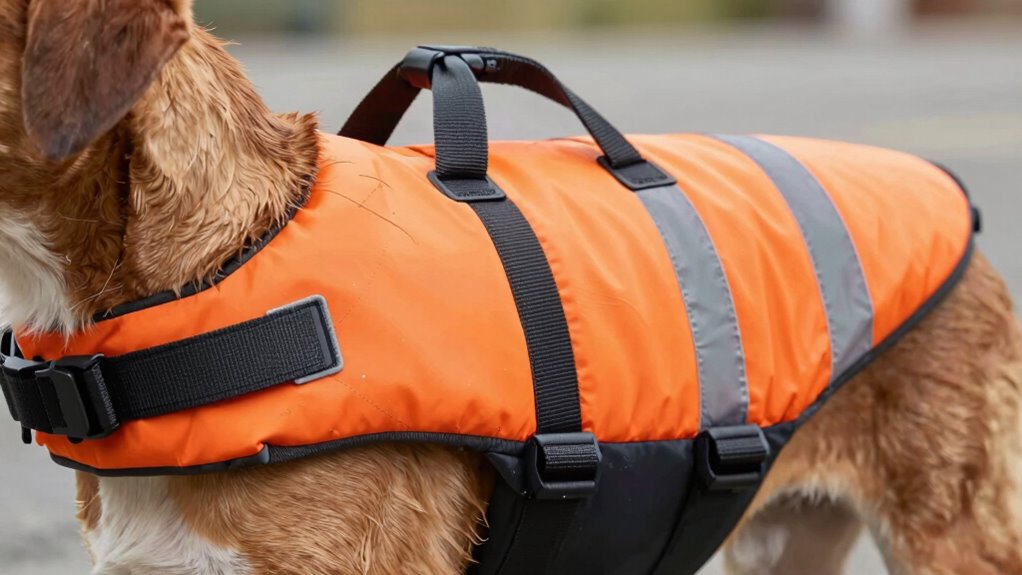
Regularly inspecting your dog’s life jacket is essential to keep it functioning safely. Over time, wear and tear can compromise its effectiveness, so check it often. During grooming routines, look for loose straps, frayed fabric, or faded reflectors. Also, ensure the buckles and closures still work smoothly. To keep it in top shape:
- Clean it gently with mild soap and water to remove dirt and salt.
- Test the flotation foam for signs of deterioration or sinking.
- Verify that all straps, buckles, and D-rings are secure and undamaged.
Incorporate these checks into your dog training and grooming routines to build familiarity and reduce stress. Regular maintenance guarantees your pup stays safe and comfortable during water adventures.
When to Replace Your Dog’s Life Jacket for Continued Protection
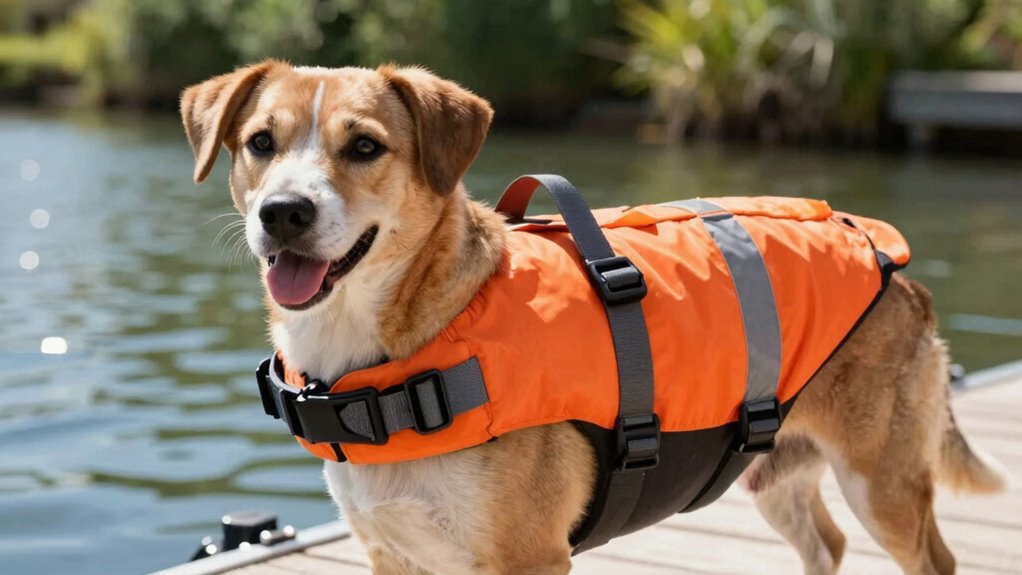
Knowing when to replace your dog’s life jacket is crucial for ensuring continuous safety. Over time, wear and tear from exposure to water, sun, and rough handling can weaken the material and straps. Conduct seasonal replacement if you notice fraying, faded colors, or compromised buckles. Regular inspections help determine if the jacket still fits snugly and provides adequate buoyancy. Proper storage tips include rinsing the jacket after use, drying it thoroughly, and keeping it in a cool, dry place away from direct sunlight. If the life jacket no longer maintains its shape or shows signs of damage, it’s time to replace it. Staying proactive ensures your pup remains protected during water adventures, avoiding unexpected failures that could put them at risk.
Filter maintenance is also essential for keeping the jacket in optimal condition and extending its lifespan.
Frequently Asked Questions
Can My Dog Wear a Life Jacket During Training Sessions?
Yes, your dog can wear a life jacket during training sessions, especially for safety during water-related activities. Using a life jacket promotes training safety and helps with behavior modification, as your dog feels secure and confident. Always guarantee the fit is correct and start with short sessions. This way, your dog associates the jacket with positive experiences, making water training safer and more effective.
What Materials Are Best for Dog Life Jackets?
Did you know that nylon and neoprene are among the most popular materials for dog life jackets? You should look for dog fabric that’s durable and water-resistant, like high-quality nylon or neoprene, to guarantee longevity and comfort. These materials offer excellent durability, withstand rough waters, and stay flexible. Choosing a jacket with sturdy material helps your dog stay safe, comfortable, and supported during water activities.
How Do I Clean and Store a Dog Life Jacket Properly?
To clean your dog’s life jacket, follow regular cleaning routines using gentle soap and warm water, then rinse thoroughly. Avoid harsh chemicals that can damage materials. For storage tips, make sure it’s completely dry before storing in a cool, dry place away from direct sunlight. Keep it flat or hanging to maintain its shape, and check periodically for wear or damage to ensure it stays safe and effective for your dog.
Are There Life Jackets Designed Specifically for Swimming or Boating?
Yes, there are dog life jackets designed specifically for swimming or boating, focusing on dog safety and aquatic gear. These jackets feature adjustable straps, buoyant materials, and a secure fit to keep your dog afloat and comfortable during water activities. Look for models with sturdy handles and bright colors for visibility. Choosing the right aquatic gear guarantees your dog’s safety and enjoyment while exploring water environments.
What Signs Indicate My Dog Is Uncomfortable in the Life Jacket?
If your dog shows behavior cues like pawing at the jacket, whining, or trying to remove it, they’re likely uncomfortable. Watch for comfort signals such as stiff posture, tail tucking, or reluctance to move. These signs indicate your dog isn’t at ease in the life jacket. If you notice any of these, check the fit, and consider switching to a more comfortable, properly fitted option to guarantee their safety and happiness.
Conclusion
A well-fitted dog life jacket is your dog’s safety net, like a sturdy anchor in rough waters. By measuring carefully, choosing the right size, and adjusting straps properly, you guarantee it fits snugly and comfortably. Regular checks and timely replacements keep this safety net strong. Remember, a life jacket that fits well is your dog’s shield, helping them navigate water adventures confidently and safely—keeping them afloat and happy, no matter what waters you explore together.