
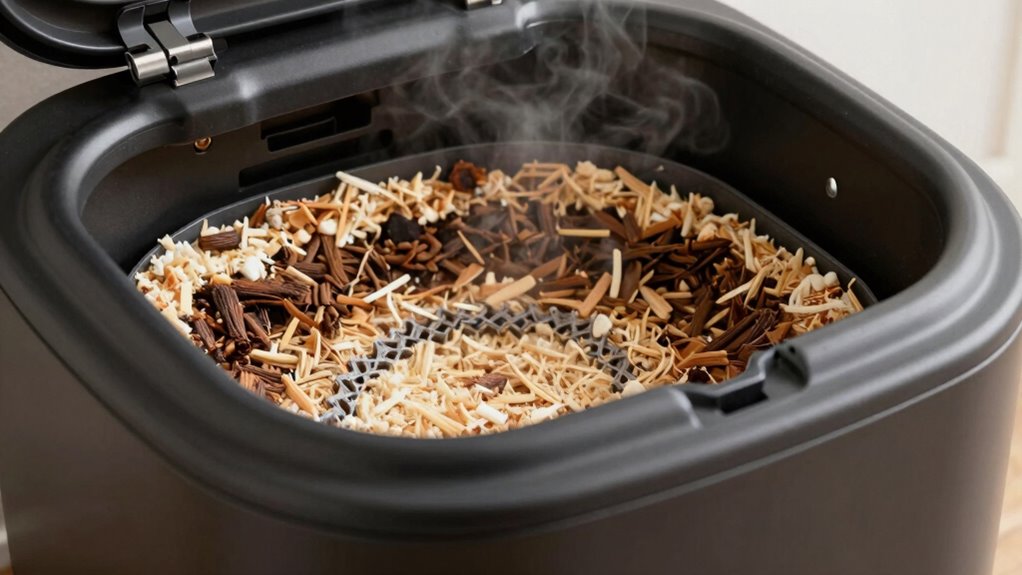

Composting toilets turn human waste into compost without needing water or connection to sewer systems. You use the toilet, and waste moves into a chamber where microorganisms break it down into nutrient-rich fertilizer, often with the help of carbon materials like sawdust. Proper ventilation controls odors, and regular maintenance keeps everything running smoothly. If you want to understand the process and clear up common myths, there’s more to discover below.
Key Takeaways
- Composting toilets convert human waste into compost through natural biological processes involving microorganisms.
- They use carbon-rich materials like sawdust to absorb moisture and control odors during decomposition.
- Proper ventilation and airflow are essential to prevent odors and promote efficient composting.
- These toilets require minimal water and often include urine diversion to optimize waste breakdown.
- Regular maintenance, such as managing moisture and adding cover materials, is vital for odor control and effective operation.
What Are Composting Toilets and How Do They Work?
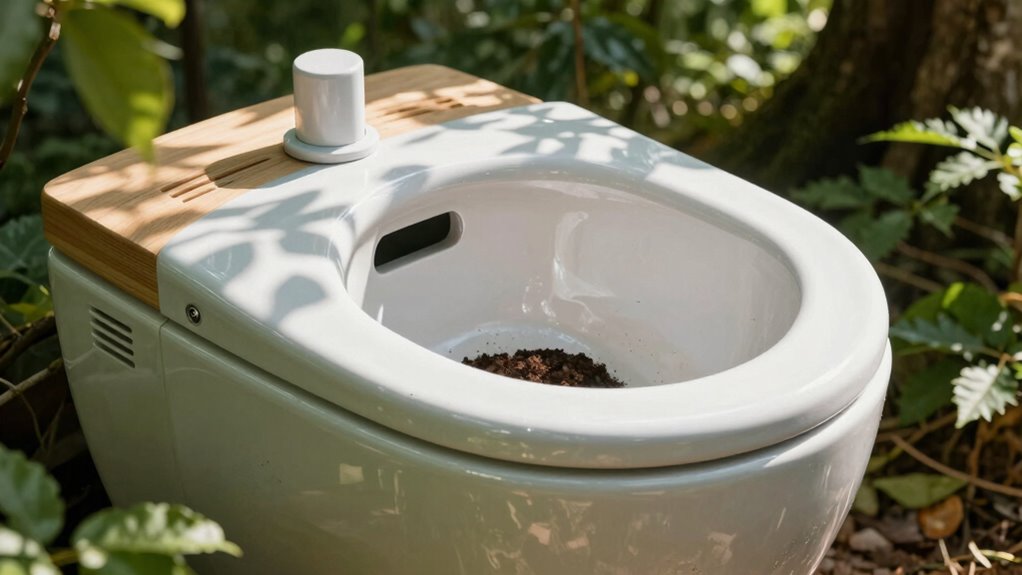
Composting toilets are eco-friendly systems that safely convert human waste into compost without needing a sewage connection. They use natural processes to break down waste, reducing water use and eliminating the need for traditional plumbing. Odor control is a key feature, often achieved through venting systems and carbon filters that prevent unpleasant smells from escaping. These toilets also promote water conservation by requiring little to no water for flushing, unlike conventional toilets. You’ll find that they’re simple to operate, usually involving a seat and a composting chamber below. As waste decomposes naturally, the system minimizes environmental impact and conserves resources. Proper maintenance, including managing composting processes, is essential to ensure odor-free operation and safe use of the resulting compost. With proper maintenance, composting toilets are a sustainable, odor-free solution that’s ideal for off-grid living or eco-conscious households.
How Does the Composting Process Turn Waste Into Fertilizer?
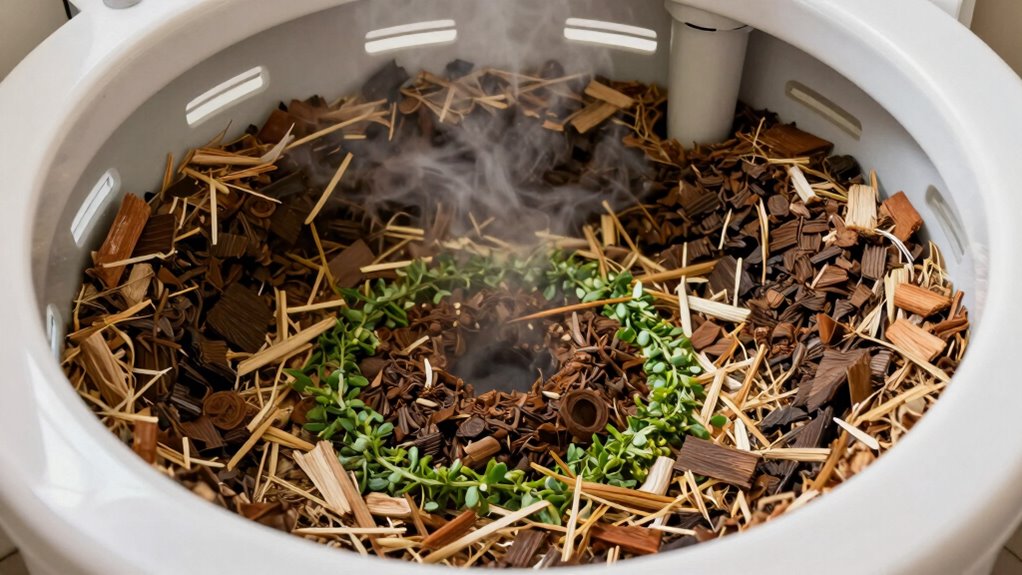
Once waste is deposited into a composting toilet, natural biological processes begin transforming it into nutrient-rich fertilizer. Microorganisms, such as bacteria and fungi, break down organic matter through waste decomposition. They consume the waste, converting complex compounds into simpler, stable substances. This process releases nutrients like nitrogen, phosphorus, and potassium, essential for plant growth. As microorganisms work, heat is generated, accelerating decomposition and killing pathogens. Over time, the waste reduces in volume and transforms into humus-like material, a process known as nutrient recycling. This stabilized compost no longer poses health risks and becomes valuable as fertilizer. Proper moisture management and aeration are crucial for efficient waste breakdown and avoiding odors. By carefully managing moisture, aeration, and temperature, you facilitate efficient waste decomposition, turning your toilet waste into safe, usable compost.
Types of Composting Toilets and Their Main Components

There are several main types of composting toilets, each designed to suit different needs and settings. These toilets vary in design variations, from self-contained units to split systems that separate urine and solids. Self-contained models combine all components in one unit, making installation simple and portable, while split systems have separate chambers for waste processing, ideal for larger applications. Main components typically include a waste chamber, ventilation system, and sometimes a urine diversion mechanism. Material options vary as well, with durable plastics, stainless steel, and composite materials offering different advantages in durability and maintenance. Your choice depends on space, usage, and environmental considerations, but understanding these design variations and material options helps you select the right composting toilet for your needs. Additionally, Free Floating designs can be integrated into various backyard settings for enhanced convenience and sustainability.
Common Challenges and Myths About Composting Toilets
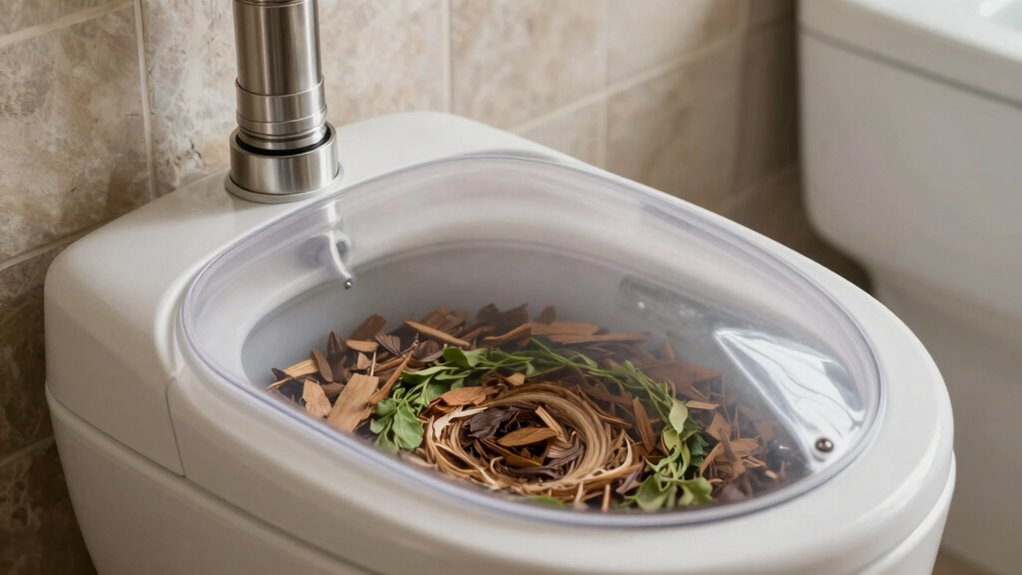
Many people hesitate to adopt composting toilets because of common challenges and misconceptions that surround their use. One widespread myth is that composting toilets smell terrible, but with proper odor control techniques, odors are usually minimal or nonexistent. Another concern is installation costs, which many assume are prohibitive; however, they can be comparable to or less than traditional plumbing setups, especially for off-grid locations. Some worry about maintenance or complicated operation, but with clear instructions, these systems are user-friendly. Addressing these myths can help you see that composting toilets are a sustainable, cost-effective alternative. Understanding the realities of odor control and installation costs can ease your perception of complexity and dispel unnecessary fears or doubts.
Maintenance Tips to Keep Your Composting Toilet Running Smoothly

To keep your composting toilet working well, you need to perform regular system checks to catch issues early. Managing the right materials, like adding carbon-rich bedding, is also vital for proper decomposition. Staying on top of these tasks ensures your toilet runs smoothly and odor-free. Incorporating visual and auditory cues can aid in understanding and maintaining the system effectively.
Regular System Checks
Regularly inspecting your composting toilet guarantees it functions efficiently and prevents potential issues. Check for any signs of odor buildup, ensuring the ventilation system is working properly to maintain good odor control. Look for leaks or clogs that could compromise water conservation efforts, and clean vents or filters as needed. Examine the composting chamber to monitor its progress and prevent overfilling, which can cause odors or messes. Make sure the lid and seals are secure to maintain airtight conditions and optimize composting. Regular inspections help you catch minor problems early, keeping your system running smoothly and hygienically. Staying attentive also ensures your toilet remains eco-friendly by conserving water and reducing waste, making maintenance straightforward and effective. Eco-friendly craft ideas can inspire sustainable ways to repurpose materials and reduce waste generated by your composting system.
Proper Material Management
Keeping your composting toilet in top shape depends heavily on proper material management. You should focus on waste separation, ensuring liquids and solids are handled appropriately to facilitate decomposition. Layering waste with carbon-rich materials like sawdust or peat helps control odor and accelerates composting. Regularly adding these materials prevents buildup and keeps odors in check. Proper waste separation minimizes the chance of clogs and reduces unpleasant smells, making your system more efficient. Also, monitor moisture levels; too much water can cause odors, while too little slows composting. Maintaining a consistent addition of cover material helps with odor control and promotes healthy composting. Using synthetic lubricants for any moving parts in your composting system can reduce wear and ensure smooth operation. By managing materials carefully, you’ll keep your toilet functioning smoothly and ensure the composting process remains odor-free and effective.
Are Composting Toilets a Good Fit for Your Home or Off-Grid Life?
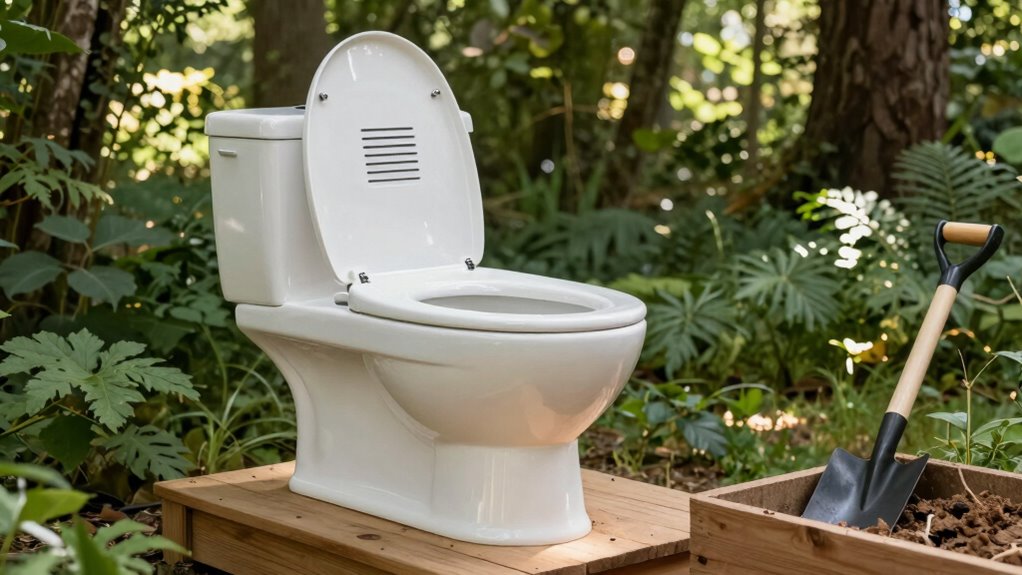
Deciding whether a composting toilet is right for your home or off-grid lifestyle depends on several practical factors. If water conservation is a priority, these toilets use markedly less water than traditional systems, making them ideal for remote or eco-conscious settings. Odor control is another key consideration; well-designed composting toilets effectively manage smells with proper ventilation and cover materials. They also reduce reliance on septic systems or sewer connections, simplifying maintenance and lowering environmental impact. Additionally, composting process management requires understanding proper handling and periodic maintenance to ensure safety and efficiency. However, you need space for composting components and a willingness to manage compost material periodically. If you’re comfortable with occasional maintenance and want to minimize water use while maintaining odor control, a composting toilet could be a perfect fit for your off-grid or sustainable home.
Frequently Asked Questions
How Long Does It Take for Waste to Fully Compost?
It usually takes about 6 months to a year for waste to fully compost in a composting toilet. During this time, waste undergoes decomposition, breaking down into rich, composted material. The process depends on factors like temperature, moisture, and aeration, which influence compost maturity. By maintaining proper conditions, you guarantee the waste decomposes efficiently, resulting in safe, usable compost at the end of the process.
Can Composting Toilets Handle Toilet Paper and Hygiene Products?
Think of your composting toilet as a busy kitchen compost bin. It can handle toilet paper disposal and most hygiene products, but you should verify if they’re compostable. Non-biodegradable items can clog the system or slow composting. Use biodegradable toilet paper and hygiene products whenever possible, and avoid flushing anything plastic or synthetic. This keeps your composting toilet functioning smoothly and ensures safe, eco-friendly waste decomposition.
What Are the Odor Control Methods Used in Composting Toilets?
You can control odors in composting toilets through air filtration and odor absorption. Installing an exhaust fan helps draw out smelly air, while a carbon filter traps odors before they escape. Adding odor-absorbing materials like sawdust or peat moss also helps neutralize smells. Regular maintenance, like mixing compost and monitoring moisture, further minimizes unpleasant odors, keeping your composting toilet fresh and odor-free.
Are Composting Toilets Safe for Children and Pets?
While composting toilets are generally safe, you should consider child safety and pet risks. Children and pets might be curious about the contents, so it’s important to keep the toilet lid securely closed and supervise their interactions. Proper maintenance and placement reduce potential hazards, ensuring your little ones and furry friends stay safe. With careful precautions, composting toilets can be a responsible and eco-friendly choice for your household.
What Environmental Benefits Do Composting Toilets Offer Over Traditional Systems?
Composting toilets offer significant environmental benefits over traditional systems by conserving water and utilizing renewable energy. You help reduce water usage, often saving hundreds of gallons daily, which eases strain on local water supplies. Plus, they promote renewable energy by composting waste naturally, reducing reliance on sewage treatment plants that consume energy. By choosing a composting toilet, you contribute to a healthier environment with less pollution and a smaller carbon footprint.
Conclusion
Embracing a composting toilet is like planting a seed for a greener future—nurturing sustainability one flush at a time. With a little knowledge and care, you’ll turn waste into life-giving soil, transforming your bathroom into a hub of environmental harmony. Remember, every small step you take toward composting is like adding a drop of water to a mighty river—together, they create a powerful current of change.