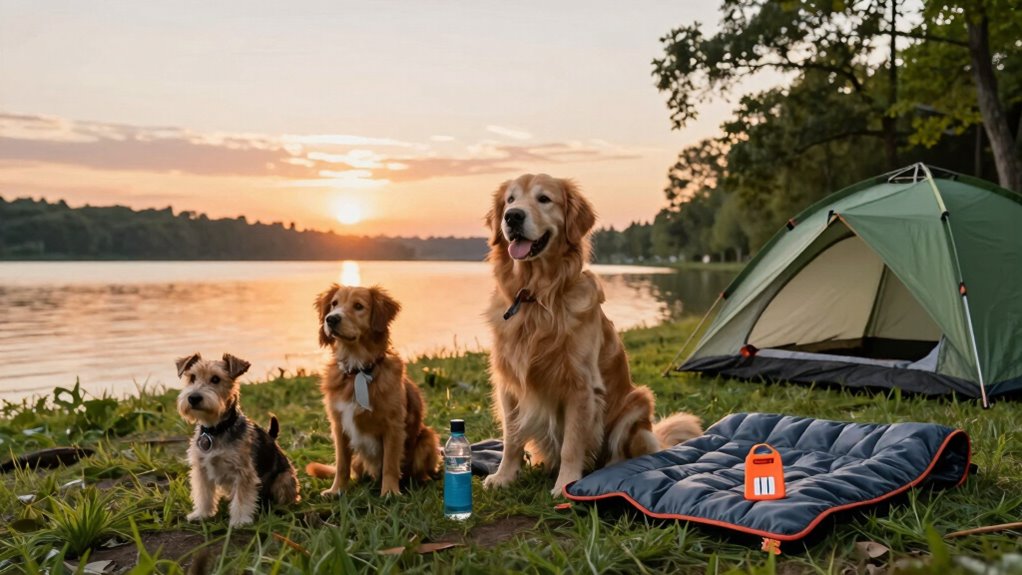

When camping with your dog, prioritize tick prevention by using vet-approved repellents and regularly checking for ticks. Watch for signs of heatstroke like excessive panting or weakness, and cool your dog immediately if symptoms appear. Keep your dog hydrated with fresh water, provide shaded and ventilated spots, and carry emergency supplies. Proper planning guarantees your pet stays safe and comfortable—stay tuned for more tips to fully protect your furry friend during outdoor adventures.

Get travel and outdoor gear delivered free with Prime
- Fast, free delivery on millions of items
- Prime Video, Amazon Music and more included
- Member-only deals all year
Key Takeaways
- Regularly check your dog for ticks and remove them promptly before and after outdoor activities.
- Monitor for signs of heat exhaustion or heatstroke, and cool your dog immediately if symptoms appear.
- Provide ample shade, ventilation, and fresh water to keep your dog cool, comfortable, and hydrated during camping trips.
- Use veterinarian-approved tick preventatives and first aid supplies to manage tick bites and emergencies effectively.
- Prepare your campsite with safe, shaded areas, and carry essential safety gear, including a first aid kit and hydration supplies.
As an affiliate, we earn on qualifying purchases.
Why Tick Prevention Is Essential When Camping With Dogs
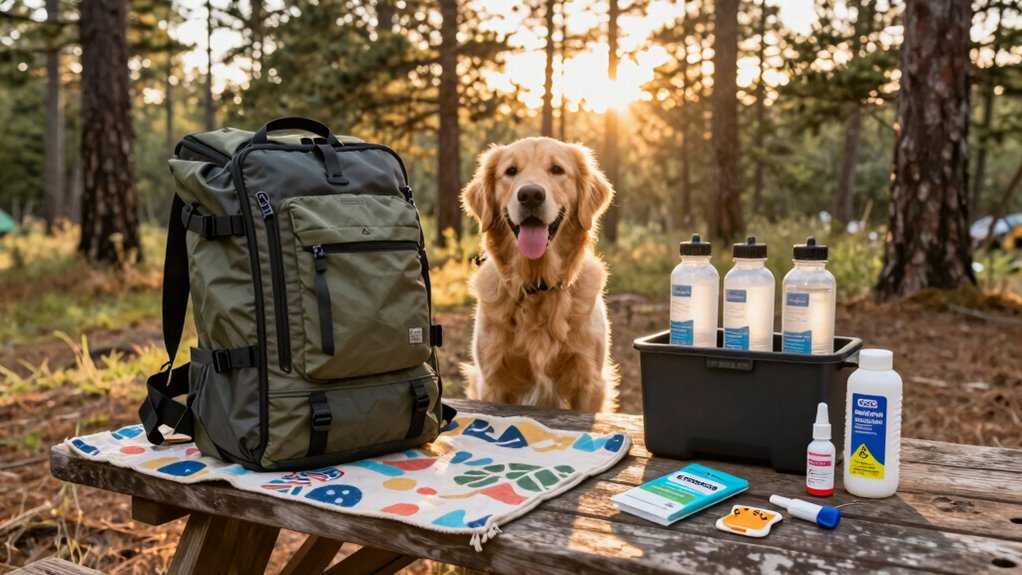
When you’re camping with your dog, tick prevention becomes a crucial part of keeping them safe and healthy. Ticks are common in outdoor environments and can latch onto your dog quickly. A dog flea infestation is unpleasant enough, but ticks pose a more serious threat because they can transmit diseases like Lyme disease and ehrlichiosis. Effective tick prevention reduces your dog’s risk of these illnesses and avoids discomfort from bites. It’s necessary to thoroughly check your dog after hikes or rest stops and use reliable tick prevention methods, such as topical treatments or collars. Staying proactive helps ensure your camping trip remains fun and safe, keeping your furry friend protected from these tiny but dangerous parasites.
How to Choose the Best Tick Repellents and Treatments
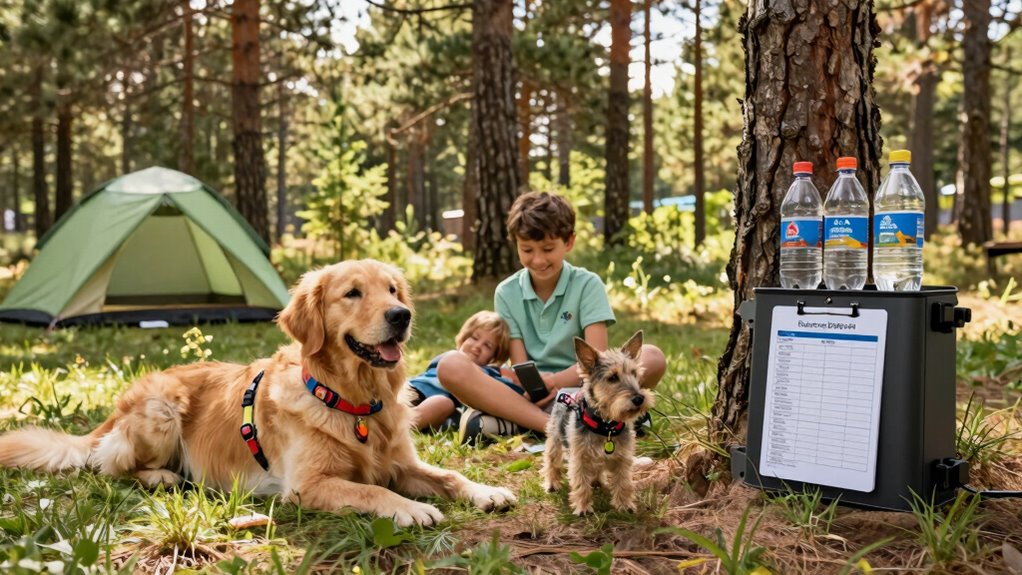
Choosing the right tick repellent or treatment is essential to effectively protect your dog during camping trips. You can opt for natural remedies like essential oils such as eucalyptus or citronella, which some owners find effective and gentle. However, be cautious and research their safety, as not all natural options are suitable for dogs. Chemical repellents, containing ingredients like permethrin or amitraz, often provide longer-lasting protection and are generally more reliable. Always consult your veterinarian before selecting a treatment, especially if your dog has health issues or is pregnant. Consider factors like the level of tick exposure, your dog’s age, and activity level. Combining natural remedies with chemical options may offer all-encompassing protection, but safety and efficacy should always guide your choice. Proper piercing care and hygiene is important to prevent infections that could complicate your dog’s health during outdoor activities.
Recognize the Signs of Heatstroke and Heat Exhaustion in Dogs
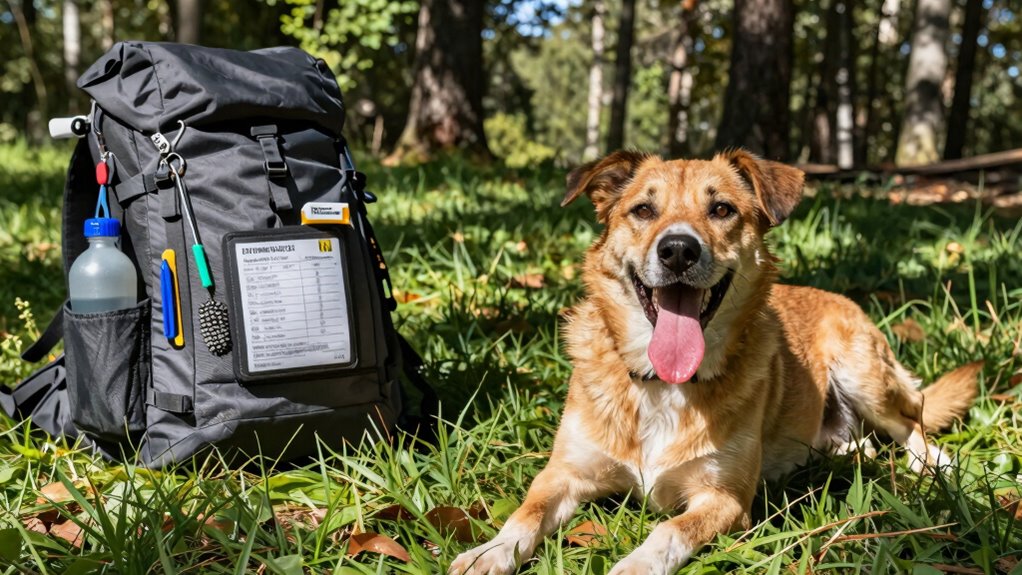
After securing effective tick protection for your dog, it’s important to stay alert to other health risks during camping, especially heat-related illnesses. Recognizing the signs of heatstroke and heat exhaustion is essential. Watch for symptoms like excessive panting, drooling, and weakness. Dehydration signs include dry gums and sunken eyes. Cold stress symptoms, although less common, can also appear if your dog is overwhelmed by heat or cold, showing shivering or anxious behavior. Be vigilant for:
Stay alert for heatstroke signs like excessive panting, drooling, weakness, and dehydration during camping.
- Rapid or labored breathing
- Lethargy or disorientation
- Excessive drooling or vomiting
- Unresponsiveness or collapse
If these signs appear, cool your dog immediately and seek veterinary help. Prompt action can prevent serious complications and ensure your pup stays safe. Incorporating mindfulness practices can also help owners remain calm and attentive during emergencies.
Keep Your Dog Cool and Comfortable During Your Camping Trip
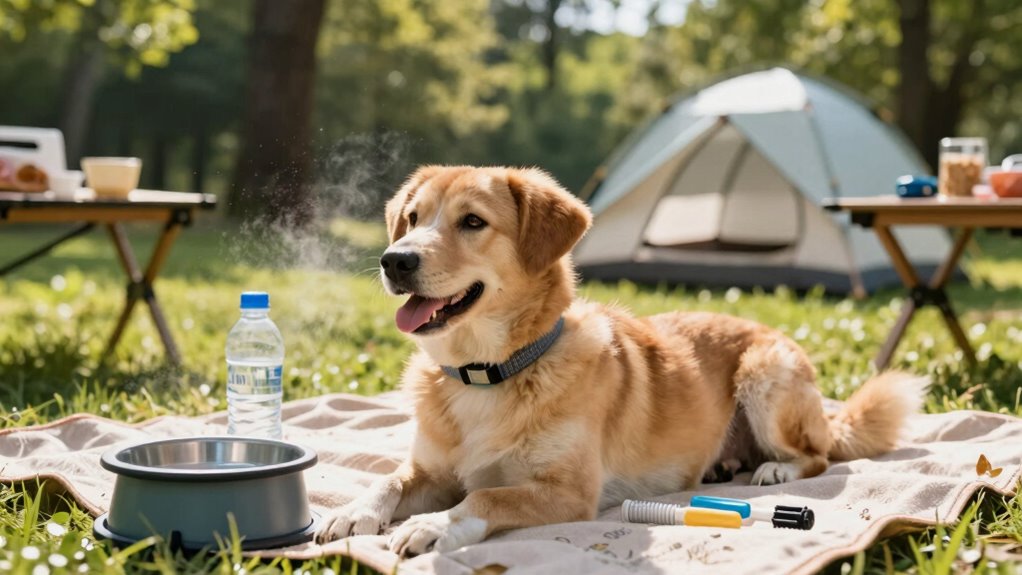
Make certain your dog stays in shaded areas and has good ventilation to stay cool. Keep fresh water available at all times to prevent dehydration. These simple steps help ensure your dog remains comfortable and safe during your camping trip. Additionally, consider providing luxury outdoor accessories like cooling mats or portable fans to enhance your dog’s comfort in outdoor environments.
Stay in Shade and Provide Ventilation
To keep your dog comfortable and safe during your camping trip, it’s vital to provide plenty of shade and guarantee proper ventilation. This helps prevent overheating and creates a relaxing environment. Set up a shaded area using a tent, canopy, or natural tree cover. Ensure good airflow by positioning your dog’s resting spot where breeze circulates freely. A shaded, well-ventilated space also minimizes stress, reducing barking caused by discomfort. To promote good behavior, practice dog agility in shaded zones, and teach barking etiquette by avoiding loud noises that disturb others. Consider these tips:
- Use reflective or breathable materials for shelters
- Elevate bedding to improve airflow
- Keep shaded areas away from direct sun
- Position your dog’s spot where breeze is strongest
- Effective soundproofing techniques can also help reduce external noise and keep your dog more comfortable in outdoor environments.
Offer Fresh Water Regularly
Keeping your dog hydrated is essential for a safe and comfortable camping experience, especially in warm weather. Make sure to offer fresh water regularly to prevent dehydration and heat exhaustion. Set up hydration stations around your campsite, so your dog always has easy access to water. Check and refill their water bowl often, especially after play or walks. Carry extra bottles of fresh water in your pack, so you’re prepared during hikes or excursions. Avoid letting your dog drink stagnant or dirty water from natural sources, which can cause illness. Promptly remove any debris or dirt from their water bowl to keep it clean. Consistent access to fresh water helps your dog stay cool, comfortable, and healthy throughout your camping adventure. Additionally, utilizing smart water delivery devices can ensure your pet remains properly hydrated even when you’re busy with other outdoor activities.
Ensure Your Dog Stays Hydrated Before, During, and After Camping
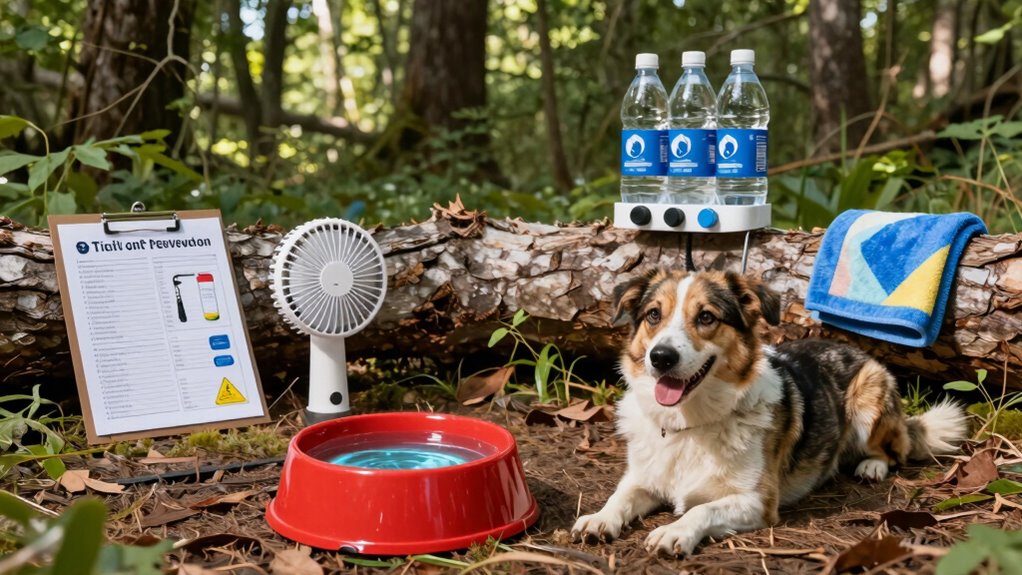
Ensuring your dog stays hydrated is essential for a safe and enjoyable camping experience. Proper dog hydration helps regulate body temperature and prevents dehydration, especially in warm weather. Before heading out, fill a portable water container with clean camping water and encourage your dog to drink. During the trip, offer water frequently and monitor their intake. After camping, provide fresh water to help them recover from physical activity and heat exposure. To maximize hydration, consider:
- Carrying multiple water sources for convenience
- Offering small, frequent water breaks
- Using a spill-proof bowl for easy access
- Watching for signs of dehydration like excessive panting or lethargy
Staying vigilant about your dog’s hydration ensures they stay healthy and comfortable throughout your camping adventure.
Set Up a Shade-Rich, Safe Campsite for Your Dog’s Comfort
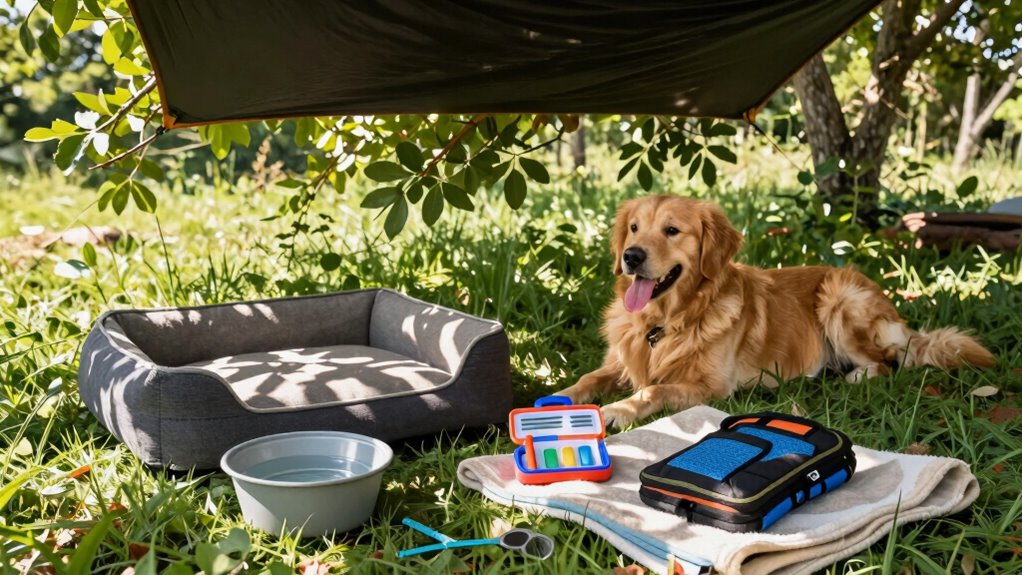
Creating a shaded, secure campsite is essential for your dog’s comfort and safety during camping. Find a spot with natural shade or set up a canopy to shield your dog from direct sun. Clear the area of sharp objects and ensure good campsite navigation so your dog doesn’t get lost or injured. Be mindful of campfire safety—keep fires contained and away from your pet’s area. Use natural features like trees or bring a portable shelter for extra shade. Here’s a quick visual guide:
| Shade Source | Safety Tip | Navigation Tip |
|---|---|---|
| Natural tree cover | Keep campfire controlled | Mark pathways clearly |
| Portable shade tents | Watch for hot surfaces | Establish boundaries |
| Canopies or tarps | Secure all coverings | Use visible markers |
| Bushes or shrubs | Avoid toxic plants | Keep your dog leashed |
Additionally, considering natural cooling methods can help keep your dog comfortable in hot weather.
What to Do If Your Dog Gets Sick From Heat or Ticks : Emergency Tips
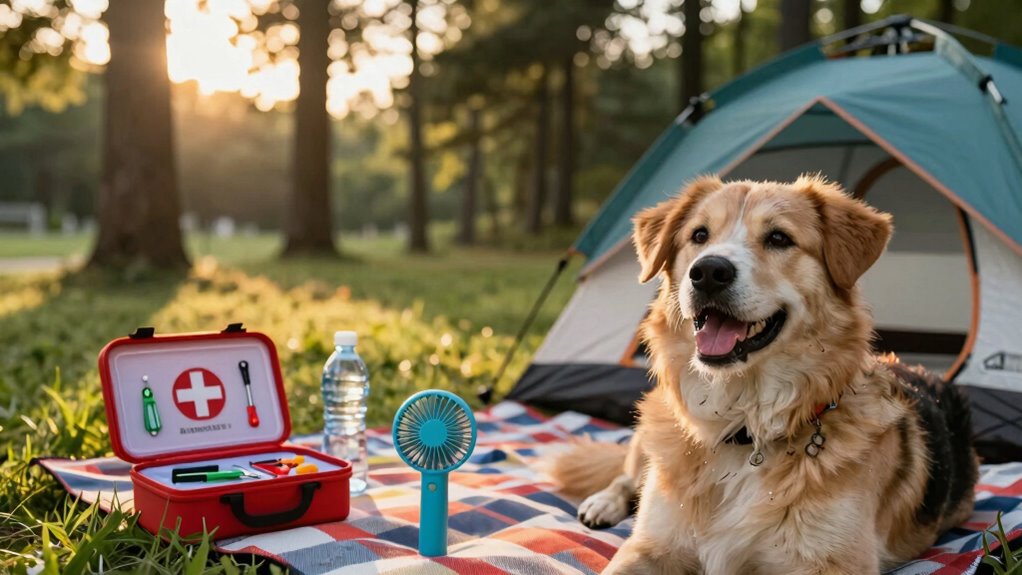
If your dog shows signs of heatstroke or tick bites, quick action can make all the difference. Knowing the immediate first aid steps can help stabilize your dog until you obtain professional help. Recognizing when to seek veterinary care ensures your dog gets the treatment they need promptly. Additionally, having portable safety equipment on hand can prevent accidents during outdoor activities.
Immediate First Aid Steps
When your dog shows signs of heat exhaustion or has been bitten by ticks, quick action can make all the difference. First, move your dog to a shaded, cool area and check for ticks, carefully performing tick removal if needed. For heat exhaustion, offer small amounts of cool water, but don’t force it. Gently wet your dog’s coat with cool water to help lower body temperature. Keep your dog calm and avoid vigorous dog grooming that might stress them further. Using a dehumidifier in your home can also help reduce indoor humidity, potentially minimizing the risk of mold and dust mites that might irritate your dog’s respiratory system.
- Use a damp cloth to cool their paws and belly
- Remove excess dog grooming accessories or collars that may cause discomfort
- Monitor their breathing and responsiveness
- Seek veterinary attention if symptoms worsen or don’t improve quickly
When to Seek Veterinary Care
Knowing the signs that indicate your dog needs urgent veterinary attention can prevent serious health complications. If your dog shows symptoms like extreme lethargy, unsteady movements, persistent vomiting, or difficulty breathing, seek care immediately. Ticks can transmit diseases, and heatstroke can escalate quickly, so watch for excessive panting, drooling, or collapse. While good dog grooming helps spot ticks early, sometimes they’re hidden. Ensure your camping gear includes a first aid kit and contact information for a nearby vet. Don’t delay if your dog’s condition worsens—prompt veterinary care can be be life-saving. Remember, even with proper preparations, unforeseen health issues can arise. Being vigilant and knowing when to seek professional help ensures your dog’s safety and well-being on your outdoor adventure.
Frequently Asked Questions
Are There Natural or Homemade Tick Repellents Safe for Dogs?
Yes, you can use DIY sprays and herbal repellents that are safe for dogs. Mix natural ingredients like cedar oil, lemon eucalyptus, or lavender with water to create effective herbal repellents. Avoid toxic substances like essential oils that are harmful to pets. Always test a small area first and consult your vet before applying any homemade repellent. These natural options help keep ticks away without risking your dog’s health.
How Often Should I Check My Dog for Ticks During Camping?
You should check your dog for ticks every 2 hours during camping—yes, every two hours, because ticks are sneaky little vampires. This keeps tick prevention effective and camping safety intact. Imagine missing a tiny hitchhiker—yep, that’s how Lyme disease or tick-borne illnesses creep in. Stay vigilant, give your pup a thorough check, and enjoy the outdoors without turning into a tick magnet. Your dog’s health thanks you!
What Are the Long-Term Health Risks of Tick-Borne Diseases?
Long-term health risks of tick-borne diseases like Lyme disease and Rocky Mountain spotted fever can be severe if untreated. Lyme disease may cause chronic joint pain, neurological issues, and fatigue, while Rocky Mountain spotted fever can lead to organ damage and neurological problems. You should seek veterinary care promptly if your dog shows symptoms, as early treatment helps prevent lasting health issues. Regular tick checks are key to reducing these risks.
Can Certain Dog Breeds Tolerate Heat Better Than Others?
Yes, breed differences influence heat tolerance in dogs. Some breeds, like Chihuahuas and Greyhounds, tolerate heat better due to their short coats and lean builds, while thick-coated breeds like Huskies struggle in high temperatures. You should consider your dog’s breed when planning outdoor activities, ensuring they stay cool and hydrated, especially during hot weather. Recognizing these breed-specific traits helps prevent heatstroke and keeps your dog comfortable.
What Signs Indicate My Dog Is Dehydrated Despite Drinking Water?
Did you know that over 50% of dogs show signs of dehydration even when they’ve had water? If your dog is dehydrated, look for signs like dry gums, excessive panting, weakness, or sunken eyes. Hydration indicators also include lethargy and a loss of skin elasticity. Even if your dog drinks, these signs suggest they need more fluids or immediate veterinary care to prevent serious health issues.
Conclusion
Camping with your dog can be a rewarding adventure, but always prioritize their safety by preventing ticks, managing heat, and keeping them hydrated. Did you know that over 70% of dogs in outdoor areas encounter ticks? Staying vigilant not only keeps your furry friend healthy but also guarantees a fun, stress-free trip. With these tips, you’ll be ready for a memorable getaway filled with wagging tails and happy memories.
Halloween Picks
halloween
As an affiliate, we earn on qualifying purchases.