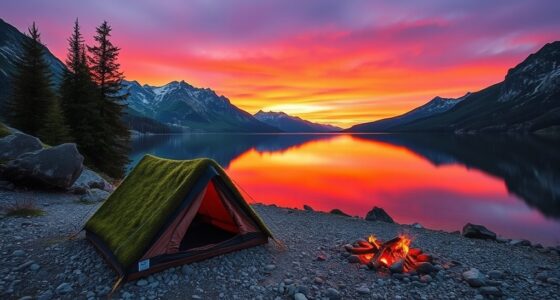
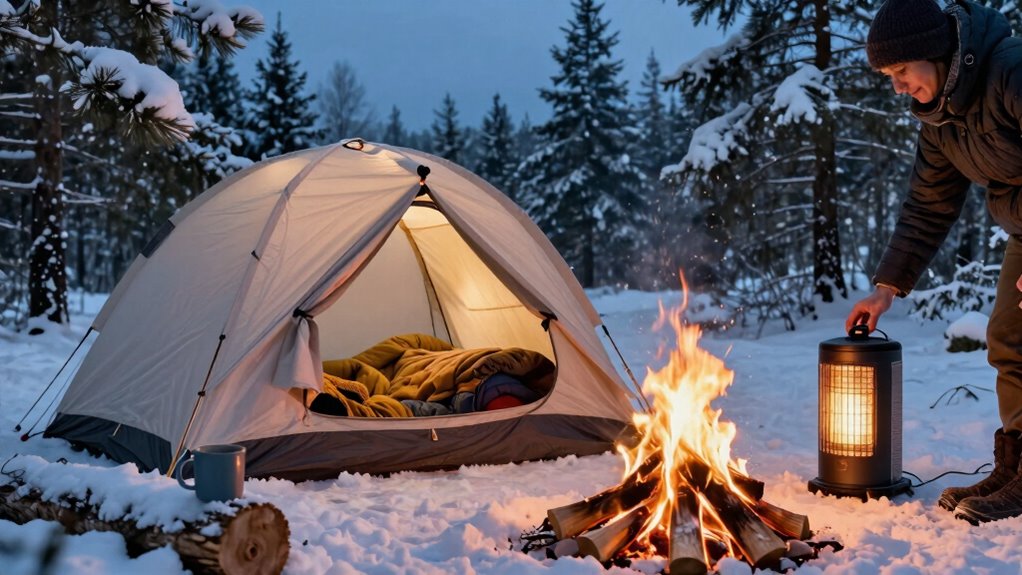
To stay comfortable while cold-weather camping without overdoing it, focus on layering smartly—use moisture-wicking base layers, insulating middle layers, and waterproof outer shells. Keep extremities warm with gloves, hats, and thermal socks, and always be ready to adjust layers as conditions change. Build a safe campfire for extra warmth and dry your gear to prevent chill. Managing moisture and insulation effectively helps you stay cozy without overheating—continue to discover more tips for an enjoyable camp.

Get travel and outdoor gear delivered free with Prime
- Fast, free delivery on millions of items
- Prime Video, Amazon Music and more included
- Member-only deals all year
Key Takeaways
- Layer clothing appropriately: base, insulating, and waterproof outer layers to regulate temperature without overheating.
- Use a well-built campfire for warmth and comfort, ensuring safety precautions are followed.
- Cover extremities with gloves, thermal socks, and hats to prevent heat loss.
- Manage moisture inside your tent with ventilation and insulation to maintain a dry, warm environment.
- Adjust clothing layers frequently to balance warmth and prevent sweating, avoiding chills.
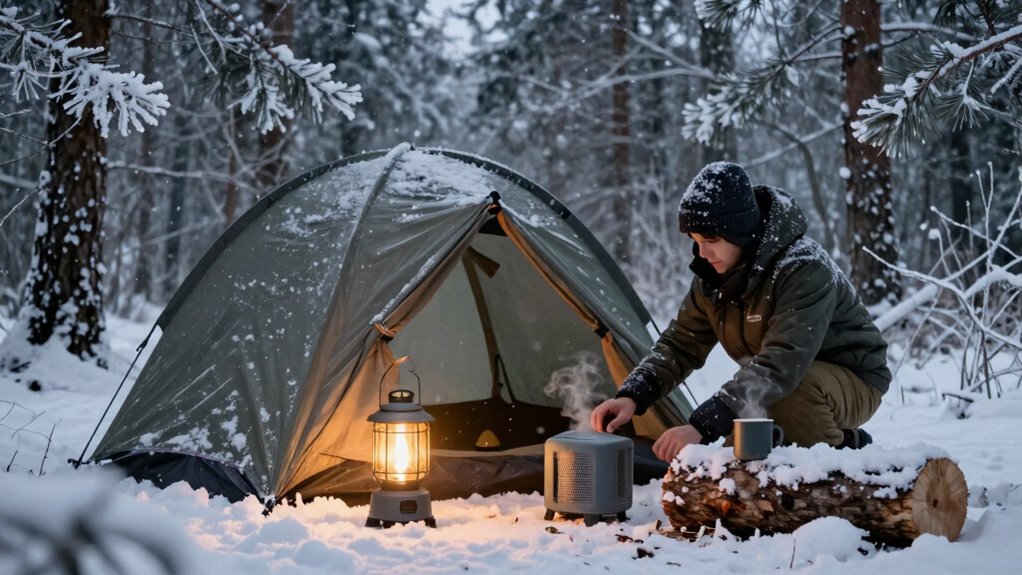
Camping in cold weather can be challenging, but with the right preparation, you can stay warm and comfortable throughout your trip. One of the most effective ways to do this is by mastering campfire safety and layered clothing techniques. A well-built fire provides essential warmth, but it’s vital to keep safety at the forefront. Always clear the area around your fire pit, keep a bucket of water or sand nearby, and never leave the fire unattended. When building your campfire, use dry, seasoned wood and start with small kindling to guarantee it catches quickly and burns steadily. A strong campfire not only heats your surroundings but also boosts morale, so tend to it regularly and guarantee it’s completely extinguished before sleeping or leaving the site.
Build a safe, steady campfire with dry wood, clear surroundings, and never leave it unattended for warm, morale-boosting warmth.
Layered clothing is your best defense against the cold. Think of your clothing system as a barrier that traps warm air close to your body. Start with a moisture-wicking base layer to keep sweat away from your skin. Avoid cotton, as it traps moisture and can make you colder. Next, add an insulating middle layer like fleece or down to retain heat. This layer should be snug but not tight, allowing air to be trapped between the fibers. Your outer shell needs to block wind and moisture — a waterproof, windproof jacket and pants are ideal. This combination ensures you stay dry and warm, even if the weather shifts unexpectedly. Proper layering also helps prevent heat loss through convection and conduction.
Adjust your clothing as needed throughout the day. If you start to feel cold, add a layer or two, and if you warm up, peel some layers off. Remember, it’s better to be slightly too warm than too cold, since sweating can lead to chills once you stop moving. Cover your head with a hat or beanie, and wear gloves and thermal socks to keep extremities warm. Proper layering also allows you to adapt quickly to changing conditions, preventing you from overheating or getting chilled. Additionally, using robotic pool cleaners or other smart home devices can help keep your camping gear dry and clean, ensuring your equipment remains in good condition during your trip. Incorporating ventilation techniques in your tent setup can also help reduce condensation and maintain a comfortable environment inside, especially when managing moisture buildup. Being mindful of insulation methods can further enhance your warmth by minimizing heat loss through the tent walls and ground. Paying attention to these insulation techniques can make a significant difference in overall comfort during cold-weather camping.
As an affiliate, we earn on qualifying purchases.
Frequently Asked Questions
What Are the Best Sleeping Bags for Extreme Cold?
For extreme cold, you need sleeping bags with high ratings, like those rated -20°F or lower. Look for bags with insulation types such as down or synthetic, which provide excellent warmth. Down insulation is lightweight and compressible, perfect for severe conditions, while synthetic offers better moisture resistance. Make sure your bag has a mummy shape for maximum heat retention, and always layer with insulated pads for extra warmth.
How Can I Prevent Frostbite During Winter Camping?
To prevent frostbite during winter camping, you should use effective layering techniques, ensuring your skin stays warm and protected. Wear moisture-wicking base layers, insulated mid-layers, and waterproof outer layers. Keep your extremities covered with insulated gloves, thick socks, and a warm hat. Regularly check for signs of frostbite, like numbness or pale skin, and keep moving to promote circulation. Proper layering and vigilance are key to frostbite prevention.
What Are Quick-Dry Clothing Options for Cold Weather?
Think of quick-dry clothing as your secret weapon against cold, damp discomfort. You should prioritize layering techniques with moisture-wicking fabrics, which draw sweat away from your skin and dry rapidly. Look for base layers made of merino wool or synthetic fibers like polyester and nylon. These materials keep you warm and dry, ensuring you stay comfortable and focused on your adventure rather than battling dampness.
How Do I Maintain Campfire Safety in Winter?
To maintain campfire safety in winter, you should always keep firewood stored off the ground and protected from snow to prevent excess moisture. When campfire cooking, build your fire on a stable, cleared surface, and never leave it unattended. Keep a bucket of water or a fire extinguisher nearby in case of emergencies. Regularly monitor wind conditions, and confirm your fire is fully extinguished before leaving the site.
What Should I Do if Someone Shows Signs of Hypothermia?
If someone shows warning signs of hypothermia, act quickly like a hero from a cheesy 80s movie. Move them to a warm, dry place and remove any wet clothing. Offer warm, non-alcoholic drinks if they’re conscious, and use blankets or layers to insulate. For hypothermia treatment, focus on rewarming the core gradually. Recognize warning signs early—shivering, confusion, and exhaustion—to prevent serious complications.
Conclusion
With these tips, your cold-weather camping adventure transforms from a frosty challenge into a cozy escape. Think of your gear as a warm embrace, wrapping you in comfort despite the icy whispers of winter. When you layer wisely and stay dry, you’re like a fire burning steadily through the snow, radiating heat and resilience. Embrace the chill with confidence—your perfect winter wilderness journey is just a campfire’s glow away.
Fall Picks
fall essentials
As an affiliate, we earn on qualifying purchases.