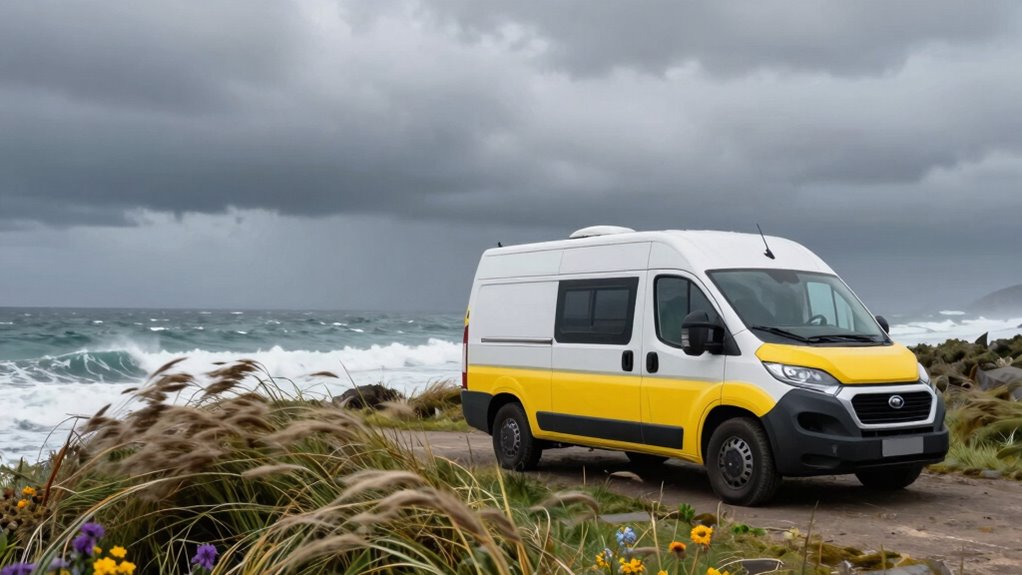

When parking your campervan in windy coastal areas, don’t overlook natural windbreaks like dunes or trees to reduce gusts. Always check tide schedules so you’re not caught by rising water or flooding, and make sure your vehicle is securely chocked and braked to prevent shifting. Respect wildlife and avoid sensitive habitats to protect ecosystems. Staying aware of weather patterns and environmental factors can save you from surprises—there’s more to take into account if you look closer.

Get travel and outdoor gear delivered free — and shop member deals
- Fast, free delivery on millions of items
- Access to Prime Big Deal Days deals on October 6–7
- Prime Video, Amazon Music and more included
Key Takeaways
- Natural windbreaks like dunes or trees are vital to reduce wind impact and prevent buffeting.
- Always check tide schedules to avoid parking in areas prone to flooding during high tide.
- Secure your campervan with wheel chocks and engage the parking brake to prevent shifting in strong winds.
- Maintain a safe distance from wildlife habitats and avoid parking on sensitive ecosystems.
- Monitor weather forecasts and environmental conditions to adapt plans and ensure safety.
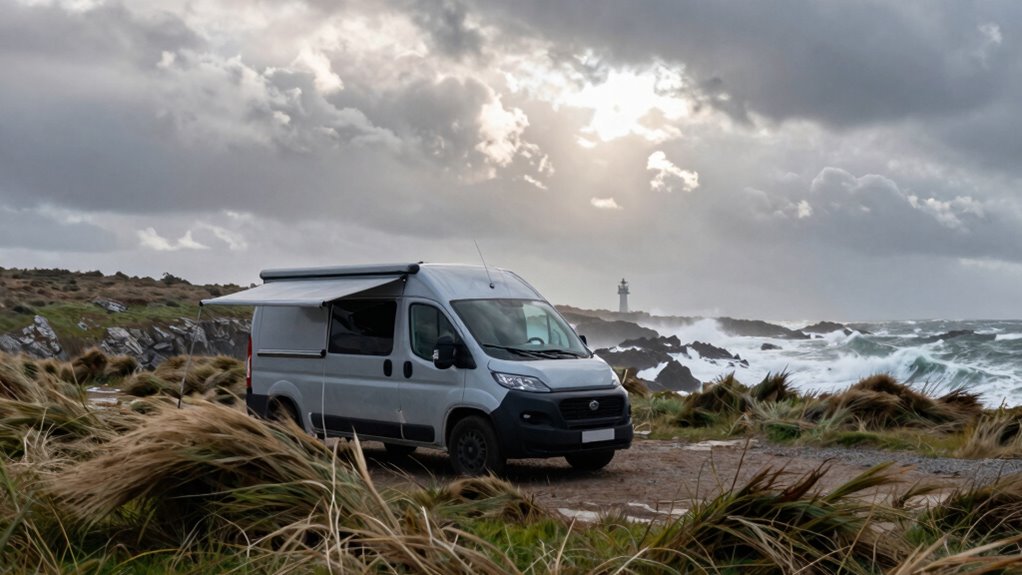
Parking a campervan in windy coastal areas requires careful planning and awareness of the environment. The wind can be relentless, and it’s easy to underestimate its power until you’re fighting to keep your vehicle steady. Before you settle in, take a moment to assess the terrain and choose a spot that offers natural windbreaks—like dunes, trees, or rocky outcroppings. This simple step can save you from constant buffeting and help protect your campervan from potential damage. Remember, the wind isn’t the only factor at play; tides can influence your chosen spot as well. High tides might flood areas that seem safe during low tide, so always check tide schedules beforehand. Parking too close to the shoreline during high tide can lead to unexpected water levels rising around your vehicle, making it difficult to leave or risking water damage.
While securing your campervan against the wind, you also need to think about wildlife safety. Coastal environments are home to numerous animals, from seabirds to marine life, and your presence can disturb their natural behaviors. It’s essential to keep a respectful distance, especially from nesting sites or areas where animals gather. Avoid parking directly on or near sensitive habitats, and never feed wildlife, as this can alter their natural feeding habits and cause them to become dependent on human food. Keeping a clean campsite also prevents attracting animals to your vehicle, reducing the risk of unwanted encounters. If you’re planning to stay overnight, double-check that your campervan is securely parked, with wheel chocks in place and the parking brake fully engaged—wind can shift your vehicle unexpectedly if it’s not properly secured. Additionally, being aware of environmental factors like wind patterns and tide changes helps you adapt your plans and stay safe during your coastal stay. Recognizing local weather conditions can also help you anticipate sudden changes in wind or tide, ensuring you’re prepared for shifts in the environment. Staying informed about environmental patterns can further improve your decision-making and safety precautions.
In addition to these precautions, continuous tide awareness is key. Coastal tides can change rapidly, and understanding local tide patterns helps you avoid being caught off guard. Some areas experience dramatic tidal shifts, which could leave your campervan stranded or vulnerable to flooding if you’re not vigilant. Always have a tide timetable handy and plan your parking so that you’re well above the high tide line. During windy nights, it’s also wise to monitor how the wind might influence tide levels, as some coastal regions see increased water movement during storms or strong gusts. Staying alert to these environmental factors ensures not only your safety but also the preservation of the delicate coastal ecosystem around you. Properly understanding environmental conditions can help you make more informed decisions and avoid potential hazards. It’s also beneficial to stay updated on weather forecasts to help you prepare for sudden environmental changes. By combining careful planning with respect for nature, you’ll enjoy your coastal adventure without unnecessary surprises.
As an affiliate, we earn on qualifying purchases.
Frequently Asked Questions
How Can I Prevent My Campervan From Rocking Excessively?
To prevent your campervan from rocking excessively, make certain your campervan interior security is tight by securing loose items and locking cabinets. Use wheel chocks and parking brakes properly on uneven or windy terrain. Incorporate wind-related driving tips, like reducing speed and steering gently into gusts. Additionally, choose sheltered parking spots when possible, and consider stabilizer jacks or blocks for extra stability, especially during strong wind conditions.
Are There Specific Types of Campervan Anchors Recommended for Windy Coasts?
While sturdy stakes are common, consider campervan anchors made from wind resistant materials like galvanized steel or reinforced nylon for windy coasts. These specialized anchors provide better grip and stability, especially when combined with secure campervan storage solutions. You’ll want to choose anchors that resist corrosion and withstand strong gusts. By investing in high-quality, wind-resistant anchors, you protect your vehicle and enjoy peace of mind, even in the fiercest coastal gusts.
What Should I Do if My Campervan Starts to Shift Unexpectedly?
If your campervan starts to shift unexpectedly, you should quickly check your parking lot safety by tightening your anchors and adjusting your wheel chocks. Make certain you’re following campsite regulations, which often recommend using appropriate anchors for windy conditions. If needed, reposition your campervan to a more sheltered spot, and always double-check your setup before leaving. Staying vigilant ensures your safety and prevents damage or accidents.
How Do Wind Conditions Affect Campervan Stability During the Night?
A stitch in time saves nine, so when it comes to wind conditions at night, you should pay close attention. High wind speeds and gust intensity can make your campervan unstable, causing it to sway or shift. To stay safe, secure all loose items, use wheel chocks, and consider additional tie-downs if necessary. Being proactive helps prevent surprises and keeps you safe during those windy coastal nights.
Can Wind Damage Campervan Windows or Exterior Panels?
Yes, strong winds can damage your campervan’s windows or exterior panels, especially if they’re not well-secured. Wind can cause stress on the campervan’s exterior, risking cracks or dents. To protect your campervan interior and maintain wind insulation, you should reinforce windows with covers or seals and guarantee panels are tightly fastened. Regular checks help prevent damage and keep your campervan resilient against gusts.
Conclusion
So, next time you think parking your campervan in a breezy coastal spot is a breeze, remember the irony—those gusts can turn your peaceful retreat into a flying circus. Sure, you might save on camping fees, but dodging flying umbrellas and trying to keep your van grounded quickly becomes your new adventure. Wind may be free, but it sure knows how to make parking a hilarious, if not slightly chaotic, challenge. Happy camping—if you can stay still!
Fall Picks
fall essentials
As an affiliate, we earn on qualifying purchases.