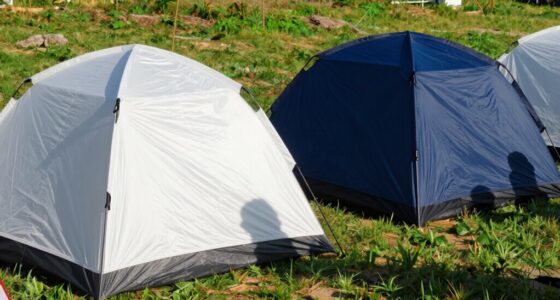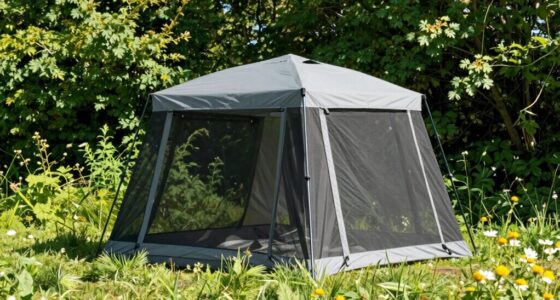
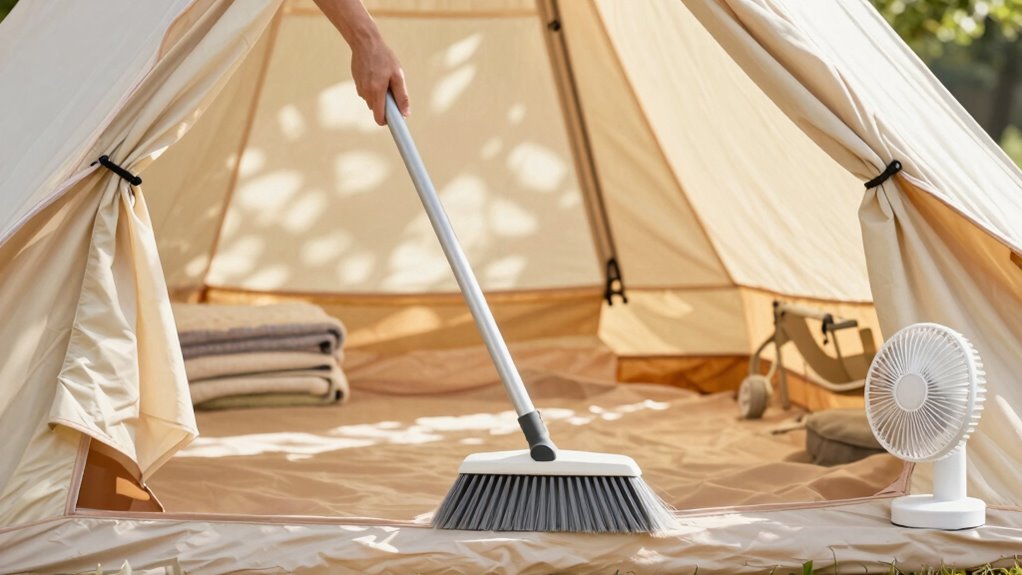

After your trip, shake out your tent to remove loose dirt and debris, then set it up in a shaded area to clean with a soft brush or sponge and a mild soap solution. Rinse thoroughly to remove soap residues and shake out excess water. Hang it in a shaded, well-ventilated spot to dry completely, avoiding direct sunlight. Regular inspection and storing in breathable containers with ventilation prevent mold and odors—discover more tips to keep your tent fresh long-term.
Key Takeaways
- Shake out and clean the tent thoroughly after each trip to remove dirt and prevent mold growth.
- Dry the tent completely in shaded, well-ventilated areas to inhibit mildew development.
- Use mild, waterproof-safe cleaning solutions to prevent fabric damage and odor retention.
- Inspect and repair any tears or damaged seams promptly to maintain waterproof integrity.
- Store the tent in breathable containers with good ventilation to reduce humidity and prevent musty odors.
Have you ever wondered how to keep your tent fresh and ready for your next adventure? Proper outdoor maintenance starts with a reliable tent cleaning routine that prevents mildew and musty odors from taking hold. When you’re out camping, your gear endures a lot—dirt, moisture, and sweat—so giving your tent a thorough clean is essential to preserve its lifespan. It’s not just about hygiene; it’s about maintaining your camping gear in top condition so it’s ready whenever you are.
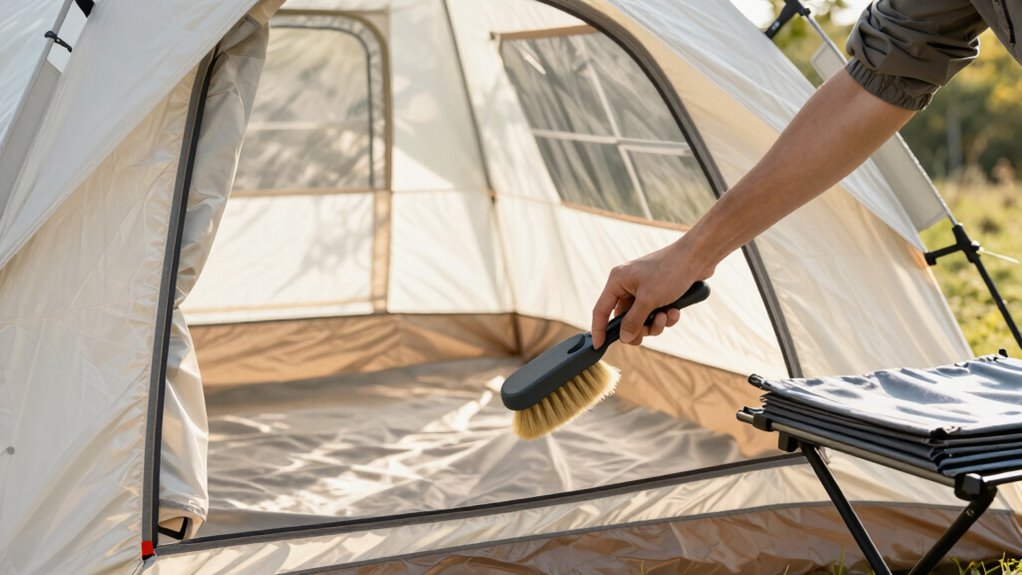
After each trip, take a moment to shake out your tent to remove loose dirt and debris. This simple step helps prevent grit from settling into the fabric and makes the deeper cleaning easier. When you’re ready to clean more thoroughly, set up your tent in a shaded area to avoid direct sunlight, which can weaken the fabric over time. Use a soft brush or sponge to gently scrub the interior and exterior, focusing on seams and corners where dirt and moisture tend to accumulate. A mild soap solution or specialized tent cleaner works best—avoid harsh detergents that can damage waterproof coatings or fabrics. Additionally, proper maintenance can significantly extend the lifespan of your tent. Regularly inspecting your tent for signs of wear and tear can help catch small issues before they become major problems. Incorporating routine cleaning and inspection can also prevent the buildup of contaminants that lead to mold growth.
Shake out your tent after each trip to prevent dirt buildup and make cleaning easier.
Once you’ve cleaned the tent, rinse thoroughly with water to remove any soap residue. It’s vital to eliminate all soap because leftover residues can attract dirt and moisture, fueling mold growth. After rinsing, gently shake out the excess water and hang your tent in a well-ventilated, shaded spot for air drying. Never dry it in direct sunlight, as UV rays can degrade the fabric. Proper outdoor maintenance also involves inspecting your tent for tears, loose seams, or damaged zippers, so you can repair issues before storing it away. Additionally, proper storage plays a crucial role in preventing mildew and odors by keeping your tent in optimal condition when not in use. Using breathable storage containers can help reduce trapped humidity and prevent mold growth during storage. Remember, ventilation during storage is key to keeping your tent smelling fresh and free of musty odors.
As an affiliate, we earn on qualifying purchases.
Frequently Asked Questions
How Often Should I Deep Clean My Tent?
You should deep clean your tent at least once each season or after heavy use. Regular tent maintenance helps prevent mildew and odors. Use effective cleaning tools like soft brushes and mild soap to scrub away dirt and grime. Be sure to dry your tent thoroughly before storing it. Deep cleaning keeps your tent in top shape, prolongs its lifespan, and guarantees a fresh, odor-free experience every time you set it up.
Can I Use Bleach to Clean My Tent?
You shouldn’t use bleach to clean your tent; it’s like opening a can of worms for tent maintenance. Bleach alternatives, like vinegar or baking soda, are gentler and effective at preventing mildew and odors. These options won’t damage your tent’s fabric or waterproof coating. Always rinse thoroughly and let your tent dry completely. Sticking to gentle cleaning methods guarantees your tent stays in top shape and lasts longer.
What Should I Do if My Tent Has Mold Stains?
If your tent has mold stains, start with mold removal by wearing gloves and a mask. Mix a solution of water and mild detergent or vinegar for stain treatment, then gently scrub the affected areas with a soft brush or sponge. Rinse thoroughly with clean water and let it dry completely in the sun, which helps eliminate remaining spores and prevents mold from returning. Always guarantee proper ventilation during and after cleaning.
Are There Eco-Friendly Cleaning Options Available?
Think of eco-friendly cleaning options as your tent’s gentle guardians. You can use natural cleaning methods with eco-friendly products like vinegar, baking soda, and lemon juice. These options are safe for the environment and effective against odors and mildew. You’ll feel good knowing you’re protecting nature while keeping your tent fresh. So, yes, eco-friendly solutions are available and perfect for a thorough, planet-friendly clean.
How Do I Prevent Mildew During Long-Term Storage?
To prevent mildew during long-term storage, you should guarantee proper ventilation and follow storage tips. Always dry your tent completely before storing it to eliminate moisture. Use ventilation tips like leaving the tent slightly open or using breathable storage bags to promote airflow. Store your tent in a cool, dry place away from direct sunlight, and periodically check it to catch any signs of moisture early.
Conclusion
By breezing through your tent cleaning routine with care and consistency, you’ll keep mildew and musty odors at bay. Regular rinses, thorough drying, and proper storage strengthen your tent’s lifespan and safeguard your outdoor adventures. Embrace this easy, effective effort to guarantee every camping trip begins with a fresh, fragrant fortress. With a little attention and a dash of dedication, your tent stays pristine, prepared, and perfectly ready for your next outdoor escapade.