Your tent color matters more than you think because it affects how much heat and light your tent absorbs. Light shades like white or beige reflect sunlight, keeping the interior cooler and more comfortable, especially in hot weather. Dark colors like navy or black absorb heat, making your tent warmer. Choosing the right color can improve your comfort, safety, and even how your tent looks over time. Keep exploring to discover more about how color choices make a difference.

Get travel and outdoor gear delivered free with Prime
- Fast, free delivery on millions of items
- Prime Video, Amazon Music and more included
- Member-only deals all year
Key Takeaways
- Light-colored tents reflect sunlight, keeping interiors cooler in hot weather.
- Dark-colored tents absorb more heat, raising interior temperatures under direct sunlight.
- Bright colors increase visibility for safety, especially in emergency situations.
- Dark or earth tones blend into surroundings, offering discretion and wildlife avoidance.
- Color choice impacts durability, fading resistance, and long-term appearance of the tent.
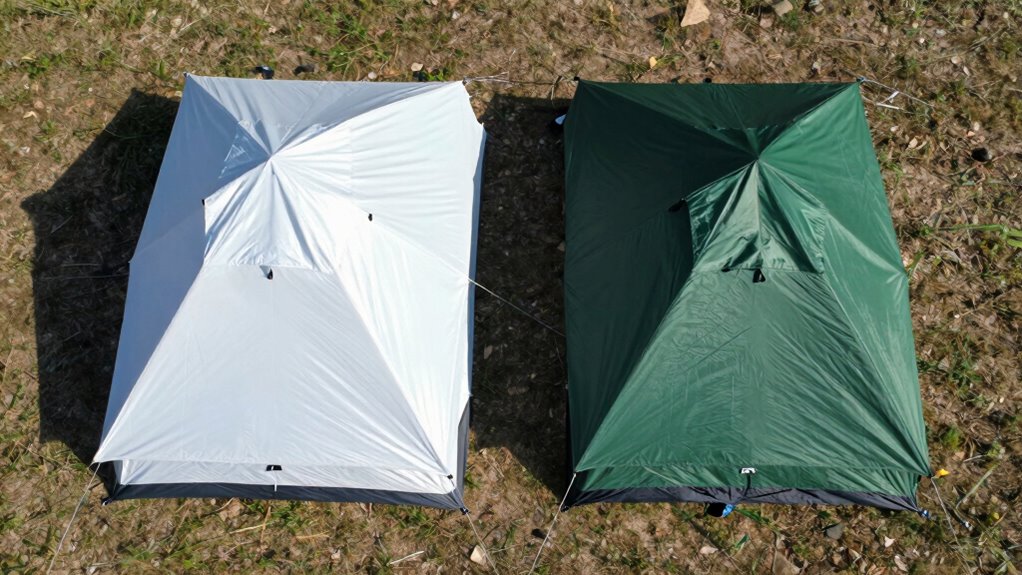
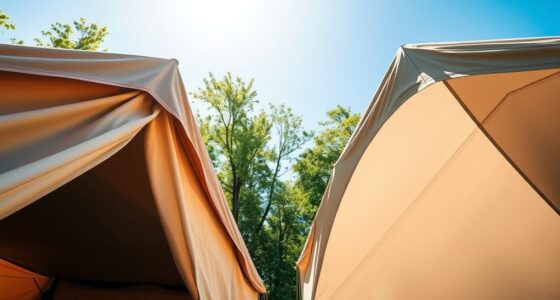
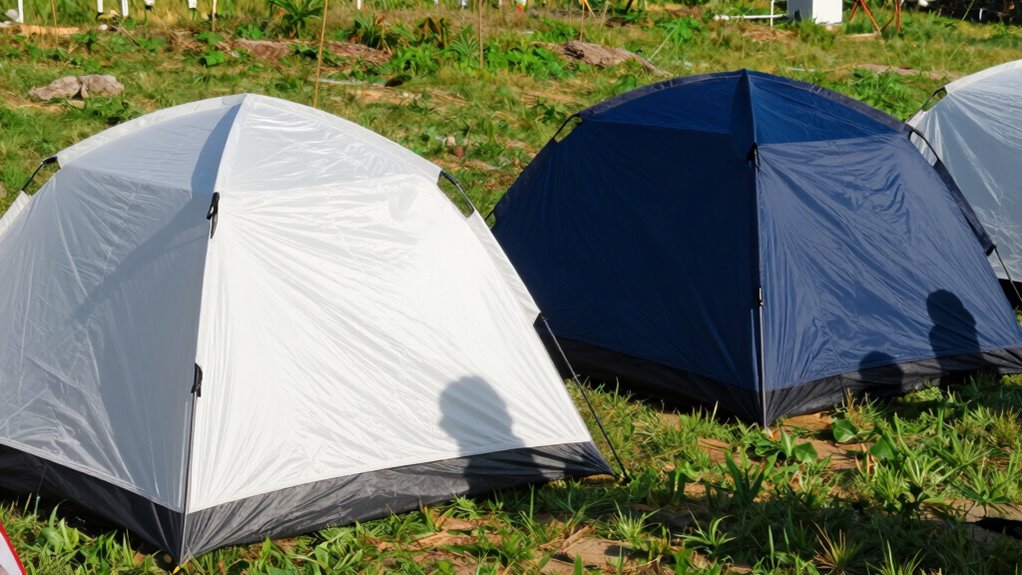
When choosing a tent, the color you pick can substantially influence how much heat and light your shelter absorbs or reflects. Lighter colors, like white or beige, tend to reflect sunlight, helping keep your tent cooler on hot days. Conversely, darker shades such as navy or black absorb more heat, making your tent warmer, especially in direct sunlight. This difference can considerably impact your comfort, especially if you’re camping in hot climates or during summer. The color choice isn’t just about aesthetics; it also affects your experience by controlling the temperature inside your tent.
Beyond heat regulation, the color of your tent also plays a role in its overall durability and appearance over time. For example, lighter colors often showcase less dirt and stains, which means your tent can look newer longer. However, the key to maintaining your tent’s appearance is choosing fabrics with strong tent fabric durability and color fading resistance. High-quality materials help your tent withstand frequent use and harsh weather, regardless of its color. When your tent’s fabric resists fading, it maintains its original hue longer, ensuring your shelter looks fresh season after season. Additionally, selecting fabrics with UV-resistant qualities can further protect your investment from sun damage and extend its lifespan. Proper fabric care can also help in preserving the integrity of the material, keeping your tent in good condition for many trips.
Light colors hide dirt and stains, helping your tent look newer longer with durable, fade-resistant fabrics.
Color fading resistance is especially important if you plan to use your tent extensively or keep it stored outdoors for long periods. UV rays and exposure to the elements naturally cause fabrics to fade over time, but some fabrics are treated with UV inhibitors or dyes designed to resist fading better. Picking a tent with these features means your tent will retain its color, whether you choose a bright, vibrant shade or a subdued tone. This not only keeps your tent looking good but also preserves its resale value if you decide to upgrade later. Additionally, the selection of UV-resistant fabrics can significantly extend your tent’s lifespan by protecting it from sun damage. Furthermore, considering the environmental conditions where you’ll camp can help you select the most suitable color, as certain hues perform better under specific weather or terrain conditions.
Temperature management isn’t the only reason to carefully consider your tent’s color. The visibility of your shelter can matter, too, especially if you’re camping in crowded areas or in case of emergencies. Bright colors like orange or yellow make your tent easier to spot from a distance, enhancing safety. On the other hand, darker or earth-toned tents blend into the environment, offering more discretion. Your choice of color can thus serve both practical and safety purposes. Furthermore, choosing a color that aligns with your outdoor environment can help your tent blend in more seamlessly, avoiding unwanted attention from wildlife or other campers. Ultimately, your decision should balance your aesthetic preferences, comfort needs, and durability concerns. Selecting a color with good tent fabric durability and color fading resistance ensures your tent remains functional and attractive season after season. Whether you prioritize temperature control, longevity, or visibility, the right color makes a noticeable difference in your outdoor experience.
As an affiliate, we earn on qualifying purchases.
Frequently Asked Questions
Do Darker Tents Absorb More Heat Than Lighter Ones?
Yes, darker tents absorb more heat than lighter ones. This increased heat absorption can affect your comfort and the tent’s fabric durability over time, especially in hot conditions. While darker colors might boost aesthetic appeal, they can make your camping experience less pleasant in the heat. Consider lighter shades if you want to stay cooler and protect your tent fabric from sun damage, ensuring long-lasting durability and comfort.
How Does Tent Color Affect Nighttime Temperature Inside?
You’ll find that tent color influences nighttime temperatures more than you might think. Lighter colors tend to keep the interior cooler, while darker shades can trap residual heat, making it feel warmer inside. Pairing your tent color with good airflow helps maintain a comfortable environment. Additionally, choose a durable material that supports temperature regulation. This thoughtful combination guarantees your camping experience remains cozy, no matter the night’s chill.
Can Tent Color Influence UV Protection?
Yes, tent color influences UV protection by affecting UV reflection. Light-colored tents, like white or beige, reflect more UV rays, helping protect you from harmful exposure. Darker colors absorb UV rays, which can degrade the material over time, reducing durability. Choosing a lighter-colored tent not only enhances UV reflection but also extends the material’s lifespan, ensuring your tent stays strong and protective during outdoor adventures.
Are Certain Tent Colors More Visible in Outdoor Environments?
You’ll notice that bright, vivid tent colors stand out like a splash of paint against nature’s canvas, making them highly visible in outdoor environments. Camouflage patterns blend seamlessly into surroundings, hiding your tent, while bold colors like red or yellow catch the eye from afar. This contrast in color visibility can be essential for safety, helping friends or rescuers spot your campsite quickly amid dense woods or open fields.
Does Tent Color Impact Energy Efficiency During Camping?
Yes, tent color impacts energy efficiency during camping. Lighter colors reflect sunlight, helping keep your tent cooler, which means you’ll need less energy for cooling devices or fans. Darker shades absorb more heat, making your camping experience less comfortable and increasing energy use. When choosing your camping gear, consider both aesthetic appeal and how the color affects temperature regulation, ensuring you stay comfortable and eco-friendly during your outdoor adventures.
Conclusion
Think of your tent as a tiny island in a vast ocean of sunlight. Choosing the right color is like selecting a boat that keeps you cooler and more comfortable. I once camped with a dark tent during a scorching summer, feeling like I was inside an oven. Conversely, a light-colored tent reflected the heat, making my nights peaceful. Your tent’s color isn’t just about style—it’s your personal shield against nature’s blazing glare.
Halloween Picks
halloween
As an affiliate, we earn on qualifying purchases.