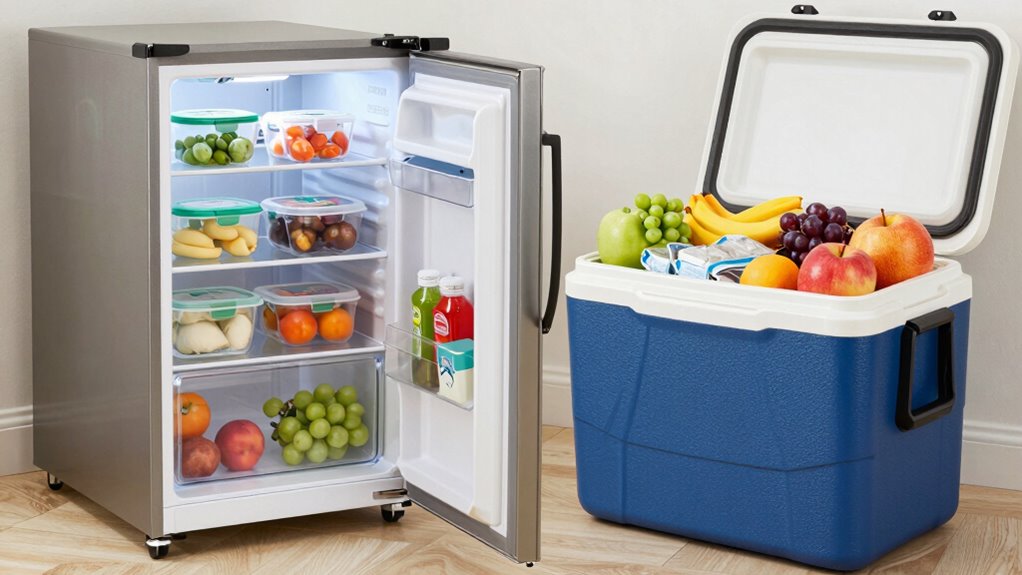
A 12V fridge keeps your food at a steady, low temperature, preventing bacteria from growing and spoilage. Unlike coolers that rely on ice, which melts and causes temperature fluctuations, fridges offer consistent and reliable cooling, especially on long trips. This helps make certain your food stays safe and fresh. If you want to understand how choosing the right cooling method can protect your meals, explore the key differences further.
Key Takeaways
- 12V fridges maintain consistent, low temperatures, reducing bacterial growth and spoilage risks compared to fluctuating temperatures in coolers.
- Modern fridges offer precise temperature control and monitoring, ensuring food safety during extended outdoor use.
- Coolers depend on ice, which melts and causes temperature fluctuations, increasing the risk of spoilage and contamination.
- Continuous cooling in 12V fridges prevents unsafe temperature spikes, unlike coolers that require manual ice replenishment.
- Proper storage practices and stable refrigeration significantly lower the chances of cross-contamination and foodborne illnesses.
Which Cooling Solution Keeps Food Safest During Your Trip?
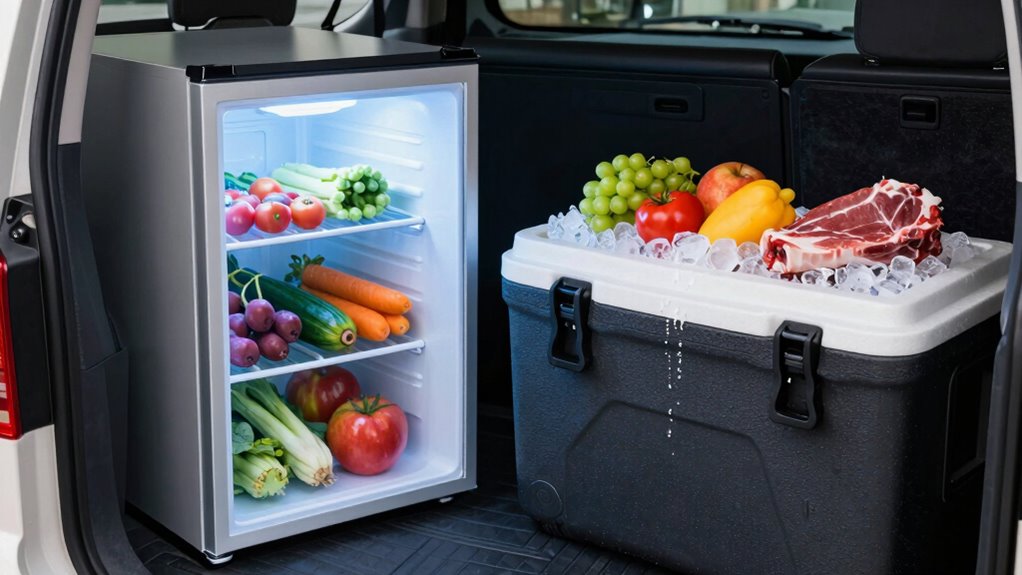
When it comes to keeping your food safe during a trip, choosing the right cooling solution is essential. A 12V fridge offers reliable portable power, ensuring consistent temperature regulation no matter where you go. Unlike traditional coolers, which rely on ice and can fluctuate in temperature, a 12V fridge maintains a steady, safe environment for your food. This stability minimizes the risk of spoilage and bacteria growth. With a built-in thermostat, you control the temperature precisely, keeping perishable items fresh longer. Portable power means you don’t have to worry about power outages or frequent ice replacements, making it a dependable option. Overall, a 12V fridge provides superior temperature regulation, giving you peace of mind that your food stays safe throughout your trip. Proper product selection and regular maintenance are crucial to ensure optimal performance and food safety.
How Do 12V Fridges Keep Food Safe?
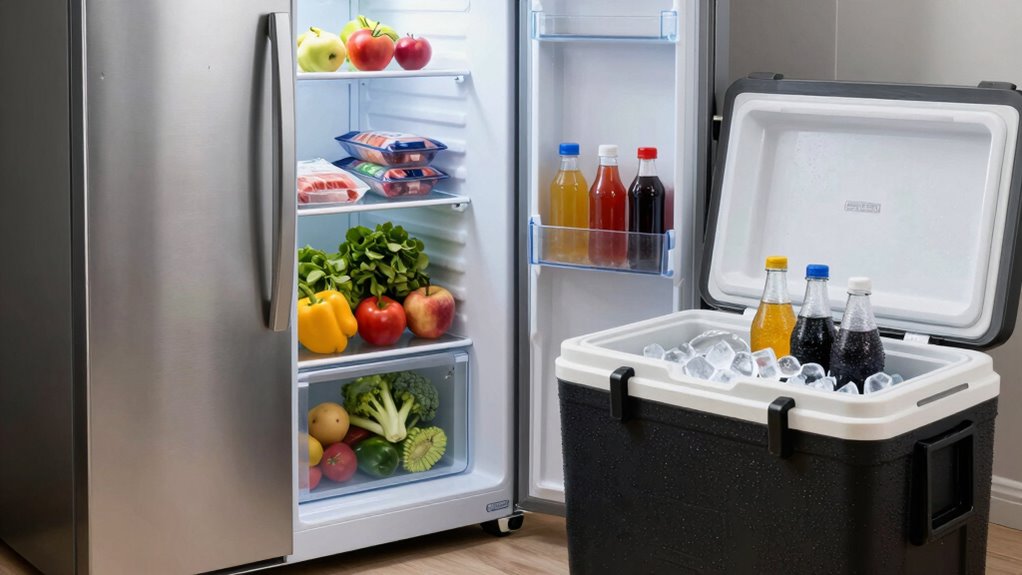
12V fridges keep food safe by maintaining a consistent, low temperature through an integrated cooling system that runs on portable power. This reliable temperature control prevents bacteria growth and spoilage, ensuring your food stays fresh longer. Their energy efficiency means you can operate them for extended periods without draining your vehicle’s battery or power source. Additionally, modern 12V fridges feature portability features like compact design, lightweight construction, and secure locking mechanisms, making them easy to transport and use in various settings. These features allow you to keep perishable items at safe temperatures, whether you’re camping, road-tripping, or working remotely. By combining energy efficiency with practical portability, 12V fridges provide a dependable solution for maintaining food safety on the go. Understanding dream symbolism can also help in planning your travel and safety routines better.
Why Is Maintaining a Consistent Temperature Important for Food Safety?

Keeping a consistent temperature prevents harmful bacteria from multiplying, maintaining your food safe. It also helps preserve the quality and flavor of your perishable items. When your fridge or cooler maintains stable temperatures, you ensure your stored food stays safe to eat. Additionally, avoiding temperature fluctuations can reduce the growth of microplastics in dust, which may impact overall indoor air quality and health.
Prevents Bacterial Growth
Maintaining a consistent temperature is essential because bacteria multiply rapidly in warm, fluctuating environments. When temperatures rise, bacteria like Salmonella and Listeria thrive, increasing the risk of bacterial contamination. This rapid growth can lead to foodborne illnesses if not controlled. Using a reliable 12V fridge keeps your food at a steady, safe temperature, preventing bacterial proliferation. Proper air purifier maintenance can also help ensure the environment stays clean and free of airborne contaminants that could contribute to spoilage.
Preserves Food Quality
Consistent temperatures not only prevent bacterial growth but also play a vital role in preserving the overall quality of your food. When your cooler or fridge maintains a steady temperature, you support effective food preservation and reduce spoilage risk. Proper temperature control keeps ingredients fresh, preserves flavors, and maintains texture, ensuring your food stays appealing. To maximize spoilage prevention, focus on these key factors:
- Uniform cooling prevents hot spots that accelerate spoilage.
- Consistent cold temperatures slow enzyme activity that causes deterioration.
- Proper insulation helps maintain stable temperatures over time.
- Regular temperature monitoring ensures your storage remains within ideal ranges. Smart thermostat protocols can also be applied to optimize temperature regulation in refrigeration units for enhanced food safety.
Ensures Safe Storage
Since temperature fluctuations can create opportunities for bacteria and pathogens to thrive, it’s crucial to keep your fridge or cooler at a steady, safe temperature. Consistent temperature control ensures proper storage practices, reducing the risk of foodborne illnesses. If your cooler or fridge fluctuates outside recommended ranges, harmful bacteria can grow quickly, compromising food safety. Maintaining a stable temperature inhibits bacteria growth and preserves the freshness of perishable items. A 12V fridge typically offers better temperature regulation than a cooler, making it easier to keep food safe for longer periods. Proper storage practices, including monitoring temperatures regularly, are essential to prevent spoilage and ensure your food remains safe to consume. Smart locks and security systems can help monitor and control storage environments remotely for added safety. Ultimately, consistent storage conditions protect your health and help avoid unnecessary waste.
What Are the Food Safety Risks of Using Coolers?
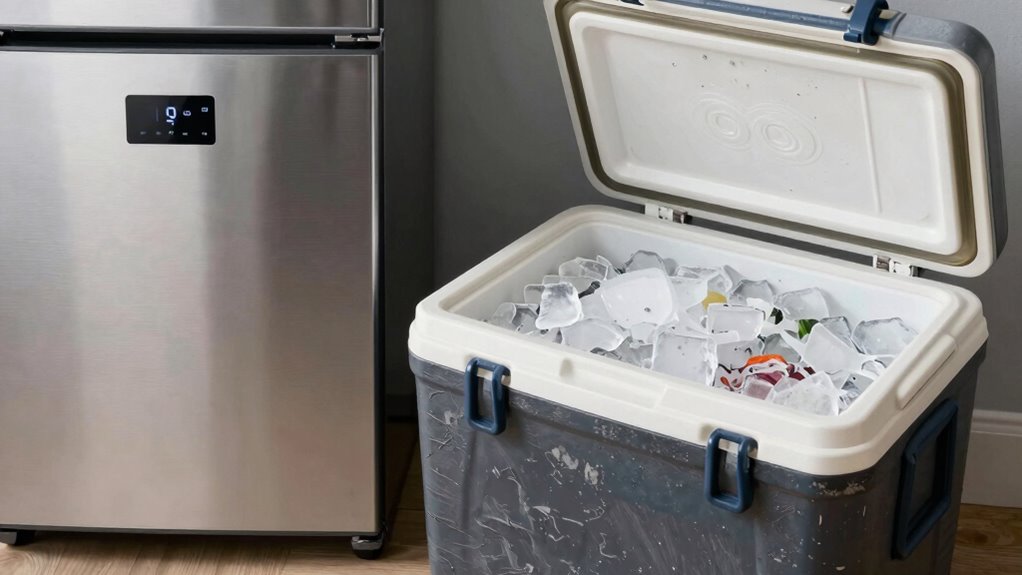
Using coolers can lead to temperature fluctuations that promote bacteria growth and cause food to spoil. If you don’t keep foods properly separated, cross-contamination becomes a real concern. These risks can compromise food safety and increase the chance of illness. Additionally, improper insulation in coolers may result in insufficient cooling, similar to the issues seen with electric bikes’ performance, which can affect the safety and freshness of stored foods.
Temperature Fluctuations and Food Spoilage
Temperature fluctuations in coolers can quickly lead to food safety issues, as bacteria thrive when food isn’t kept at the proper temperature. Poor insulation quality and unstable power sources cause these fluctuations, increasing spoilage risk. When temperatures rise above 40°F (4°C), bacteria multiply rapidly, risking foodborne illnesses. To mitigate this, consider these factors:
- Inconsistent power supply can cause temperature swings, compromising food safety.
- Insulation quality affects how well the cooler maintains a stable temperature over time.
- Frequent opening of the cooler introduces external heat, raising internal temperature.
- Temperature fluctuations shorten the safe storage window, risking spoilage and illness.
- Using a reliable cooling system designed to minimize temperature variations further enhances food safety during storage.
Understanding these risks emphasizes the importance of a reliable, well-insulated cooling system to preserve food safety during storage.
Cross-Contamination Risks
When coolers experience temperature fluctuations or become poorly insulated, the risk of cross-contamination increases markedly. If contents aren’t properly sealed, raw meats, dairy, and produce can leak or drip onto other foods, spreading bacteria. Damaged or compromised packaging integrity further heightens this risk, allowing harmful pathogens to transfer between items. Without consistent cold temperatures, bacteria can multiply rapidly, making cross contamination more likely. You might not notice leaks or compromised packaging right away, but they can lead to serious food safety issues. Using coolers requires careful monitoring to prevent these risks. Ensuring proper packaging and avoiding overcrowding help minimize cross contamination. Ultimately, cooler’s susceptibility to temperature swings makes them less reliable for maintaining safe, uncontaminated food compared to more controlled storage options.
How Do Coolers Affect Food Safety During Outdoor Adventures?
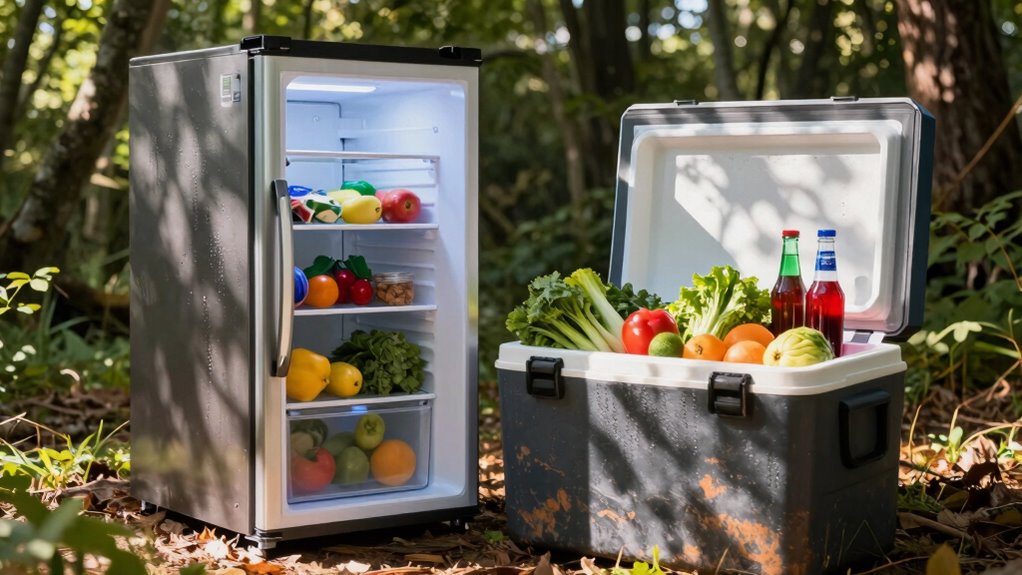
Coolers play a crucial role in maintaining food safety during outdoor adventures by keeping perishables cold and slowing bacterial growth. Their effectiveness depends on factors like ice retention and portability advantages, which directly impact food safety. Properly packed coolers can maintain low temperatures for extended periods, reducing the risk of spoilage. To maximize safety, consider these points:
Properly packed coolers keep food safe longer by maintaining low temperatures and slowing bacterial growth during outdoor activities.
- Use sufficient ice to sustain cold temperatures throughout your trip.
- Keep perishable foods at the bottom of the cooler, where it’s coolest.
- Limit opening the cooler to preserve ice retention.
- Choose a lightweight, portable cooler suitable for your activity, ensuring ease of transport and quick access.
- Regularly monitor the temperature inside the cooler with a thermometer to ensure it stays below the safe threshold. Temperature monitoring helps prevent bacterial growth and spoilage.
These features help ensure your food stays safe, fresh, and uncontaminated during outdoor adventures.
What Features Make a 12V Fridge Safer for Perishables?
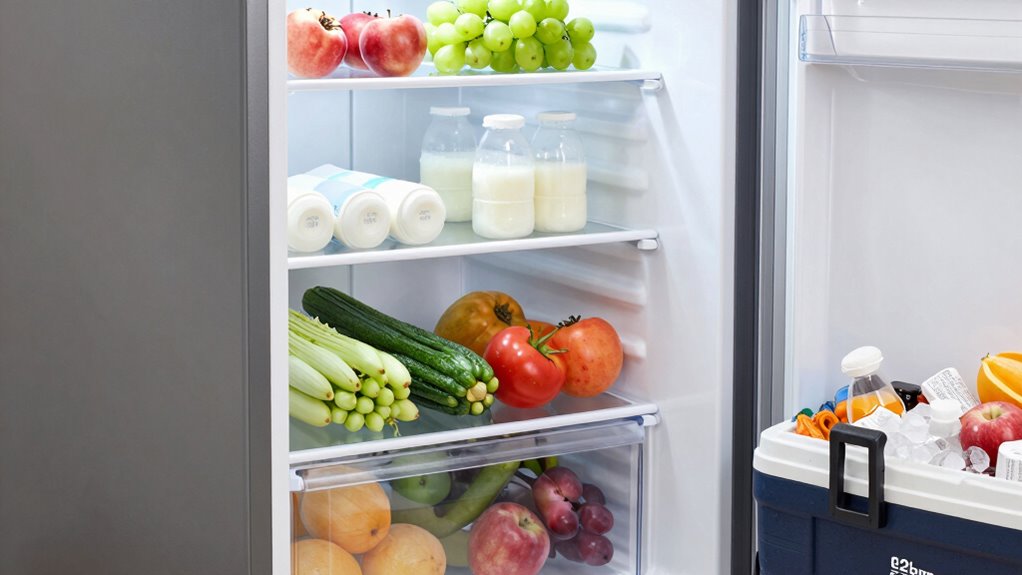
A 12V fridge offers several features that enhance the safety of perishable foods during outdoor trips. Its energy efficiency guarantees consistent cooling without draining your power source, reducing the risk of spoilage. Additionally, portability features like compact size and sturdy handles make it easy to transport and position securely, minimizing temperature fluctuations. Here’s a quick overview:
| Feature | Benefit |
|---|---|
| Energy-efficient compressor | Maintains consistent temperature, saving power |
| Compact design | Fits easily in vehicles, tight spaces |
| Robust portability handles | Simplifies transport and secure placement |
These features work together to keep your perishables safe, preventing spoilage and ensuring food remains fresh throughout your adventure.
How Do Cooler and Fridge Temperature Controls Compare?
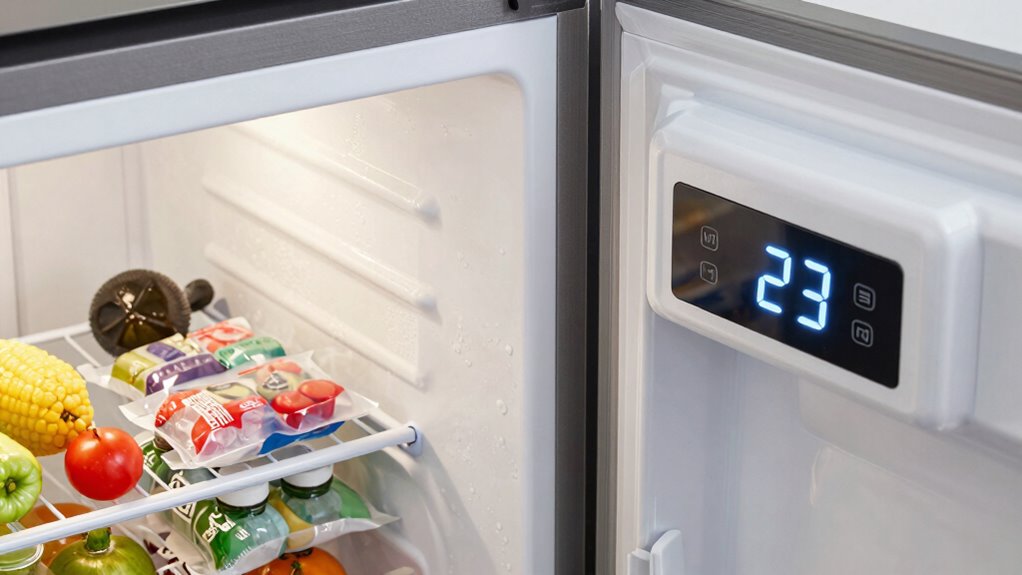
While both coolers and 12V fridges allow you to keep perishables cold during outdoor adventures, their temperature controls differ considerably. Coolers typically rely on passive insulation and ice packs, offering limited control accuracy and inconsistent temperature regulation. In contrast, 12V fridges feature advanced thermostats that provide precise temperature adjustments. Specifically:
- 12V fridges maintain consistent temperatures through automatic thermostats, ensuring food safety.
- Coolers depend on manual ice replacement, resulting in fluctuating temperatures.
- Fridges often include digital displays for easy control and monitoring.
- Cooler temperature control is less responsive, risking temperature spikes that compromise food safety.
- The importance of temperature regulation cannot be overstated in maintaining food safety and preventing spoilage.
How to Choose the Best Food-Safe Cooling Solution for Your Needs
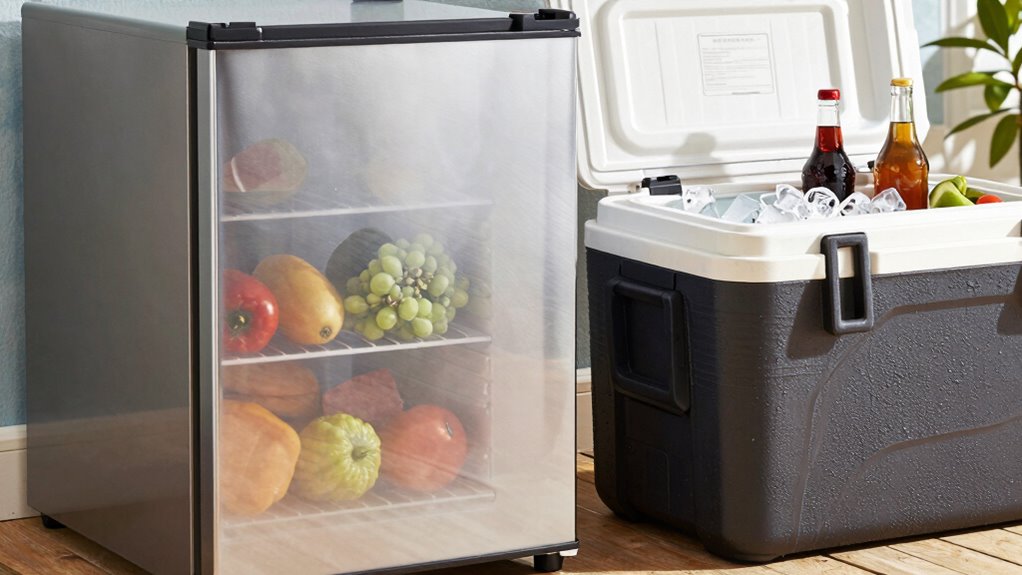
Choosing the right cooling solution for your needs depends on how you prioritize convenience, temperature stability, and food safety. Start by evaluating how portable insulation fits into your plans—if you need a lightweight, easy-to-carry option, a cooler with quality insulation might suffice. For longer trips or frequent use, a 12V fridge offers consistent temperature control and better food safety. Energy efficiency is also key; a cooler generally consumes less power, but a fridge with good insulation can maintain safe temperatures longer without draining your battery. Consider your environment and usage patterns to balance portability, energy consumption, and food safety. This way, you can select a cooling solution that keeps your food fresh, safe, and suitable for your specific needs.
Frequently Asked Questions
How Long Can Food Stay Safe in a Cooler Without Refrigeration?
You can usually keep food safe in a cooler for about 24 to 48 hours, depending on ice longevity and cooler insulation. To extend freshness, confirm you pack the cooler tightly with ice or ice packs, keeping the lid closed as much as possible. Proper insulation minimizes temperature fluctuations, helping prevent bacterial growth. Check the temperature regularly, and discard any perishable items that have been above 40°F for more than two hours.
Are 12V Fridges Energy-Efficient for Extended Trips?
Yes, 12V fridges are energy-efficient for extended trips if you choose models with low energy consumption. They often have features to optimize battery life, making them suitable for long use without draining your power source quickly. While they do consume more energy than coolers, the convenience of consistent refrigeration outweighs this, especially if you monitor your battery levels and select an efficient unit.
What Types of Food Are Best Stored in Coolers Versus Fridges?
You should store perishable items like dairy, meats, and fresh produce in a cooler with ice to maintain them safe. Non-perishable foods such as canned goods, snacks, and dried fruits are best kept in a fridge or cooler for convenience, but they don’t require constant refrigeration. Use coolers for short trips and fridges for longer stays to ensure your food stays fresh and safe.
Can Temperature Fluctuations in Coolers Cause Food Poisoning?
You might not notice it, but sudden temperature fluctuations in coolers can lead to food poisoning. When temperature stability falters, bacteria like Salmonella and Listeria can thrive, risking contamination. Imagine your food sitting at just the right temperature—then suddenly warming up. That unstable environment creates a perfect storm for bacteria growth, making your food unsafe. Stay vigilant; consistent cooler temperatures are vital for preventing food contamination and keeping your food safe.
How Often Should You Check Temperatures in Portable Cooling Devices?
You should check temperatures in portable cooling devices at least twice a day to guarantee food safety. Place your thermometer in the thickest part of the cooler or fridge, avoiding contact with walls or containers. Regular temperature monitoring frequency helps prevent food spoilage and illness. Keep a log for consistency, and adjust cooling methods if temperatures fluctuate outside the safe range, typically below 40°F (4°C).
Conclusion
If you want to avoid turning your trip into a food safety disaster, choosing a 12V fridge is like having a personal food security guard on duty 24/7. Coolers can’t match its precise temperature control, risking spoilage and illness. Don’t let a simple cooler ruin your adventure—invest in a fridge and keep your food fresh, safe, and your trip worry-free. Trust me, your stomach will thank you!