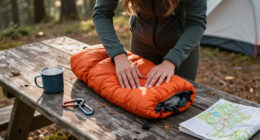
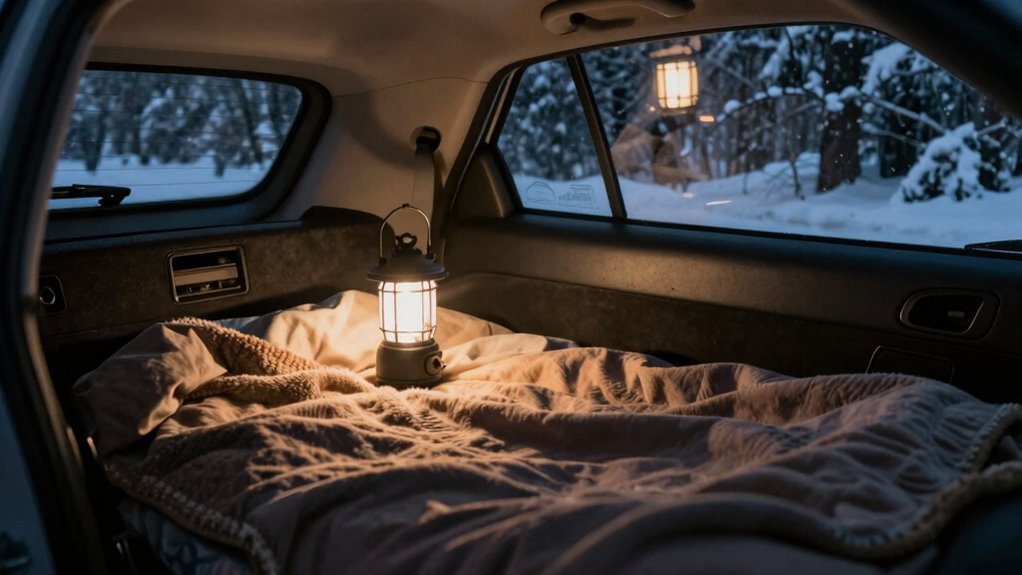

To stay warm in your car, guarantee proper ventilation to prevent carbon monoxide buildup and refresh the air. Layer your clothing with moisture-wicking base layers, insulating mid-layers, and windproof outer shells. Insulate windows and use safe, low-profile heating methods if needed, always monitoring for safety hazards like fires or fumes. Avoid common mistakes like blocking vents or overpacking blankets. Keep these safety and comfort tips in mind, and you’ll discover more ways to stay cozy and safe overnight.

Get travel and outdoor gear delivered free — and shop member deals
- Fast, free delivery on millions of items
- Access to Prime Big Deal Days deals on October 6–7
- Prime Video, Amazon Music and more included
Key Takeaways
- Use proper ventilation techniques, like cracking windows or vents, to prevent fume buildup and ensure fresh air circulation.
- Layer clothing with moisture-wicking base layers, insulating mid-layers, and windproof outer shells for warmth and safety.
- Insulate windows and doors with reflective barriers or foam panels to retain heat and reduce cold drafts.
- Avoid running engines or portable heaters inside the vehicle; always ensure proper ventilation and use safety devices like CO detectors.
- Plan according to weather forecasts, pack adequate blankets, and check vehicle exhaust systems to prevent cold-related hazards and ensure safety.
As an affiliate, we earn on qualifying purchases.
Why Proper Ventilation Is Key When Sleeping in a Car
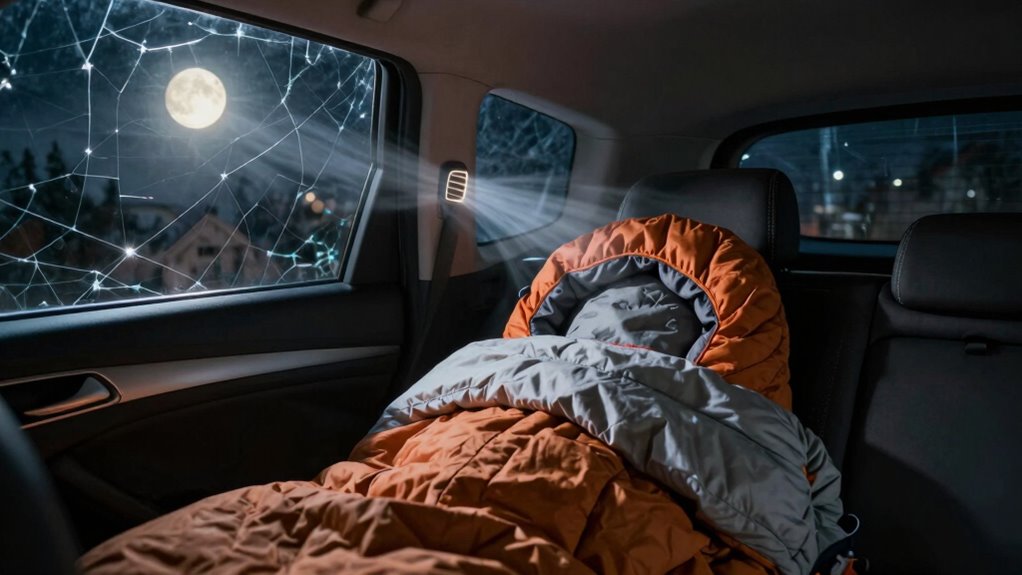
Proper ventilation is vital when sleeping in a car because it helps prevent the buildup of carbon dioxide and reduces the risk of carbon monoxide poisoning. Good air quality keeps you alert and comfortable, making your sleep safer and more restful. When you don’t have proper airflow, window condensation can become a problem, creating moisture that leads to foggy windows and poor visibility. This moisture also encourages mold growth and can make the interior damp and uncomfortable. By cracking a window slightly or using vents, you guarantee fresh air circulates, reducing carbon dioxide levels and managing humidity. Maintaining proper ventilation isn’t just about comfort — it’s an essential safety measure to keep your sleeping environment healthy and secure. Proper ventilation techniques can also help extend the lifespan of your vehicle’s interior and prevent damage caused by excess moisture.
How to Layer Clothing to Stay Warm and Safe

Layering your clothing effectively is essential for staying warm and safe while sleeping in a car, especially in cold weather. To do this, start with a base layer of thermal underwear that wicks moisture away from your skin. Add an insulating layer like a fleece or wool sweater to trap body heat. Top it with a windproof and waterproof outer shell to protect against the elements. Consider these key points:
- Use moisture management fabrics to stay dry and prevent hypothermia
- Avoid cotton; it traps moisture and chills your skin
- Wear multiple thin layers instead of one thick one for better insulation
- Keep extremities covered with hats, gloves, and warm socks
- Adjust layers if you start to overheat or feel too cold
- Incorporate airless paint spraying tips and gear to ensure your clothing and gear are suited for outdoor conditions and moisture control
Proper layering keeps you warm, dry, and safe throughout the night.
Insulation Tips to Keep Warm Without Overheating
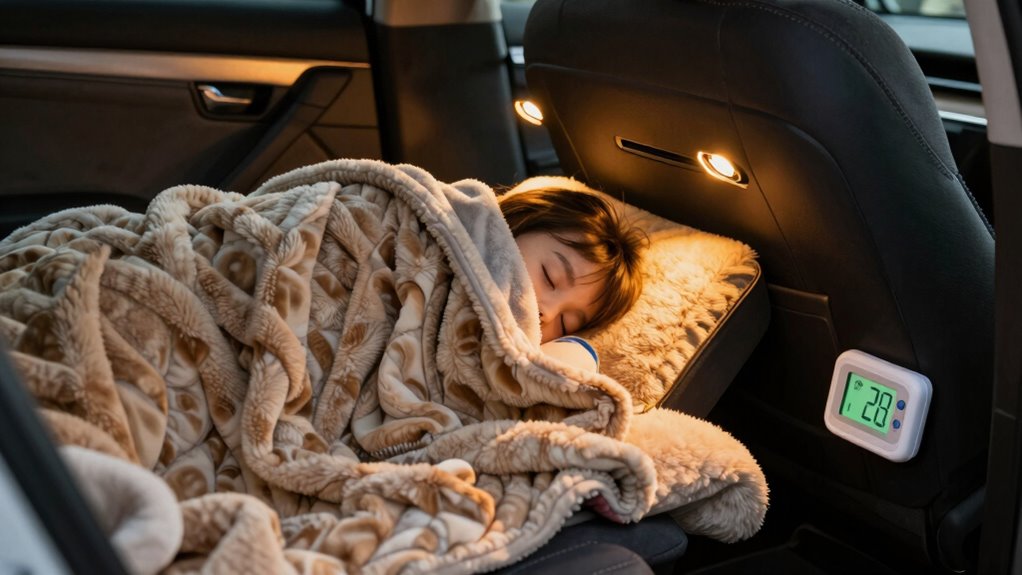
While layering keeps you warm and dry, it’s equally important to prevent overheating during the night. Using thermal barriers can help insulate your car’s interior without trapping excess heat. Reflective insulation is an effective option; it reflects your body heat back toward you instead of letting it escape. Installing a layer of reflective insulation between your sleeping bag and the car’s windows creates a barrier that maintains warmth without causing overheating. Make sure to choose lightweight, breathable materials that allow moisture to escape. Combining reflective insulation with thermal barriers helps you control temperature fluctuations and stay comfortable throughout the night. Proper insulation also minimizes the buildup of indoor air pollutants that can occur in enclosed spaces. Remember, proper insulation enhances warmth while preventing sweating and overheating, ensuring a safe, restful sleep in your car.
Safety Tips to Prevent Carbon Monoxide Poisoning and Fires
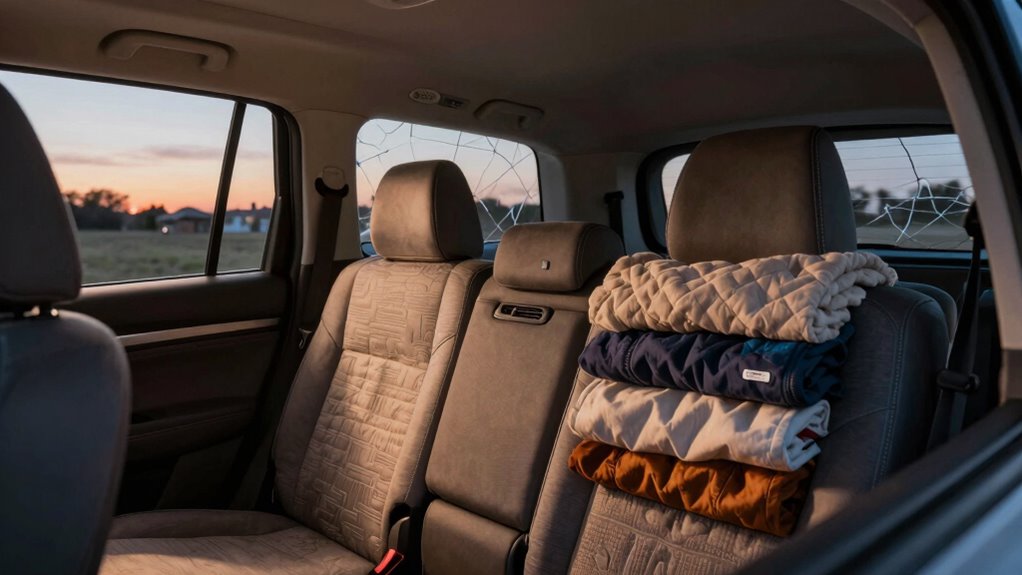
To stay safe while sleeping in your car, it’s crucial to prevent carbon monoxide buildup and reduce fire risks. Carbon monoxide safety is critical, so never run your engine or use a portable heater inside a closed vehicle. Also, avoid smoking or using open flames that could ignite flammable materials. Keep a working smoke detector and carbon monoxide detector nearby to alert you to danger. Ensuring proper power source standards and using reliable equipment can further minimize risks. To minimize fire hazards, stay clear of overloaded power sources, store flammable items outside the vehicle, and avoid using unapproved heating devices. Remember these safety tips:
- Never run the engine for extended periods
- Use battery-powered or approved camping heaters
- Keep vents unobstructed for proper ventilation
- Store flammable substances outside the car
- Install working smoke and carbon monoxide alarms
Choosing the Best Sleeping Gear for Cold Nights
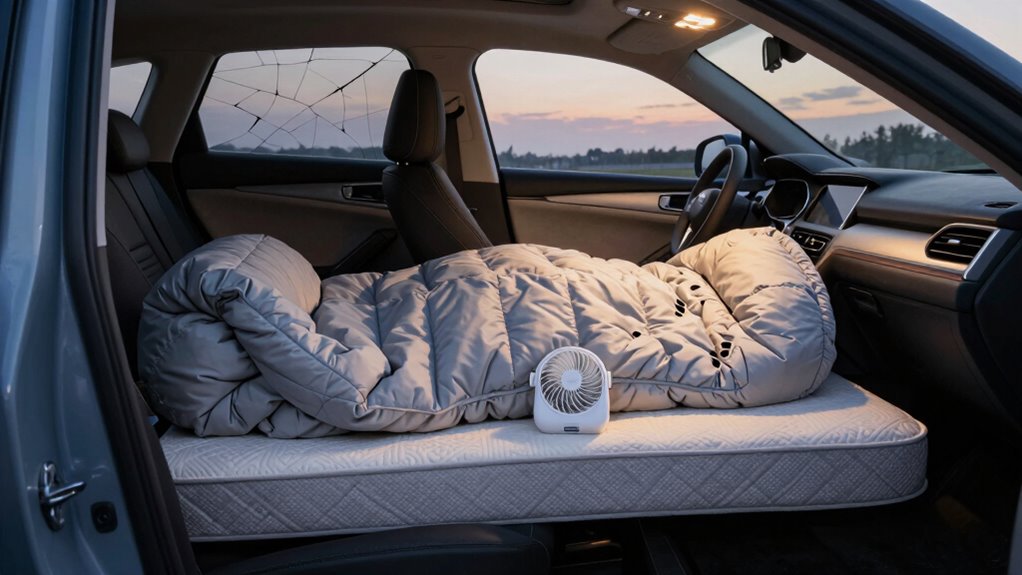
Choosing the right sleeping gear can make all the difference on cold nights. Consider the insulation materials, such as synthetic or down, to keep warmth in. Layering your sleeping bag and clothes adds extra protection against the chill, ensuring a more comfortable sleep. Additionally, selecting gear with a high insulation value can significantly improve warmth retention during freezing temperatures.
Insulation Material Choices
Selecting the right insulation material is essential for staying warm during cold nights in your car. You want options that trap heat effectively and are easy to handle. Faux fur insulation offers a soft, insulating layer that adds comfort and warmth, especially in colder conditions. Reflective bubble wrap reflects your body heat back toward you, boosting insulation without bulk. Consider these materials:
- Faux fur insulation for cozy warmth and softness
- Reflective bubble wrap to reflect heat and reduce heat loss
- Foam panels for lightweight, sturdy insulation
- Reflective blankets for quick, portable warmth
- Wool or synthetic blankets for versatile layering
Combining faux fur insulation with reflective bubble wrap can create a barrier that maximizes heat retention, keeping you warmer throughout the night. Choose materials based on ease of use and insulation efficiency.
Sleeping Bag Types
When you’re sleeping in your car during cold nights, the type of sleeping bag you choose can make a significant difference in staying warm. There are several sleeping bag types to contemplate, such as mummy, rectangular, or semi-rectangular designs. Mummy bags are great for heat retention, fitting snugly to minimize heat loss. Your insulation material choices also matter; synthetic insulation offers better moisture resistance, while down provides superior warmth-to-weight ratio. If you’re expecting damp conditions, synthetic bags are preferable. For colder, dry nights, down bags deliver maximum warmth. Take into account your sleep environment and personal preferences when selecting a sleeping bag type and insulation material choices. Picking the right combination ensures you stay warm, comfortable, and safe throughout the night. Additionally, vetted sleeping bag options are recommended to ensure quality and reliability in your choice.
Layering Strategies
To stay warm in your car during cold nights, layering your sleeping gear effectively is key. Focus on thermal layering to trap body heat and moisture management to keep sweat away from your skin. Use these strategies:
- Base layer: moisture-wicking fabrics that draw sweat away
- Insulating layer: fleece or down for warmth
- Outer layer: windproof and water-resistant material
- Sleeping pad: adds insulation from the cold car floor
- Hat and socks: retain heat and prevent heat loss from extremities
Using Portable Heaters Safely in Your Car
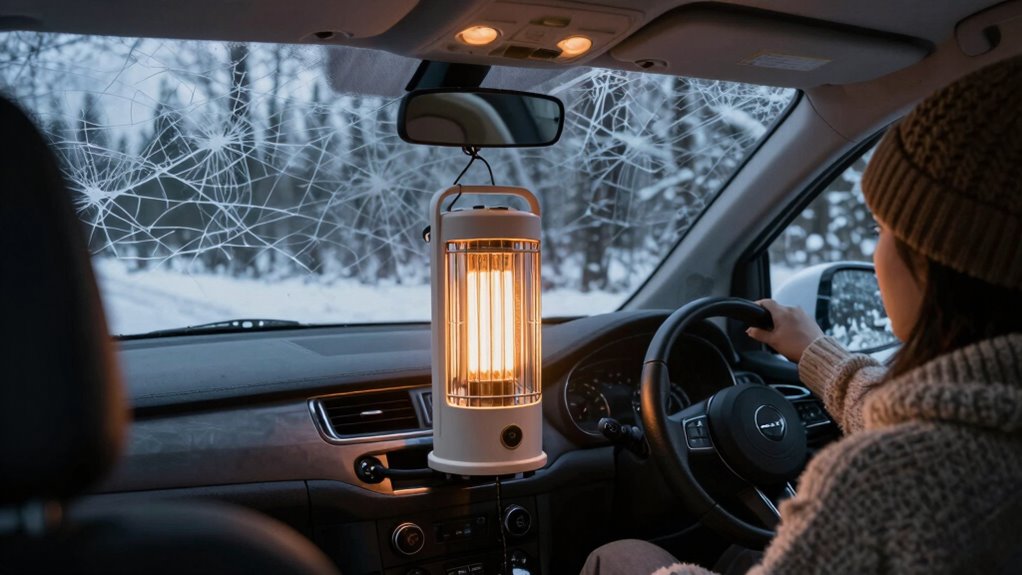
Using portable heaters in your car can be an effective way to stay warm, but it’s essential to prioritize safety at all times. Always follow portable heater safety guidelines to prevent accidents. Place the heater on a flat, stable surface away from your bedding, clothing, and other combustibles. Avoid placing it near windows or curtains, which could catch fire or block ventilation. Make certain the heater has an automatic shut-off feature in case it tips over. Keep a carbon monoxide detector nearby if you’re using a fuel-powered heater, and never leave it unattended while on. Proper heater placement minimizes fire risks and indoor air hazards, helping you stay warm safely throughout the night. Additionally, ensure you are aware of essential safety tips for portable oil radiators to further reduce potential hazards.
Common Mistakes to Avoid During Cold Weather Sleep in Your Car
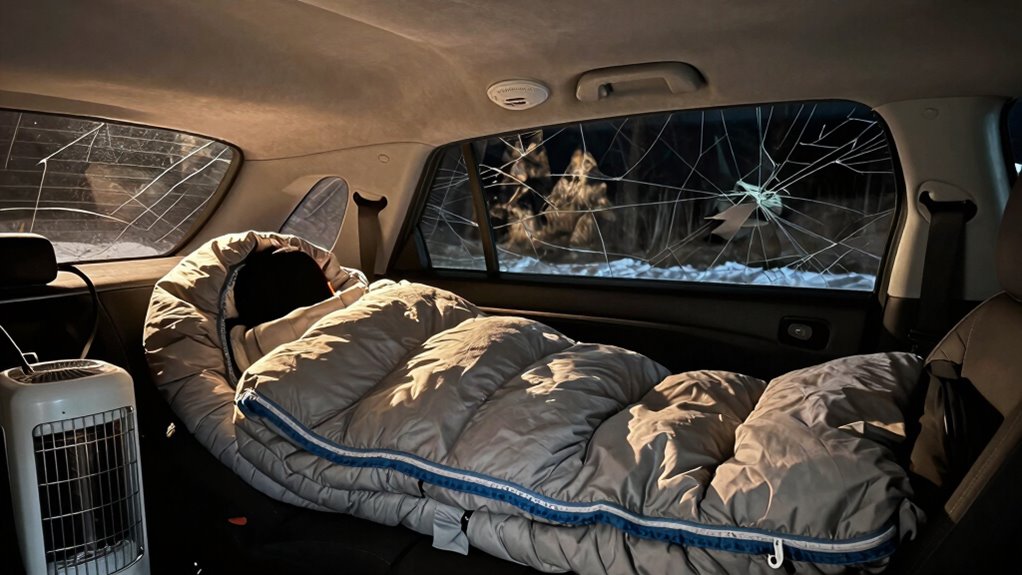
Sleeping in your car during cold weather can be safe if you avoid common mistakes that compromise your safety or comfort. One mistake is overpacking blankets, which can cause overheating or restrict movement. Ignoring weather forecasts is another risk, leading you to be unprepared for sudden drops in temperature or storms. Additionally, relying solely on portable heaters without proper ventilation can risk carbon monoxide buildup. Failing to insulate windows properly can cause heat loss, while neglecting to check your vehicle’s exhaust system might lead to dangerous fumes. Always plan ahead by checking the forecast, pack an appropriate number of blankets, and ensure your ventilation and heating methods are safe and effective. Being prepared helps you stay warm and safe throughout the night. Proper ventilation techniques are essential to prevent unsafe buildup of fumes and ensure fresh air circulation.
Frequently Asked Questions
Can I Sleep Comfortably in a Parked Car Overnight During Winter?
Yes, you can sleep comfortably in a parked car overnight during winter. To stay warm, guarantee good car insulation by sealing windows and vents, and use insulated sleeping bags or blankets. Choose a sleeping position that minimizes heat loss, like curling up or lying close to the door. Keep ventilation in mind to prevent condensation. With proper preparation, you’ll stay cozy and safe throughout the night.
What Are the Signs of Carbon Monoxide Poisoning While Sleeping in a Car?
Imagine a silent shadow creeping in your sleep—that’s carbon monoxide poisoning warning signs. You might feel dizzy, nauseous, or experience headaches, like a fog clouding your mind. If symptoms worsen or you feel weak, it’s a sign to act fast. To prevent poisoning, make sure proper ventilation and never run your engine while sleeping. Recognize these symptoms early to stay safe and avoid dangerous CO buildup in your car.
How Do I Prevent Condensation Buildup Inside My Car While Sleeping?
To prevent condensation buildup inside your car while sleeping, you should use proper ventilation techniques and moisture control. Crack a window slightly to allow fresh air to circulate without losing too much heat. Use moisture-absorbing products like silica gel packs or desiccants, and avoid bringing excessive wet clothing or gear inside. Keeping the interior dry and well-ventilated helps reduce condensation, keeping your sleeping environment more comfortable and safer.
Are There Specific Types of Clothing Best for Cold-Weather Car Sleeping?
You should wear thermal underwear and an insulated jacket to stay warm while sleeping in your car. Thermal underwear provides a snug base layer that traps body heat, while insulated jackets add extra warmth for colder nights. Combine these with warm hats and gloves if needed, and layer appropriately to guarantee you stay comfortable and safe in low temperatures. These clothing choices help retain heat and prevent cold-related issues.
Is It Safe to Leave a Portable Heater Running All Night in My Car?
Leaving a portable heater running all night in your car isn’t safe—it’s a common cause of fires and carbon monoxide poisoning. Did you know that these hazards cause hundreds of injuries yearly? For safe warmth, always prioritize car ventilation tips, like cracking windows slightly, and never leave a heater unattended. Instead, use safer alternatives like sleeping bags and proper insulation to stay warm without risking your safety.
Conclusion
If you follow these tips, you can stay warm and safe overnight in your car. But remember, even the smallest oversight can turn a cozy night into a dangerous situation. Are you prepared to handle unexpected cold snaps or ventilation mishaps? Stay vigilant, prioritize safety, and trust your instincts. The night might be peaceful now, but one mistake could change everything—are you ready to face what’s lurking in the dark?
Fall Picks
fall essentials
As an affiliate, we earn on qualifying purchases.