
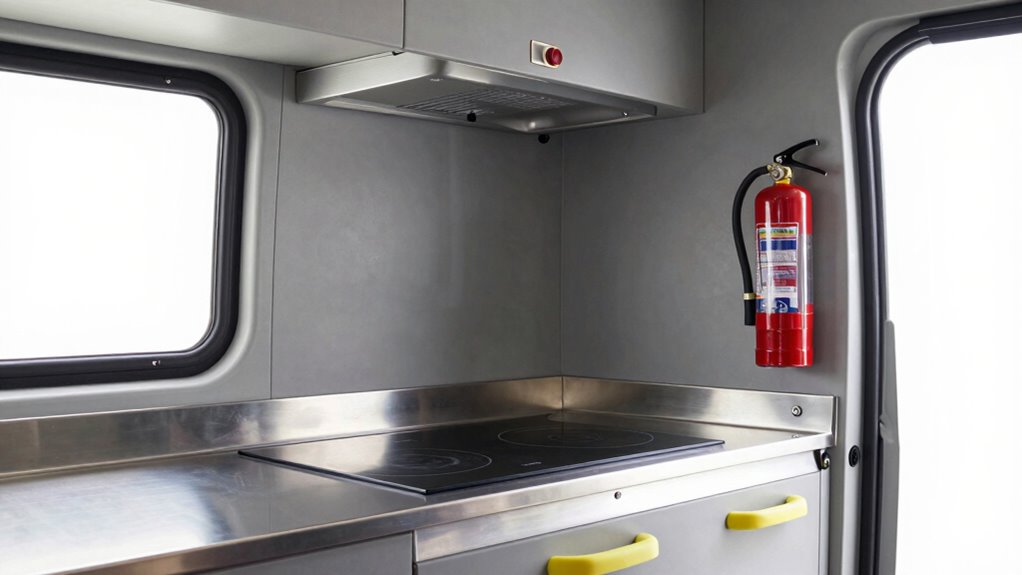
To prevent fires and burns in your van kitchen, identify potential hazards like flammable liquids and open flames. Choose safe appliances such as induction cooktops with auto shut-off features, and guarantee proper ventilation with range hoods. Use fire-resistant materials and keep fire extinguishers handy. Regularly inspect gas and electrical systems, maintain detectors, and develop safety routines. Staying vigilant and proactive can make your van cooking safer—discover more tips to protect yourself and your space.
Key Takeaways
- Install smoke detectors, fire extinguishers, and fire suppression systems for early fire detection and quick response.
- Use fire-resistant materials and proper ventilation to reduce fire spread and improve air quality.
- Choose safe, efficient appliances with automatic shut-off features and regularly maintain gas and electrical systems.
- Store flammable liquids properly, conduct leak checks, and ensure secure propane connections to prevent fires.
- Conduct routine safety inspections, educate household members, and keep emergency tools accessible for fire prevention.
Identify Fire Hazards in Your Van Kitchen Setup
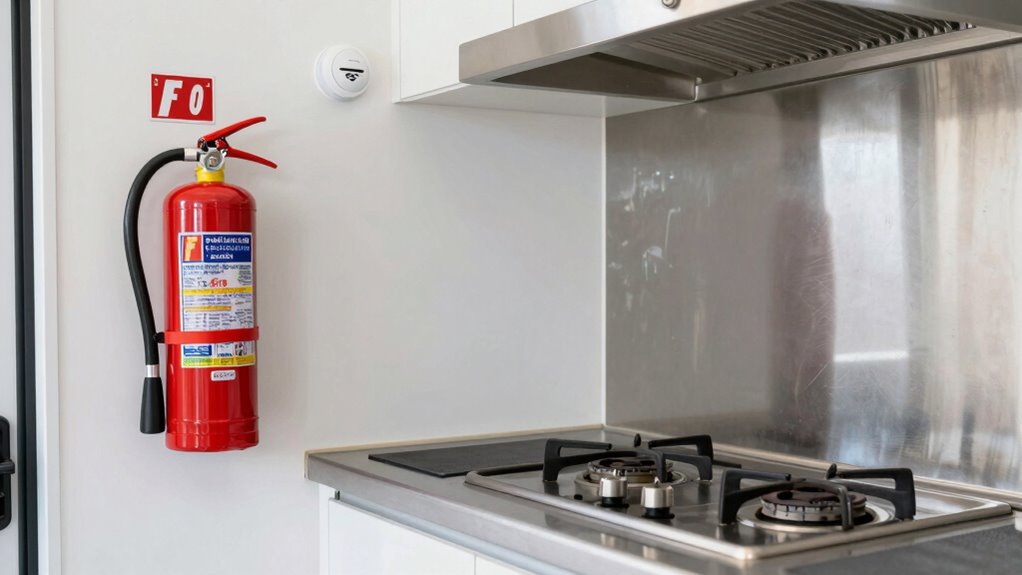
Since a van kitchen involves cooking appliances and flammable materials in a confined space, identifying fire hazards is crucial for safety. You need to be cautious with flammable liquids like cooking oils, propane, and cleaning supplies, which can ignite if not stored properly. Open flames from portable stoves or burners pose significant risks, especially if left unattended or near combustible materials. Always keep these items away from heat sources and ensure they’re stored securely when not in use. Be aware of potential ignition points, such as faulty wiring or loose connections, which could spark a fire. Regularly inspect your setup for leaks, spills, or damaged equipment. Additionally, understanding water safety and the importance of having accessible fire extinguishers can further reduce risks. By recognizing these hazards, you take essential steps to prevent fires and create a safer van kitchen environment.
Choose the Safest Cooking Appliances for Van Life
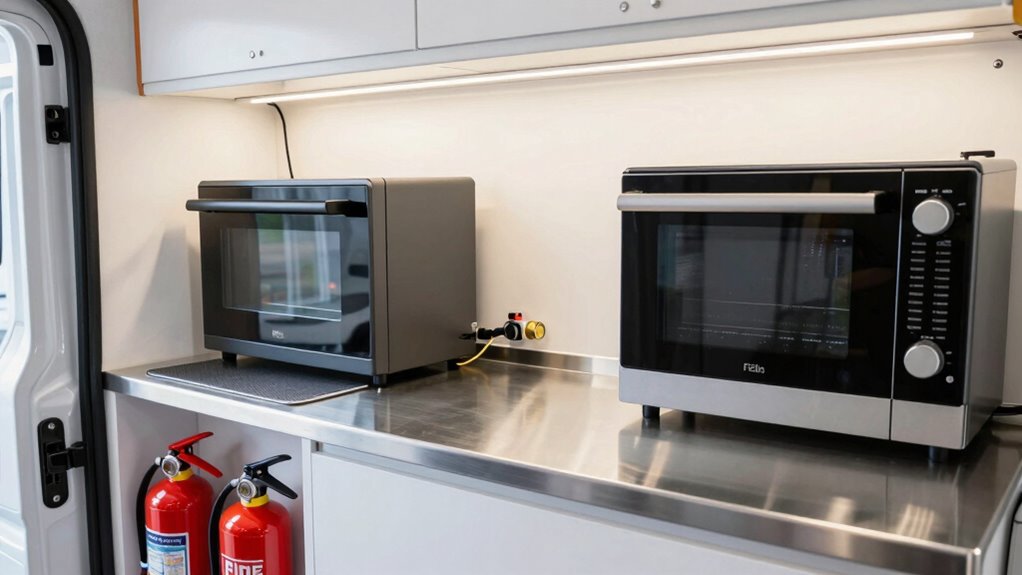
Are you choosing the safest cooking appliances for your van life setup? Prioritize appliances that run efficiently on solar power to minimize fire risks and reduce electrical overloads. Compact induction cooktops are a safe choice because they heat quickly and shut off automatically when not in use. Avoid open-flame stoves, which pose significant fire hazards in confined spaces. Incorporate water filtration systems to keep your cooking water clean, preventing potential health issues in a small, enclosed environment. Look for appliances with safety features like auto shut-off and temperature controls. By selecting energy-efficient, fire-resistant appliances compatible with your solar power setup, you enhance safety and reliability in your van kitchen, ensuring peace of mind on your adventures. exploring new content formats
Install Ventilation and Fire-Resistant Materials
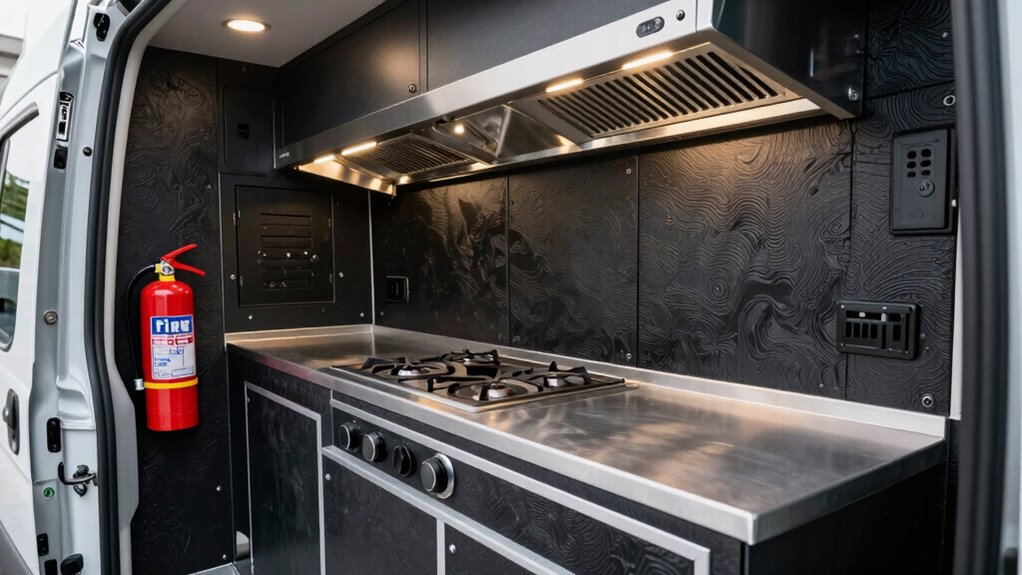
Installing proper ventilation and fire-resistant materials is essential to keep your van kitchen safe and functional. Ventilation optimization ensures smoke, heat, and cooking odors are effectively expelled, reducing fire risk and improving air quality. Consider installing a high-quality vent fan or range hood above your stove to promote airflow. Fire-resistant materials, such as non-combustible countertops and fireproof wall panels, act as critical barriers if heat or sparks escape. These materials help contain potential fires and prevent them from spreading throughout your van. Proper ventilation not only enhances safety but also keeps your space comfortable. Adequate fire safety measures can significantly mitigate hazards and protect your property. By combining ventilation optimization with fire-resistant materials, you create a safer, more reliable kitchen environment tailored for van life.
Practice Safe Propane and Electrical System Use
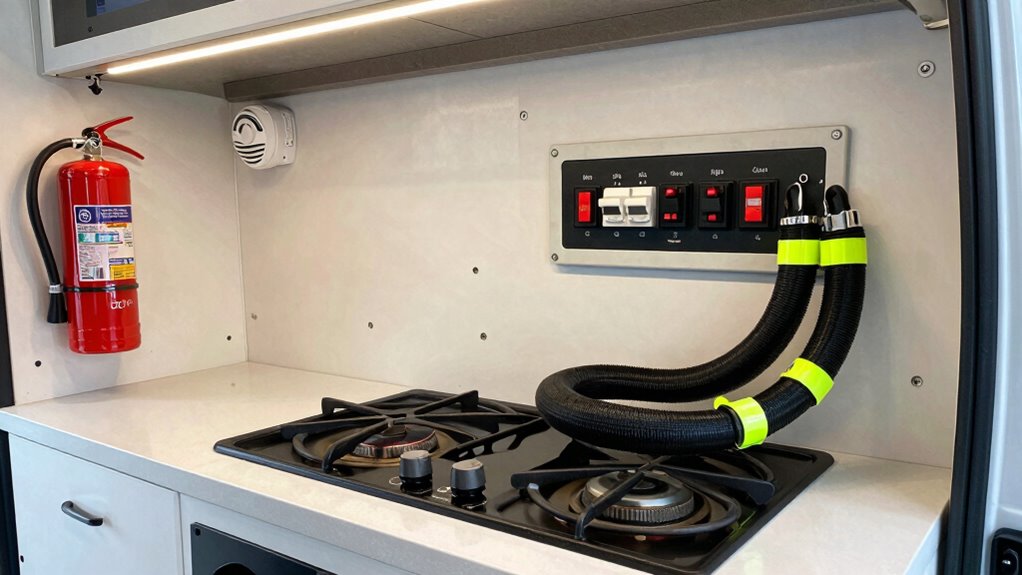
You need to store propane cylinders properly to prevent leaks or accidents, especially in confined spaces. Regular electrical system inspections help catch issues before they become serious hazards. Staying vigilant with these safety measures keeps your van kitchen secure and reliable. Additionally, using portable oil radiators with safety features can help prevent overheating and potential fires.
Proper Propane Storage
Proper propane storage is essential for safety and efficiency in your van kitchen setup. You should always place propane tanks in well-ventilated, upright positions, away from heat sources and direct sunlight. Ensure the propane tank placement is stable and secure to prevent movement during travel. Use secure cylinder connectors to avoid leaks or accidental disconnections. Proper storage also involves checking for corrosion or damage regularly. To help manage safety considerations, refer to the table below:
| Aspect | Best Practice | Key Consideration |
|---|---|---|
| Tank Placement | Upright, ventilated compartment | Avoid heat sources |
| Cylinder Connectors | Secure and tight connections | Prevent leaks |
| Storage Environment | Cool, dry, away from ignition sources | Regular inspection |
| Leak Prevention | Use of soapy water to check fittings regularly | Immediate action if leaks detected |
Electrical System Inspections
Regular electrical system inspections are crucial to guarantee safe and reliable operation in your van kitchen. By routinely checking your wiring, connections, and components, you prevent potential hazards. Focus on key areas like wireless charging stations to ensure they’re functioning correctly and aren’t overheating. Proper battery management is essential—monitor your batteries for signs of wear and ensure your system safely handles charge cycles. During inspections, look for loose connections, corrosion, and damaged insulation. Consider these safety tips:
- Verify all wiring and connections are secure
- Test wireless charging pads for proper function
- Assess battery health and management systems
- Stay informed about home security system effectiveness to understand how safety features can enhance your overall security
Regular checks help avoid electrical fires and ensure your setup operates smoothly, keeping your van safe and functional on the road.
Add Fire Detectors and Suppression Devices
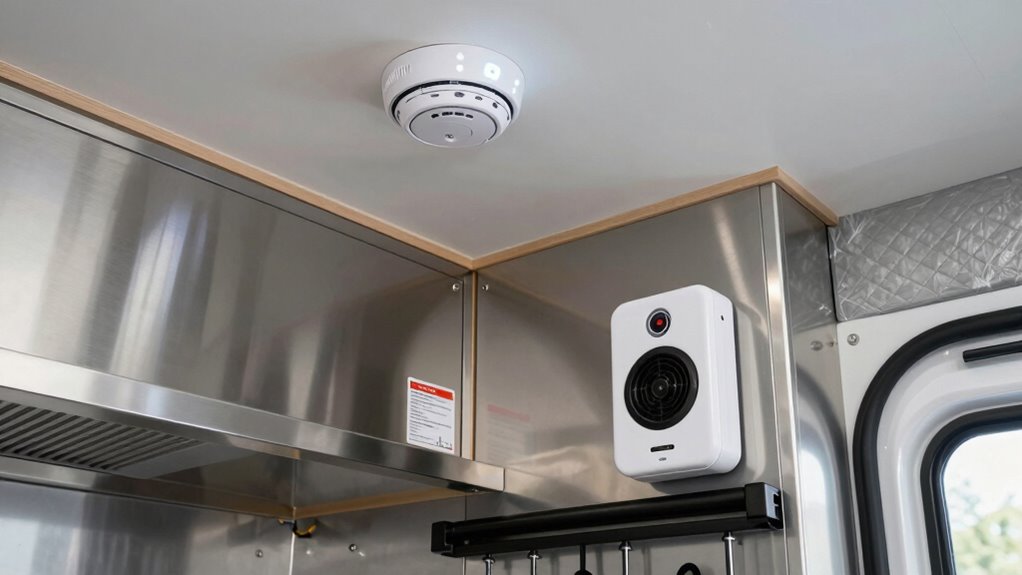
Installing smoke detectors is essential to alert you quickly in case of a fire. Consider adding fire suppression systems that can automatically extinguish flames before they spread. These devices give you peace of mind and help keep your van safe. Additionally, integrating fire safety measures tailored for mobile environments can further reduce risks.
Installing Smoke Detectors
Adding smoke detectors and fire suppression devices to your van kitchen is a crucial step in guaranteeing safety while you cook and relax. Proper smoke detector placement is key—install them near the cooking area and sleeping zones without blocking airflow. Remember to check and replace batteries regularly to guarantee they’re always operational. Regular battery maintenance is essential for timely alerts during emergencies. Consider the following tips:
- Mount detectors high on the wall or ceiling, away from vents or windows
- Test alarms monthly to confirm they’re working properly
- Keep batteries fresh, replacing them at least once a year
- Choose fire suppression devices that are suitable for kitchen use to enhance safety and prevent fires from spreading.
Using Fire Suppression Systems
Using fire suppression systems is a vital step in protecting your van kitchen from potential fires. These safety upgrades quickly respond to fires, minimizing damage and reducing risk to yourself. Install an automatic fire suppression system designed for small spaces, such as kitchens, to guarantee fast activation when heat or flames are detected. Combining these systems with fire detectors enhances safety, providing early warnings and prompt suppression. Regular maintenance and testing keep the systems reliable in an emergency. Don’t forget to choose a system compatible with your kitchen appliances and fuel sources. Incorporating neural interface technology can also improve monitoring and control of safety devices in your setup. By investing in effective fire suppression systems, you’re taking essential steps to prevent fires and burns, making your van kitchen safer and more secure during every trip.
Develop Safe Cooking Habits and Emergency Plans
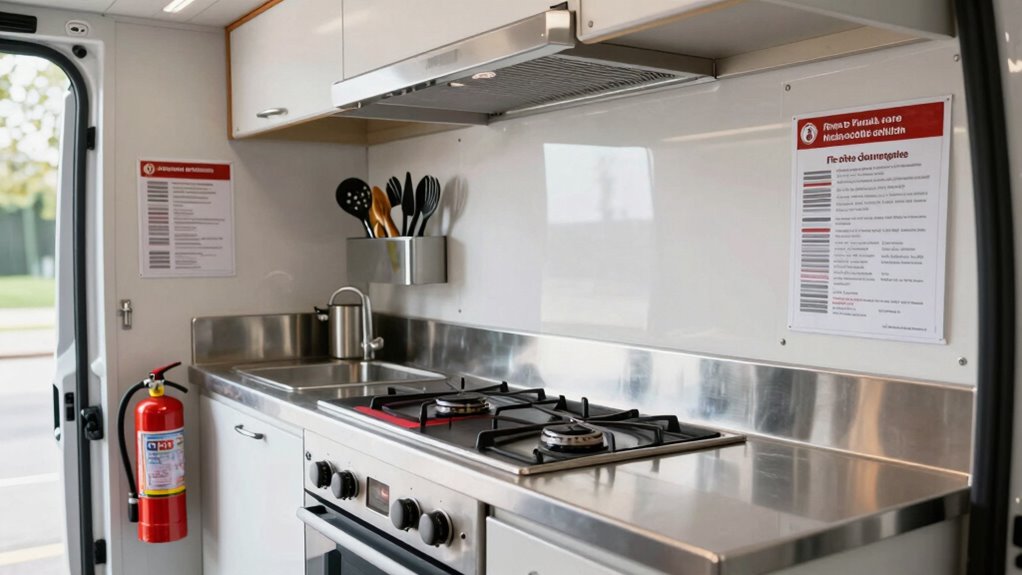
To guarantee your safety in the kitchen, developing good cooking habits and having a clear emergency plan are essential. Safe cooking involves staying attentive, avoiding distractions, and never leaving food unattended. You should also keep flammable items away from the stove and use proper cookware to prevent accidents. Having an emergency plan ensures you’re prepared if something goes wrong, like a fire or burn. Consider these steps:
- Always keep a fire extinguisher nearby and know how to use it.
- Practice quick, safe evacuation procedures.
- Keep emergency contact numbers easily accessible.
- Incorporate carry-on safety measures, such as portable fire extinguishers or smoke detectors, to enhance your safety in a mobile environment.
Regularly Inspect and Maintain Your Van Kitchen Safety Features
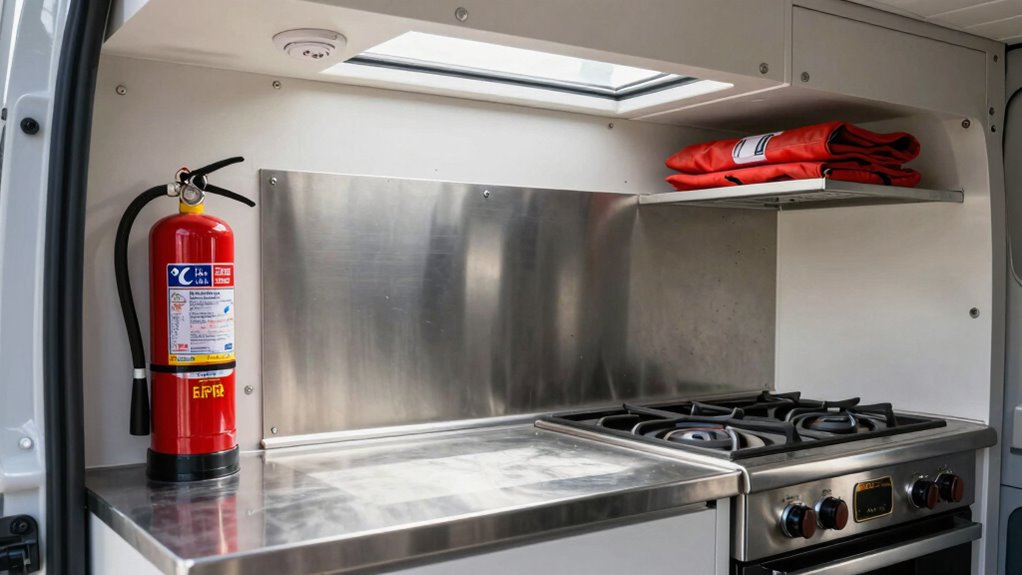
Maintaining your van kitchen’s safety features is key to preventing accidents and ensuring everything works properly when you need it. Regular inspections help you spot issues with gas lines, electrical wiring, and fire extinguishers, keeping your van life essentials safe. Schedule routine checks to confirm that propane regulators are secure, burners ignite properly, and smoke detectors are functioning. Proper campervan cleaning also reduces fire hazards by removing grease and debris that can ignite. Use the table below as a quick reference:
| Safety Feature | Inspection Checklist |
|---|---|
| Fire Extinguisher | Check pressure, expiry date, accessibility |
| Gas Lines & Regulators | Inspect for leaks, secure fittings |
| Smoke & Carbon Monoxide Detectors | Test alarms, replace batteries |
| Electrical System | Examine wiring, avoid exposed connections |
Staying informed about comogenic ratings of products used in your kitchen can further reduce fire risks by selecting safer materials. Stay vigilant—your safety depends on it.
Frequently Asked Questions
How Often Should I Test My Fire Detectors in the Van?
You should test your fire detector monthly to guarantee it’s working properly. Regular fire detector maintenance involves pressing the test button and replacing batteries annually or as needed. Make smoke alarm testing a routine part of your safety checks, especially before long trips. This way, you stay confident that your fire detector will alert you promptly, helping prevent fires or burns in your van.
What Are the Best Storage Practices for Flammable Materials?
Think of your van as a treasure chest, safeguarding precious items. For flammable storage, always use safety containers specifically designed for flammable materials, ensuring they’re tightly sealed and clearly labeled. Store these containers away from heat sources, direct sunlight, and ignition points. Keep them in well-ventilated areas, preferably in a designated fire-safe cabinet or compartment, to minimize risk. Proper storage practices are your best defense against fire hazards.
Can I Install a Fire Suppression System Myself?
You can attempt a DIY installation of a fire suppression system, but it’s not recommended unless you have proper training. Fire suppression involves complex components that require precise placement and integration to work effectively. Mistakes can lead to failure during an emergency. Always follow manufacturer instructions carefully, and consider consulting a professional for installation. Properly installed fire suppression systems greatly enhance safety, so investing in expert help is worth your peace of mind.
What Should I Do if a Fire Breaks Out in My Van Kitchen?
If a fire breaks out in your van kitchen, stay calm and act quickly. Use your fire extinguisher, making sure it’s properly maintained, to put out the flames. Always have an emergency exit plan in place, so you can evacuate swiftly if needed. After the incident, check your fire extinguisher for maintenance, and review your emergency exit plan to improve safety and prevent future fires.
Are There Specific Safety Standards for Van Kitchen Appliances?
Think of your van kitchen appliances as the heart of your mobile home—keeping them safe is essential. Yes, there are specific safety standards and codes you must follow to ensure appliance safety and prevent hazards. Always check for compliance labels and certifications, like UL or CSA, and adhere to local building codes. By doing so, you protect yourself and ensure your appliances operate safely, keeping your journey worry-free.
Conclusion
By budgeting for basic safety, staying vigilant, and installing smart safeguards, you can markedly reduce risks in your van kitchen. Prioritize prevention with proper planning, proactive inspections, and prompt maintenance. Remember, safety starts with you—so stay cautious, keep cleaning, and create calm in your compact cooking space. With thoughtful tweaks and consistent care, you’ll confidently cook, carve out comfort, and conquer your camper culinary adventures—safely, securely, and stress-free.