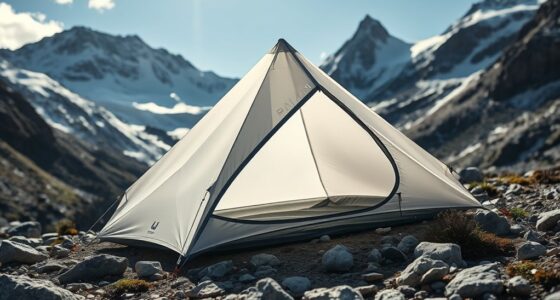
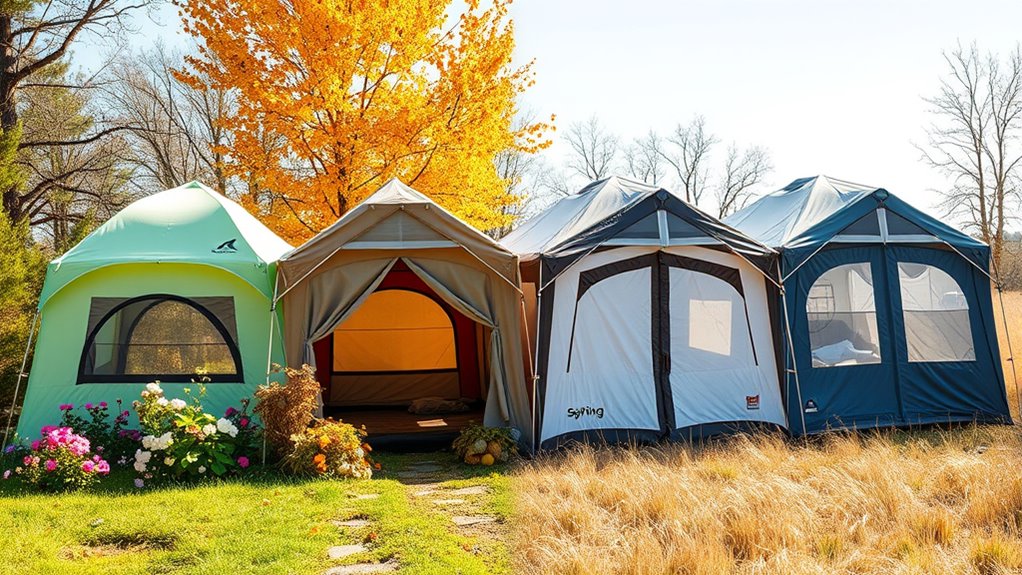

Understanding tent seasons helps you choose the right shelter for specific weather conditions. A 1-season tent is lightweight, suitable for fair weather, while a 2- or 3-season tent offers more versatility for variable conditions like spring, summer, and fall. A 4-season tent is built for harsh winter environments, with durable materials and advanced ventilation to handle snow and wind. Knowing these distinctions guarantees you select ideal protection and performance for your outdoor adventures. Exploring further reveals key design differences and material specifications.
Key Takeaways
- 1‑season tents are lightweight and suitable for summer, offering minimal weather protection.
- 3‑season tents balance weight and weather resistance for spring, summer, and fall conditions.
- 4‑season tents are heavily reinforced, designed to withstand snow, wind, and harsh winter weather.
- Material choice and ventilation features are crucial for optimal performance across different season tents.
- Understanding seasonal differences ensures safe, comfortable shelter tailored to specific environmental challenges.

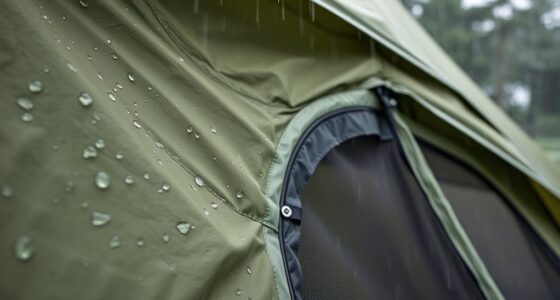
Understanding tent seasons is essential for selecting the appropriate shelter for specific environmental conditions and outdoor activities. When evaluating a tent’s suitability, you must consider the tent material and ventilation features, which directly influence performance across different seasonal contexts. Tent materials, typically fabrics like polyester, ripstop nylon, or canvas, vary in their durability, weight, and resistance to elements such as wind, rain, and snow. For instance, 4-season tents employ high-denier fabrics with waterproof coatings or silicone treatments to withstand heavy snow loads and strong winds, ensuring structural integrity and moisture resistance. Conversely, 3-season tents utilize lighter, breathable fabrics that balance weather resistance with ventilation, optimizing comfort during spring, summer, and fall conditions.
Choosing the right tent involves considering materials and ventilation for optimal seasonal performance.
Understanding tent season classifications helps in choosing the right shelter for specific environmental challenges, ensuring safety and comfort. Ventilation features are equally critical, especially as they prevent condensation buildup—a common issue in colder, more humid environments. In 4-season tents, ventilation is often integrated through adjustable vents, mesh panels, and rain-resistant zippers, allowing airflow while preventing water ingress. Proper ventilation reduces internal humidity, which otherwise could lead to frost or mildew formation, compromising both comfort and structural integrity. When selecting a tent, you should prioritize models with well-designed ventilation features, such as adjustable vents positioned to promote cross-flow, and mesh panels that maximize airflow without sacrificing weatherproofing. This balance ensures you maintain adequate air circulation in winter conditions, where temperature regulation is vital.
The interplay between tent material and ventilation features determines the overall performance of a tent in different seasons. For example, a tent constructed with lightweight, highly breathable fabrics may excel during summer but fall short in winter, where heavier, more waterproof materials combined with strategic ventilation are necessary. In cold environments, proper ventilation prevents internal moisture buildup caused by breath and perspiration, which can lead to frost inside the tent, reducing insulation effectiveness. Conversely, in milder conditions, enhanced ventilation minimizes humidity, keeping the interior dry and comfortable.
Ultimately, understanding the technical specifics of tent material and ventilation features enables you to make informed decisions tailored to your outdoor adventure needs. It ensures that the shelter you choose provides the appropriate balance of durability, weather resistance, and airflow, which is essential for safety and comfort across all seasons. Recognizing how these technical elements interact allows you to select a tent that maintains structural integrity, prevents condensation, and offers reliable protection regardless of environmental challenges.
Frequently Asked Questions
How Do I Properly Store My 4-Season Tent During Off-Season Months?
You should thoroughly clean your 4-season tent, ensuring all tent fabric and zippers are free of dirt and debris. Dry it completely to prevent mold or mildew growth. Store the tent in a cool, dry place, ideally in a breathable storage bag or container. Regularly check zipper maintenance, applying lubricant if needed to keep zippers functioning smoothly. Proper storage preserves fabric integrity and zipper performance for peak durability during the off-season.
Are 4-Season Tents Suitable for Summer Camping?
Think of a 4-season tent as a sturdy fortress designed to withstand harsh weather, not just summer breezes. While it’s durable fabric handles heavy snow and wind, ventilation concerns arise in hot weather, potentially causing condensation. If you’re summer camping, guarantee proper airflow and consider tents with adjustable vents. Overall, 4-season tents can be suitable, but their design prioritizes durability over summer ventilation, so plan accordingly for comfort.
What Maintenance Is Required to Keep a 4-Season Tent in Top Condition?
To keep your 4-season tent in top condition, regularly inspect and improve tent waterproofing by applying a suitable silicone or polyurethane spray, especially after heavy rain or prolonged use. Make certain zippers function smoothly by cleaning debris and lubricating with zipper wax or silicone lubricant. Check seams for signs of wear, resealing with seam sealer as needed. Proper maintenance prevents leaks, prolongs tent life, and maintains ideal performance in extreme weather conditions.
Can 4-Season Tents Be Used for Backpacking Trips?
Yes, you can use 4-season tents for backpacking trips, but consider their weight and design. They often incorporate durable materials suitable for harsh conditions, but tend to be heavier than ultralight gear. Make sure your tent has effective ventilation to prevent condensation buildup during extended use. While sturdy, their weight may limit long-distance backpacking, so evaluate your route and prioritize tents with enhanced ventilation and minimal weight for ideal performance.
How Do I Select the Right 4-Season Tent for Extreme Weather Conditions?
To select a 4-season tent for extreme weather, prioritize vent durability to guarantee proper airflow without compromising protection. Choose models with reinforced, high-quality materials like ripstop nylon or polyester, which withstand heavy snow, wind, and rain. Look for sturdy pole structures and robust seams. A tent with strategic, durable vents prevents condensation and enhances ventilation, vital in severe conditions. Always verify the tent’s weather ratings and manufacturer specifications for peak performance.
Conclusion
Understanding tent seasons is like mastering a complex language—you must recognize the subtle nuances that dictate performance and durability. By selecting the appropriate season rating, you’re fundamentally choosing the armor your shelter needs to withstand the elements. Whether you opt for a 1-season or 4-season tent, each serves as a strategic tool tailored to specific conditions. Making an informed decision ensures you’re equipped to face the unpredictable, transforming your tent into a resilient fortress amid nature’s shifting moods.