When choosing a mountain campsite, avoid spots that look fine but hide hazards like unstable ground, erosion, or water dangers. Stay away from areas with recent landslides, loose rocks, overhanging cliffs, or signs of water runoff and flooding. Watch out for dead trees, heavy brush, and saturated soil that could lead to falls or collapses. Recognizing these warning signs helps keep you safe—if you keep exploring, you’ll uncover even more tips to pick the best site.
Key Takeaways
- Avoid sites with recent erosion signs, such as cracks, exposed roots, or loose soil, indicating unstable terrain.
- Stay away from low-lying, flood-prone areas and water runoff zones after heavy rain.
- Do not set up near cliffs or overhangs showing cracks, loose rocks, or recent rockfalls.
- Steer clear of vegetation patches indicating past flooding or water activity, like water-concentrated plants.
- Choose slopes less than 15° with good drainage, avoiding steep or unstable ground.
How to Find Safe Mountain Campsites
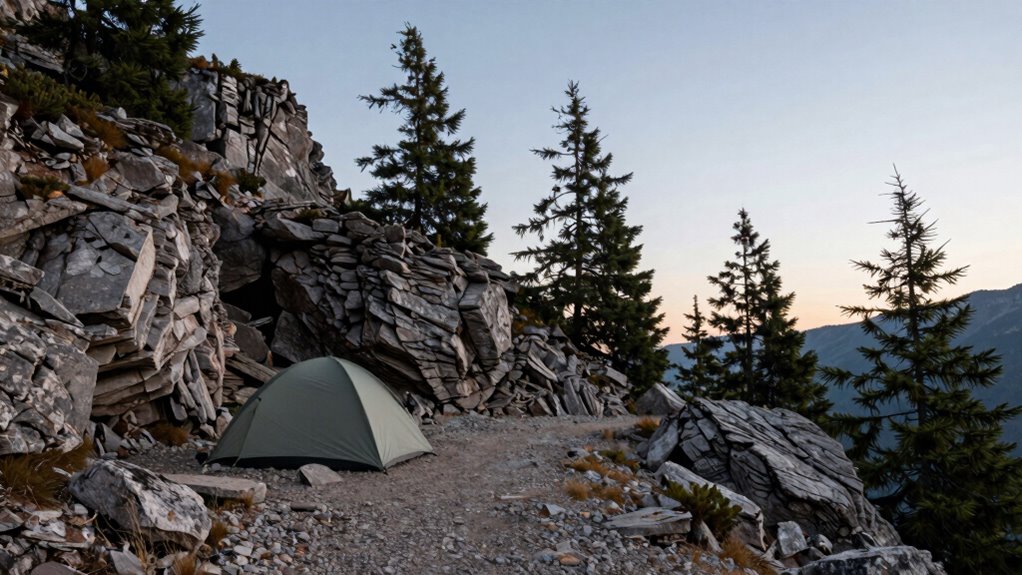
Finding a safe mountain campsite begins with careful research and observation. Pay attention to wildlife activity; frequent animal tracks or sightings can indicate high animal presence, which might pose risks or disturb your sleep. Observe the terrain for signs of recent wildlife visits, like droppings or disturbed vegetation. Additionally, understanding weather patterns helps you choose a secure spot—avoid areas prone to sudden storms, high winds, or heavy snowfall. Check local forecasts and note how weather changes during the day. Stable weather patterns usually mean safer conditions. By combining knowledge of wildlife activity and weather trends, you can select a campsite that minimizes risks from unexpected animal encounters or weather-related hazards, ensuring a safer and more comfortable outdoor experience. Incorporating wildlife activity patterns into your planning can further enhance your safety.
Identify Signs of Erosion and Unstable Ground
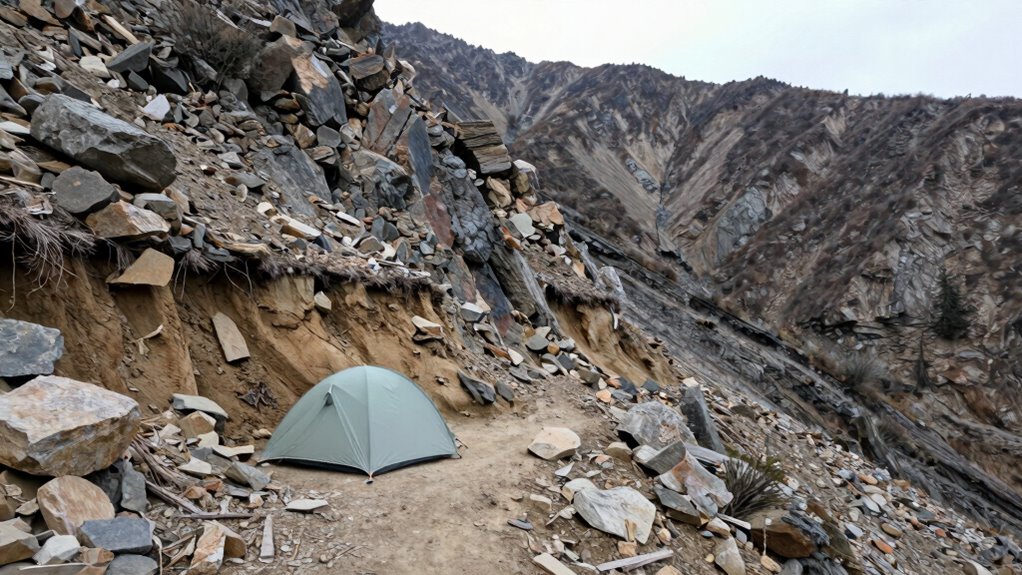
To guarantee your campsite remains stable and safe, recognizing signs of erosion and unstable ground is essential. Look for areas where soil composition appears loose or discolored, indicating recent erosion. Erosion signs include exposed roots, thin soil layers, or small gullies forming around the site. These features suggest the ground may give way unexpectedly. Use the table below to identify potential issues:
| Erosion Signs | Indicators of Unstable Ground |
|---|---|
| Exposed roots | Cracks in the soil or ground surface |
| Thin or patchy soil layers | Slumping or leaning terrain |
| Small gullies or rills | Sudden ground shifts or unevenness |
Being aware of soil stability is crucial for preventing accidents and ensuring the safety of your campsite. Stay alert to these signs to avoid dangerous, unstable spots.
Avoid Campsites Near Waterfalls and Flood Zones
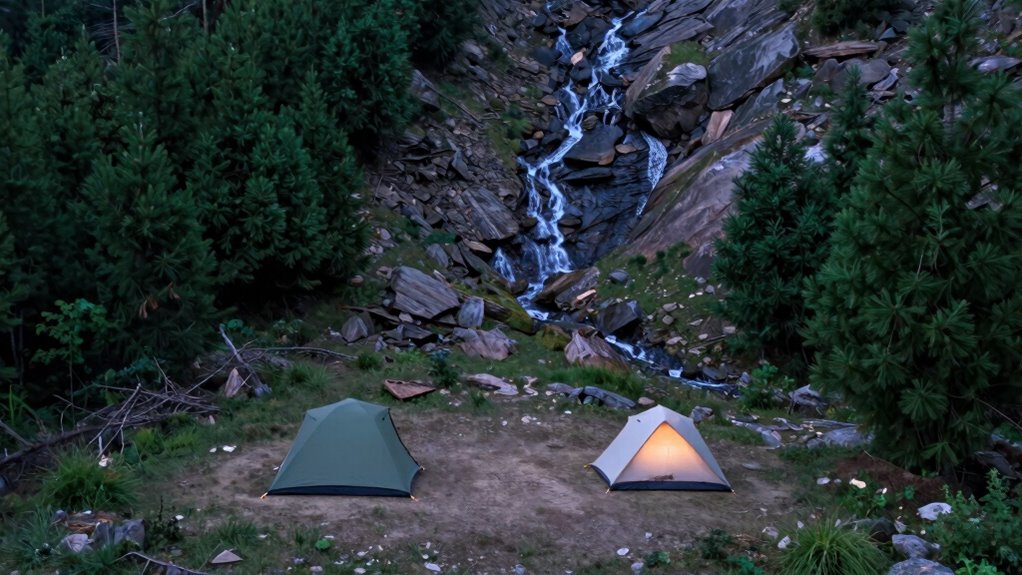
Avoid setting up your campsite near waterfalls or flood zones, as these areas pose significant risks. Waterfall hazards can cause sudden surges of water or falling debris, making them dangerous spots. Flood zone dangers include rapid water rise, especially during heavy rain, which can flood your campsite unexpectedly. To stay safe:
- Stay at least 200 feet away from waterfalls to avoid falling rocks and strong currents.
- Avoid low-lying areas prone to sudden flooding during storms.
- Check weather forecasts for rain, as it increases flood risk.
- Look for terrain that is elevated and well-drained, reducing exposure to water surges.
- Be aware of water surge risks in areas with heavy rainfall, which can quickly turn a safe spot into a hazard.
Watch for Overhanging Cliffs and Loose Rocks
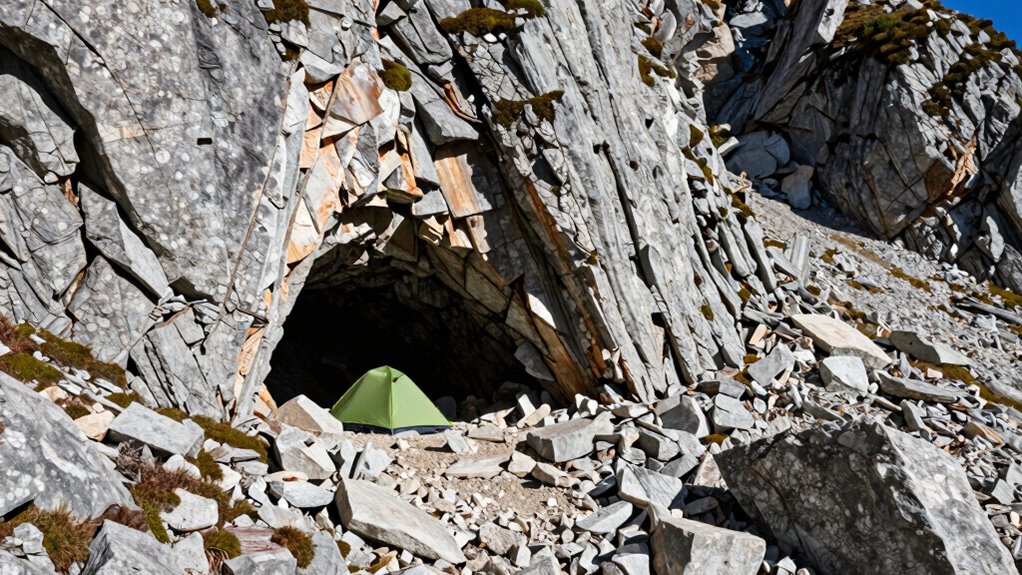
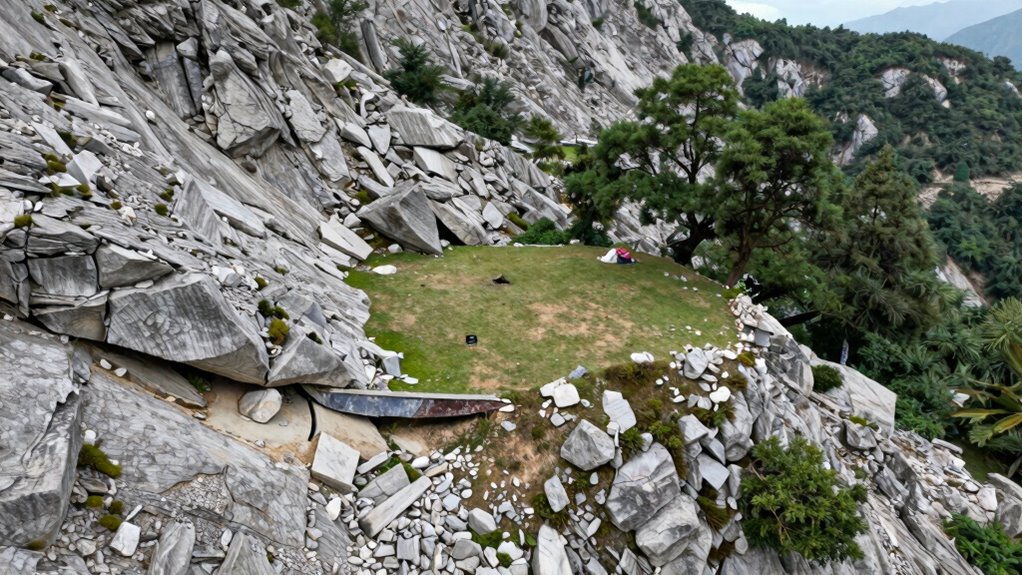
Always check the stability of overhanging cliffs before setting up camp, and look for signs of shifting or crumbling rocks. Inspect the rock conditions carefully to spot loose stones or fragile formations that could fall. Pay attention to warning signs like fresh cracks or loud noises, and stay alert to avoid potential hazards. Additionally, geological stability is crucial to prevent unexpected rockfalls or landslides.
Assess Cliff Stability
Evaluating cliff stability is essential before setting up camp near steep drops. Overhanging cliffs and loose rocks can pose serious rockfall hazards and accelerate cliff erosion. To assess stability:
- Look for fresh cracks or new fractures indicating ongoing erosion.
- Check if overhangs appear cracked or unstable, suggesting potential collapse.
- Inspect loose rocks or debris at the cliff edge; these are warning signs.
- Observe signs of recent rockfalls or debris piles below the cliff, indicating instability.
- Be aware that cliff erosion can occur rapidly due to natural weathering processes, so ongoing observation is crucial.
Avoid spots with visible erosion patterns or unstable formations. Recognizing these signs helps prevent accidents caused by falling rocks or sudden cliff collapse. Remember, cliff stability can change quickly, so always err on the side of caution when selecting your campsite.
Inspect Rock Conditions
Inspecting rock conditions is essential for campsite safety, especially when near overhanging cliffs or loose rocks. You should carefully examine the rock stability of the area. Look for erosion signs, such as cracks, crumbling edges, or fresh debris at the base of cliffs, which indicate ongoing deterioration. Overhanging rocks pose a significant risk if they appear unstable or show signs of recent movement. Test loose rocks by gently tapping them or applying slight pressure. Avoid areas with visibly loose or fractured stones, as they could fall unexpectedly. Always prioritize solid, well-supported rock formations for your campsite. Recognizing these signs helps prevent accidents caused by falling debris or collapses, ensuring you set up camp in a safer, more secure spot. Regularly battery maintenance and checking for signs of instability can also help ensure overall safety during your outdoor adventures.
Recognize Warning Signs
Recognizing warning signs is essential when selecting a safe campsite, especially around overhanging cliffs and loose rocks. Watch for these indicators:
- Cracks or shifting on cliff edges suggest instability.
- Frequent wildlife disturbances near certain spots may indicate loose terrain or hidden dangers.
- Unusual temperature fluctuations can weaken rock integrity over time.
- Falling debris or loose stones signal ongoing erosion or instability.
- Monitoring for essential oils for safety can help you stay alert to environmental hazards that may compromise terrain stability.
Stay alert to subtle signs that suggest danger. Overhanging cliffs with visible cracks or recent rockfalls are red flags. Wildlife disturbances often point to unstable ground or hidden hazards. Remember, temperature swings can weaken rocks, increasing the risk of collapse. Always assess the terrain carefully before setting up camp to ensure your safety.
Look for Animal Trails, Dens, or Droppings
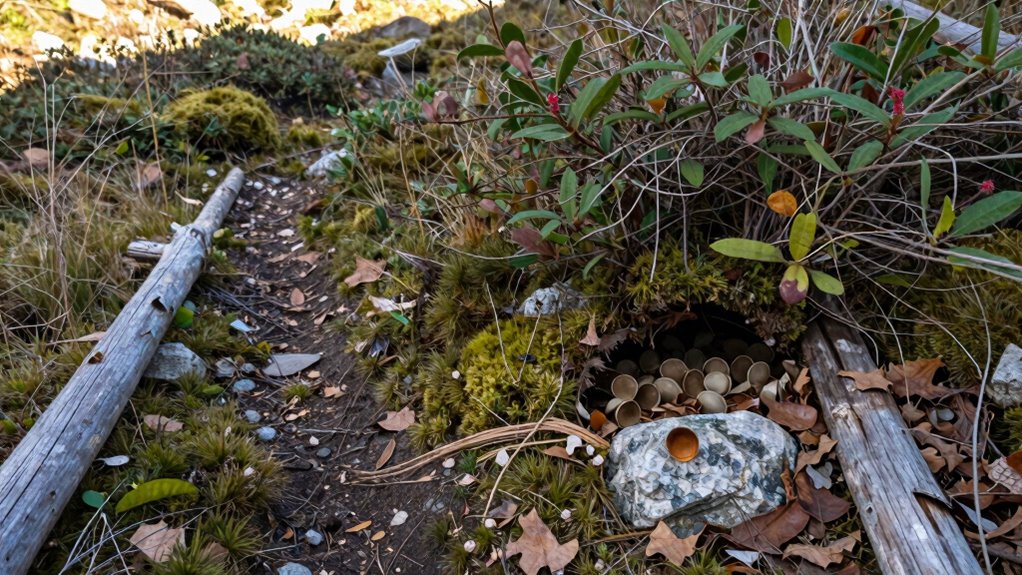
Looking for animal trails, dens, or droppings can give you valuable clues about wildlife activity near your campsite. Animal trails often indicate frequent paths animals use, suggesting areas they feel safe and comfortable. If you notice fresh droppings, it shows recent activity, and the location might be attractive to wildlife. However, this can also mean animals frequent the area, increasing the chance of encounters. Dens, especially those close to your site, can be a sign of active animal habitation, which could lead to unexpected visits or conflicts. Pay attention to the freshness and frequency of these signs. Avoid spots with obvious signs of animal activity, especially if they’re near your planned camping area, to minimize risks and ensure a safer camping experience.
Steer Clear of Sloped Areas With Poor Drainage
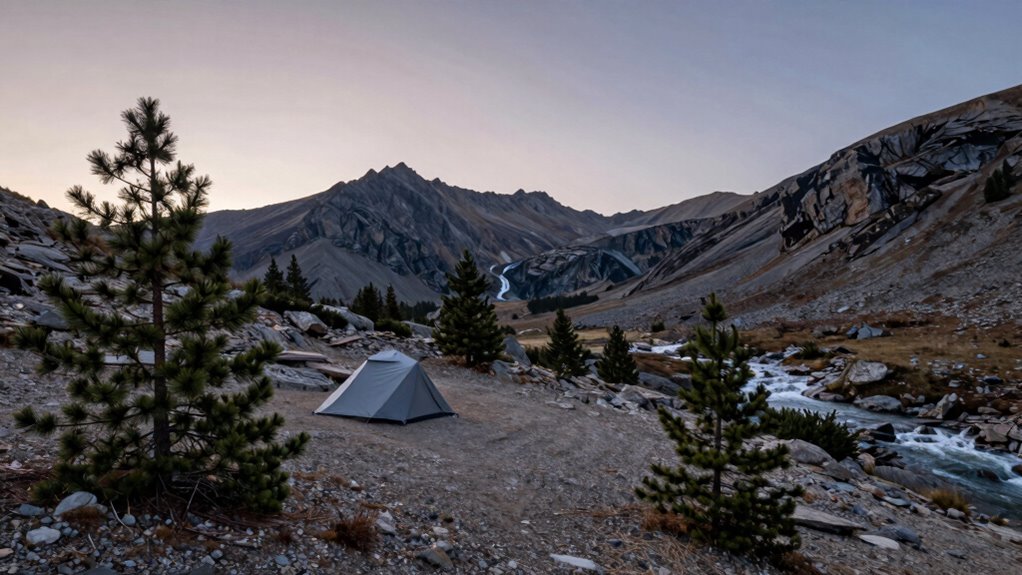
Before setting up camp, check the slope angle to avoid areas that could cause water runoff or landslides. Test the ground’s drainage by pouring a little water and seeing how quickly it absorbs or flows away. Staying on well-drained, gentle slopes keeps you safer from flooding and unstable ground. Additionally, choosing properly graded terrain can prevent water from pooling around your tent.
Check Slope Angle
Checking the slope angle of your campsite area is essential for safety. A gentle slope helps prevent erosion and reduces the risk of landslides. To assess risk properly, consider these factors:
- Use a inclinometer or smartphone app to measure the slope angle accurately.
- Aim for a slope less than 15 degrees to minimize risk.
- Avoid areas with slopes between 15-30 degrees, as they can be unstable.
- Steer clear of steep slopes over 30 degrees, which are prone to slides and poor drainage.
- Ensuring proper drainage is crucial to prevent water accumulation that can weaken slopes.
Test Ground Drainage
Poor drainage can cause water to pool around your campsite, increasing the risk of erosion and instability. When water doesn’t drain properly, it can lead to groundwater contamination, risking your drinking water and the environment. Look for signs of poor drainage, such as soggy soil, muddy patches, or water pooling after rain. Test the ground by pouring a small amount of water and observing how quickly it drains. Avoid sloped areas where water tends to run off slowly or collects. Poor drainage also causes soil compaction, making the ground less stable and more prone to collapsing or sliding. Selecting a spot with good drainage ensures water flows away naturally, keeping your campsite safe, dry, and less vulnerable to erosion or soil instability. Additionally, understanding groundwater movement can help you anticipate areas where water may accumulate and avoid potential hazards.
Avoid Spots With Recent Landslides or Damage
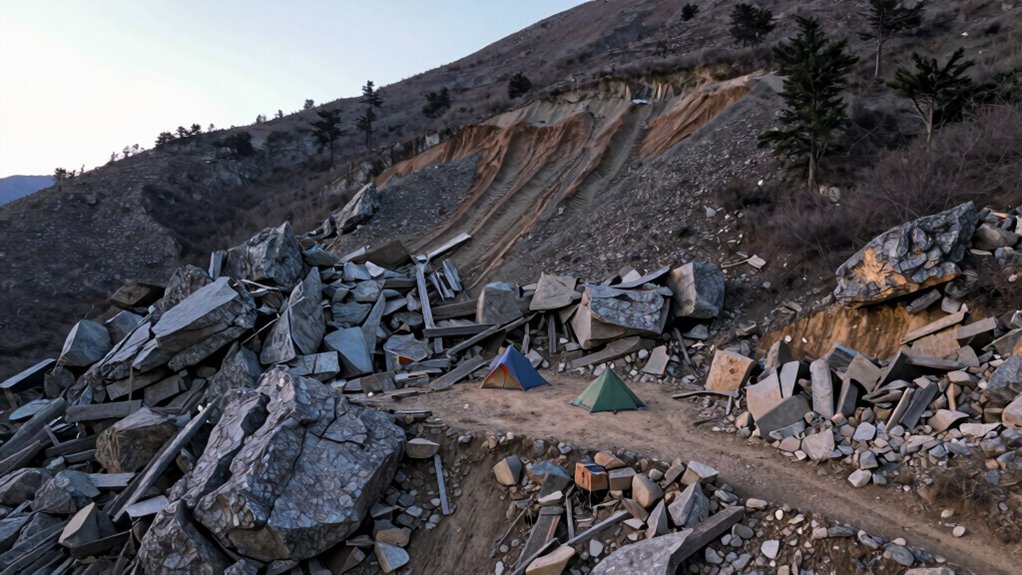
Recent landslides or damage can pose serious risks to your safety, so it’s crucial to avoid affected areas. Damaged terrain indicates instability and the potential for further collapses. When choosing a campsite, look for signs of recent activity. Avoid spots with:
Avoid damaged terrain and recent landslides for your safety; seek stable, undisturbed ground when camping.
- Loose rocks or fresh debris
- Exposed soil or unstable slopes
- Cracks or shifts in the ground
- Fallen trees or large branches indicating recent movement
These signs suggest recent landslides or ongoing instability. Camping on or near damaged terrain increases your risk of injury from sudden slides or collapses. Always scout the area thoroughly and prioritize stable, undisturbed ground to guarantee your safety during your mountain adventure.
Spot Vegetation Indicating Past Flooding or Water Runoff
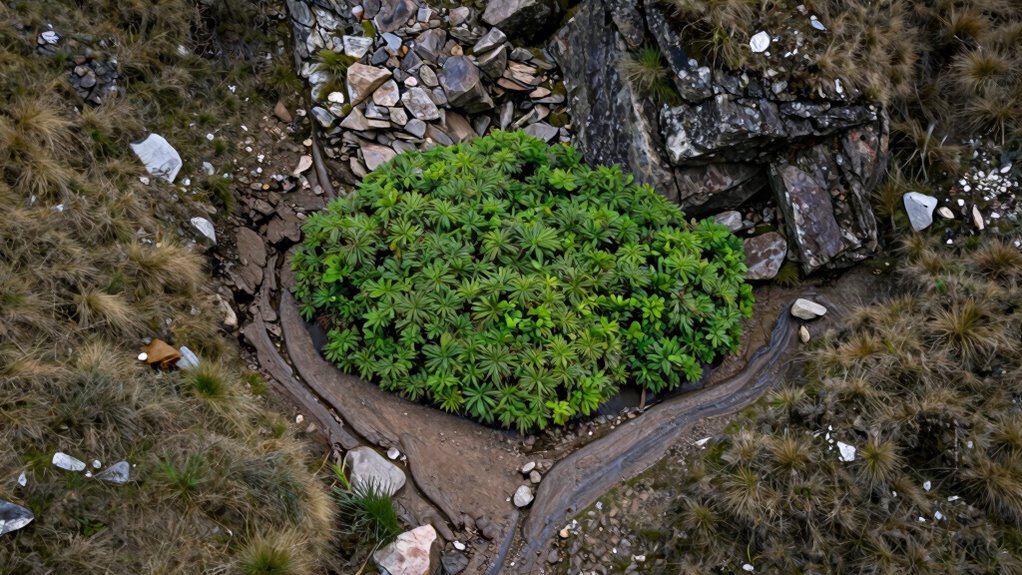
Vegetation patterns can reveal past flooding or water runoff, so pay close attention to the plant growth around your campsite. Areas with flood indicators often show lush, water-loving plants like grasses or mosses that thrive in moist soil. Look for patches of vegetation that appear unusually dense or different from the surrounding area, as these can signal past water accumulation. Conversely, sparse or stunted plants may indicate soil erosion from water flow. Flood indicators include areas with bent or flattened vegetation, or plant growth concentrated along natural drainage paths. Avoid spots where vegetation suggests frequent or recent water activity, as these areas are prone to instability and flooding during heavy rain. Recognizing these signs helps you pick a safer, higher ground campsite.
Stay Away From Heavy Vegetation and Dead Trees (Falling Hazard)
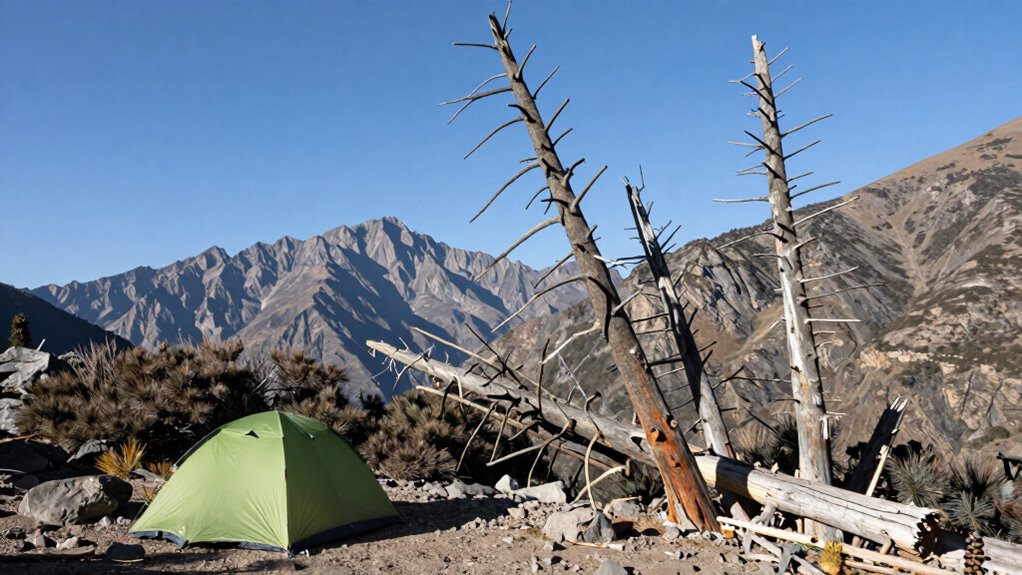
While evaluating vegetation for signs of past flooding helps identify unstable ground, it’s equally important to steer clear of heavy vegetation and dead trees nearby. Dead trees and heavy brush can pose serious falling hazards, especially during wind or storms. To stay safe, watch out for:
Avoid heavy, dead trees and tangled brush to prevent falling hazards during storms.
- Dead trees with cracked or peeling bark, which may snap unexpectedly.
- Heavy brush that’s dense and tangled, indicating unstable roots.
- Trees leaning at odd angles, suggesting weakness or root damage.
- Vegetation with broken branches or uprooted plants, signs of recent instability.
Avoid setting up camp near these areas, as falling limbs or trees can cause injury or damage your gear. Maintaining distance from dead trees and thick vegetation helps ensure your safety in the mountains.
Check Soil Stability and Look for Loose Gravel or Soggy Soil
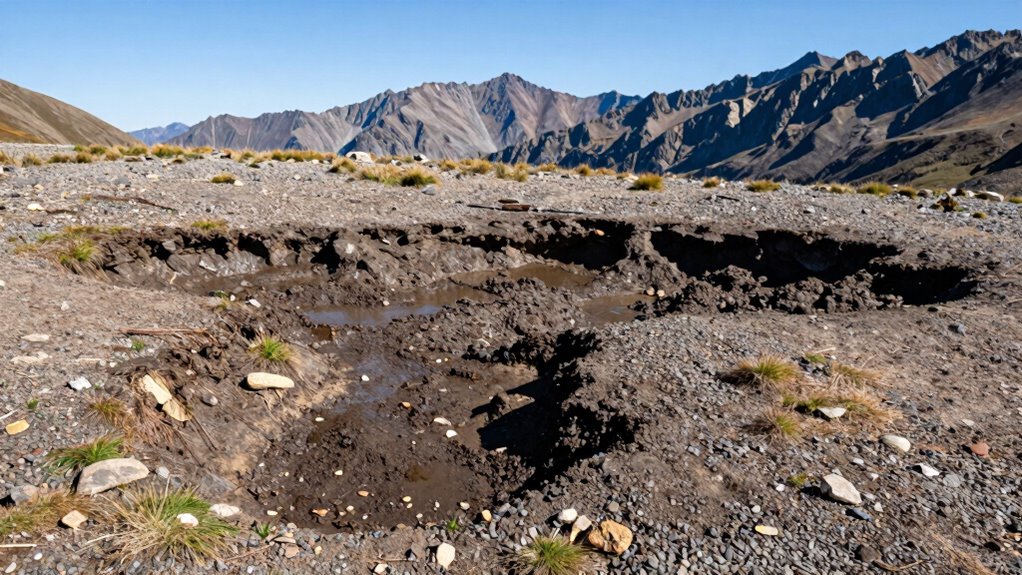
Before setting up camp, look closely at the soil for any discoloration that might indicate instability. Check for loose gravel layers that could shift under your weight or cause landslides. Also, assess the moisture level; soggy soil often signals poor drainage and increased risk of slipping or sinking.
Spot Soil Discoloration
Have you noticed any unusual soil discoloration around your campsite? This can signal instability or past water flow. Look for signs like soil with different shades or streaks, which could indicate rock staining or mineral deposits. To evaluate safety, consider these points:
- Check if the soil discoloration appears fresh or faded; fresh staining suggests recent water movement.
- Observe if the discolored area is muddy or soggy, indicating poor drainage.
- Look for loose gravel or small rocks that might shift under weight.
- Notice if the soil feels soft or spongy, which could compromise stability.
Spotting these signs helps you avoid unstable ground. Soil discoloration isn’t just an aesthetic issue; it’s often a warning sign of underlying instability that could lead to landslides or collapse.
Detect Loose Gravel Layers
How can you tell if there’s a loose gravel layer beneath the surface? Start by inspecting the soil composition—if it feels gritty or crumbly, it may contain loose gravel. Gently press or poke the ground; if it shifts easily or shifts under your weight, the rock stability is questionable. Look for uneven patches or areas that seem unstable when walked upon. Soggy soil often indicates poor drainage, which can undermine soil stability and cause gravel to loosen over time. Clear away surface debris to reveal the soil layer beneath. Remember, loose gravel layers pose a risk of landslides or sudden shifts. Always test the ground carefully, and choose a spot with firm, compact soil and stable rock layers for your campsite.
Assess Moisture Levels
Evaluating moisture levels is essential to determining soil stability at your campsite. A proper dampness assessment helps you avoid areas prone to shifting or collapse. First, look for soil with high moisture content, which can indicate soggy, unstable ground. Second, press lightly on the soil; if it feels overly damp or leaves a mark, it’s a red flag. Third, check for loose gravel that moves easily underfoot, signaling poor cohesion. Fourth, observe the soil surface for puddles or water pooling, indicating excessive dampness. By carefully assessing these factors, you’ll identify spots with suitable moisture levels that won’t compromise your safety or comfort. Remember, stable soil with balanced moisture content is crucial for a secure camping setup.
Frequently Asked Questions
What Are the Best Indicators of Animal Presence Near Campsites?
You can spot animal presence near campsites by looking for wildlife signs like fresh tracks, scat, or disturbed vegetation. Animal tracks are especially helpful; notice their size, shape, and direction to identify which species visit the area. Also, listen for sounds or watch for movement. These signs indicate recent activity, so avoid spots with abundant wildlife signs to reduce your chances of close encounters or potential danger.
How Can Weather Forecasts Influence Campsite Safety Decisions?
Weather forecasts profoundly influence your campsite safety decisions. Pay close attention to changing weather patterns, as they can signal storms or heavy rainfall that threaten your safety. Rely on forecast accuracy to plan ahead, avoiding sites prone to flooding or landslides. Always check updated forecasts before setting up camp, and remain flexible. Being proactive with weather info helps you make smarter choices, ensuring a safer and more enjoyable camping experience.
Are There Specific Times of Day When Campsites Are Safer?
You’re safest camping early in the morning or late evening when temperatures are cooler and weather is more stable. During these times, campfire safety is easier to manage, and you’re less likely to encounter sudden storms. Plus, maintaining campsite cleanliness helps prevent wildlife encounters and reduces fire hazards. Avoid midday hours when heat peaks and weather can shift unpredictably—staying vigilant guarantees your campsite remains a safe, enjoyable refuge.
How Do Altitude Changes Affect Campsite Safety?
Altitude changes can substantially impact your campsite safety by increasing the risk of altitude sickness due to lower oxygen levels. As you ascend, your body struggles to adapt, leading to symptoms like headaches and fatigue. To stay safe, choose campsites at lower elevations when possible, gradually acclimate, and monitor how your body reacts to altitude. Proper hydration and pacing also help reduce risks associated with altitude sickness and low oxygen levels.
What Legal Restrictions Should Be Considered When Choosing a Campsite?
Coincidentally, ignoring legal restrictions can ruin your trip. You should check permitting requirements before setting up camp, as some areas need permits for use. Also, consider land ownership—public lands usually have regulations, while private lands require permission from owners. Failing to follow these rules can lead to fines or eviction. Always research local laws, obtain necessary permits, and respect landownership to make certain of a safe, enjoyable camping experience.
Conclusion
Always stay alert, observe carefully, and choose wisely. Avoid risks, assess stability, and respect nature’s signals. Trust your judgment, prioritize safety, and remember that what looks fine might hide danger. By staying vigilant, making informed decisions, and respecting your environment, you can enjoy your adventure while minimizing hazards. Your safety depends on your awareness, your caution, and your willingness to choose the right spot, every time, in every situation.