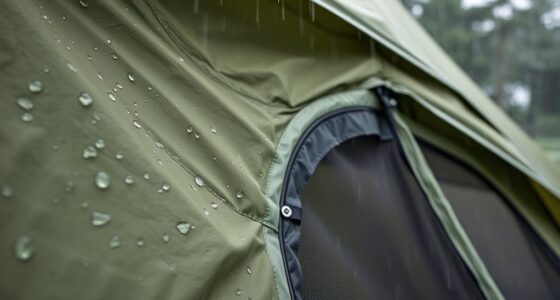


To extend your tent’s lifespan, regularly inspect it for tears, frayed seams, and worn fabric, repairing issues promptly to prevent leaks. Clean your tent with mild, pH-neutral soap in shaded areas, avoiding harsh detergents or abrasive scrubbing, then rinse thoroughly and air dry away from direct sunlight. Reapply high-quality waterproof treatments evenly on seams and vulnerable spots, following manufacturer guidelines. Consistent maintenance and timely care guarantee your shelter remains durable and reliable—discover more tips to keep your tent in top condition.
Key Takeaways
- Regularly clean your tent with mild, pH-neutral soap and rinse with cold water to remove dirt and prevent damage.
- Dry the tent thoroughly in a shaded, well-ventilated area to avoid mold, mildew, and fiber deterioration.
- Inspect seams, zippers, and fabric for tears or wear, repairing issues promptly to prevent further damage.
- Reapply waterproof treatments evenly on all surfaces, focusing on seams and leaks-prone areas for continued water resistance.
- Establish a consistent maintenance routine to preserve waterproofing, structural integrity, and extend your tent’s overall lifespan.

Proper maintenance and cleaning are essential to prolonging the lifespan and ensuring the performance of your tent. Central to this process is understanding the role of the tent fabric and maintaining its waterproof integrity. Tent fabric, typically made from nylon, polyester, or canvas, is engineered with specific coatings or laminates to repel water and resist UV damage. Over time, dirt, grime, and exposure to the elements can degrade these coatings, compromising waterproofing and structural integrity. Hence, regular inspection and treatment are vital.
Proper tent maintenance preserves waterproofing and extends your gear’s lifespan.
When cleaning your tent, avoid harsh detergents or abrasive scrubbing, which can strip away the waterproof coating. Instead, use a mild, pH-neutral soap designed specifically for outdoor gear. To clean the tent fabric effectively, set up your tent in a shaded area to prevent sun damage during cleaning. Rinse off loose dirt with cold, fresh water, then gently scrub the fabric with a soft sponge or cloth soaked in soapy water. Pay particular attention to seams and zippers, as these areas are prone to accumulating dirt and debris, which can weaken their seals over time. After cleaning, thoroughly rinse the fabric to remove all soap residues, as leftover detergents can interfere with waterproof treatments and cause fabric deterioration.
Dry the tent thoroughly before storage to prevent mold and mildew growth. Air drying in a shaded, well-ventilated space is best; avoid direct sunlight, which can break down fabric fibers and coatings. Once dry, inspect the tent fabric for tears, frayed seams, or worn spots, and repair any damage promptly to prevent further deterioration.
Reapplication of waterproof treatment is an essential maintenance step to restore the tent’s water resistance. Use a high-quality waterproof spray or liquid treatment compatible with your tent fabric. Apply the treatment evenly across the entire surface, focusing on seams and areas prone to leaks. For spray-on treatments, hold the can at the recommended distance and work in a well-ventilated area. After application, allow the fabric to cure according to the manufacturer’s instructions, typically by air drying for several hours. This process rejuvenates the waterproof coating, ensuring your tent remains resistant to rain and moisture during future use.
Regular inspections and proper maintenance help identify potential issues early, including damaged fabric or worn seams, which can be repaired before they lead to leaks or more serious damage.
Consistent, thorough maintenance of the tent fabric and waterproof treatment not only extends the lifespan of your tent but also guarantees the best performance in adverse weather conditions. Regular inspections, gentle cleaning, and timely re-treatment are the technical steps that safeguard your gear, making sure it provides reliable shelter for many adventures ahead.
Frequently Asked Questions
How Often Should I Clean My Tent During Regular Use?
You should clean your tent after every three to four uses or when you notice dirt buildup, especially following seasonal maintenance. Regular cleaning prevents dirt and debris from degrading fabric and waterproof coatings. Focus on removing mud, dust, and organic matter from seams, zippers, and fabric surfaces. Dry the tent thoroughly before storage to avoid mold. This routine helps extend your tent’s lifespan and maintains its waterproof integrity.
Can I Use Bleach to Clean My Tent?
No, you shouldn’t use bleach to clean your tent. Bleach risks fabric damage, weakening waterproof coatings and causing discoloration. Instead, opt for a gentle, non-abrasive cleaner specifically designed for outdoor fabrics. Carefully follow the manufacturer’s instructions, and always rinse thoroughly to remove residues. Using proper cleaning methods preserves your tent’s integrity, extends its lifespan, and maintains its water resistance, ensuring reliable protection on future camping trips.
What’s the Best Way to Dry My Tent After Cleaning?
After cleaning, you should use proper tent drying techniques to prevent mold and mildew. First, unzip all vents and doors to facilitate airflow, then set the tent in a well-ventilated, shaded area. Use a fan or gentle breeze to accelerate drying, avoiding direct sunlight that can degrade fabric. Once dry, store your tent in a cool, dry place, loosely folded or rolled, to maintain fabric integrity and prolong its lifespan.
How Do I Repair Small Tears or Holes?
To repair small tears or holes, you should perform a patch repair using a durable, waterproof tent patch kit. Clean the area thoroughly, then cut a patch slightly larger than the damage, and adhere it with waterproof seam sealing adhesive for a secure bond. For seams, apply seam sealing tape or liquid seam sealer along the affected areas to prevent leaks and reinforce the tent’s integrity.
Should I Treat My Tent With Waterproofing Spray Regularly?
Think of waterproofing spray as a shield for your tent’s fabric, keeping moisture at bay like a moat around a castle. You should treat your tent with waterproofing spray regularly, especially after storage or exposure to rain. Proper tent storage prevents unnecessary wear, and fabric treatment restores water resistance, extending your tent’s lifespan. Apply evenly, follow manufacturer instructions, and keep that shield strong to guarantee your tent remains dry and durable through many adventures.
Conclusion
Regular maintenance and thorough cleaning considerably extend your tent’s lifespan, ensuring reliable performance on future adventures. While it may seem tedious, neglecting proper care can lead to material degradation and costly replacements. By inspecting seams, drying thoroughly, and using appropriate cleaning agents, you prevent mold, UV damage, and fabric weakening. Investing a little effort now avoids premature deterioration, saving you money and ensuring your tent remains durable and functional for years to come. Proper care truly pays off in long-term performance.