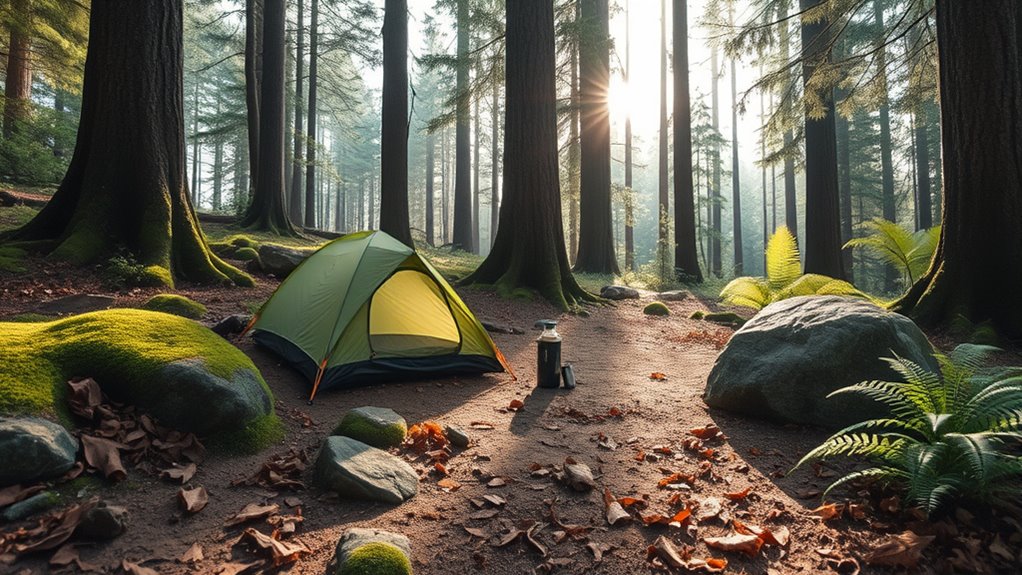

When stealth camping, minimize your impact by choosing established sites and avoiding new trails to protect ecosystems. Set up shelters using natural features, and avoid digging or altering the ground. Pack out all waste, including food scraps and hygiene products, following Leave No Trace principles. Keep noise low, store food securely, and respect wildlife by maintaining a low profile. Practicing these eco-conscious habits helps preserve natural spaces for future adventures and guarantees your presence leaves minimal trace.
Key Takeaways
- Choose established campsites and avoid creating new trails or disturbing vegetation.
- Use natural features for shelter and support, avoiding digging or soil disturbance.
- Pack out all waste, including food scraps and hygiene products, following Leave No Trace principles.
- Keep noise low, store food securely, and avoid approaching or feeding wildlife.
- Maintain a responsible outdoor mindset, prioritizing minimal impact and preserving natural spaces for future visitors.
When stealth camping, practicing Leave No Trace principles is essential to safeguard your environmental impact and guarantee you can enjoy nature responsibly. One of the key aspects of ethical camping is minimizing site disturbance, ensuring that your presence leaves as little trace as possible. This means you need to be mindful of where and how you set up your camp, paying close attention to the natural environment around you. Avoid creating new trails or trampling vegetation, as these actions can cause lasting damage to fragile ecosystems. Instead, look for already established campsites or areas that show signs of previous human activity, which helps reduce the overall impact on untouched nature.
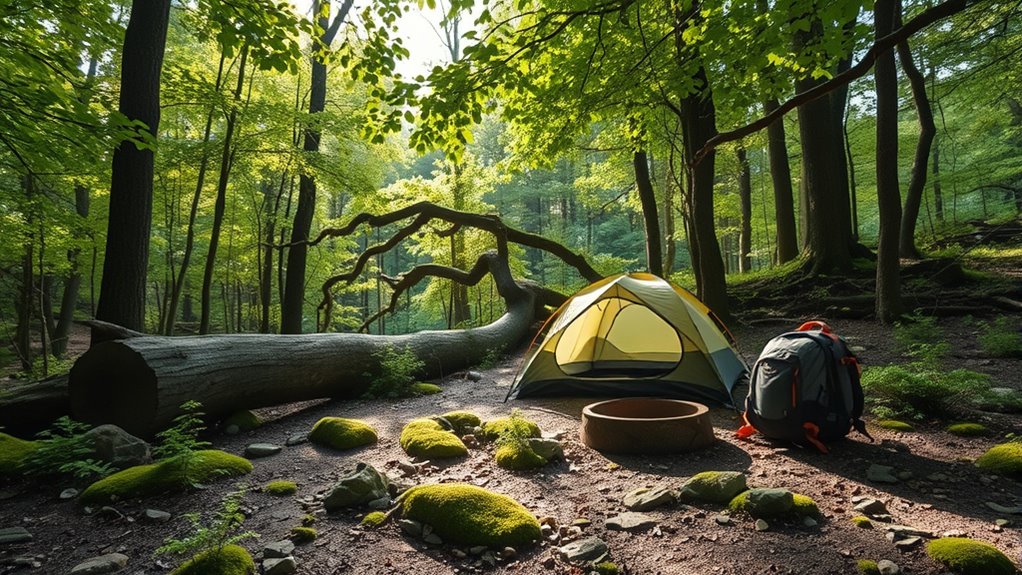
To truly embrace ethical camping, it’s necessary to keep your site as pristine as possible. This involves choosing a location that can sustain minimal impact and setting up your tent or shelter in a way that doesn’t disturb the soil or plant life. When possible, use natural features like rocks or fallen logs for support, rather than digging or anchoring into the ground, which can cause unnecessary site disturbance. If you need to clear a small area, do so gently and only remove debris that’s already on the ground, avoiding any disruption to the surrounding plants or wildlife. Remember, your goal is to blend into the environment, not reshape it.
Keep your campsite pristine by using natural features and minimizing ground disturbance.
Waste management is another crucial component of ethical camping. Always pack out everything you bring in, including trash, food scraps, and hygiene products. Leaving waste behind not only pollutes the environment but also disturbs local wildlife and diminishes the natural beauty of the area. If you’re camping in a remote spot without facilities, carry a small biodegradable waste bag to collect human waste and dispose of it properly later. This proactive approach helps prevent site contamination and keeps the area pristine for future visitors. Additionally, understanding the principles of Leave No Trace can help guide your efforts to minimize your footprint effectively.
Respect for wildlife and other visitors also plays a significant role in minimizing your impact. Keep noise levels low, avoid approaching animals, and store food securely to prevent attracting wildlife to your camp. By maintaining a low profile, you reduce the risk of disturbing natural behaviors or causing animals to become dependent on human food sources. Additionally, being discreet and considerate of other campers promotes a peaceful environment and preserves the solitude that makes stealth camping appealing.
Ultimately, ethical camping is about more than just following rules; it’s a mindset that prioritizes the health and longevity of natural spaces. By conscientiously reducing site disturbance, managing waste responsibly, and respecting the environment and its inhabitants, you ensure that you can enjoy the wilderness while preserving it for generations to come. Practicing Leave No Trace isn’t just good manners—it’s a critical step toward responsible outdoor adventures that honor the beauty and resilience of nature.
Frequently Asked Questions
How Do I Find Stealth Camping Spots Legally and Ethically?
To find stealth camping spots legally and ethically, you should research local regulations first—some areas allow dispersed camping, while others prohibit it. Look for public lands like national forests or Bureau of Land Management areas that permit camping with minimal impact. Always respect private property and seek permission if necessary. Be mindful of your surroundings, minimize noise, and follow Leave No Trace principles to reduce your footprint and ensure your camping remains eco-conscious and respectful.
What Gear Minimizes Environmental Impact During Stealth Camping?
Imagine you’re gently treading in nature’s quiet embrace. To keep your footprint light, choose eco-friendly gear like lightweight, reusable camping tools, and opt for biodegradable supplies such as soap, utensils, and trash bags. Compact, energy-efficient gear reduces waste and disturbance. By selecting sustainable options, you protect the environment while enjoying your stealth camping adventure, ensuring nature stays pristine for future explorers and maintaining a respectful, harmonious relationship with the land.
How Can I Prevent Wildlife Disturbances While Stealth Camping?
To prevent wildlife disturbances while stealth camping, avoid feeding animals, as this disrupts their natural behaviors. Keep a safe distance from wildlife to prevent habitat disruption and avoid trampling vegetation. Store food securely to prevent attracting animals and safeguard their habitat. Respect their space, and minimize noise and light pollution. By doing so, you help preserve their habitat and ensure your presence doesn’t cause unnecessary stress or ecological imbalance.
Are There Specific Techniques for Discreetly Setting up a Campsite?
Imagine you’re a modern-day ninja, slipping into nature unnoticed. To discreetly set up your camp, focus on concealment techniques like choosing natural cover, minimizing noise, and avoiding bright lights. Use a low-profile camp setup, pitch your tent away from trails, and hide gear behind foliage. Keep your activities quiet and swift, blending seamlessly with your surroundings to prevent wildlife disturbance and leave no trace behind.
How Do Weather Conditions Affect Low-Impact Stealth Camping?
Weather challenges and seasonal considerations considerably influence your stealth camping approach. Rain can erode your campsite’s discreetness and cause environmental damage, so choose sheltered spots and pack waterproof gear. Cold weather demands extra insulation and ventilation to prevent condensation, while hot, dry conditions increase fire risk and impact vegetation. Always adapt your setup to current weather patterns, minimizing disturbance and ensuring your presence remains unobtrusive, eco-friendly, and safe in any season.
Conclusion
By practicing Leave No Trace, you become a quiet ripple in the wilderness, leaving behind only footprints in your memory, not on the earth. Your actions, like gentle whispers, preserve the landscape’s natural harmony, allowing its beauty to flourish undisturbed. As a steward of these sacred spaces, you paint a vivid picture of respect and care, ensuring future explorers find the wilderness unchanged—an untouched canvas awaiting their own stories. Let your footprint be one of kindness, not harm.