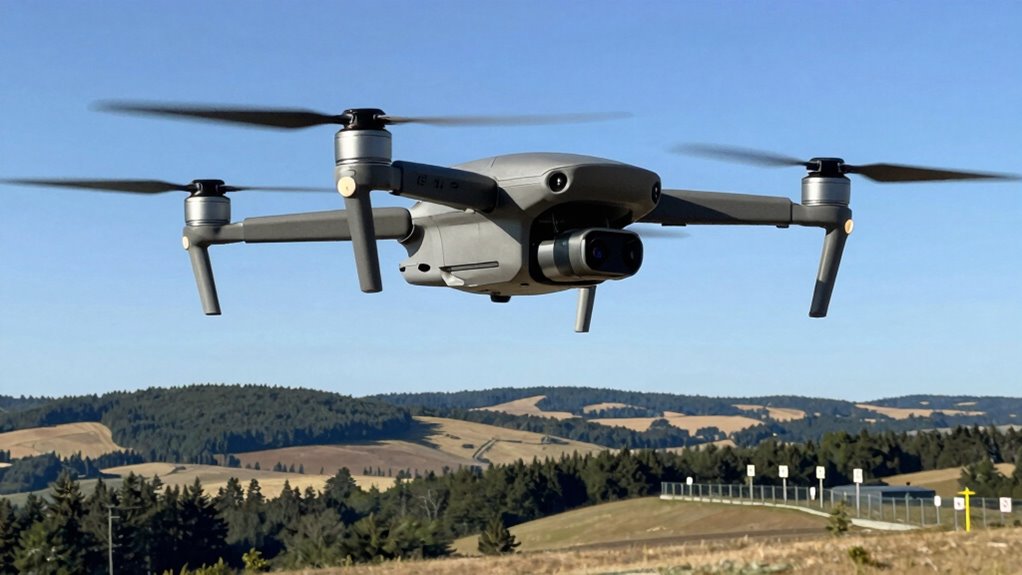
When traveling with a drone, you need to manage battery life carefully by keeping batteries charged, cool, and avoiding over-discharging to guarantee your flight lasts. Wind conditions greatly affect stability—stick to safe wind limits, fly lower, and avoid gusty days to keep control. Also, always check no-fly zones around airports, military sites, or restricted areas, using official maps or apps. Staying aware of these basics helps prevent accidents and legal issues, and there’s more to know to fly confidently and responsibly.
Key Takeaways
- Always check weather conditions and wind speeds to ensure safe drone operation and avoid crashes in gusty conditions.
- Keep drone batteries fully charged, stored properly, and avoid over-discharging to maximize flight time and prevent power failures.
- Research and verify no-fly zones using official apps and maps to prevent accidental violations near airports, military sites, or restricted areas.
- Use GPS stabilization, fly at lower altitudes in windy conditions, and make slow control adjustments for safer flights in challenging weather.
- Perform a final pre-flight checklist including battery health, firmware updates, propeller security, and regulatory compliance to prevent common pitfalls.
How to Prepare for Your First Drone Flight
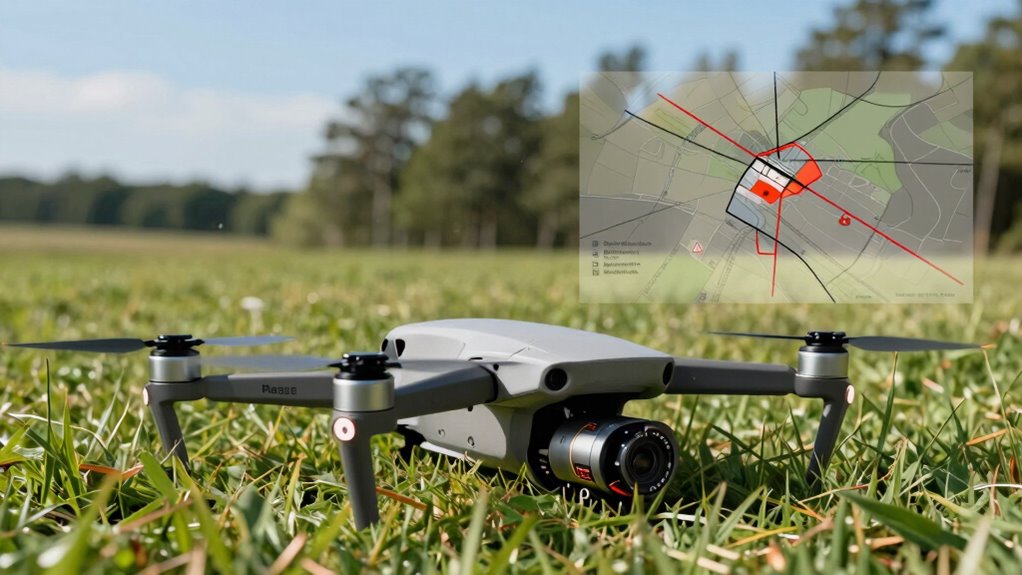
Before taking your first drone flight, it’s crucial to thoroughly prepare to guarantee a safe and successful experience. Start by checking weather considerations, like wind speed, visibility, and precipitation, since poor conditions can cause crashes or loss. Always review weather forecasts before heading out. Additionally, perform drone maintenance by inspecting propellers, ensuring batteries are fully charged, and confirming firmware updates are installed. Clean any dirt or debris from your drone, and verify that all components are secure. Understanding weather patterns helps you avoid risky situations, while regular maintenance ensures your drone functions properly during flight. Proper preparation minimizes surprises and increases your confidence, making your first drone experience safer and more enjoyable. Weather awareness is essential for avoiding unexpected hazards during your flight.
Why Battery Life Matters and How to Maximize It
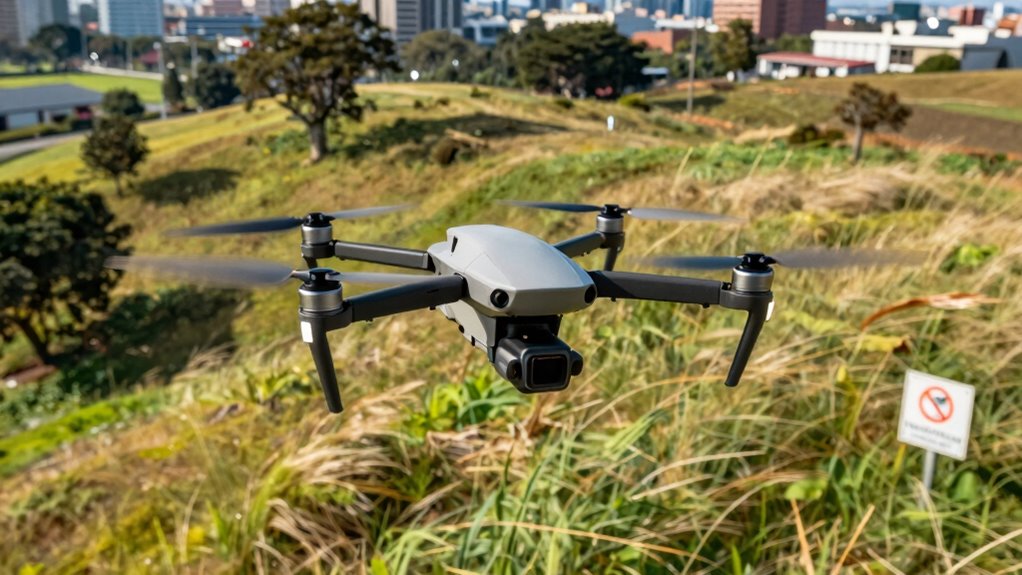
Battery life is a critical factor in your drone’s performance because it directly affects how long you can fly and capture footage. To maximize your flight time, focus on battery enhancement and effective power management. Keep your batteries at ideal charge levels—neither fully drained nor fully charged—and store them in cool, dry places. Use the table below to highlight key tips:
| Tip | Benefit |
|---|---|
| Reduce camera and gimbal use | Saves power for longer flights |
| Fly in moderate speeds | Conserves battery life |
| Avoid aggressive maneuvers | Prevents rapid drain |
How Wind Conditions Impact Drone Stability and Safety
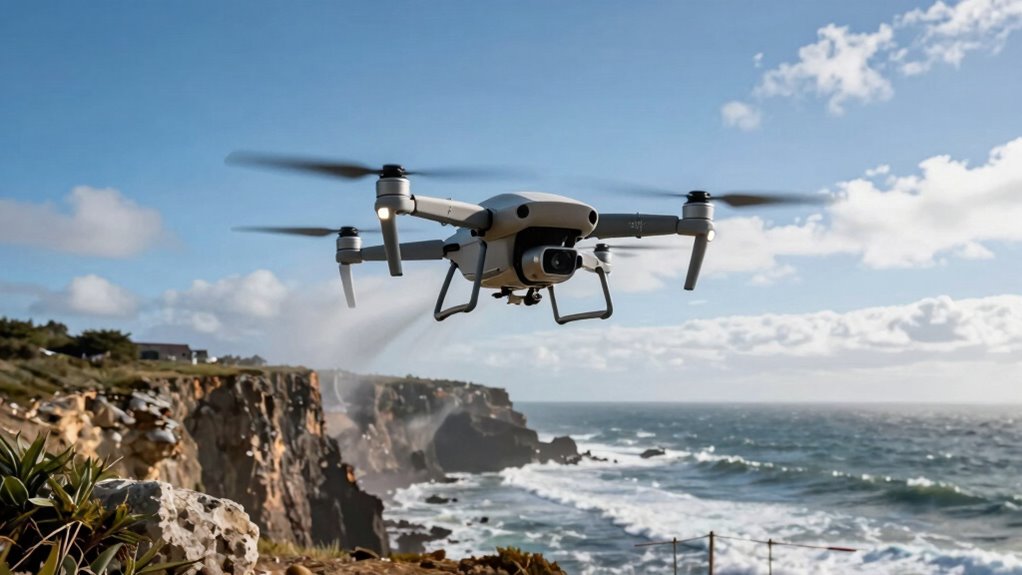
Wind speed can considerably affect your drone’s stability during flight. When wind exceeds certain thresholds, it becomes harder to control and increases the risk of crashes. Knowing these limits helps you plan safer flights and avoid dangerous conditions. Additionally, understanding weather conditions can help you anticipate and prepare for challenging flying environments.
Wind Speed Thresholds
High wind speeds can considerably affect a drone’s stability and safety, making it essential to understand wind speed thresholds. Most drones have specific safe flying limits, which vary based on size and design. Flying beyond these limits risks loss of control or damage. Check your drone’s manual for recommended wind speed thresholds. For instance, beginner drones typically handle winds up to 10-15 mph, while advanced models may tolerate 20-30 mph. Below is a quick reference:
| Wind Speed (mph) | Flying Recommendation |
|---|---|
| 0-10 | Safe for most drones |
| 11-20 | Caution; expert pilots only |
| 21-30 | Risky; avoid unless experienced |
| 30+ | Unsafe for nearly all drones |
Always respect these safe flying limits to ensure safety and avoid accidents. Understanding wind conditions can help you make better decisions about when to fly and prevent potential hazards.
Effects on Flight Stability
When wind conditions increase, they can substantially disrupt a drone’s flight stability, making it harder to control and navigate accurately. Strong gusts or unpredictable weather factors can push your drone off course, causing instability during flight. Wind can create sudden tilts or vibrations, challenging your ability to maintain steady drone stability. As wind speed fluctuates, your drone may struggle to hold position, especially at higher altitudes. This not only affects safety but also increases the risk of crashes. To ensure safe and stable flights, it’s essential to monitor weather factors closely and avoid flying in gusty or turbulent conditions. Understanding how wind impacts your drone’s stability helps you make smarter decisions, preserving your equipment and ensuring a smooth flying experience. Proper knowledge of Free Floating can also help in assessing how environmental factors like wind influence drone performance and safety.
How to Find and Recognize No-Fly Zones Before You Fly
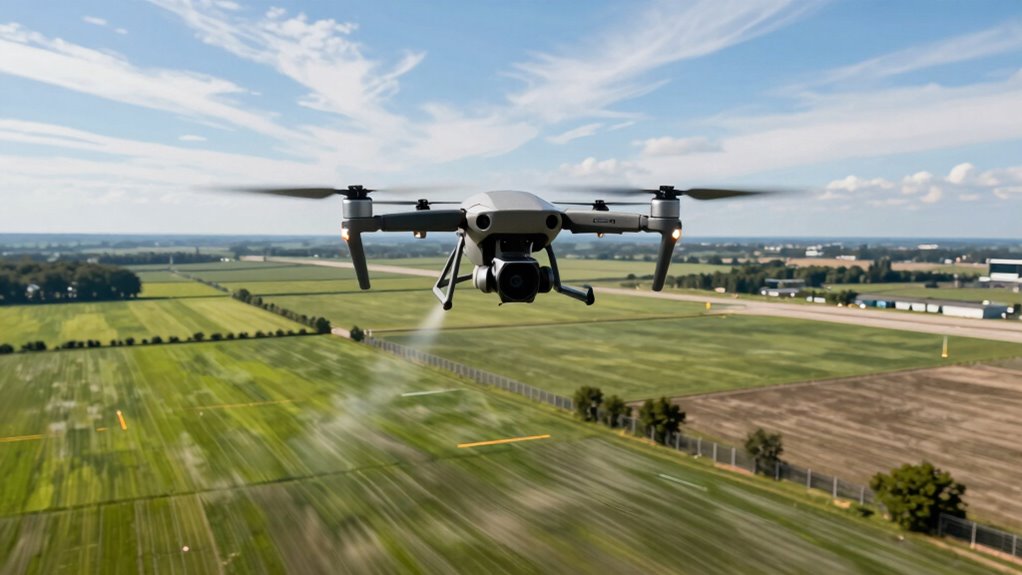
Before you take off, it is crucial to identify no-fly zones to avoid legal issues and safety risks. Start by checking official sources for geographical boundaries that define restricted areas. Many authorities provide map overlays that clearly mark these zones, making it easier to recognize where you can’t operate your drone. Use apps or online tools that display no-fly zones in real-time, ensuring you’re aware of airports, military installations, or other sensitive locations. Pay attention to visual cues on maps and overlays, such as shaded regions or warning icons, which indicate restrictions. Familiarizing yourself with these boundaries before your flight helps prevent accidental violations and keeps your flying experience safe and legal. Always verify the latest data, as restrictions can change. Incorporating sector performance evaluation insights can also help you choose the best times and locations for drone flights, especially in high-traffic or regulated areas.
What Legal Restrictions and Permits Do You Need for Drone Flying?
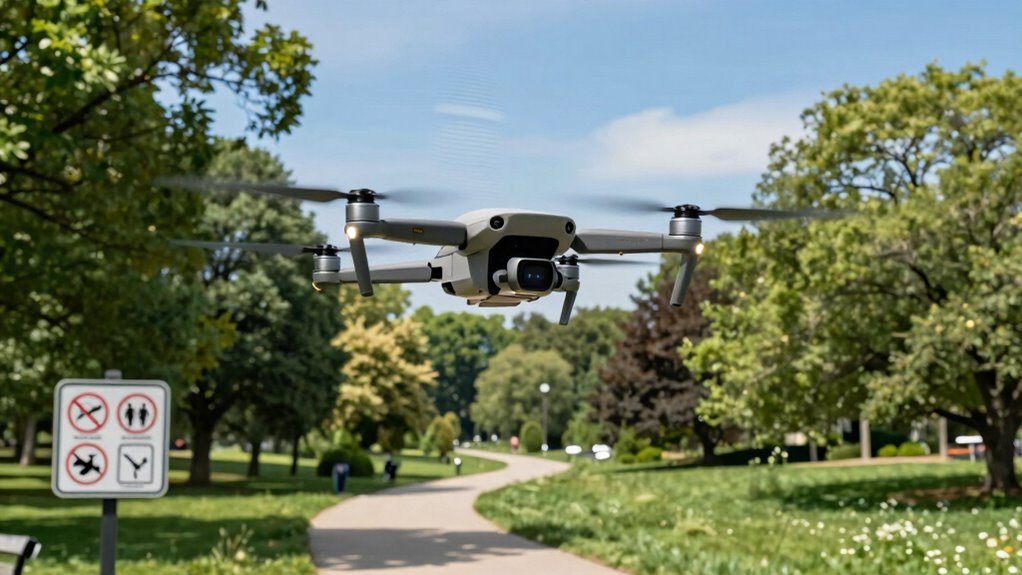
Before you take off, it’s important to understand the legal restrictions and permits required for flying your drone. Federal regulations, like licensing and registration, set the baseline, but local and state rules can add extra restrictions. Make sure you check all levels of regulation to fly safely and legally. Additionally, being aware of smart lock systems and other security measures can help protect your equipment when not in use.
Federal Regulations and Licensing
Are you aware of the federal rules that govern drone flying in the United States? To stay compliant, you need to understand the basics of federal regulations and licensing. First, all drones weighing over 0.55 pounds must be registered with the FAA, a simple process called drone registration. Second, if you plan to fly for commercial purposes, you’ll need a remote pilot certificate, also known as federal licensing. Finally, you must follow FAA guidelines on airspace use, including restrictions around airports and other sensitive areas. Keep in mind, these rules are designed to ensure safety and accountability. Staying informed about federal regulations not only keeps you legal but also helps you enjoy your drone adventures without worries. Additionally, understanding energetic alignment can enhance your flying experience by promoting greater focus and confidence during flights.
Local and State Restrictions
Understanding local and state restrictions is essential because rules can vary considerably depending on where you fly your drone. Local regulations may prohibit flying in certain parks, neighborhoods, or near airports, while state laws can impose specific requirements or bans. Before you take off, research the regulations in your area and any places you plan to visit. Many cities or states require permits or registrations beyond federal licenses. Ignoring these rules can lead to fines or confiscation of your drone. Always check for updates, as regulations can change frequently. Staying informed about local regulations and state laws ensures you fly responsibly and avoid legal trouble. Being proactive helps you enjoy your drone adventures safely and legally. Additionally, understanding cultural artifacts and respecting local customs when flying in areas with significant cultural heritage, such as locations with traditional Indonesian decor, is crucial to avoid causing disturbances.
How to Check Local Drone Regulations and Restrictions
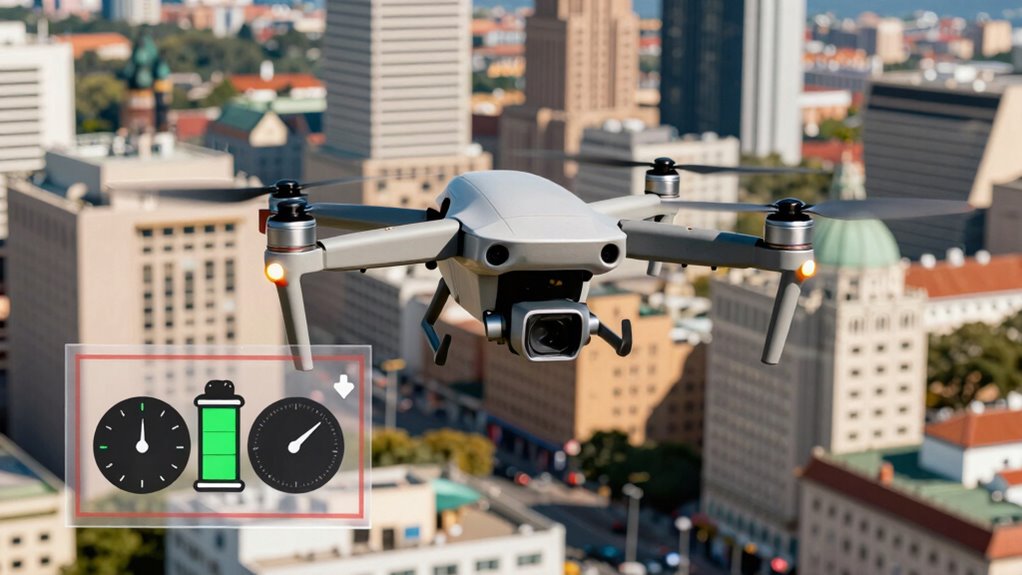
Checking local drone regulations and restrictions is essential to flying safely and legally. Start by researching geographic boundaries that define where you can operate your drone. Many areas have specific zones where flying is prohibited or limited, so understanding these boundaries helps prevent accidental violations. Also, verify your drone is properly registered if required by local authorities, as drone registration is often mandatory for certain weights or uses. To stay informed, consider these steps:
- Visit local government or aviation authority websites for updated rules.
- Use official drone regulation apps to verify no-fly zones.
- Check for any special restrictions related to drone registration or permits in your area.
- Understanding drone restrictions can help you better navigate local laws and avoid potential penalties.
Staying informed about these regulations helps you avoid fines and ensures responsible flying.
Tips for Flying Safely in Windy Conditions
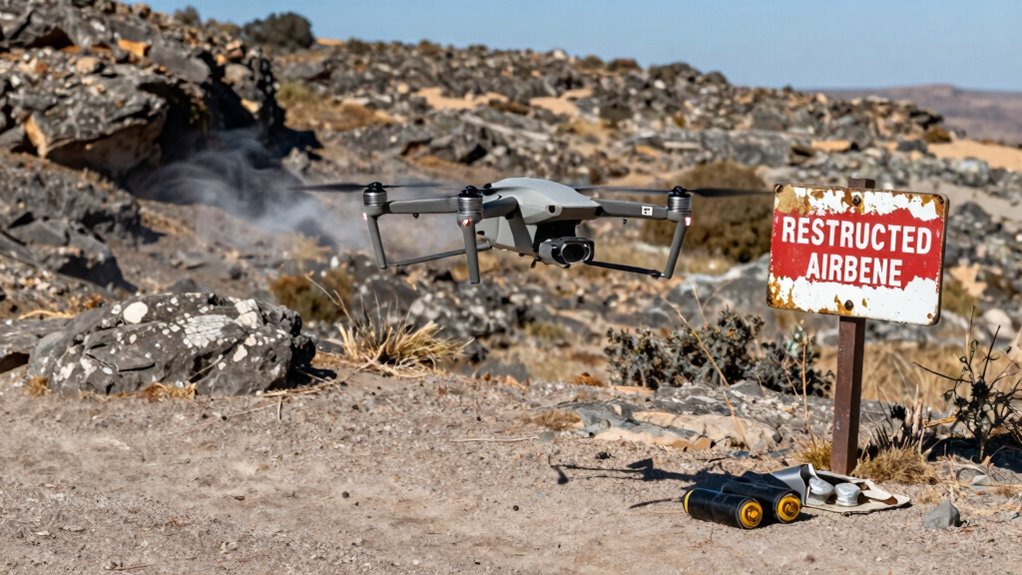
Flying your drone in windy conditions requires extra caution, as strong gusts can destabilize your aircraft and lead to crashes. To maintain rotor stability, keep your drone at lower altitudes where wind gusts are less intense. Avoid sudden movements; instead, make slow, deliberate adjustments to your controls. Monitor the wind speed continuously using your drone’s sensors or a weather app, and be prepared to land if gusts become too strong. Use GPS mode if available to help stabilize your drone against gusts. Remember, even small increases in wind can considerably impact flight safety. Staying vigilant and adjusting your flying style ensures you keep your drone safe and steady in challenging wind conditions. Additionally, understanding weather conditions can help you plan better flights and avoid risky situations.
Troubleshooting Battery and Wind-Related Flight Issues
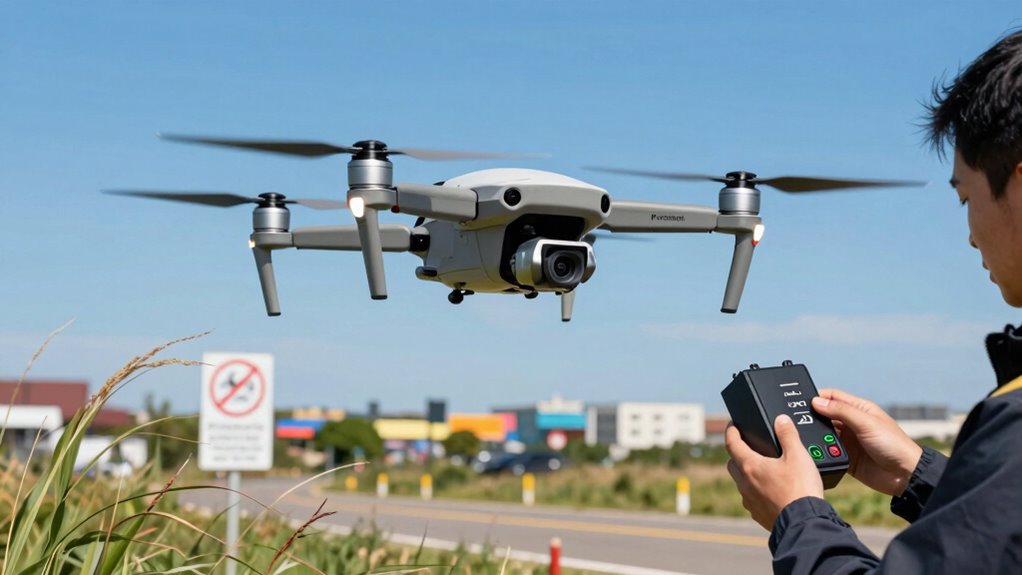
When dealing with wind-affected flights, battery performance can substantially influence your drone’s stability and safety. If your drone struggles to maintain power or lands unexpectedly, it’s time to check your battery. Proper battery maintenance ensures peak performance, so regularly inspect and calibrate your batteries before flights. Use wind forecasting tools to anticipate gusts and adjust your flight plan accordingly. To troubleshoot common issues:
- Keep batteries at recommended storage levels and avoid over-discharge
- Monitor battery temperature to prevent overheating during flight
- Plan flights during calmer weather, using wind forecasts to avoid sudden gusts
Common Mistakes to Avoid When Flying Your Drone
To guarantee safe and successful drone flights, it’s essential to avoid common mistakes that can compromise your drone’s performance and safety. One key mistake is neglecting proper battery maintenance; always ensure your batteries are fully charged and in good condition before flying. Avoid flying with damaged or low-quality batteries, as they can cause crashes or sudden power loss. Wind mitigation is also vital—don’t fly in strong or unpredictable wind conditions, which can destabilize your drone and lead to accidents. Additionally, rushing into a flight without checking weather updates or creating a flight plan increases risks. Keep a close eye on battery levels during flight and be mindful of wind conditions to maintain control. Staying vigilant about these mistakes helps guarantee safe, smooth drone experiences.
Final Checklist Before Launching Your Drone
Before you take off, performing a final checklist helps guarantee your drone is ready for a safe flight. Verify your payload calibration to ensure weight distribution is correct, which affects flight stability. Double-check your camera settings—adjust exposure, resolution, and focus to match your shooting goals. Inspect your drone’s battery levels and confirm they’re fully charged. Make sure the propellers are secure and undamaged. Confirm GPS signal strength and that your flight area is clear of obstacles. Review local regulations to ensure flying is permitted in your chosen location. Additionally, check controls and firmware updates. This final step minimizes risks and maximizes your drone’s performance, giving you confidence to fly safely and capture high-quality footage.
Frequently Asked Questions
How Do I Choose the Best Drone for Beginners?
To choose the best drone for beginners, look for user-friendly features like stability, simple controls, and good camera quality. Make sure it’s lightweight and durable for easy handling. Check if you need drone registration or pilot certification in your area, and choose a model that complies. Start with an affordable, beginner-friendly drone that offers easy flight modes, so you can learn confidently while staying within regulations.
What Accessories Improve Drone Safety and Performance?
Did you know that drone accidents drop by 30% with proper accessories? You should definitely add propeller guards to protect your blades and improve safety, especially for beginners. GPS modules boost performance by providing precise positioning and easy return-to-home features. These accessories not only enhance safety but also guarantee smoother flights, giving you more confidence and control while flying your drone.
How Can I Improve My Drone’s Camera Stability?
To improve your drone’s camera stability, you should focus on enabling gimbal stabilization, which keeps your footage steady during flight. Adjust your camera settings, like shutter speed and ISO, to reduce shakiness and enhance clarity. Also, make certain your drone’s firmware is up-to-date, as updates often improve stabilization features. Practice smooth, gentle movements to minimize vibrations, and consider using a vibration dampener for even better video quality.
What Are the Signs of a Drone Battery Nearing Failure?
You’ll notice warning indicators like reduced flight time, sluggish performance, or the drone shutting down unexpectedly, which signal your battery is nearing failure. Regular battery maintenance helps prevent these issues, so keep an eye on voltage levels and avoid overcharging. If you see swelling or leaks, replace the battery immediately. Recognizing these signs early guarantees safe flights and prolongs your drone’s battery life.
How Do Weather Changes Affect Drone Flight Plans?
Weather impact can considerably alter your drone flight plans. Sudden changes in wind hazards, such as gusts or storms, can cause instability or crashes. Always check the forecast before flying, and avoid windy conditions or storms. High humidity and rain can damage your drone’s electronics, so plan to fly in clear, calm weather. Staying aware of weather changes helps guarantee safe, successful flights and prevents accidents.
Conclusion
Before your first flight, remember to check battery levels, wind conditions, and no-fly zones. For example, a beginner once ignored a gusty day and lost control, damaging their drone. By following these basics—like planning ahead and flying safely—you’ll enjoy smooth flights and avoid costly mistakes. Stay prepared, stay informed, and keep safety your top priority to make every drone adventure a success.