To manage seasonal allergy symptoms while camping, choose gear with sealed seams and HEPA filters, wear masks, and use hypoallergenic bedding to reduce pollen entry. Stay updated on pollen forecasts to plan outdoor activities during low pollen times, like late afternoons or after rain. Wear sunglasses, protective clothing, and shower after outdoor exposure to wash away pollen. Proper planning and environment management can make your trip more comfortable; discover more tips below.
Key Takeaways
- Check local pollen forecasts and plan outdoor activities during low pollen times or after rain.
- Use allergy-friendly gear like sealed tents, hypoallergenic bedding, and HEPA filters to minimize pollen entry.
- Wear protective clothing, sunglasses, and masks such as N95 or KN95 during outdoor setup and activities.
- Keep allergy medications accessible, stay hydrated, and shower promptly after outdoor exposure to reduce symptoms.
- Regularly clean outdoor gear and furniture, and manage indoor pollen by minimizing outdoor gear infiltration.
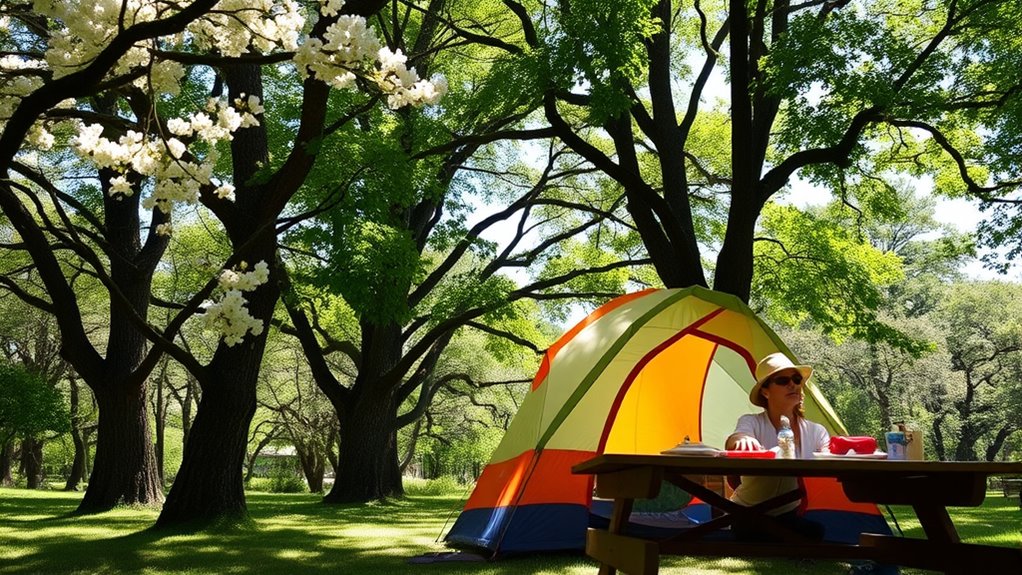
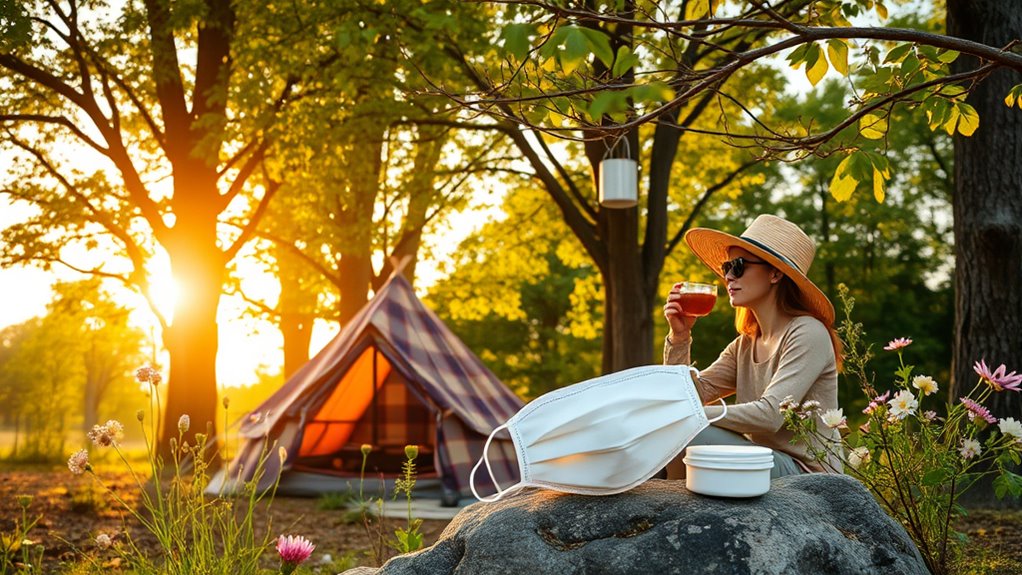
Are you planning a camping trip during peak allergy season? If so, preparing ahead can considerably reduce your allergy symptoms and make your outdoor experience more enjoyable. One essential step is selecting allergy-friendly gear. Opt for tents with sealed seams and HEPA filters to minimize pollen infiltration. Wearing a high-quality N95 or KN95 mask while setting up your campsite and during outdoor activities can filter airborne pollen effectively, providing immediate relief. Consider using hypoallergenic sleeping bags and pillow covers to prevent pollen from settling in your sleeping area. Additionally, bring washable or disposable covers for outdoor furniture, and double-check that your camp chairs and gear are free from dust and pollen traces before use. These measures are proven to reduce allergen exposure and create a safer, more comfortable environment.
Equally important is pollen forecast awareness. Before leaving, check local pollen counts from reliable sources like weather apps or allergist websites. Planning your outdoor activities for times when pollen levels are lowest, often late afternoon or after a rain, can markedly diminish allergen exposure. Pollen forecasts are typically updated daily and can guide you on when to minimize outdoor exertion. If you notice high pollen levels, consider postponing strenuous activities or staying in shaded, enclosed areas. Staying informed allows you to adapt your plans dynamically, ensuring you avoid peak pollen times. Wearing sunglasses outdoors can also help prevent pollen from reaching your eyes, reducing irritation.
In addition to gear and awareness, packing allergy medication, such as antihistamines or nasal sprays, is essential. Take them as directed before and during your trip, especially if you’re prone to severe reactions. Keep your medications accessible, and consider consulting your healthcare provider for personalized advice tailored to outdoor activities. Hydration is another important aspect—drinking plenty of water helps thin mucus and alleviate allergy symptoms. It’s also wise to shower and change clothes promptly after outdoor exposure to wash away pollen particles that may cling to your skin or clothing, preventing further irritation indoors.
Frequently Asked Questions
Can I Camp if I Have Severe Seasonal Allergies?
Yes, you can camp if you have severe seasonal allergies. Make sure to bring allergy medication, such as antihistamines or nasal sprays, to manage symptoms. Choose a campsite away from heavy pollen sources like tall grasses or flowering trees, and consider staying in shaded or less windy areas. Preparing in advance guarantees you enjoy the outdoors comfortably and safely, even with severe allergies.
What Outdoor Activities Should I Avoid During Allergy Season?
During allergy season, avoid outdoor activities like hiking or picnicking when pollen counts are high, as this can worsen your symptoms. Stay informed about pollen count awareness through weather apps or local reports, and choose allergy-friendly gear, such as masks and sunglasses, to reduce exposure. Limiting strenuous outdoor activities during peak pollen times helps manage your symptoms effectively, allowing you to enjoy the outdoors safer and more comfortably.
Are There Natural Remedies to Reduce Allergy Symptoms While Camping?
You can ease allergy symptoms while camping by sipping herbal teas like chamomile or peppermint, which soothe your airways and reduce inflammation. Honey remedies, especially local honey, may help desensitize your immune response to pollen over time. Incorporate these natural remedies into your routine during outdoor adventures to minimize discomfort, supported by evidence suggesting their beneficial effects. Always consult a healthcare professional before relying solely on natural treatments.
How Can I Prevent Allergy Flare-Ups in the Campsite?
To prevent allergy flare-ups at your campsite, you should set up air purifiers to reduce airborne allergens and choose allergy-friendly plants around your site. Keep windows closed when possible, especially during peak pollen hours, and wear a mask if you’re sensitive. Regularly clean your gear to prevent pollen buildup, and stay hydrated. These steps minimize exposure, helping you enjoy camping without worsening allergy symptoms.
What Should I Pack for Allergy-Proof Outdoor Camping?
Did you know that over 60 million Americans suffer from allergies, making outdoor activities challenging? Pack allergy-proof gear like sealed air purifiers, hypoallergenic bedding, and dust-mite-proof pillowcases as packing essentials. Include antihistamines, nasal sprays, and allergy-friendly snacks. Bringing a portable air purifier and wearing protective gear like masks and gloves can substantially reduce exposure. Proper preparation ensures you enjoy your camping trip while managing allergy symptoms effectively.
Conclusion
By preparing ahead and taking preventive measures, you can enjoy camping despite seasonal allergies. Use antihistamines, wear protective gear, and stay aware of pollen forecasts to reduce symptoms. Remember, an ounce of prevention is worth a pound of cure—staying proactive minimizes discomfort and enhances your outdoor experience. With careful planning, you can embrace nature’s beauty without letting allergies overshadow your trip. Ultimately, being prepared allows you to make the most of your adventure while managing symptoms effectively.