
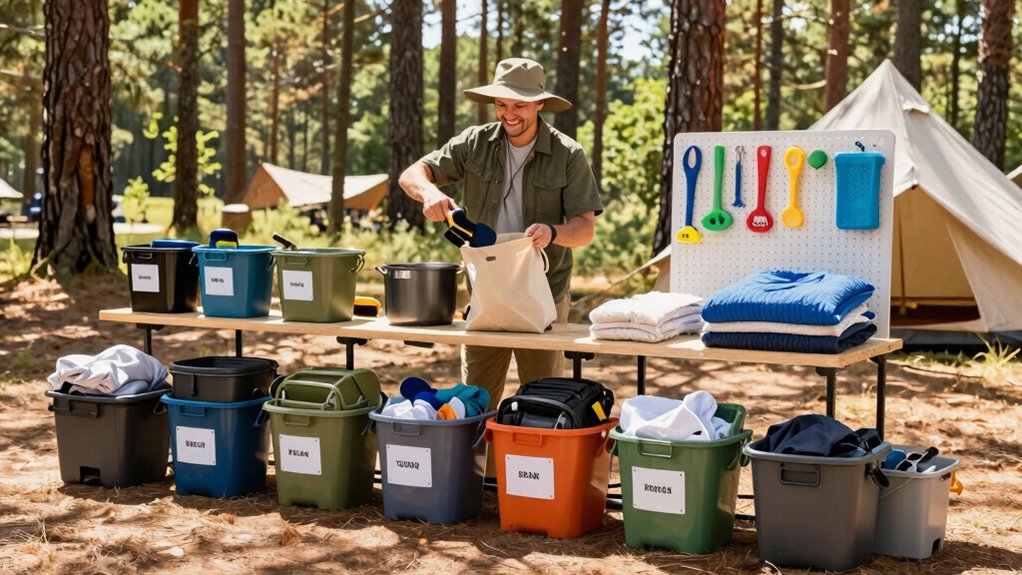

To prevent one person from doing everything, establish a clear, rotating chore system that everyone agrees on. Assign specific tasks like cooking, cleaning, and safety checks to different people on set days or weeks. Rotate responsibilities regularly to keep it fresh and fair. Make sure everyone understands their roles and encourage teamwork in routines like meal prep and campfire safety. Keep the process simple and consistent — you’ll find useful tips if you keep going.
Key Takeaways
- Implement a rotating chore schedule to evenly distribute responsibilities among all participants.
- Clearly assign specific chores to individuals and rotate tasks regularly to prevent burnout.
- Use collaborative planning for chores, encouraging group input and shared accountability.
- Incorporate fun elements like campfire recipes to engage everyone in meal prep and chores.
- Designate safety leaders and routine checks to ensure chores are completed without overburdening one person.

Implementing a clear and consistent camp chore system can make your camp run smoothly and reduce conflicts. When everyone knows their responsibilities, chores become less of a source of tension, and your group can focus on enjoying the experience. A well-organized system guarantees that tasks like preparing meals, maintaining safety, and cleaning up are evenly distributed. This not only lightens the load for one person but also helps everyone feel involved and responsible.
A clear chore system ensures fairness, reduces tension, and helps everyone enjoy the camp experience.
Sharing chores effectively means creating a schedule that everyone agrees on. For example, designate specific days or times for cooking, dishwashing, and tidying up. By rotating these tasks, no one feels stuck doing the same chores repeatedly, and it fosters a sense of fairness. When it comes to meal prep, incorporating campfire recipes can be a fun part of the routine. Assign someone to gather firewood, set up the cooking area, and prepare meals, so the process feels collaborative and engaging. This way, everyone gets to contribute their part, and mealtime becomes a team effort rather than a burden on one individual.
A key aspect of the camp chore system is cooking safety, especially when handling campfire recipes. Make sure everyone understands basic fire safety rules—like keeping a bucket of water nearby, never leaving the fire unattended, and ensuring the fire is completely extinguished before leaving the site. These precautions protect your group and the environment while making sure cooking is a safe, enjoyable activity. Including safety checks in your routine can prevent accidents and create a more relaxed atmosphere. Incorporating fire safety protocols into your routine can further enhance safety and preparedness. Additionally, emphasizing fire safety practices helps reinforce the importance of vigilance around open flames. Incorporating fire safety training can also increase confidence and preparedness in emergency situations. Regularly reviewing safety procedures ensures everyone remains aware of potential hazards and how to respond appropriately.
Hiking safety is another essential part of your camp chore system. Assign someone to check gear and ensure everyone has necessary supplies like water, maps, and first aid kits. Regularly remind your group about staying on designated trails, what to do if someone gets lost, and how to handle encounters with wildlife. Having a designated person responsible for safety can prevent emergencies and build confidence among your campers. Additionally, utilizing innovative home robotics can support safety checks and streamline routine tasks, reducing the workload and enhancing overall safety. It also reduces the burden on individuals who might otherwise be overwhelmed by responsibilities, ensuring everyone stays safe and prepared.
As an affiliate, we earn on qualifying purchases.
Frequently Asked Questions
How Do I Start Implementing the Chore System?
To start implementing the chore system, first establish a clear reward system to motivate everyone. Then, create a chore rotation schedule, assigning tasks fairly and rotating regularly. Explain the system to everyone, emphasizing teamwork and consistency. Encourage participation by highlighting benefits like shared responsibilities and fairness. Regularly review and adjust the system as needed, ensuring it stays effective and everyone feels involved and appreciated in maintaining the camp.
What Supplies Are Needed for the System?
To set up the system, you’ll need supplies like a chore chart, stickers or tokens for reward incentives, and a rotation schedule. You might also want a marker or pen for updates and a small container for tokens. Incorporate reward incentives to motivate participation and use a chore rotation to guarantee everyone shares responsibilities fairly. These supplies help keep the system organized and engaging, making chores easier and more fun for everyone involved.
How Do I Ensure Everyone Participates Equally?
You can guarantee everyone participates equally by implementing a chore rotation system, so no one feels overburdened. Use reward incentives to motivate everyone to complete their tasks and stay engaged. Regularly review the chore schedule as a group, and encourage open communication about fairness. This approach keeps chores balanced and makes participation feel fair, while reward incentives boost motivation and create a positive, cooperative environment.
Can the System Be Adapted for Different Ages?
Yes, you can adapt the system for different ages by making age-specific adjustments and encouraging family collaboration. For younger kids, assign simple, manageable chores and supervise closely. Older children can handle more responsibilities independently. Regularly discuss roles as a family, ensuring everyone understands their tasks and feels involved. This way, the chore system remains effective, inclusive, and tailored to each family member’s abilities, fostering teamwork and responsibility across all ages.
How Long Does It Take to See Results?
You’ll start noticing results within a week or two of implementing the system, especially if you use reward incentives consistently. As kids begin to follow their daily routines more independently, their motivation grows. Keep reinforcing positive behavior with small rewards, and you’ll see cooperation improve quickly. Patience is key, but with steady effort and clear routines, your camp chores will become much more manageable in a short amount of time.
Conclusion
Implementing this camp chore system means you’re no longer stuck doing everything alone. It encourages teamwork and shared responsibility, making chores less overwhelming. Did you know that camps with organized chore systems report 30% higher satisfaction among campers and staff? By sharing tasks, you create a more enjoyable, balanced environment for everyone. So, give this system a try and watch how it transforms your camp into a place where everyone contributes and thrives together.