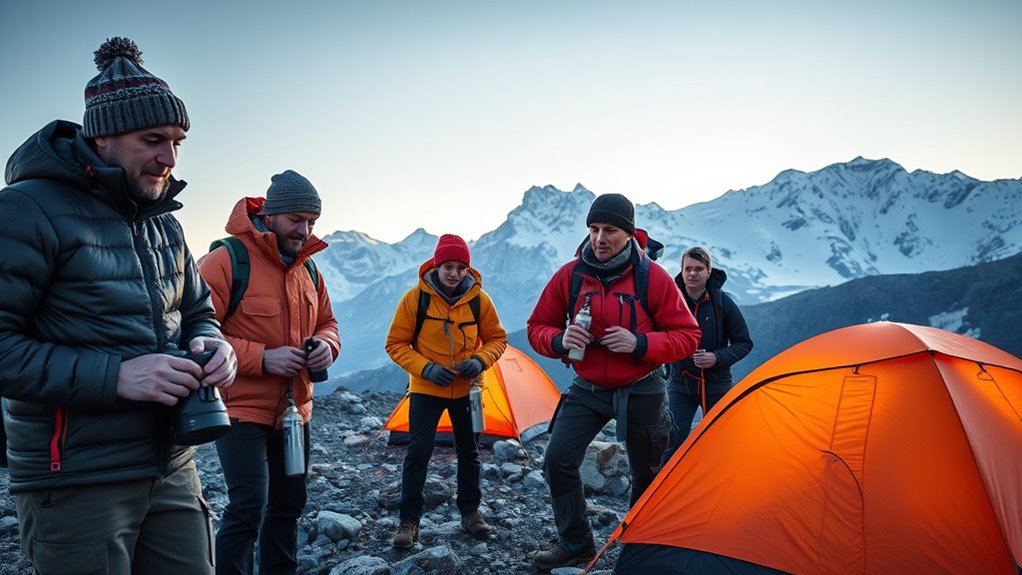
To prepare for altitude sickness on mountain camping trips, focus on gradual acclimatization by ascending slowly and incorporating rest days. Hydrate frequently with electrolyte-rich fluids and avoid alcohol or caffeine. Plan your schedule to include high-altitude overnight stays progressively, and consider pre-trip acclimatization exercises. Monitor symptoms closely and be ready to descend if needed. Proper planning and proactive strategies markedly reduce risks—continue to explore detailed techniques to stay safe at high elevations.

Get travel and outdoor gear delivered free with Prime
- Fast, free delivery on millions of items
- Prime Video, Amazon Music and more included
- Member-only deals all year
Key Takeaways
- Gradually ascend, limiting elevation gain to 300-500 meters per day above 2,500 meters.
- Maintain frequent small water intakes and avoid alcohol or caffeine to stay well-hydrated.
- Incorporate rest days at intermediate elevations to allow your body to acclimate.
- Use supplemental oxygen if available and monitor symptoms like headache or dizziness.
- Prepare by pre-acclimatizing through altitude training and carrying essential hydration and health supplies.
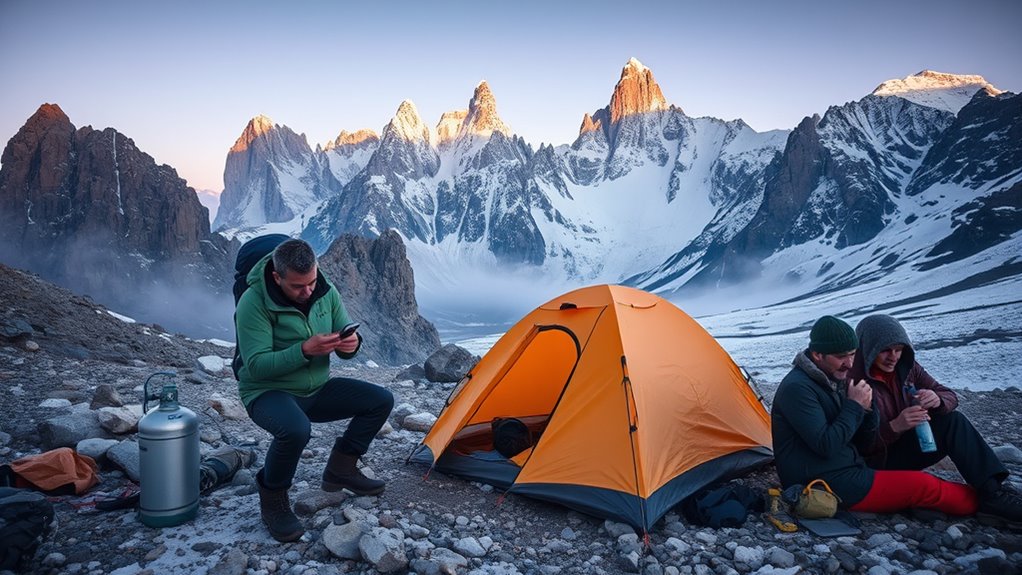
Altitude sickness poses a significant risk during mountain camping trips, especially when ascending rapidly or camping at high elevations. To mitigate this risk, you must implement effective hydration strategies and employ acclimatization techniques. Proper hydration is critical because high altitudes increase fluid loss through respiration and perspiration, leading to dehydration that can exacerbate altitude sickness symptoms. You should aim to drink small amounts frequently, approximately 250-500 milliliters every hour, depending on activity level and weather conditions. Avoid alcohol and caffeinated beverages, as they promote dehydration. Carry sufficient water supplies and use purification methods like filters or tablets to ensure consistent access to safe drinking water. Consider supplementing water intake with electrolyte solutions to maintain electrolyte balance, which is *essential* for nerve and muscle function at altitude.
Acclimatization techniques are equally important for reducing altitude sickness risk. As you ascend, your body needs time to adapt to decreasing oxygen levels. The most effective method is to follow a gradual ascent, increasing elevation by no more than 300-500 meters per day once above 2,500 meters. Incorporate rest days every 2-3 days at intermediate elevations to allow physiological adjustments. During these rest periods, avoid strenuous activity to facilitate acclimatization. Monitoring your symptoms closely is essential; early signs of altitude sickness, such as headache, nausea, or dizziness, indicate the need to descend or pause your ascent. Using supplemental oxygen can be beneficial if available, especially when symptoms worsen. Additionally, understanding the importance of exposure to high altitudes can help you plan your trip more safely.
Pre-acclimatization prior to your trip, such as spending time at intermediate altitudes or engaging in altitude training, can enhance your body’s ability to adapt quickly. Additionally, maintaining a well-balanced diet rich in carbohydrates supports energy needs and improves oxygen utilization. Proper planning should include scheduling for slow ascents, adequate hydration, and rest periods to optimize acclimatization. You should also educate yourself about the symptoms of altitude-related illnesses and recognize the importance of immediate response, including descent if symptoms escalate.
portable supplemental oxygen for high altitude
As an affiliate, we earn on qualifying purchases.
As an affiliate, we earn on qualifying purchases.
Frequently Asked Questions
Can Altitude Sickness Develop Suddenly Without Warning?
Altitude sickness can develop suddenly without warning, especially with rapid symptom onset. You might experience quick progression of symptoms like headache, nausea, or dizziness within hours of ascent. This rapid development indicates your body is struggling to acclimate to lower oxygen levels. Recognizing these signs early is vital, as untreated altitude sickness can worsen quickly, making prompt descent essential to prevent severe complications.
Are There Specific Medications to Prevent Altitude Sickness?
Yes, there are specific medication options to prevent altitude sickness. Acetazolamide is commonly prescribed as a prevention strategy, helping your body acclimate faster by improving oxygenation. Other medications like dexamethasone are used in particular cases. Always consult a healthcare professional before using these medications to ensure proper dosage and to discuss potential side effects. Incorporating these prevention strategies can considerably reduce your risk of altitude sickness.
How Long Should I Acclimate Before Camping at High Altitude?
You should allow an acclimation period of at least 24 to 48 hours before camping at high altitude. During this time, you need a gradual ascent, ascending slowly to give your body time to adapt. Spend extra days if you experience symptoms of altitude sickness or are going above 8,000 feet. Proper acclimation reduces risks and enhances your ability to perform comfortably at higher elevations.
Is It Safe to Ascend Rapidly if I Feel Fine Initially?
You shouldn’t rely solely on initial symptom awareness to justify a rapid ascent. If you feel fine initially, it might seem safe, but altitude sickness can develop unpredictably. Rapid ascent increases risk, even without symptoms. Always progress gradually, monitor for symptoms continuously, and prioritize safety. A cautious approach minimizes health risks, ensuring you can enjoy your trip without complications. Remember, early symptoms can be subtle but serious if ignored.
Can Children or Elderly People Safely Handle High-Altitude Camping?
Think of altitude like a steep climb—children’s safety and elderly endurance vary greatly. You must tailor plans accordingly, as children have developing lungs and lower reserves, and seniors often have pre-existing conditions. Data shows they’re more susceptible to altitude sickness. You should consult a healthcare professional, monitor symptoms diligently, and plan gradual ascents. Prioritizing their health guarantees a safe adventure, rather than risking a dangerous descent.
Conclusion
By understanding altitude sickness and taking proactive steps, you set yourself up for a safe, enjoyable mountain camping experience. Hydrate well, ascend gradually, and recognize early symptoms to stay ahead of complications. Remember, prevention is better than cure—don’t let altitude catch you off guard. Proper preparation acts as your shield against the risks, ensuring you can confidently face the heights. Stay vigilant, plan ahead, and make your adventure both memorable and safe.
Fall Picks
fall essentials
As an affiliate, we earn on qualifying purchases.