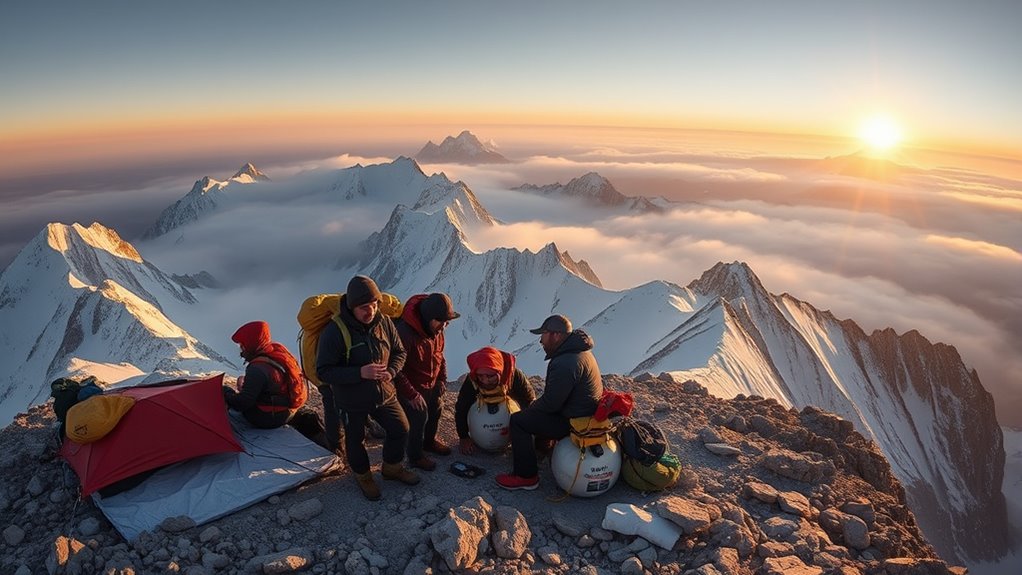

During the first 48 hours at high altitude, your body quickly adapts by increasing breathing rate to improve oxygen intake, which may cause dizziness and symptoms like headaches or nausea. Staying well-hydrated, resting, and climbing gradually are key strategies to support this process. Monitoring your symptoms closely helps identify when to descend if needed. Mastering these initial adjustments guarantees safer altitude gains—keep going to discover more tips for effective acclimatization.

Get travel and outdoor gear delivered free with Prime
- Fast, free delivery on millions of items
- Prime Video, Amazon Music and more included
- Member-only deals all year
Key Takeaways
- Implement gradual ascent to allow the body to adjust within the first 48 hours.
- Prioritize hydration and rest to support respiratory adaptation and prevent altitude sickness.
- Monitor for early symptoms like headaches, nausea, and fatigue during the initial two days.
- Expect increased breathing rate and hyperventilation as primary physiological responses.
- Be prepared to descend if symptoms worsen, ensuring safe acclimatization and minimizing health risks.
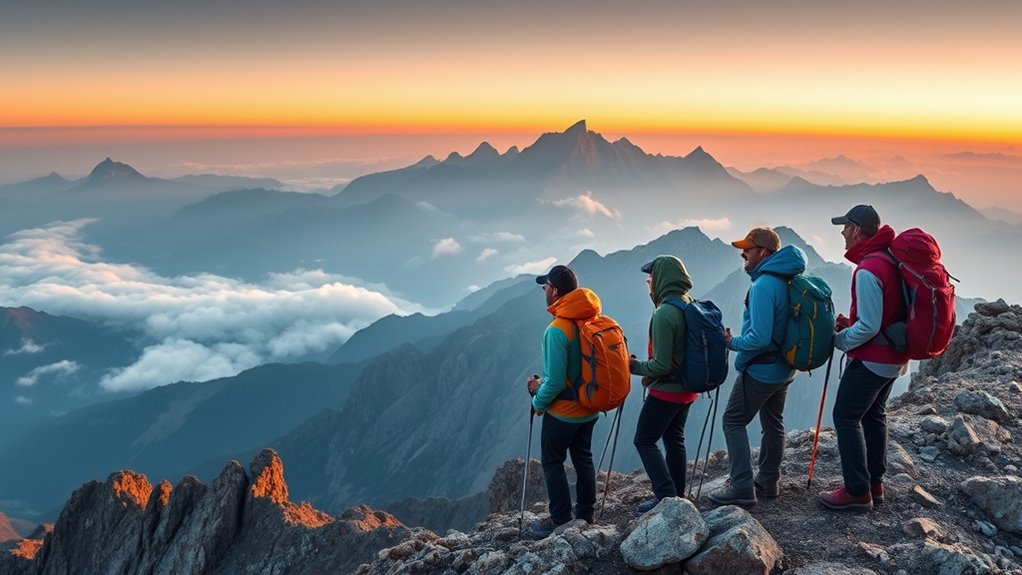
When you ascend to higher altitudes, your body must adapt to decreased oxygen levels to function properly. This process, known as altitude acclimatization, is essential to prevent altitude sickness and guarantee you can perform at your best during your climb. The initial challenge you face is oxygen deprivation, which occurs because the air contains less oxygen at higher elevations. Your body responds through a series of physical adaptations that help you cope with this reduced oxygen supply. Understanding how your body adjusts in the first 48 hours is critical for high-peak hikers aiming for a safe and successful ascent.
Immediately upon gaining altitude, your body kicks into gear to compensate for the lower oxygen levels. One of the primary responses is an increase in your breathing rate. You start to breathe more rapidly and deeply to maximize oxygen intake. This hyperventilation helps deliver more oxygen to your blood, but it also causes you to lose carbon dioxide faster, which can lead to dizziness or lightheadedness if not managed properly. Your body also begins producing more red blood cells over time, a longer-term adaptation that boosts your blood’s oxygen-carrying capacity. However, these changes are gradual, and in the first 48 hours, your primary adjustment involves respiratory changes.
Your body’s physical adaptation during this period involves more than just breathing adjustments. You may notice early signs of altitude discomfort, such as headaches, nausea, or fatigue, which stem from the initial oxygen deprivation. Staying well-hydrated helps your blood flow and supports efficient oxygen transport. It’s also important to avoid overexertion during these first two days, as your body is still adjusting and can easily become overwhelmed. Rest is essential to allow your respiratory system to stabilize and to prevent the onset of more serious altitude sickness. Additionally, paying attention to symptom monitoring can help you identify when to seek descent or medical assistance.
To facilitate effective acclimatization, you should consider implementing a gradual ascent plan. Climbing slowly allows your body to make these necessary physiological adjustments without overwhelming your system. Taking frequent breaks and spending extra time at intermediate elevations can considerably improve your physical adaptation process. Monitoring your symptoms closely is crucial; if your condition worsens, descending to a lower elevation might be necessary to prevent severe altitude sickness.
As an affiliate, we earn on qualifying purchases.
Frequently Asked Questions
Can I Speed up Altitude Acclimatization?
You can’t really speed up altitude acclimatization, but you can optimize it. Focus on proper climbing techniques and gradual ascent to reduce stress on your body. Incorporate altitude training beforehand to boost your adaptation, and stay hydrated, well-nourished, and rested. Avoid rushing your climb, as this can cause altitude sickness. Taking these steps helps your body adjust more efficiently, making your high-peak adventure safer and more enjoyable.
What Are the Signs of Altitude Sickness?
Did you know that altitude sickness affects up to 25% of travelers at elevations above 8,000 feet? You should watch for altitude symptoms like headaches, nausea, dizziness, and fatigue, which signal the need for proper acclimatization. Recognizing these signs early helps you prevent severe altitude illness. During the acclimatization process, listen to your body, stay hydrated, and avoid ascending too quickly to stay safe.
Should I Take Medication Before Ascending?
You should consider taking altitude medication before ascending if you’re prone to altitude sickness or have a history of severe symptoms. Altitude prevention with medication like acetazolamide can help your body adapt more quickly and reduce symptoms. Consult your healthcare provider to determine if altitude medication is suitable for you. Proper preparation ensures a safer climb, especially on high peaks, and helps you enjoy the experience without unnecessary health risks.
How Does Hydration Affect Acclimatization?
Did you know proper hydration can reduce altitude sickness symptoms by up to 50%? Hydration importance is key because it helps your body adjust to lower oxygen levels. Maintaining fluid intake strategies guarantees your body stays well-hydrated, preventing dehydration and fatigue. Drink water regularly, even if you don’t feel thirsty, and include electrolyte drinks to support acclimatization. Staying hydrated keeps your body functioning at its best, making your ascent safer and more comfortable.
Is It Safe to Descend Quickly if Symptoms Worsen?
If symptoms worsen during your climb, it’s vital to prioritize altitude safety by not hesitating to initiate an emergency descent. Descending quickly can prevent serious conditions like high-altitude cerebral edema or pulmonary edema. Always listen to your body, and if symptoms escalate, promptly descend to a lower elevation. This proactive step is essential for your safety and can be life-saving in high-altitude environments.
Conclusion
By following this 48-hour protocol, you guarantee your body adjusts smoothly to high altitudes, preventing altitude sickness. Remember, even seasoned explorers like Sir Edmund Hillary knew the importance of proper acclimatization. Don’t rush the process—think of it as preparing for a quest worthy of legend. Stay vigilant, hydrate well, and listen to your body. With patience, you’ll conquer peaks like a true mountaineer, just as adventurers of old did before the age of modern gear.
Columbus Day / Indigenous Peoples' Day Picks
long weekend sales
As an affiliate, we earn on qualifying purchases.