
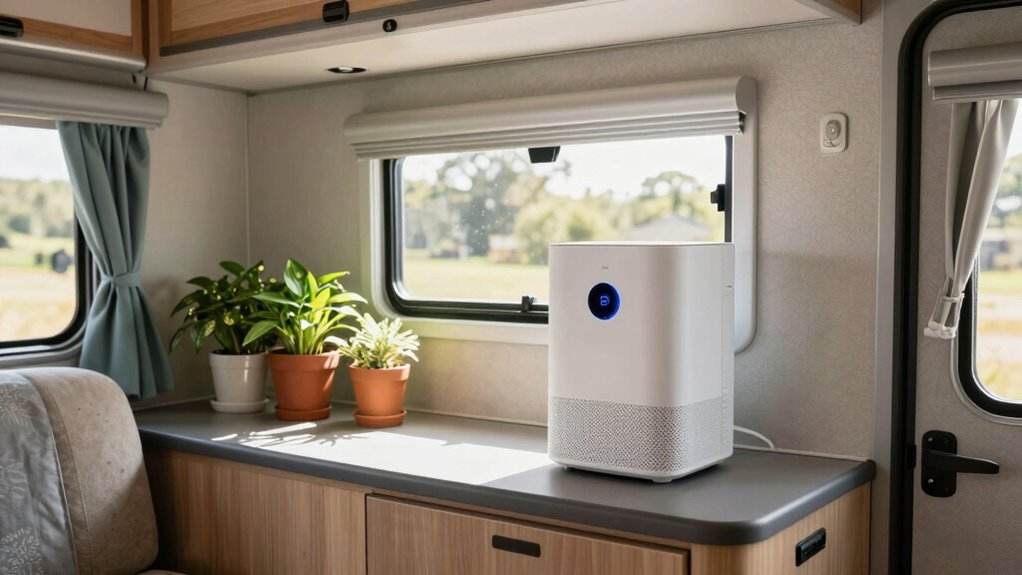

In RV living, air quality matters more than you might think because the small space and limited ventilation can cause pollutants like dust, pet dander, mold spores, and VOCs to build up quickly. Cooking, heating, and appliances further add to indoor emissions, making ventilation essential. Poor air can affect your health and comfort more rapidly in a compact environment. Keep exploring to discover effective ways to improve your RV’s air quality and breathe easier.

Get travel and outdoor gear delivered free — and shop member deals
- Fast, free delivery on millions of items
- Access to Prime Big Deal Days deals on October 6–7
- Prime Video, Amazon Music and more included
Key Takeaways
- Limited space in RVs causes pollutants to accumulate quickly, impacting health more than in larger homes.
- Poor ventilation in compact RVs traps indoor pollutants, increasing exposure risks.
- Continuous use of appliances and cooking emit indoor pollutants, making air quality crucial.
- External factors like pollen and vehicle exhaust more easily infiltrate RVs, affecting indoor air.
- Maintaining good air quality is essential to prevent mold, allergens, and chemical buildup in confined spaces.
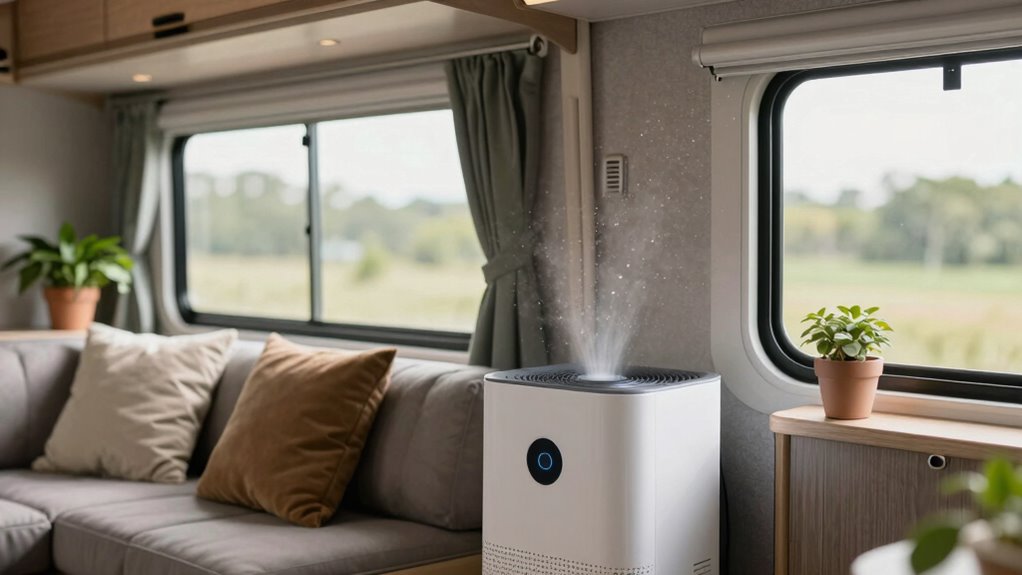
Living in an RV offers freedom and adventure, but it also means paying close attention to the air you breathe. Unlike traditional homes, RVs are compact spaces where indoor pollutants can quickly accumulate. These pollutants include dust, pet dander, mold spores, volatile organic compounds (VOCs) from cleaning supplies, and even emissions from cooking or heating appliances. Because of the limited space and ventilation challenges, you need to be proactive about managing indoor air quality.
Living in an RV requires proactive management of indoor air quality to ensure a healthy, breathable environment.
One of the most effective ways to combat indoor pollutants is by implementing solid ventilation strategies. Ventilation helps replace stale, polluted air with fresh outdoor air, reducing the concentration of harmful substances inside your RV. Since RV windows are often small, relying solely on natural ventilation isn’t enough. You should consider installing vent fans or exhaust systems that can be turned on during cooking, cleaning, or whenever you notice the air becoming stuffy. These systems draw out indoor pollutants and help circulate air more effectively.
Another key strategy involves controlling the sources of indoor pollutants. Regularly cleaning your RV reduces dust and pet dander, while choosing low-VOC products minimizes chemical emissions. Avoid smoking indoors, as tobacco smoke is a major indoor pollutant that lingers and affects everyone’s health. Also, make sure appliances like heaters, stoves, and generators are well-maintained to prevent the release of harmful fumes. Properly sealing and insulating your RV can also prevent outdoor pollutants like pollen, dust, and vehicle exhaust from seeping inside. Additionally, understanding indoor air quality is crucial for making informed decisions about ventilation and pollution control. Being aware of how outdoor factors impact indoor air can help you better protect your living space. Regularly checking air quality levels can help you identify when additional measures are needed to maintain a healthy environment. Furthermore, utilizing air quality monitoring devices can provide real-time data to help you respond quickly to changes in air quality. Incorporating proper ventilation methods can significantly improve the overall air quality inside your RV, especially in areas with high outdoor pollution levels.
Air purifiers can be a valuable addition, especially those equipped with HEPA filters that trap tiny particles like allergens and mold spores. Using air purifiers consistently helps maintain a cleaner, healthier environment, particularly during allergy seasons or in areas with high pollution levels. It’s equally important to monitor humidity levels inside your RV; high humidity promotes mold growth, which becomes another source of indoor pollutants. Using a dehumidifier or ensuring good ventilation can keep moisture levels in check.
Living in an RV means you’re more exposed to environmental factors that can impact your health if you’re not careful. Paying attention to indoor pollutants and adopting effective ventilation strategies aren’t just optional—they’re essential for your well-being. By actively managing air quality, you’ll enjoy your travels more, knowing that you’re breathing cleaner, healthier air every day.
RV air purifier with HEPA filter
As an affiliate, we earn on qualifying purchases.
As an affiliate, we earn on qualifying purchases.
Frequently Asked Questions
How Often Should I Test My Rv’s Air Quality?
You should test your RV’s air quality monthly to stay on top of potential issues. Regular air quality monitoring helps you identify pollutants and allergens early, ensuring a healthier environment. Additionally, prioritize air filter maintenance by replacing or cleaning filters every 1-3 months, depending on usage. By staying consistent with testing and filter upkeep, you’ll maintain fresher, cleaner air and improve your overall RV living experience.
Can RV Air Purifiers Improve Allergy Symptoms?
Yes, RV air purifiers can improve allergy symptoms by filtering out allergens like pollen, pet dander, and dust. While they help, regular maintenance is key—you’ll need to change filters and clean units to keep them effective. Imagine breathing fresh mountain air instead of stuffy, allergy-triggering air. An air purifier offers allergy symptom relief, making your travels more comfortable and enjoyable, even during allergy season.
What Are Common Sources of Indoor Air Pollution in RVS?
You should watch out for dust accumulation and mold growth as common sources of indoor air pollution in your RV. Dust settles on surfaces and gets stirred up, worsening air quality and allergy symptoms. Mold can develop in damp areas, releasing spores that trigger respiratory issues. Regular cleaning, proper ventilation, and controlling moisture help reduce these pollutants, ensuring cleaner, healthier air during your travels.
Is It Safe to Use Traditional Household Air Purifiers in RVS?
Using traditional household air purifiers in your RV isn’t always safe or effective. You need portable filtration units designed for small spaces, and proper air purifier placement is essential. Overly powerful purifiers can cause airflow issues or leaks, making your RV less safe. Choose compact, RV-specific models, and position them correctly to guarantee clean air without risking damage or inefficiency. Your health depends on it—don’t compromise on air quality.
How Does Ventilation Affect Air Quality in Small RV Spaces?
Ventilation greatly impacts air quality in small RV spaces by improving ventilation efficiency and odor control. When you guarantee proper airflow, stale air and pollutants are replaced with fresh air, reducing indoor contaminants. Good ventilation prevents the buildup of cooking smells, pet odors, and moisture, which can lead to mold. By maximizing ventilation, you keep your RV environment healthier and more comfortable, making your travels more enjoyable and safe.
Conclusion
So, next time you settle into your RV, remember—air quality isn’t just a background concern; it’s the invisible thread that can make or break your adventure. You might think you’re safe, but hidden pollutants could be lurking, waiting to surprise you. Will you take the necessary steps now to protect your health and your journey? The choice is yours—don’t let something so essential slip away unnoticed. Your future self will thank you, but only if you act today.
Fall Picks
fall essentials
As an affiliate, we earn on qualifying purchases.