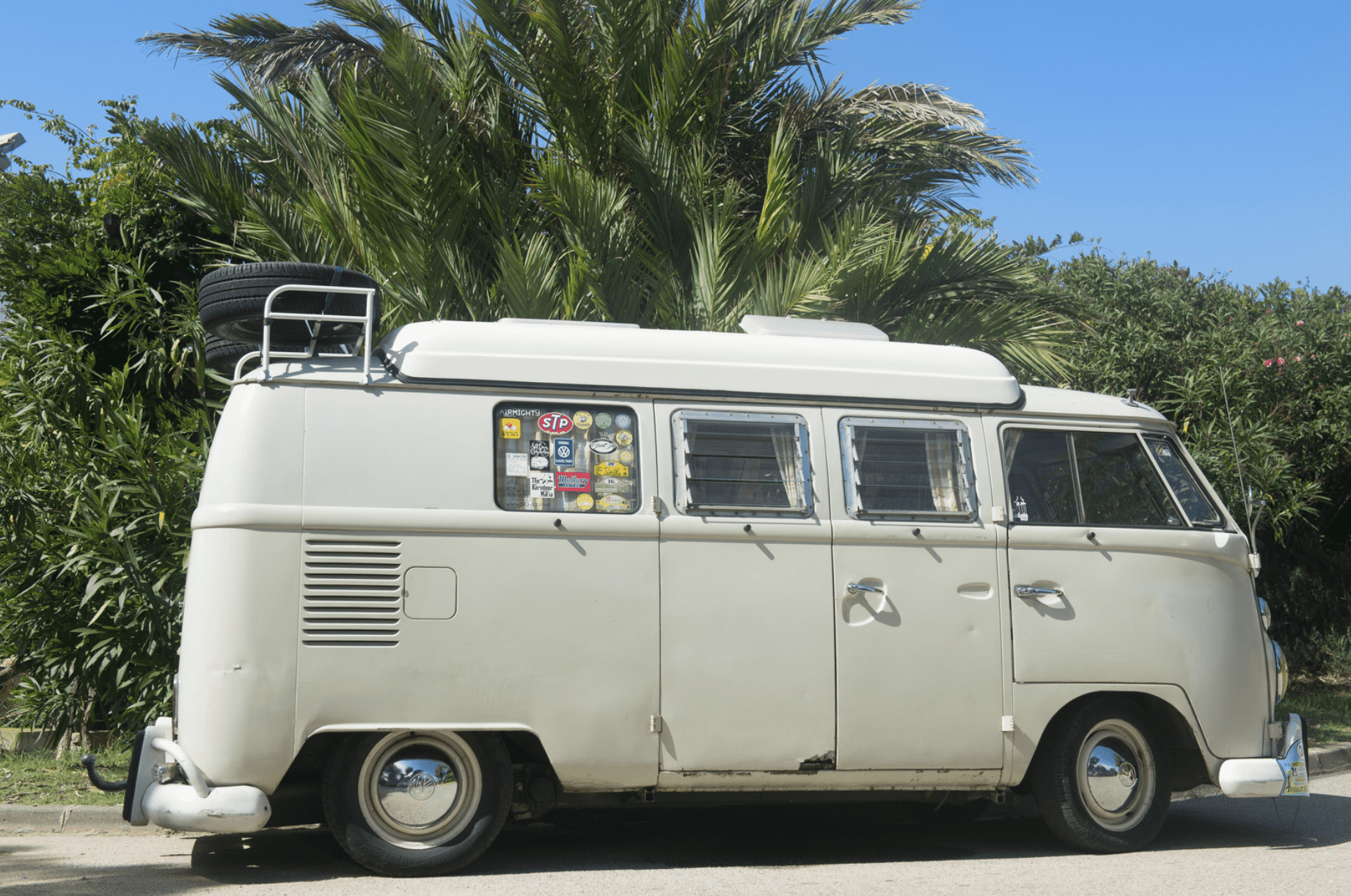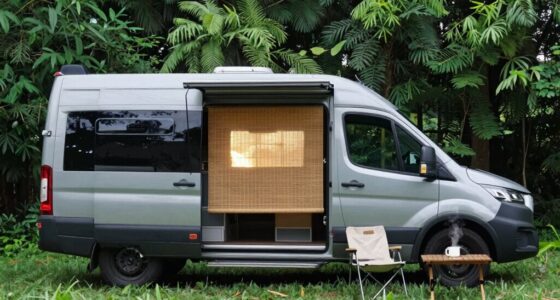
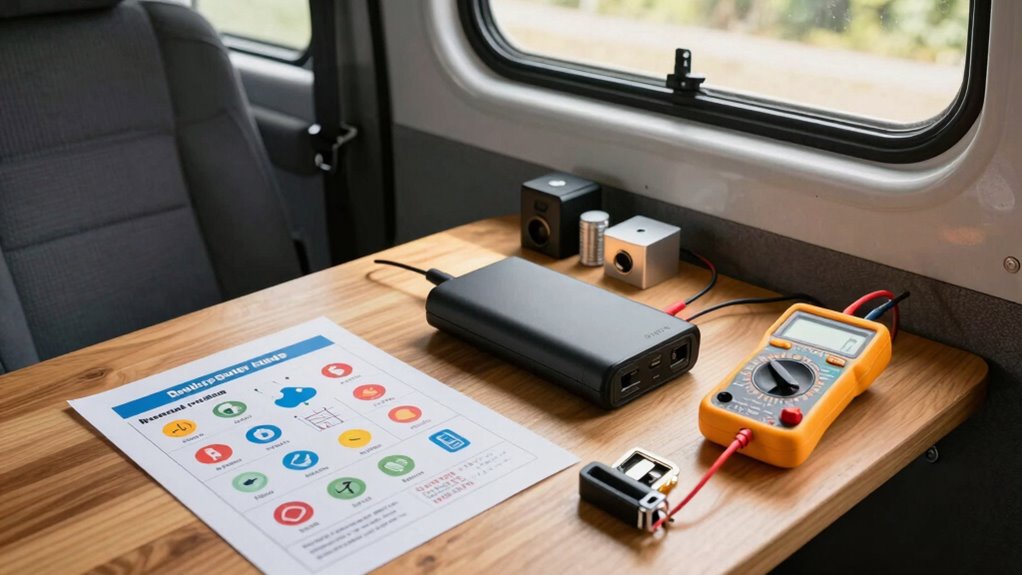

To estimate your campervan’s daily power use easily, list each device or appliance, note their wattages, and how many hours you plan to use them each day. Multiply the wattage by usage hours to get the energy in watt-hours, then add everything up for your total daily consumption. Focus on efficiency and realistic usage. Keep going, and you’ll discover simple ways to fine-tune your energy plan and make your setup more efficient.

Get travel and outdoor gear delivered free with Prime
- Fast, free delivery on millions of items
- Prime Video, Amazon Music and more included
- Member-only deals all year
Key Takeaways
- List all devices and note their wattage and estimated daily usage hours.
- Multiply each device’s wattage by its daily hours to find individual daily energy use.
- Add up all device energy consumptions to determine total daily power requirements.
- Choose energy-efficient appliances to reduce overall power needs and simplify calculations.
- Consider buffer capacity by sizing batteries at 1.5–2 times your total daily energy use.
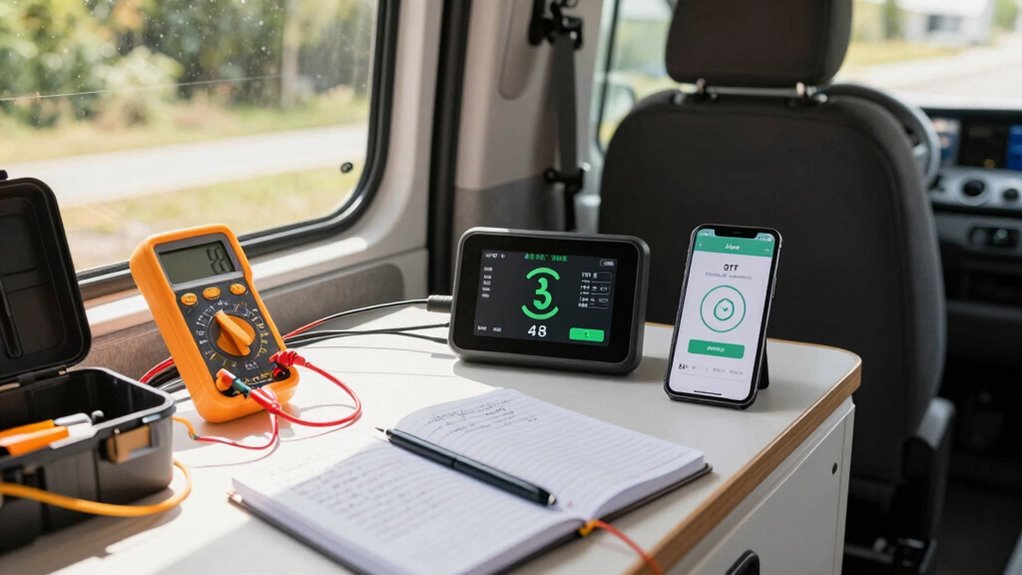
Planning your campervan’s power needs doesn’t have to feel overwhelming. The key is understanding how much energy you’ll use each day and then figuring out the right setup to meet those demands. To do this efficiently, start by listing all the devices and appliances you plan to run—like your refrigerator, lights, phone chargers, and maybe even a small TV. Next, determine how many hours each device will be in use daily. For example, if your fridge runs 24 hours but only consumes a certain amount of power, you can estimate its daily energy use. Once you have these details, you can calculate your daily energy consumption in watt-hours (Wh). It’s also helpful to understand curated lists and reviews, so you can select the most efficient gadgets for your setup. Additionally, understanding energy efficiency can help you choose devices that minimize power consumption and extend your battery life.
From there, it’s important to consider your power generation options. Solar panels are a popular choice because they’re renewable and provide a steady source of power during the day. The size and number of solar panels you need depend on your total daily energy use. For example, if your calculations show you need 2000 Wh of energy each day, you’ll want enough solar capacity to generate that amount, accounting for sunlight hours and efficiency. To make sure your solar setup is sufficient, also consider your battery capacity. Your batteries store the energy generated by your solar panels, so they need to be large enough to hold your daily energy needs plus some extra for cloudy days or unexpected consumption. A common recommendation is to have a battery capacity that’s at least 1.5 to 2 times your daily usage, giving you a buffer to avoid running out of power.
As an affiliate, we earn on qualifying purchases.
Frequently Asked Questions
What Tools Can Help Track Power Consumption Automatically?
You can use solar monitoring systems and energy meters to automatically track your campervan’s power consumption. Solar monitors provide real-time data on energy generated and used, helping you optimize your system. Energy meters installed on your circuits record detailed power usage, giving you clear insights without manual calculations. These tools simplify tracking, allowing you to manage your power needs efficiently and avoid surprises during your adventures.
How Often Should I Check My Power System’s Performance?
You should check your power system’s performance at least once a week, especially if you’re using solar panels. Regular checks help guarantee your inverter efficiency remains ideal and your batteries stay healthy. Keep an eye on solar input, inverter readings, and battery levels. If you notice drops in performance or unusual readings, investigate immediately. Consistent monitoring helps you catch issues early and keeps your campervan’s power system running smoothly.
Can I Upgrade My Campervan’s Battery System Later?
Absolutely, you can upgrade your campervan’s battery system later—think of it as turning a simple story into a masterpiece. You might start with a modest battery capacity, but as your power needs grow, increasing your batteries or adding more charge cycles becomes essential. Upgrading is straightforward, allowing you to maximize your system’s efficiency and lifespan, ensuring your adventures stay powered without compromise.
What Are Signs of Insufficient Power Supply in a Campervan?
If your campervan’s power supply is insufficient, you’ll notice your devices frequently shut off or dim, and your battery voltage drops below safe levels. You might also see inconsistent operation of solar panels and voltage regulators, indicating they’re struggling to keep up. These signs mean you need to upgrade your system, perhaps adding more solar panels or improving voltage regulation, to guarantee reliable power for your travels.
How Do Weather Conditions Affect Power Usage Estimates?
Weather conditions act like a unpredictable weather vane, spinning your power needs with temperature fluctuations and sunlight shifts. Cold or cloudy days reduce solar efficiency, making your power consumption soar as you rely more on backup sources. Hot, sunny weather boosts solar output, lowering your energy demands. Keep an eye on these changes, adjusting your power estimates accordingly to stay ahead of your campervan’s energy needs, rain or shine.
Conclusion
By keeping things simple—like counting your devices’ wattages and estimating their daily use—you can easily gauge your campervan’s power needs. For example, if you plan to run a 60W fridge for 24 hours, it’ll use about 1.44 kWh daily. This straightforward approach helps you avoid spreadsheet headaches and guarantees you pack just enough power. With a clear estimate, you’ll enjoy your adventures without worrying about running out of juice.
Fall Picks
fall essentials
As an affiliate, we earn on qualifying purchases.