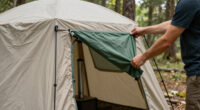
Tent stoves make hot-tent camping much more comfortable by providing reliable heat that keeps you cozy even in winter. They allow you to cook, dry gear, and stay warm, transforming your tent into a welcoming space. Just be sure to follow safety rules, like proper ventilation and stove placement. With a tent stove, your outdoor adventure becomes considerably more enjoyable and stress-free. Keep going to discover more tips on making the most of your hot-tent experience.
Key Takeaways
- Tent stoves create a warm, inviting environment, transforming the tent into a comfortable living space during winter camping.
- They enable safe indoor cooking and drying, enhancing convenience and self-sufficiency in cold conditions.
- Proper ventilation and safety measures ensure a secure, cozy experience without risks of carbon monoxide or fire hazards.
- Consistent heat from the stove reduces drafts and cold spots, making the interior more evenly heated and enjoyable.
- Incorporating a tent stove elevates the overall hot-tent camping experience by combining warmth, comfort, and practicality.
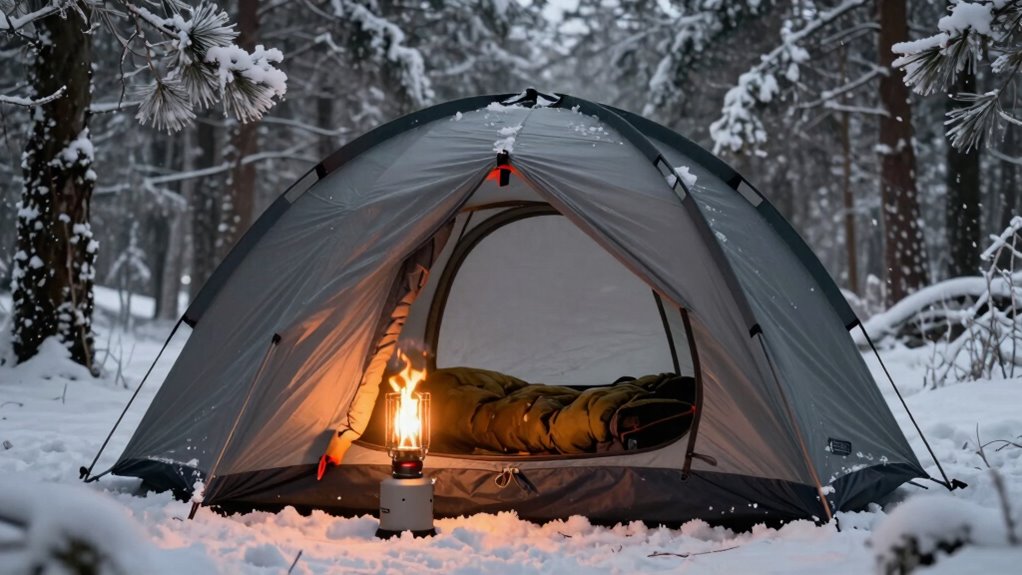
When winter camping, staying warm becomes a top priority, and tent stoves offer a reliable solution. They provide portable heating that keeps your tent cozy, even in the coldest conditions. Unlike relying solely on sleeping bags or external heat sources, a tent stove creates a consistent and comfortable environment, allowing you to enjoy your outdoor adventure without shivering. The heat from a stove helps prevent frostbite and hypothermia, making it an essential piece of gear for serious cold-weather campers.
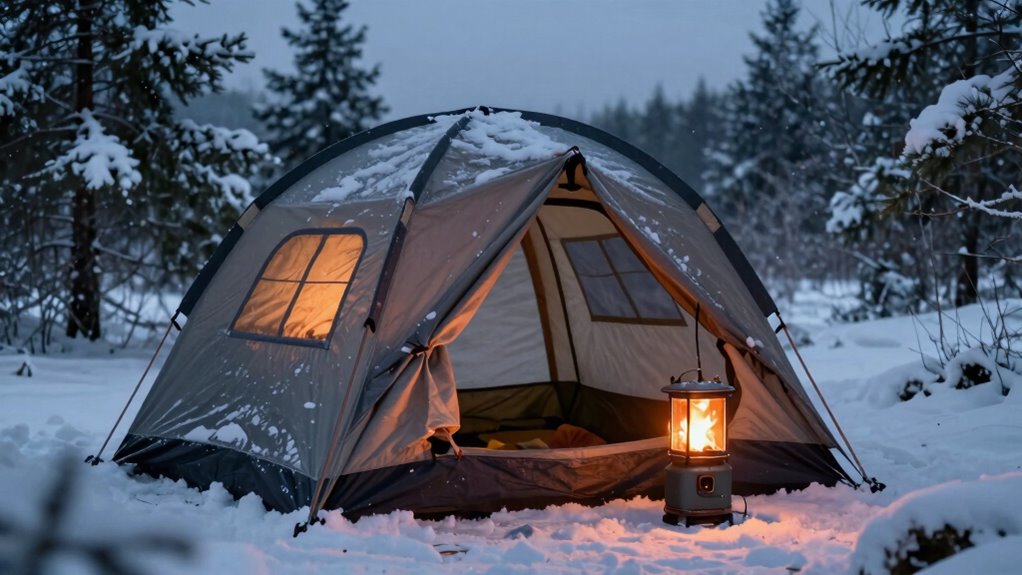
Using a tent stove enhances the hot-tent camping experience by turning your tent into a warm, inviting space. You can cook meals, boil water, and dry out damp gear directly inside the tent, which is especially useful in winter conditions. The portable heating aspect means you don’t need to be near a fire outside or worry about cold drafts seeping in, as the stove warms the entire interior evenly. This not only boosts comfort but also creates a more homely atmosphere amidst the wilderness, making your camping trip more enjoyable and less stressful. Properly ventilating your tent stove is crucial to ensure safe operation and prevent dangerous buildup of fumes.
Using a tent stove creates a cozy, versatile space for cooking, drying gear, and staying warm in winter conditions.
However, safety precautions are paramount when operating a tent stove. You need to ensure proper ventilation; a well-ventilated tent prevents dangerous carbon monoxide buildup, which can be deadly. Always check for exhaust leaks and make sure the stove pipe is correctly installed and free of obstructions. When setting up your stove, place it on a stable, fire-resistant surface, and keep it away from tent walls and gear that could catch fire. Never leave the stove unattended when it’s lit, and make sure you have a fire extinguisher or a bucket of water nearby in case of emergencies. Being aware of fire safety practices can significantly reduce the risk of accidents.
It’s also crucial to understand the stove’s capacity and how much wood or fuel it consumes. Overfilling or using inappropriate fuel can cause dangerous flare-ups or carbon monoxide poisoning. Always follow the manufacturer’s instructions for safe operation and maintenance. Additionally, having a smoke and carbon monoxide detector inside the tent adds an extra layer of safety, providing peace of mind in case something goes wrong. Properly venting systems for stoves are essential for safe and effective operation in winter camping. Being aware of biodiversity impacts related to fire use can help campers adopt environmentally responsible practices, minimizing their ecological footprint.
Incorporating a tent stove into your hot-tent camping routine transforms cold nights into warm, comfortable experiences. With proper use and safety precautions, a tent stove becomes an indispensable tool that enhances your outdoor adventure, making winter camping safer and more enjoyable. It’s all about balancing the benefits of portable heating with cautious handling, ensuring you stay warm without risking safety.
As an affiliate, we earn on qualifying purchases.
Frequently Asked Questions
How Safe Are Tent Stoves for Indoor Use?
Tent stoves can be safe for indoor use if you prioritize tent stove safety and guarantee proper indoor ventilation. Always follow the manufacturer’s instructions, keep a safe distance from tent walls, and use a carbon monoxide detector. Proper ventilation is essential to prevent dangerous fumes from building up. When used carefully and responsibly, tent stoves provide reliable warmth without compromising safety, making them a valuable part of your camping experience.
What Are the Best Fuel Types for Tent Stoves?
You might think choosing fuel is simple, but it’s not just about firepower. The best fuels for tent stoves are seasoned wood, propane, or kerosene, because they balance fuel efficiency with stove durability. Ironically, the “best” fuel depends on your setup and needs. Wood offers great heat and efficiency, but propane and kerosene are cleaner and easier to manage, keeping your hot-tent cozy without sacrificing safety or longevity.
Can Tent Stoves Be Used in Extreme Cold Conditions?
Yes, tent stoves can be used in extreme cold conditions if you pay attention to tent stove insulation and stove placement. You should insulate your tent well to retain heat and position the stove centrally for even warmth. Make certain proper clearance around the stove to avoid fire hazards, and use appropriate fuel types. With these precautions, a tent stove can effectively keep you warm even in harsh winter weather.
How Do You Prevent Carbon Monoxide Buildup?
Imagine your tent as a house with a tiny chimney. To prevent carbon monoxide buildup, you need proper ventilation strategies, like vents or windows, allowing fresh air in and fumes out. Stove placement is essential—keep it away from tent walls and guarantee it’s on a stable, non-flammable surface. Regularly check for any signs of smoke or fumes, and never leave the stove unattended while burning.
What Are the Maintenance Tips for Tent Stoves?
To maintain your tent stove, regularly clean the stove and chimney to prevent creosote buildup, which can cause fires. Make sure you inspect and replace chimney insulation if it’s damaged to keep heat efficient and safe. Always check for corrosion or rust and clear out ash after each use. Proper maintenance prolongs your stove’s lifespan, maintains safety, and keeps your camping experience warm and cozy.
Conclusion
So, next time you’re braving the elements in your cozy hot tent, remember: a tent stove isn’t just about warmth—it’s your new best friend, your secret weapon against the cold, and your excuse to ignore that pesky “roughing it” label. Who knew that a little metal box could turn you into a winter camping hero? Embrace the heat, enjoy the glow, and bask in the glory of being the king or queen of the cold—stove included.