
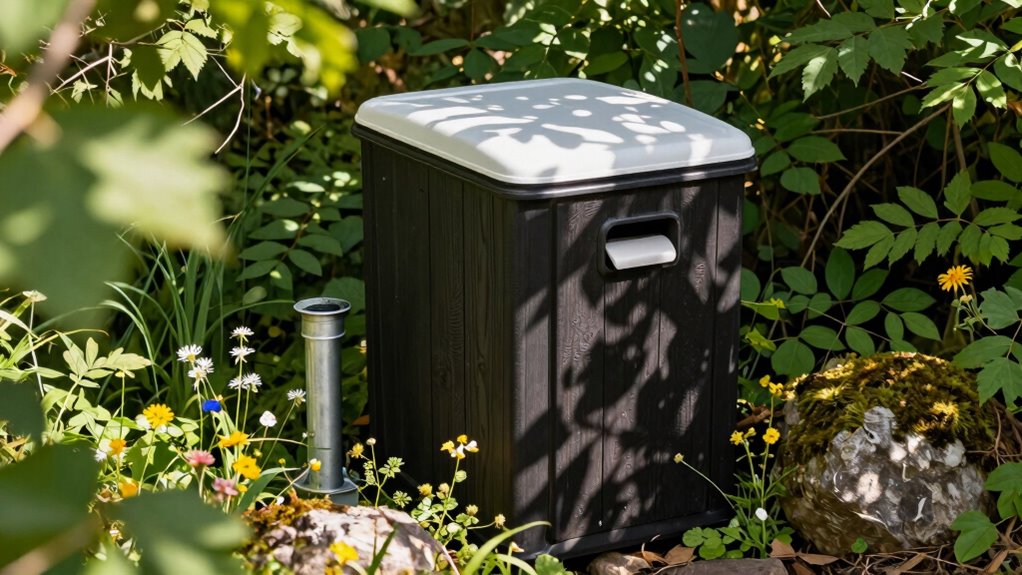

Composting toilets help you turn waste into safe, nutrient-rich compost without using water or a septic system. They work by separating liquids and solids, which break down naturally with the help of biodegradable materials like sawdust or coconut coir. Good system design, regular maintenance, and proper airflow are essential for odor control and hygiene. Keep adding fresh bulking agents and monitoring moisture levels — if you want to master the basics, you’ll find plenty more to discover.
Key Takeaways
- Composting toilets convert waste into compost without water, relying on natural decomposition processes.
- They separate liquid and solid waste to enhance decomposition and reduce odors.
- Use biodegradable materials like sawdust and coconut coir to support eco-friendly operation.
- Regular maintenance, such as adding bulking agents and checking vents, keeps the system hygienic and odor-free.
- Proper system design and airflow are essential for efficient composting and minimizing environmental impact.
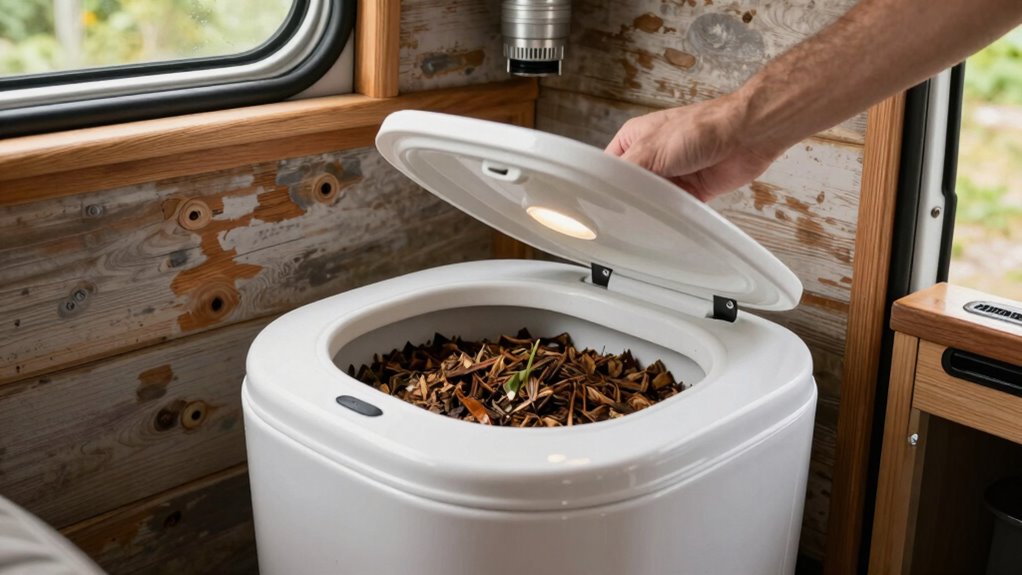
Have you ever wondered how composting toilets work and why they’re gaining popularity? If you’re someone who loves camping or traveling in a van, you’ve probably heard about these eco-friendly systems. Composting toilets are designed to turn waste into compost without using water or traditional septic systems. Instead, they rely on natural decomposition, making them a sustainable choice for off-grid living. They work by separating liquid and solid waste, with the solids breaking down over time into compost-like material. This process is facilitated by specific materials and proper maintenance, which guarantees the toilet functions efficiently and hygienically.
One of the main reasons composting toilets are eco friendly is their use of eco friendly materials. These toilets often incorporate biodegradable components, such as compostable bags, eco-friendly seats, and natural absorbents like coconut coir or sawdust. These materials help minimize environmental impact and guarantee that waste is processed safely. By choosing systems made from sustainable materials, you support a greener lifestyle and reduce your carbon footprint. Additionally, many composting toilets are designed with durable, non-toxic plastics or other environmentally conscious materials, making them safe for long-term use and easy to clean. Understanding the biological decomposition process can help you optimize the conditions for faster and more efficient waste breakdown. Proper system design also plays a crucial role in ensuring effective composting and odor control.
Maintaining a composting toilet isn’t complicated, but it does require some regular upkeep. A key maintenance tip is to regularly add appropriate bulking agents like sawdust or coconut coir after each use to control moisture and odor. This helps promote aerobic decomposition and keeps the system odor-free. You should also monitor the moisture levels inside the compost chamber, ensuring it stays moist but not overly wet, which could lead to odor or bacterial issues. Additionally, understanding the waste breakdown process can help you better manage the timing for emptying the composted material and prevent potential issues. Emptying the composted material at the right time—when it’s fully decomposed—is essential. Usually, this involves removing the finished compost and replacing it with fresh material, a process that’s straightforward with most systems. Ventilation is another vital aspect; ensuring your composting toilet has proper airflow prevents bad smells and aids in the composting process. Regularly inspecting seals and vents helps maintain this airflow and keeps the system functioning smoothly. Proper system maintenance is crucial to ensure the process remains hygienic and odor-free.

NOMAD by OGO Portable Compost Toilet – Camping Toilet for Truck Campers, Hunting Blinds, Car Camping, Primitive Camping & Boating, No-Electric, Waterless, Odor-Free Fits 8 Gallon Bags
- Designed for Rugged Adventures: No electric or plumbing needed
- Odor-Free Urine Separation: Keeps liquids and solids apart
- Portable and Space-Saving: Fits in trucks, tents, boats
As an affiliate, we earn on qualifying purchases.
As an affiliate, we earn on qualifying purchases.
Frequently Asked Questions
How Long Does a Composting Toilet Last Before Replacement?
A composting toilet typically lasts between 5 to 10 years before needing replacement, depending on your maintenance schedule and usage. You’ll notice replacement indicators like persistent odors, leaching issues, or cracks in the unit. Regularly emptying and maintaining your toilet extends its lifespan. When you see these indicators or if it becomes difficult to maintain hygiene and odor control, it’s time to think about replacing the composting toilet for ideal functioning.
Can Composting Toilets Be Used During Winter Camping?
Yes, you can use composting toilets during winter camping, but you should take some precautions. Make sure to add winter insulation around the toilet to prevent freezing concerns. Using insulating mats or blankets and maintaining a warmer ambient temperature inside your camper helps keep the composting process active. Regularly check for any signs of freezing, and consider adding a heating element if you stay in extremely cold conditions for extended periods.
What Are the Best Types of Composting Toilet Additives?
Think of composting toilet additives as the secret ingredients in your camping recipe. The best types include natural amendments like sawdust, coconut coir, and peat moss, which help balance moisture and carbon levels. Chemical additives can also speed up decomposition but may introduce odors or chemicals you’d rather avoid. For a cleaner, eco-friendly experience, stick with natural amendments—they’re your best friends for a smooth composting process.
How Do I Handle Odors in a Composting Toilet?
To handle odors in a composting toilet, focus on odor control by ensuring proper ventilation. Install a ventilation system that directs air outside, preventing smells from lingering inside. Use carbon-based additives to absorb odors and regularly mix the compost to aerate it. Keeping the toilet lid closed when not in use also helps minimize odors. Consistent maintenance and good ventilation are key to a fresh, odor-free experience.
Are Composting Toilets Suitable for Large Family Use?
Think of a composting toilet like a busy city bus—designed to handle many passengers comfortably. For large families, choosing a composting toilet with ample family capacity and appropriate toilet size considerations is vital. Some models support multiple users efficiently, but you’ll want to make sure it’s large enough to prevent discomfort. Proper maintenance and choosing the right model guarantee everyone stays satisfied, making it a practical solution for bigger households.
Conclusion
Now that you understand the basics of composting toilets, you’re ready to embrace sustainable camping and van life. With proper use, maintenance, and a little bit of patience, you’ll enjoy a cleaner, greener experience. Embrace the simplicity, embrace the convenience, and embrace the eco-friendly benefits. Remember, composting toilets are more than just a necessity—they’re a choice for a better, more responsible adventure. So go ahead, explore boldly and leave a lighter footprint wherever you go.