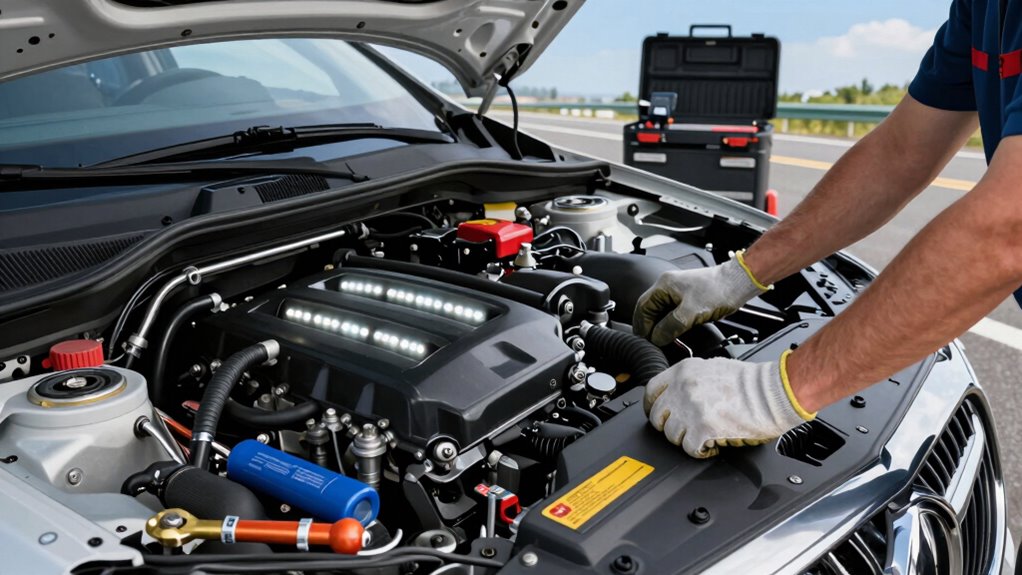

Before hitting the road, perform a thorough pre-trip inspection to prevent breakdowns. Check your tires for proper pressure, tread, and wear, and make certain all exterior lights work. Verify fluid levels, including oil, coolant, and brake fluid, and inspect belts and hoses for damage. Confirm your emergency kit and spare tire are accessible and in good shape. Doing these checks guarantees your vehicle runs smoothly and keeps you safe—discover more essential tips to prep for your journey.
Key Takeaways
- Conduct a thorough vehicle inspection, including tires, lights, fluids, belts, and hoses, to identify potential issues early.
- Verify tire pressure, tread depth, and proper inflation to prevent blowouts and ensure safe handling.
- Check all exterior lights and signals for proper operation to enhance visibility and communication on the road.
- Ensure fluid levels (oil, coolant, brake fluid) are adequate and inspect brake system for responsiveness and wear.
- Prepare an emergency kit and confirm the spare tire, jack, and tools are accessible and in good condition.
Why a Pre-Trip Inspection Is Key to a Safe Road Trip
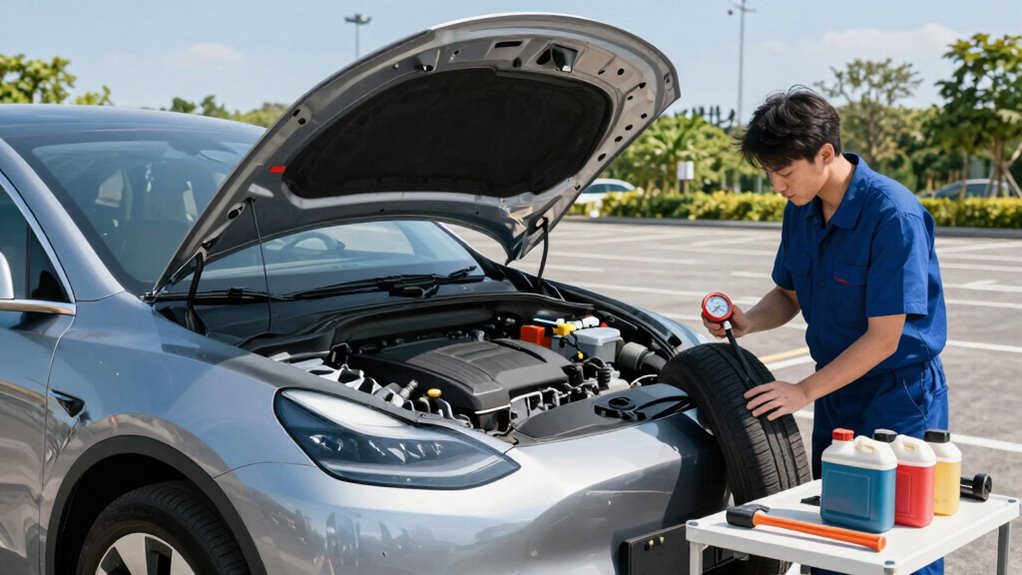
A pre-trip inspection is essential because it helps identify potential issues before hitting the road, reducing the risk of breakdowns or accidents. When you check your vehicle beforehand, you can spot signs of driver fatigue that may impair your focus during the trip. Proper route planning also plays a critical role; knowing your stops, rest areas, and fuel stations ensures you won’t overexert yourself or get lost, which can lead to dangerous situations. By performing a thorough inspection, you’re better prepared to handle any minor problems that could escalate if ignored. Additionally, ensuring your vehicle is equipped with emergency safety supplies can be crucial in case of unforeseen issues. This proactive approach keeps you alert, minimizes stress, and helps you maintain a safe, enjoyable journey. Remember, preparation is key to a smooth, accident-free road trip.
Are Your Tires Properly Inflated and Worn?
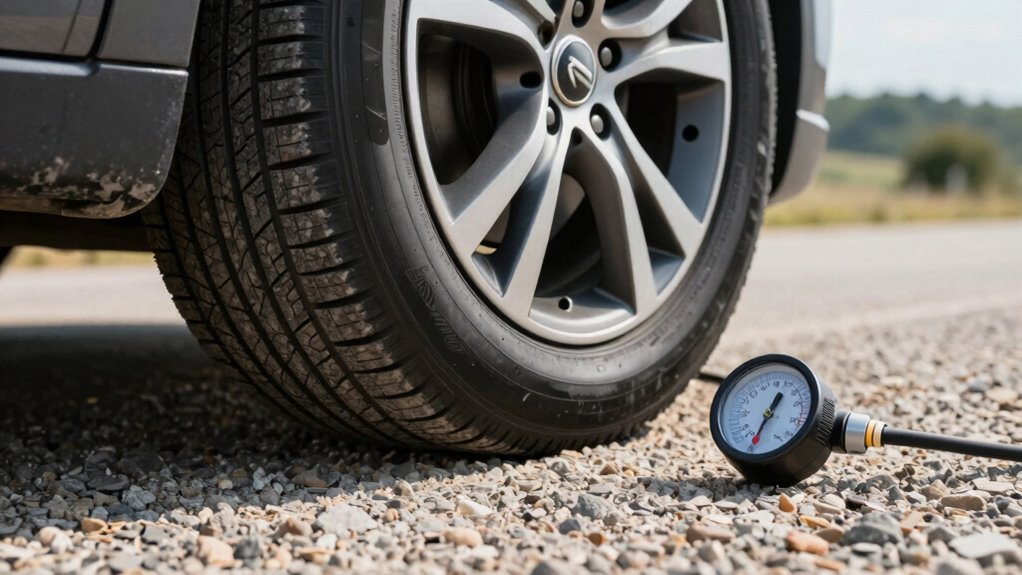
Before hitting the road, you need to make certain your tires are properly inflated and have adequate tread. Check your tire pressure and make sure it matches your vehicle’s recommended levels. Also, inspect the tread depth to confirm your tires can grip the road safely. Regularly monitoring tire wear and tear can help prevent unexpected breakdowns and ensure safe driving conditions.
Tire Pressure Check
Have you checked your tire pressure lately? Proper tire pressure is essential for a safe and smooth road trip. Use a reliable tire pressure gauge to measure each tire’s air inflation, ensuring they match the manufacturer’s recommended PSI. Under-inflated tires can cause poor handling, increased fuel consumption, and uneven wear, while over-inflated tires may lead to a rougher ride and increased risk of blowouts. Make sure to check tires when they are cold, as heat from driving can give inaccurate readings. If your tires are not properly inflated, add or release air accordingly. Regularly inspecting tire pressure before your trip helps prevent breakdowns, improves safety, and guarantees your tires perform at their best throughout your journey. Additionally, inspecting for Free Floating can help identify any issues with tire alignment or balance that could affect your drive.
Tread Depth Inspection
Ever wonder if your tires can handle the road ahead? Checking tread depth is essential to guarantee safe driving and prevent breakdowns. Use a tread depth gauge or the penny test: insert a penny into the tire’s tread with Lincoln’s head upside down. If you can see all of Lincoln’s head, your tread is too shallow, indicating significant tire wear. Adequate tread depth helps maintain traction, especially in wet conditions. Worn tires with insufficient tread increase the risk of hydroplaning and reduce braking effectiveness. Regularly inspecting your tire wear and tread depth keeps you aware of when it’s time to replace tires. Properly maintained tires not only enhance safety but also improve fuel efficiency and vehicle performance during your road trip.
How to Check Your Car’s Fluids Before Hitting the Road
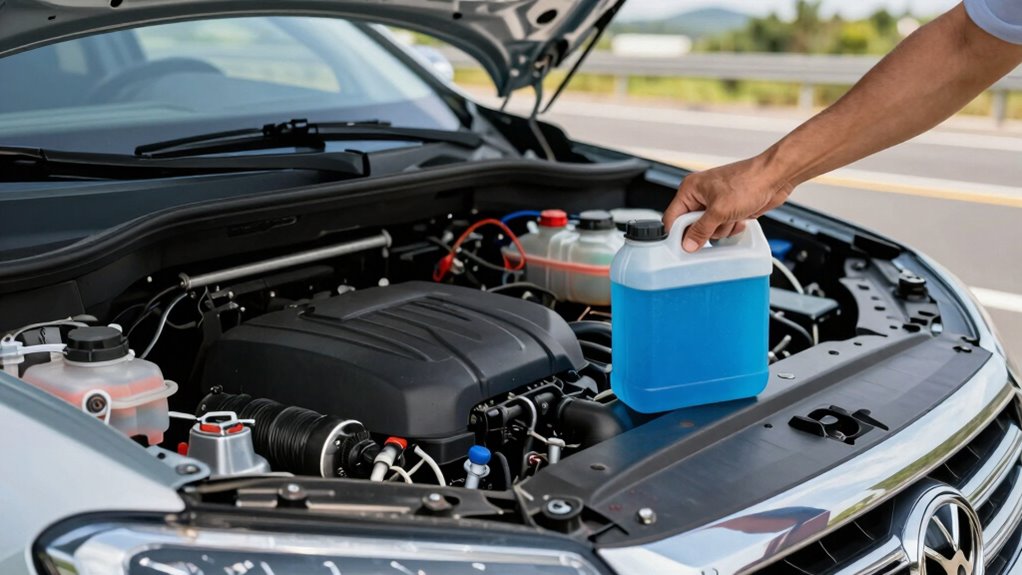
Before you hit the road, it’s vital to check your car’s fluids to prevent breakdowns. Start by verifying the engine oil level, then inspect the coolant reservoir and brake fluid. Keeping these fluids in good shape guarantees a smoother, safer trip.
Check Engine Oil Level
Checking your engine oil level is a crucial step to guarantee your vehicle runs smoothly during your trip. Low or dirty engine oil can cause engine damage or breakdowns on the road. To check the oil, park your car on a level surface and turn off the engine. Wait a few minutes for the oil to settle. Remove the dipstick, wipe it clean, then reinsert it fully. Pull it out again to check the oil level; it should be between the minimum and maximum marks. If the oil is low, top it up with the recommended type. Remember, if your oil looks dark or gritty, it’s time for an oil change. Regularly maintaining proper engine oil levels helps prevent breakdowns and keeps your engine running efficiently on your trip.
Inspect Coolant Reservoir
After verifying your engine oil is at the proper level, it’s vital to check other essential fluids, like the coolant. Start with a reservoir inspection—look at the coolant level to make sure it’s between the “MIN” and “MAX” marks. If it’s low, add the recommended coolant type. Always check the reservoir cap for cracks or leaks before opening it. Regularly inspecting your vehicle’s gear care helps ensure a smooth and safe journey. Monitoring the coolant level and reservoir condition helps prevent overheating during your trip, keeping your engine running smoothly.
Examine Brake Fluid
Ensuring your brake fluid is at the proper level is crucial for safe stopping power during your trip. Open the hood and locate the brake fluid reservoir, usually near the firewall. Check the fluid level against the markings on the reservoir—if it’s below the minimum line, you need a fluid replacement. Use a clean cloth to wipe the cap before opening it to prevent dirt from contaminating the system. Inspect the fluid’s color; it should be clear or slightly yellow. Dark, cloudy, or dirty fluid indicates it’s time for a brake fluid flush and replacement. Regularly examining your brake fluid helps maintain braking efficiency and prevents potential failures during your journey. Maintaining your vehicle’s safety by performing simple checks like this can help you avoid unexpected breakdowns. Don’t ignore this check—it’s a simple step to ensure your safety on the road.
Is Your Battery in Good Condition for a Reliable Start?
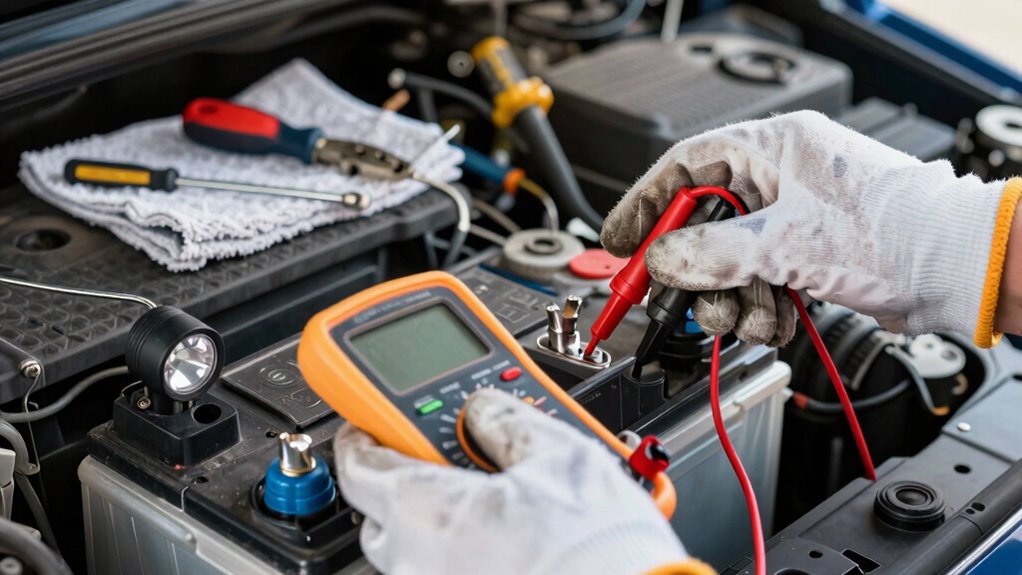
Your vehicle’s battery is essential for a smooth start, especially on a road trip. Before hitting the road, check the battery’s health by inspecting for corrosion, cracks, or leaks around the terminals. Confirm the battery is securely mounted and that the connections are tight. A weak battery can struggle to deliver the power needed for your vehicle to start reliably. Also, test your charging system by starting the engine and observing the dashboard indicators. A healthy charging system keeps the battery charged and prevents it from draining prematurely. Be aware that manipulation tactics can sometimes be used to hide underlying issues, so trust your own inspections over misleading signs. If your battery shows signs of aging or the charging system isn’t functioning properly, consider replacing or servicing them before your trip. This simple check can prevent unexpected breakdowns and keep your journey smooth.
Are Your Brakes Responsive and Worn Out?
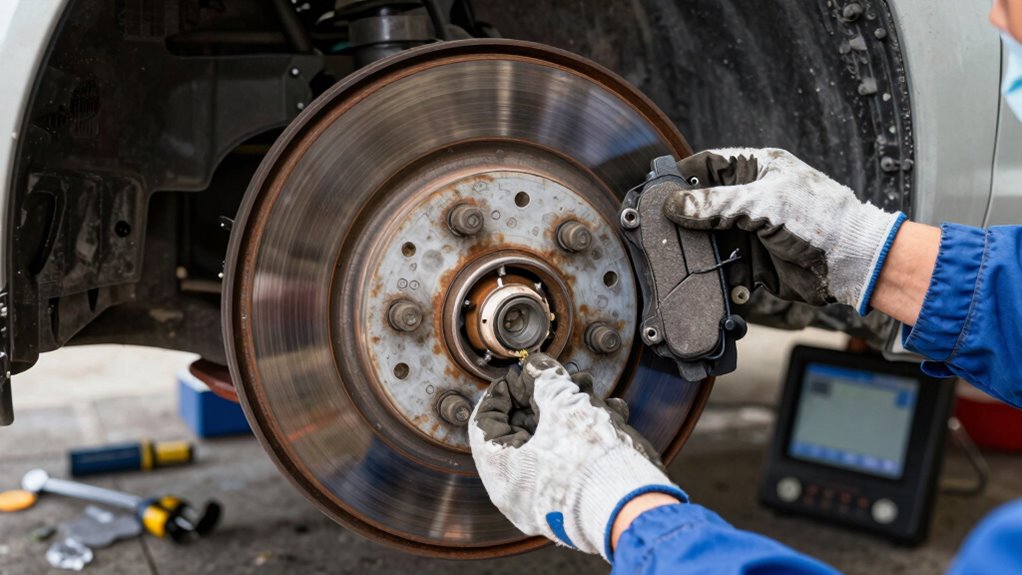
A reliable start is just the beginning; your vehicle’s ability to stop effectively is equally vital for a safe road trip. Check your brake responsiveness by gently applying pressure to verify the brakes engage smoothly and promptly. If you notice a delay or if the brake pedal feels soft or spongy, it could indicate a problem. Also, inspect brake wear by looking at the brake pads—if they’re thin or unevenly worn, it’s time for a replacement. Squealing or grinding noises when applying brakes are signs of excessive brake wear. Properly functioning brakes give you confidence and control on the road, helping prevent accidents and breakdowns. Remember, brake maintenance is crucial for vehicle safety and optimal performance. Don’t overlook brake health—it’s a vital part of your pre-trip inspection for a safe journey.
Do All Your Exterior Lights and Signals Work?
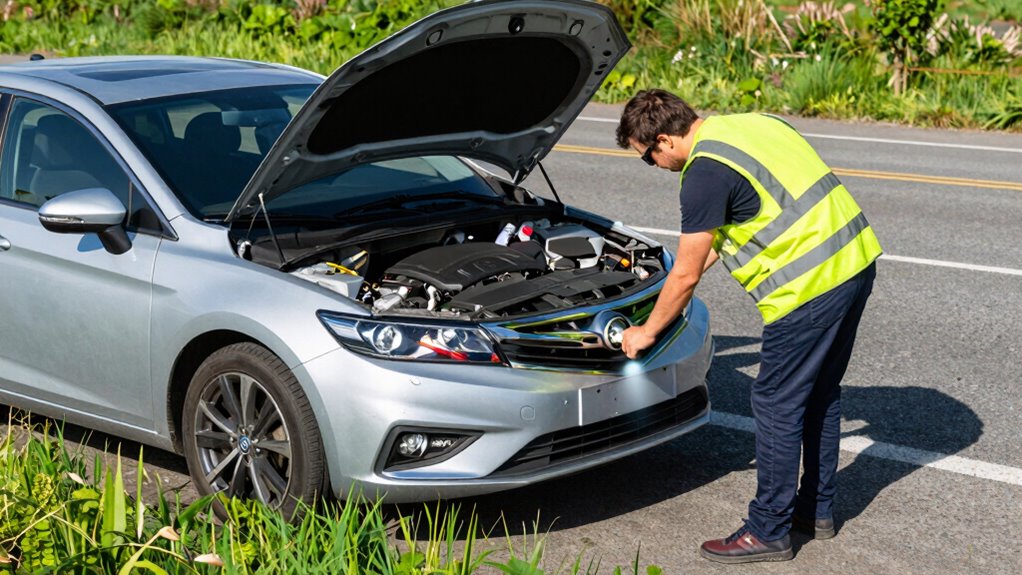
Before hitting the road, make sure all your exterior lights and signals are functioning properly, so you’re visible and can communicate your intentions to other drivers. Check your headlights, tail lights, brake lights, turn signals, and hazard lights. Proper signal functionality guarantees safety and prevents accidents. Use your vehicle’s manual to locate each light and activate them one by one. If any light isn’t working, replace the bulb or fix wiring issues before departure. Regular maintenance can also help you identify common electrical problems that may affect your lights.
Are Your Belts and Hoses Free of Wear or Damage?
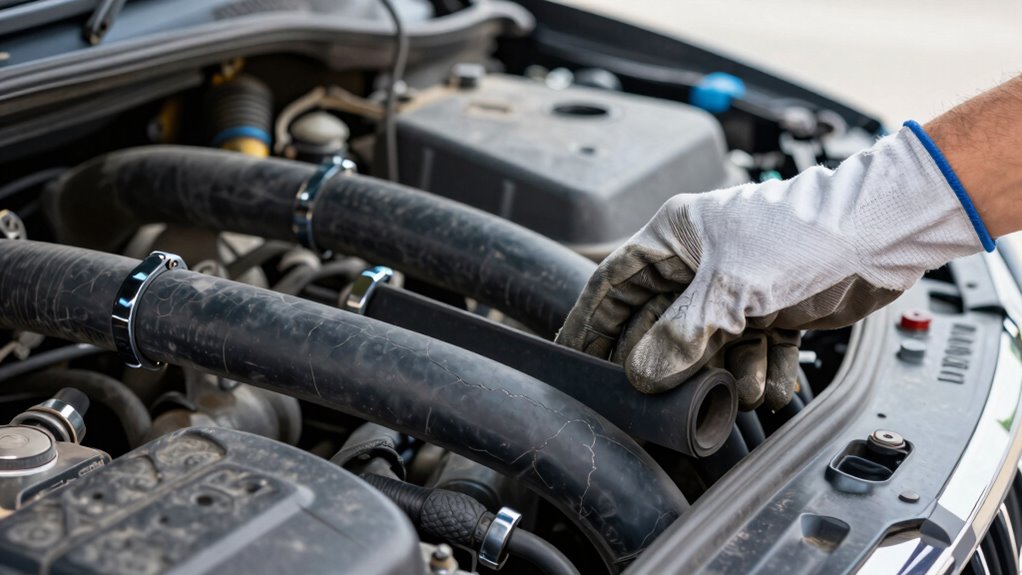
You should visually inspect your belts for any signs of wear, such as cracks or fraying. Look closely at the belts’ surfaces to spot potential issues before they cause problems on the road. Catching damage early can prevent breakdowns and keep your trip smooth.
Visual Belt Inspection
Regularly inspecting your belts and hoses visually is essential to catch signs of wear or damage early. Look for cracks, fraying, or glazing on the belts, especially the timing belt and serpentine belt, which drive many engine accessories. Check the tension and alignment—loose or misaligned belts can cause slipping or failures. Hoses should be free of bulges, cracks, or leaks, and fittings should be secure. Use the table below to guide your inspection:
| Belt Condition | Hose Condition |
|---|---|
| Cracks or fraying visible | Cracks or leaks present |
| Glazing or slipping | Bulges or soft spots |
| Looseness or misalignment | Hard or brittle hoses |
| Excessive wear | Loose clamps or fittings |
| Proper tension | No signs of leaks |
Address issues promptly to prevent breakdowns during your trip. Regular maintenance and visual inspection techniques can help identify potential problems before they cause a breakdown.
Check for Cracks
Inspecting your belts and hoses for cracks is a straightforward step that can prevent unexpected breakdowns. Crack detection is essential, as small fissures can worsen over time and lead to failure. During surface inspection, look closely at all visible areas of belts and hoses for any signs of wear, such as cracks, cuts, or fraying. Pay special attention to areas near pulleys or clamps, where stress is higher. Feel for brittleness or softness, which indicates deterioration. Replace any belts or hoses showing signs of cracks or damage before your trip. Regular surface inspection helps catch issues early, ensuring your vehicle runs smoothly and safely. Taking this simple step now can save you from costly repairs and breakdowns on the road.
Is Your Emergency Kit Ready and Accessible?
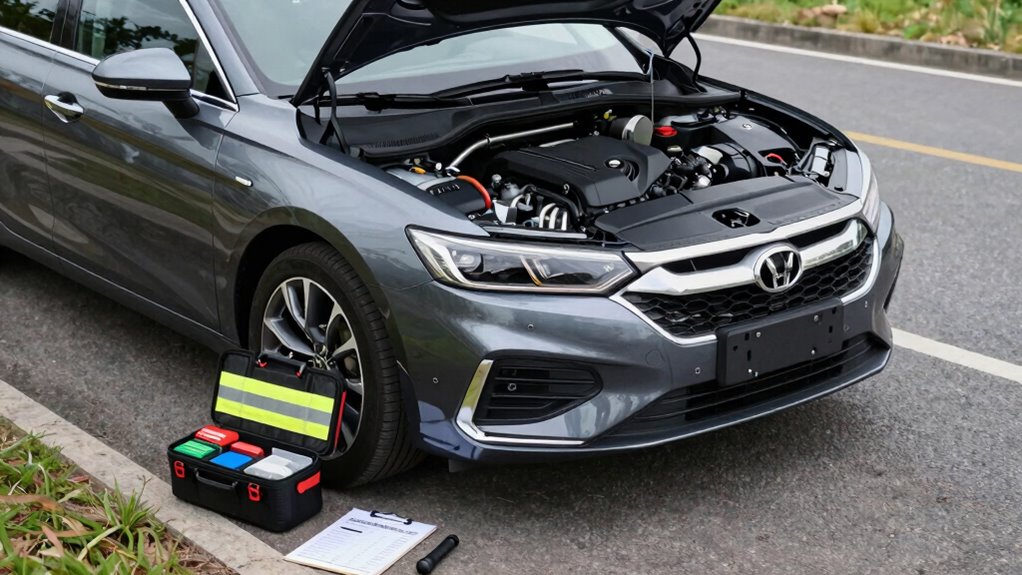
Ensuring your emergency kit is ready and accessible is a crucial step before hitting the road. Proper emergency preparedness boosts your travel safety, providing peace of mind during unexpected situations. Check that your kit contains essentials like first aid supplies, flashlight, batteries, bottled water, and non-perishable snacks. Make sure it’s stored in an accessible location, such as the trunk or behind the seats, so you can grab it quickly if needed. Confirm all items are in good condition and not expired. An organized, well-stocked emergency kit can make a difference during breakdowns or accidents, helping you stay safe until help arrives. Taking these precautions ensures you’re prepared for any emergencies on your journey, keeping you safe and confident from start to finish.
Is Your Spare Tire and Tools Easy to Find?
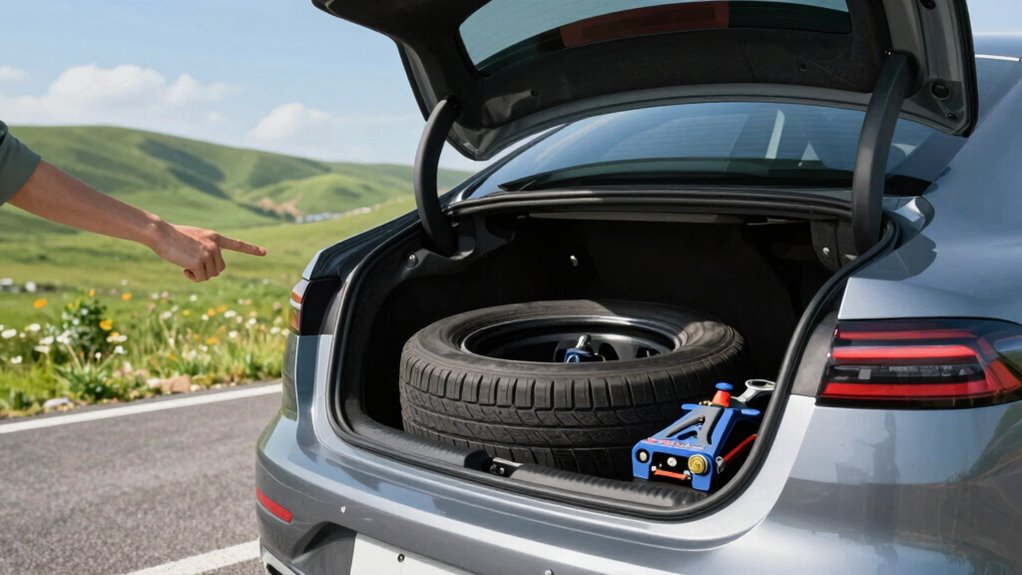
Have you checked if your spare tire and tools are easy to locate? Making certain quick access to your spare tire and necessary tools is vital in an emergency. Confirm that the spare tire is properly inflated, in good condition, and stored in an accessible spot, like the trunk or under the vehicle. Tool accessibility is just as important—make sure your jack, lug wrench, and any other essential tools are organized and easy to reach. Avoid digging through clutter or hidden compartments during a breakdown. Taking a few moments to verify that everything is in place and easy to access can save you time and stress if a flat tire occurs. Clear organization ensures you’re prepared to handle tire changes swiftly and safely.
How to Perform a Test Drive and Catch Last-Minute Issues
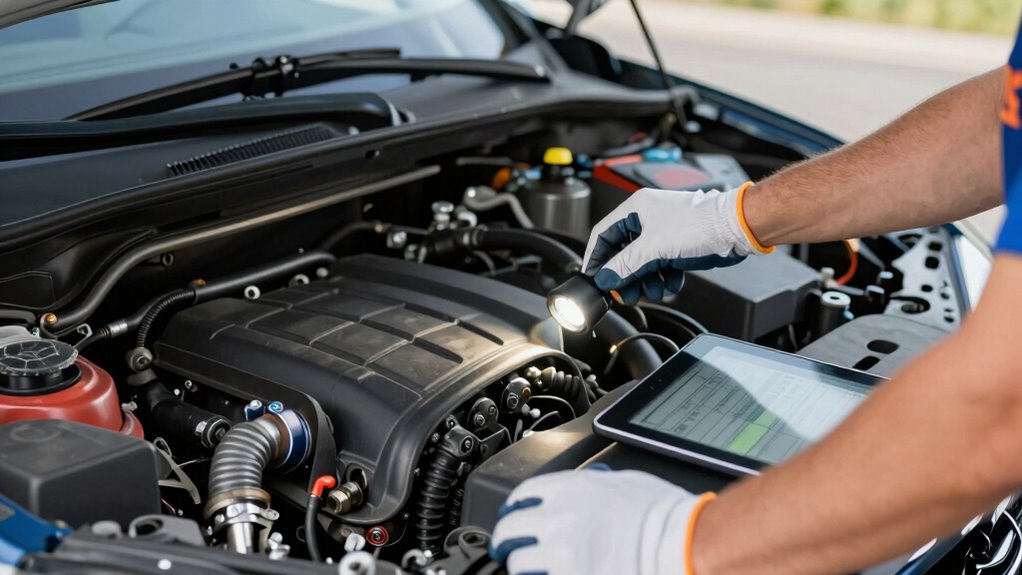
Before hitting the road, take your vehicle for a test drive to identify any last-minute issues. A thorough test drive helps catch potential problems before they become roadside emergencies. Focus on test drive safety by staying alert and driving in familiar areas. Listen for unusual noises, feel for vibrations, and check that brakes respond smoothly. Use this time for last-minute diagnostics, such as verifying fluid levels and ensuring dashboard lights are off. During your drive, pay attention to steering, acceleration, and overall handling. Here’s a quick checklist:
| Aspect | What to Check | Why It Matters |
|---|---|---|
| Brakes | Test responsiveness and noise | Safety during sudden stops |
| Steering | Check for looseness or pull | Easy handling on highways |
| Suspension | Feel for excessive bouncing | Comfort and safety |
| Engine performance | Observe smooth acceleration | Prevent breakdowns |
| Lights and signals | Verify all work properly | Visibility and safety |
Frequently Asked Questions
How Often Should I Perform a Pre-Trip Inspection?
You should perform a pre-trip inspection every time you hit the road to guarantee vehicle maintenance and safety precautions are in place. Before each trip, check tires, fluid levels, brakes, lights, and belts. Regular inspections help catch potential issues early, preventing breakdowns. Make it a routine, especially before long drives, so you stay confident and safe on the road. Consistent checks keep your vehicle in top shape and protect you from unexpected problems.
What Tools Are Necessary for a Thorough Check?
Imagine you’re a modern-day knight, ready for your journey. You’ll need a tire pressure gauge to guarantee ideal inflation and a diagnostic scanner for engine health. These tools help you catch issues early. Additionally, keep a flashlight, gloves, and a mirror on hand for thorough checks. With these essentials, you’re equipped to perform a thorough inspection, preventing breakdowns and ensuring a smooth, safe trip ahead.
Can I Perform These Checks Myself or Need a Mechanic?
You can definitely perform DIY maintenance checks yourself if you’re comfortable with basic tasks like inspecting tires, fluids, and lights. However, for more complex issues or if you’re unsure, a mechanic inspection is a good idea. Doing your own checks saves time and money, but don’t hesitate to seek professional help for thorough diagnostics or repairs beyond your skill level. Always prioritize safety and proper vehicle functioning.
How Long Does a Comprehensive Pre-Trip Inspection Typically Take?
A thorough pre-trip inspection usually takes about 30 to 60 minutes, like a quick check-up before a big test. You can perform vehicle maintenance yourself to save time and money, ensuring driving safety. This process involves checking tires, brakes, lights, fluids, and more. Taking the time guarantees your vehicle’s readiness, reducing breakdown risks and keeping your trip smooth and safe. Proper prep pays off with peace of mind on the road.
Are There Specific Checks for Long-Distance or Winter Road Trips?
For long-distance or winter road trips, you should focus on specific checks like ensuring your winter tires are in good condition and properly inflated. You also need to verify your antifreeze levels are adequate to prevent freezing in cold temperatures. Additionally, check your windshield wipers and fluid, battery, and lights to stay safe in winter conditions. These steps help prevent breakdowns and keep you prepared for challenging weather.
Conclusion
So, after all that, it’s almost impressive how a simple pre-trip check can save you from becoming the star of a roadside drama. Skip it, and you might just find yourself stranded, giving strangers a free show. Remember, neglecting these steps isn’t just risking a breakdown; it’s risking your weekend plans, your patience, and maybe your sanity. So, do the smart thing—inspect, prepare, and keep the adventure smooth. Or, you know, enjoy the surprise!