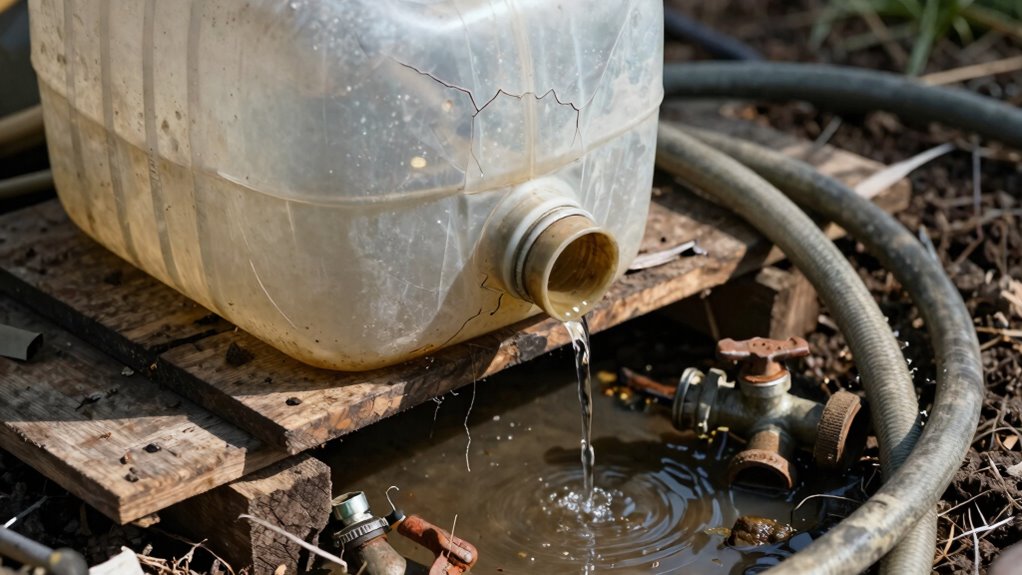

One common mistake is filling containers with untreated water from streams or lakes, which can cause contamination and discomfort. Using damaged or non-food-grade containers increases leaks and risks bacterial growth. Poor inspection and maintenance can lead to leaks and contamination, while neglecting proper storage practices allows bacteria to grow. Choosing the wrong containers or not purifying water first causes frustration and health issues. Keep these mistakes in mind, and you’ll learn more ways to keep your water safe and your camp hassle-free.

Get travel and outdoor gear delivered free — and shop member deals
- Fast, free delivery on millions of items
- Access to Prime Big Deal Days deals on October 6–7
- Prime Video, Amazon Music and more included
Key Takeaways
- Filling containers with untreated water can lead to contamination and health issues, causing frustration during the trip.
- Using damaged or inappropriate storage containers increases the risk of leaks and water spoilage.
- Neglecting regular inspection and cleaning of storage containers allows bacteria buildup and contamination.
- Choosing non-food-grade or improper materials can leach chemicals, compromising water quality and safety.
- Failing to implement proper storage practices, like sealing and protecting water, accelerates contamination over time.
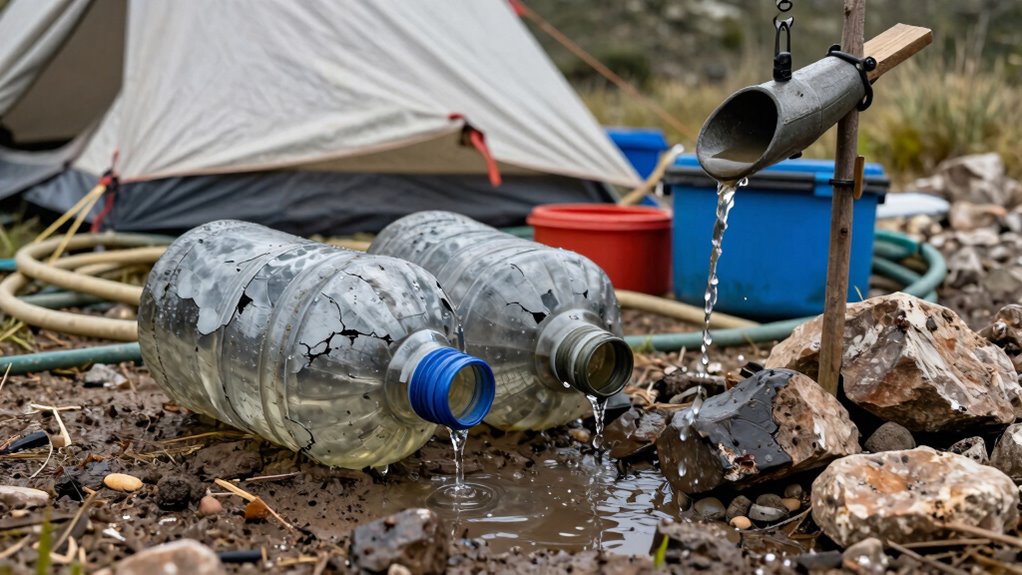
Are you confident your water storage practices at camp are safe? Many campers overlook essential details, leading to frustration and even health risks. One of the most common mistakes is neglecting proper water purification methods before storing water. Even if you’re filling your container from a seemingly clean stream or lake, bacteria, viruses, or pollutants might still be present. Failing to treat your water properly means you could be drinking contaminated water, which can cause stomach illnesses and dehydration. Always verify you have reliable water purification supplies, like filters, purification tablets, or boiling methods, and use them consistently before filling your storage containers. Skipping this step is a quick way to compromise safety and lead to unnecessary discomfort during your trip. Proper water treatment is essential to ensure your stored water remains safe for consumption. Regularly inspecting your water storage containers for cracks or damage can help prevent contamination and leaks over time. Additionally, choosing containers made from food-grade materials can further protect your water quality and prevent chemical leaching. To further safeguard your water, consider implementing proper storage practices to maintain its safety over extended periods.
water purification tablets for camping
As an affiliate, we earn on qualifying purchases.
As an affiliate, we earn on qualifying purchases.
Frequently Asked Questions
How Often Should Water Containers Be Cleaned During Camping Trips?
You should clean your water containers every few days during camping trips to guarantee water purification remains effective and prevent bacteria buildup. Regular container maintenance involves washing with soap and hot water, then rinsing thoroughly. If water tastes off or looks cloudy, clean it immediately. This routine helps maintain safe, fresh water and avoids frustration caused by contaminated water, making sure your hydration is always reliable and safe.
What Are the Best Materials for Water Storage at Camp?
Did you know that 80% of camping water issues stem from poor container choices? For durability and safety, BPA-free plastic and stainless steel are top picks. Plastic is lightweight and resistant to impact, while stainless steel offers unparalleled durability and safety. Both materials are easy to clean and don’t leach harmful chemicals, making them ideal for camp. Choose wisely to guarantee safe, hassle-free water storage on your outdoor adventures.
How Can I Prevent Water From Becoming Contaminated?
To prevent water from becoming contaminated, you should regularly practice water purification and maintain your containers properly. Always clean your storage containers thoroughly after each use, using soap and water, and disinfect them periodically with a bleach solution. When collecting water, use clean tools and avoid touching the inside of the container. Proper water purification techniques, like boiling or using water purification tablets, also help guarantee your water stays safe to drink.
What Signs Indicate Water Storage Is Unsafe?
Imagine opening your water container after a week at camp and noticing a foul smell or cloudy appearance—that’s a clear sign your storage is unsafe. Check water container labels for expiration dates and confirm storage temperature stays consistent, as high heat can promote bacterial growth. If the water tastes off or shows discoloration, it’s time to replace it. These signs warn you that your water might be contaminated and unsafe to drink.
Are There Portable Water Filtration Options for Stored Water?
Yes, there are portable water filtration options for stored water. You can use portable filters like pump filters, squeeze filters, or straw filters, which are easy to carry and operate. These devices provide effective water purification by removing bacteria, protozoa, and viruses, ensuring safe drinking water at your campsite. Always choose a filter suited for your needs, and remember to maintain and replace parts regularly for peak performance.
Conclusion
By avoiding these water storage mistakes, you’re not just protecting your supplies—you’re tending to the well of your resilience. Think of your water as a sacred vessel, symbolizing life’s flow even in the harshest conditions. When carefully managed, it becomes a mirror of your resourcefulness and patience. Each mindful choice you make at camp guarantees the well never runs dry, allowing your spirit to stay nourished and strong amidst the wilderness’s relentless demands.
Fall Picks
fall essentials
As an affiliate, we earn on qualifying purchases.