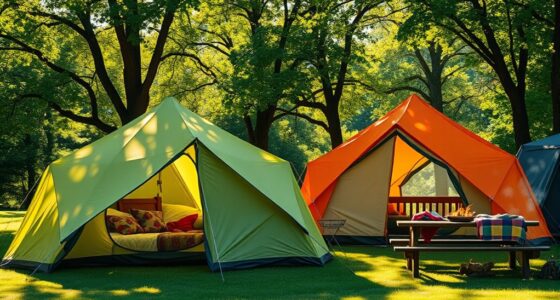
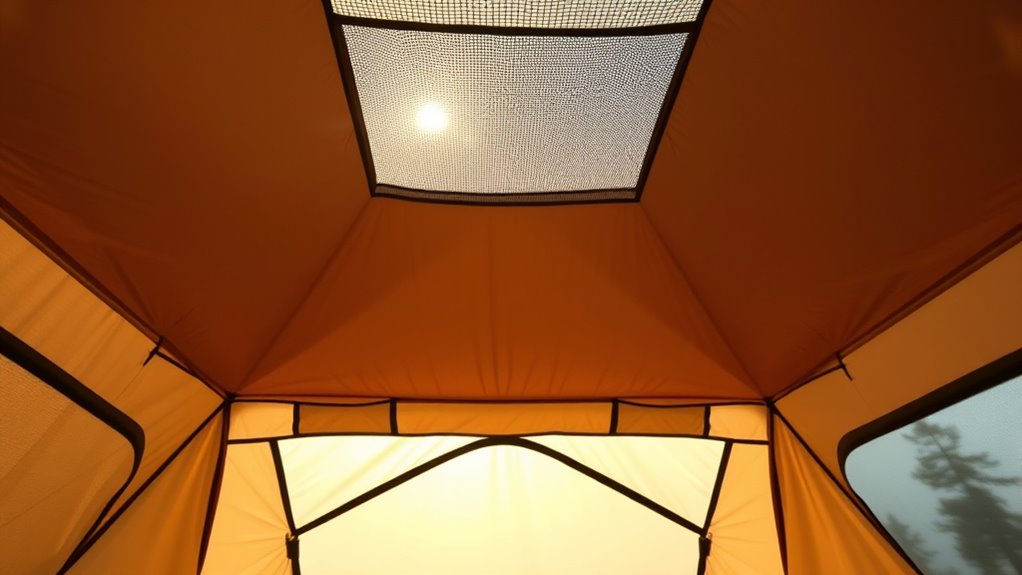

To prevent condensation and guarantee airflow, position vents strategically—use upper openings to let warm, moist air escape and lower ones to draw in cooler, dry air. Choose tents with breathable fabrics that balance moisture vapor transmission and waterproofing. Adjust vents based on weather conditions to optimize airflow, considering external wind direction. Proper ventilation maintains internal humidity at safe levels, reducing condensation and prolonging gear life. Continuing to explore these principles will help you maximize comfort and durability in your shelter.
Key Takeaways
- Use strategically placed adjustable vents and mesh panels to promote continuous airflow and remove moist air from inside the tent.
- Incorporate high-breathability fabrics with microporous membranes to allow moisture vapor escape while maintaining waterproofing.
- Position vents at different heights to create natural convection currents that enhance airflow and reduce condensation buildup.
- Consider external wind conditions when designing ventilation to improve airflow efficiency without risking water intrusion.
- Balance ventilation and weatherproofing by utilizing materials and vent placements that allow vapor escape while preventing rain from entering.
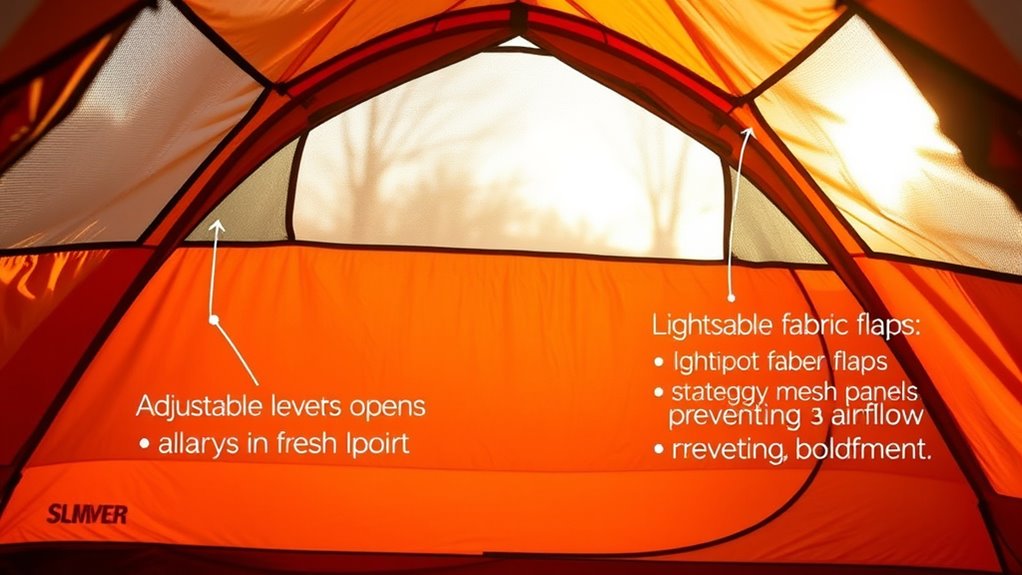
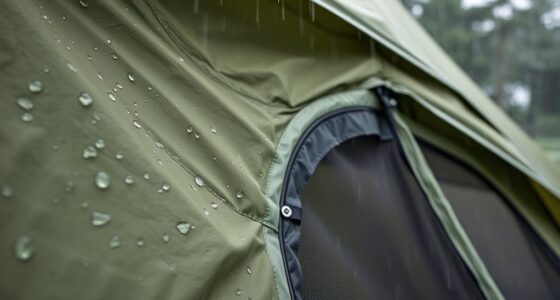
Have you ever wondered why proper ventilation is crucial in tents? The answer lies in understanding the critical role of breathability factors and ventilation design in maintaining a healthy environment inside your shelter. When you set up a tent, you’re creating a confined space that, if not properly ventilated, can quickly become damp, stuffy, and prone to condensation. This condensation occurs when warm, moist air from your body and activities encounters cooler tent surfaces, causing water vapor to turn into liquid. To prevent this, the tent’s design must prioritize effective airflow pathways and materials that facilitate breathability. Breathability factors refer to the ability of fabric and construction elements to allow moisture vapor to escape while preventing ingress of water or wind. High-quality breathable fabrics, such as those with microporous membranes or densely woven fibers, are essential in reducing internal humidity levels.
Ventilation design is equally crucial. It encompasses the strategic placement and size of vents, windows, and mesh panels to promote continuous airflow. Good ventilation design ensures that fresh air circulates efficiently, carrying moisture away from the interior and reducing the likelihood of condensation buildup. Properly designed vents should be adjustable, allowing you to tailor airflow based on weather conditions and activity levels. For example, opening vents during the day can facilitate the exchange of humid indoor air with drier outdoor air, while closing them during rain prevents water intrusion. Additionally, the placement of vents at different heights encourages natural convection currents: warm, moist air rises and escapes through upper vents, while cooler, drier air enters through lower openings. This airflow pattern maximizes moisture removal and maintains a comfortable environment. Ensuring that the tent’s ventilation system considers external factors such as wind direction and intensity can significantly enhance airflow efficiency.
Incorporating breathability factors into your tent’s ventilation design ensures that moisture vapor can escape without compromising weatherproofing. The materials used need to balance breathability with waterproof properties, preventing internal humidity buildup without allowing water ingress. This balance is achieved through advanced fabrics with microporous membranes that permit vapor transmission while blocking liquid water. Furthermore, the design must account for external factors such as wind direction and intensity, which influence airflow efficiency. A well-constructed ventilation system also minimizes the risk of condensation by maintaining a slight positive pressure inside the tent, preventing cold, damp air from settling on surfaces. Understanding ventilation principles and their application in tent design is key to optimizing airflow and moisture management.
Ultimately, understanding and implementing ideal breathability factors and ventilation design principles is essential to keep your tent dry, comfortable, and free from condensation. Proper airflow management not only enhances your camping experience but also extends the lifespan of your gear by preventing mold and material degradation.
Frequently Asked Questions
Can I Add Extra Vents to My Existing Tent?
Yes, you can add extra vents to your tent through tent modification, but guarantee compatibility with your tent’s design. Use ventilation accessories like mesh panels or vent flaps designed for your tent model. Carefully cut and install these components to prevent leaks and maintain structural integrity. Properly positioned additional vents improve airflow and reduce condensation, but follow manufacturer guidelines and consider professional installation for ideal results.
How Often Should I Ventilate My Tent During Sleep?
You should ventilate your tent every 30 minutes during sleep, like opening a window to refresh a room, to prevent sleeping bag condensation. Use tent ventilation tips such as slightly unzipping vents or doors to guarantee airflow without losing warmth. This regular exchange of air reduces moisture buildup, maintaining a dry environment. Proper ventilation minimizes condensation, keeping your sleeping bag dry and comfortable throughout the night.
Do Different Weather Conditions Require Different Ventilation Strategies?
Different weather conditions demand tailored ventilation techniques for ideal climate adaptation. In cold, humid climates, you should minimize ventilation to prevent heat loss and condensation buildup, using vent zippers or adjustable panels. Conversely, in hot, dry environments, increase airflow by fully opening vents to promote cooling and moisture escape. Adjust your tent’s ventilation based on the current weather, ensuring effective airflow and reducing condensation risks regardless of conditions.
What Materials Best Promote Airflow in Tents?
You should choose tents with fabric breathability and mesh panels to promote airflow effectively. Breathable fabrics, like nylon or polyester with moisture-wicking properties, reduce condensation buildup. Mesh panels allow continuous air exchange, enhancing ventilation without sacrificing protection from insects or debris. Combining these materials creates ideal airflow, minimizes moisture accumulation, and maintains a comfortable interior environment, especially in varying weather conditions.
Can Ventilation Help Prevent Mold Growth Inside the Tent?
Good airflow can considerably aid in mold prevention inside your tent by promoting moisture control and reducing humidity buildup. Proper ventilation helps remove excess moisture, which is essential in preventing mold growth. By ensuring continuous airflow, you create an environment less conducive to mold development. This technical approach to moisture management keeps your tent dry, safe, and comfortable, protecting your gear and health while enhancing overall comfort during your outdoor adventures.
Conclusion
Ensuring proper ventilation in your tent is essential to prevent condensation and maintain airflow. By understanding how to optimize vents and airflow pathways, you can create a comfortable, dry environment regardless of weather conditions. Remember, good ventilation isn’t just a nice-to-have—it’s crucial for your comfort and safety. Don’t let moisture sneak in; take the reins and keep things flowing smoothly. With the right setup, you’ll stay dry as a bone and enjoy your outdoor adventures to the fullest.