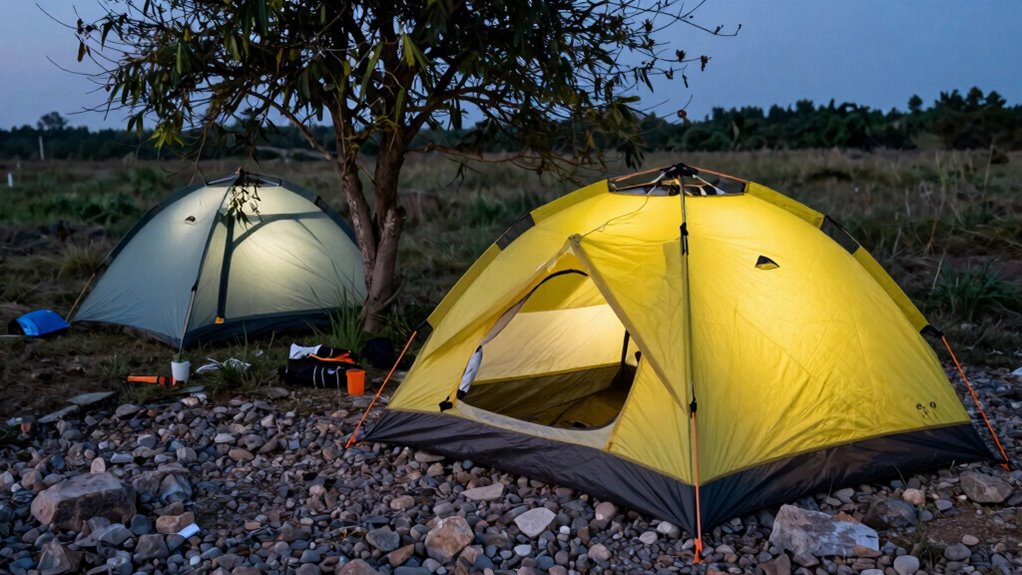
One common mistake is ignoring designated camping areas and too closely encroaching on others’ spaces, which can disturb privacy and create discomfort. You might also set up under unstable terrain, like near trees or rocks, risking falling hazards or damage. Failing to take into account wind direction or drainage can lead to discomfort or flooding. By paying attention to terrain, environment, and spacing, you’ll guarantee a safer, more enjoyable campsite. Keep exploring to discover more tips for perfect tent placement.

Get travel and outdoor gear delivered free with Prime
- Fast, free delivery on millions of items
- Prime Video, Amazon Music and more included
- Member-only deals all year
Key Takeaways
- Setting up tents under trees or near large rocks increases fall and debris hazards.
- Choosing uneven or rocky terrain can cause discomfort and damage to the tent.
- Ignoring wind direction can lead to tents facing strong gusts, reducing stability.
- Overcrowding tents in a small area hampers privacy and movement.
- Failing to consider drainage may result in flooding or dampness during rain.
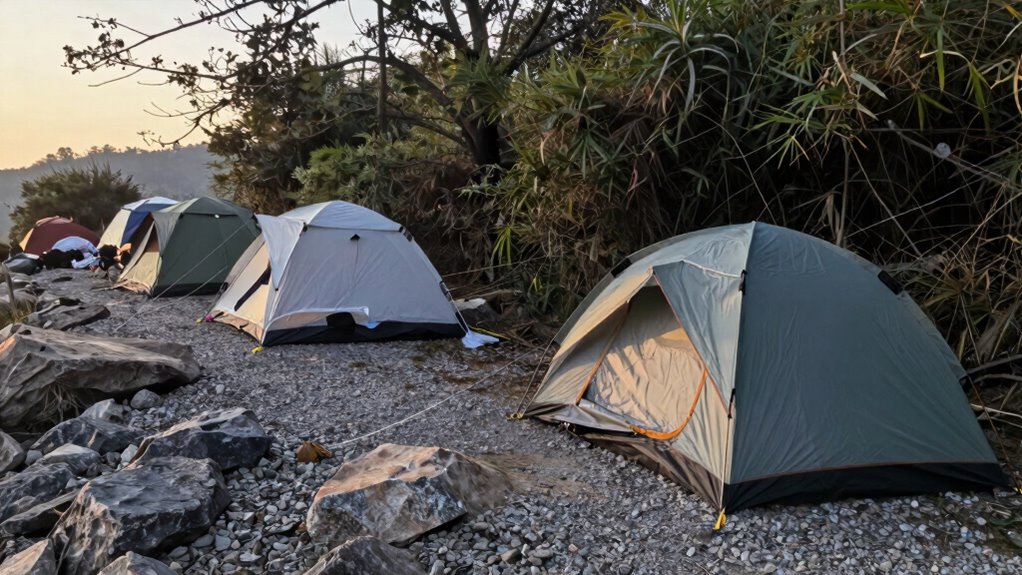
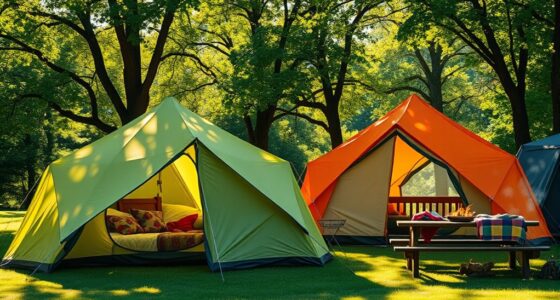
Ever wonder why your campsite feels less comfortable or more challenging than it should? One common reason is how you’re placing your tent. Many campers overlook the importance of proper tent placement, which can lead to discomfort, safety issues, and even conflicts with fellow campers. Starting with campground etiquette, it’s essential to be mindful of where you set up. Respect designated areas and avoid encroaching on others’ spaces. It’s polite to leave enough room between tents for personal privacy and ease of movement. Ignoring this can disturb others and create an uncomfortable atmosphere, turning what should be a relaxing experience into a stressful one.
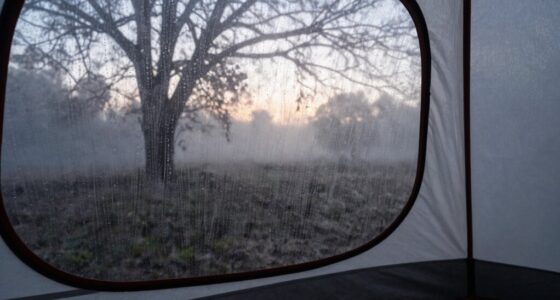
Another mistake is not considering outdoor safety when choosing your tent spot. You might be tempted to set up on a flat, shaded patch, but that’s not always the best choice. Be cautious about placing your tent under trees or near large rocks. Falling branches or loose stones can pose serious safety risks, especially during windy weather or storms. Additionally, avoid low-lying areas prone to flooding or water runoff during rain. A well-drained spot helps prevent your tent from becoming submerged or damp, which can lead to discomfort and potential health issues. Environmental factors such as drainage and terrain can significantly influence safety and comfort. Being aware of local weather conditions is also crucial for a safe and enjoyable camping experience. Ensuring you understand the local environment can help you make better site selections that prioritize safety and sustainability.
Many campers also forget to check the ground surface. Setting up on uneven or rocky terrain makes sleeping uncomfortable and can damage your tent in the long run. Opt for soft, level ground that provides stability and comfort. Clear the area of twigs, sharp rocks, or debris that might puncture your tent or cause discomfort. Proper placement also involves considering wind direction. Position your tent to minimize exposure to prevailing winds, which not only makes sleeping more comfortable but also reduces wear and tear on your gear. Proper site selection can make a substantial difference in your overall camping enjoyment.
As an affiliate, we earn on qualifying purchases.
Frequently Asked Questions
How Do I Choose the Best Spot for My Tent?
To choose the best tent site, prioritize flat, well-drained ground that offers some shade, respecting camping etiquette. Look for a spot away from water sources and trails to minimize disturbances. Consider your tent site selection carefully, avoiding low-lying areas prone to flooding or high-traffic zones. Make certain there’s enough space for your gear and that you’re not infringing on neighbors’ space. This thoughtful approach creates a comfortable, respectful camping experience for everyone.
What Are the Legal Restrictions for Tent Placement?
You need to follow campground permits and stay within designated camping zones to avoid legal issues. Check the rules before setting up your tent, as permits might be required for certain areas. Campgrounds often reserve specific zones for tents, so avoid unauthorized spots. Respect local regulations to prevent fines or being asked to move your tent. Always review the campground’s regulations to confirm your placement is legal and responsible.
How Can Weather Affect Tent Placement Decisions?
Imagine camping during a storm, and your tent faces strong winds. Weather considerations are crucial when choosing your spot; you want to avoid open areas prone to wind. Opt for a sheltered location, perhaps near trees or natural windbreaks, to guarantee wind protection. Always check the forecast beforehand, and position your tent accordingly, so weather doesn’t turn your camping trip into a struggle against the elements.
Are There Specific Rules for Tent Placement Near Water Sources?
You should keep your tent at least 200 feet away from water sources to prioritize water safety and minimize environmental impact. This distance reduces the risk of contaminating water with waste or soap and helps protect local ecosystems. Always choose a spot that’s elevated and flat, avoiding flood-prone areas. By following these rules, you guarantee a safer camping experience and help preserve the natural environment for future visitors.
How Do I Prevent Wildlife From Approaching My Tent?
To prevent wildlife from approaching your tent, use wildlife deterrents like noise makers or bear spray if needed. Keep your tent scent management in check by storing food and scented items away from your tent, ideally in bear-proof containers or hanging them high. Avoid cooking near your tent and clean up food scraps promptly. These steps help reduce your scent and make your campsite less attractive to curious animals.
Conclusion
By steering clear of these common tent placement pitfalls, you set the stage for a smoother, more enjoyable camping adventure. Think of your tent as the heart of your outdoor haven—placing it wisely is like planting a sturdy seed in rich soil. When you avoid mistakes, your campsite becomes a cozy fortress against nature’s whims, turning your trip from a shaky start into a symphony of peaceful nights and starry mornings.
Halloween Picks
halloween
As an affiliate, we earn on qualifying purchases.