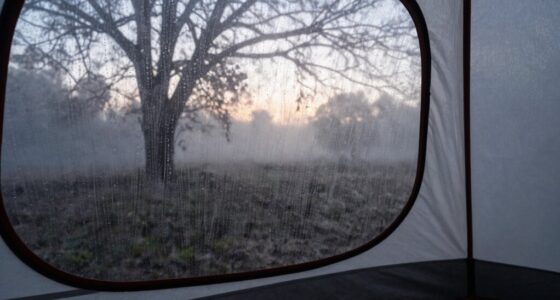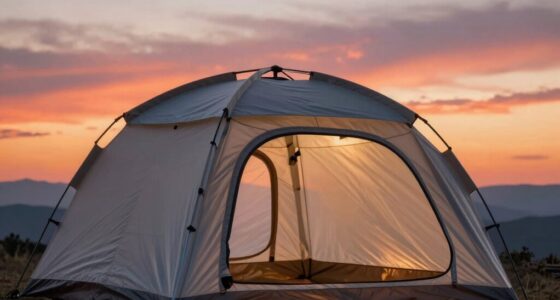
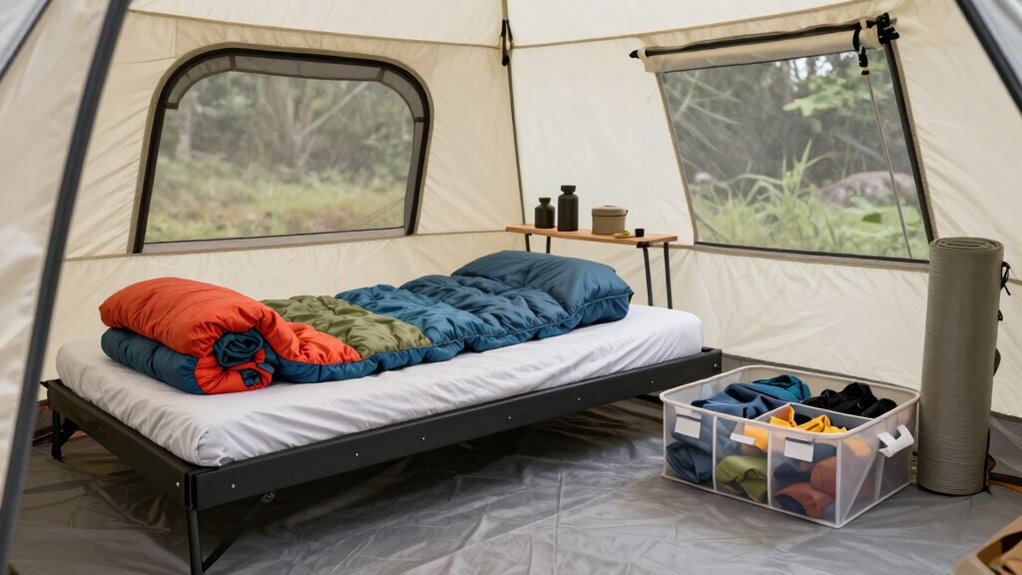
To keep your tent feeling less cluttered on longer trips, organize your gear by designating specific storage areas for clothes, supplies, and personal items. Maximize vertical space by hanging gear and suspending frequently used items near the entrance. Regularly tidy up by returning items to their spots, and use compression sacks for bulky belongings. Planning your setup beforehand helps keep things efficient. Stay organized, and you’ll enjoy a more comfortable camp experience—more helpful tips are ahead.

Get travel and outdoor gear delivered free with Prime
- Fast, free delivery on millions of items
- Prime Video, Amazon Music and more included
- Member-only deals all year
Key Takeaways
- Designate specific storage zones for different gear to prevent clutter spread inside the tent.
- Utilize vertical space with hanging organizers and hooks to maximize limited interior space.
- Regularly tidy and return items to their designated spots to maintain organization throughout the trip.
- Use compression sacks and efficient packing strategies to save space and keep gear orderly.
- Keep frequently used items near the entrance or in accessible pockets for easy access.
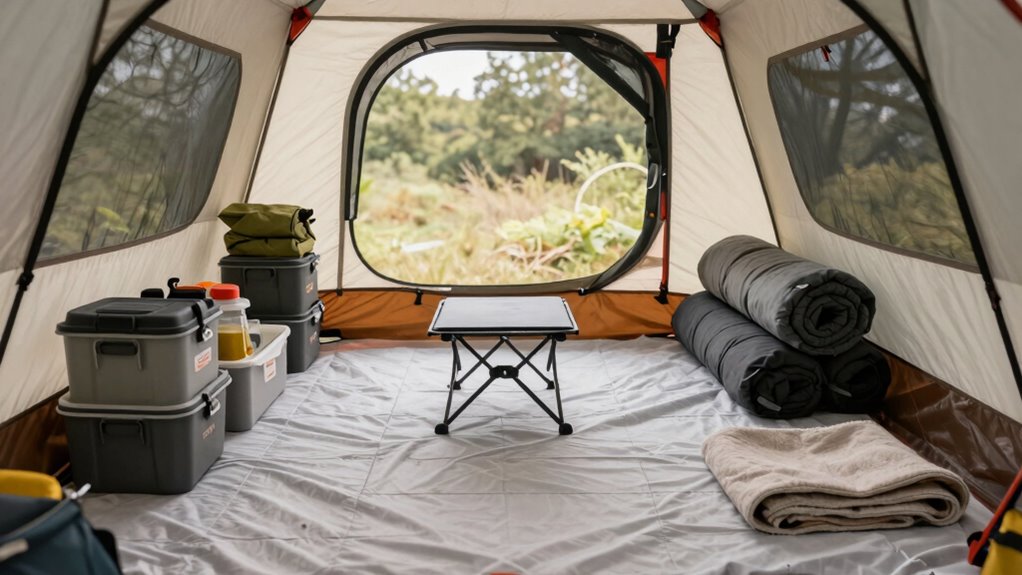
When you’re camping for an extended period, keeping your tent organized can feel like a challenge, but with some simple strategies, you can maintain a tidy space. The key is smart camp storage and effective organization tips that make everything easy to find and put away. Start by designating specific spots for your gear, such as a corner for clothes, another for cooking supplies, and a separate area for personal items. Using small, lightweight containers or mesh bags helps keep everything contained, so your tent doesn’t turn into a jumble of scattered belongings. These containers are especially useful for storing snacks, toiletries, and small tools, making it simple to access what you need without rummaging through everything.
Organize your tent with designated spots and lightweight containers for easy access and a clutter-free camping experience.
Vertical space is your friend when it comes to camp storage. Hang a gear organizer or a series of small hooks along the tent walls for items like flashlights, hats, or damp clothes. This frees up floor space and keeps clutter off the ground, which is especially important if the weather turns wet or muddy. Another organization tip is to keep frequently used items near the tent entrance or in a designated accessible pocket, so you don’t have to dig through your entire setup every time. When packing your gear initially, use compression sacks for bulky clothing or bedding. These not only save space but also protect your items from dirt and moisture. Incorporating eco-friendly storage solutions can also help minimize environmental impact during your trip. Additionally, choosing reusable containers instead of single-use options supports sustainability efforts and reduces waste.
Maintaining a tidy tent also involves regular tidying up. At the end of each day, spend a few minutes putting things back in their designated spots. This habit prevents clutter from piling up and makes packing up easier at the end of your trip. Using a checklist of essential items can help ensure you’re not leaving anything behind or leaving your tent in disarray. If you have multiple people sharing the tent, assign storage areas to each person, so everyone is responsible for their own clutter. This encourages cooperation and keeps the space organized for everyone. Furthermore, implementing organizational routines can streamline your setup and tear-down processes, making your camping experience more efficient.
Finally, plan your gear layout before setting up camp. Visualize where each item will go and arrange accordingly. This foresight reduces chaos once you’re inside and helps you stick to your organization tips. Incorporating biodiversity-conscious storage solutions, such as eco-friendly containers, can also help minimize environmental impact during your trip. With these strategies—smart camp storage, using vertical space, regular tidying, and thoughtful planning—you can keep your tent feeling less cluttered on longer trips. A neat tent not only looks better but also makes your camping experience more enjoyable, comfortable, and less stressful.
As an affiliate, we earn on qualifying purchases.
Frequently Asked Questions
How Do I Organize Small Items Inside My Tent Effectively?
To organize small items inside your tent effectively, use lightweight, stackable containers or gear lofts to maximize your tent interior space. Keep personal belongings in designated pockets or hanging organizers, so they’re easy to find and don’t clutter the floor. Clear zippered bags are perfect for small essentials, preventing clutter and making quick access simple. This setup keeps your personal belongings tidy, accessible, and your tent feeling more spacious.
What Are the Best Storage Solutions for a Tent?
The best storage solutions for a tent include using specialized tent accessories like hanging organizers and gear lofts, which keep your camping gear easily accessible and off the floor. Invest in compact storage bins or gear cubes for your camping gear, and utilize pockets on tent walls for small items. These solutions help maximize space, reduce clutter, and make packing and unpacking more efficient during longer trips.
How Can I Prevent My Tent From Becoming Overcrowded?
Keep your tent from becoming overcrowded by prioritizing tent ventilation and ground insulation. Proper ventilation reduces moisture buildup, preventing clutter from dampness and mold. Use ground insulation wisely to create designated areas, keeping gear organized and off the floor. Regularly assess your space, removing unnecessary items and rearranging essentials. By maintaining good airflow and strategic insulation, you create a more spacious, comfortable environment, reducing clutter and making longer trips more enjoyable.
Are There Specific Packing Tips for Long-Term Trips?
For long-term trips, pack smart by organizing your camping gear and travel accessories efficiently. Use compression bags to save space and designate specific spots inside your tent for essentials. Prioritize multi-use items, and keep frequently used gear near the entrance for easy access. Avoid overpacking by evaluating what you truly need, and remember to regularly tidy up to maintain a clutter-free space, making your camping experience more comfortable.
How Do I Keep My Tent Clean During Extended Stays?
Did you know that the average person produces about 1.5 liters of sweat daily? To keep your tent clean during extended stays, prioritize camping hygiene by regularly removing dirt and debris. Use tent ventilation to prevent moisture buildup, which can lead to mold and odors. Keep a small brush or cloth handy to spot-clean surfaces and avoid clutter. Proper hygiene and airflow will help your tent stay fresh and comfortable longer.
Conclusion
By regularly tidying up, organizing your gear, and prioritizing essentials, you create space to breathe, relax, and unwind. Keep your tent neat, keep your mind clear, and keep your trip enjoyable. When clutter stays at bay, your surroundings stay calm; when your surroundings stay calm, your mind stays refreshed. A tidy tent is a haven of peace in the wilderness, a sanctuary of simplicity amid the wild. Embrace organization, and your longer trips will feel lighter, freer, and more memorable.
Halloween Picks
halloween
As an affiliate, we earn on qualifying purchases.