

Many campers skip proper pegging and guyline setup, but doing so can compromise your tent’s stability and weather resistance. By not securing stakes and tensioning guylines correctly, your tent can shift, flap, or collapse in wind and rain. Proper pegging keeps your shelter grounded and maintains its shape, protecting against leaks and damage. Mastering these basics guarantees your tent stays secure and comfortable. Stay with us to discover how to set up your tent like a pro.

Get travel and outdoor gear delivered free with Prime
- Fast, free delivery on millions of items
- Prime Video, Amazon Music and more included
- Member-only deals all year
Key Takeaways
- Proper pegging and guyline setup are essential for tent stability and to prevent shifting or collapsing.
- Skipping proper tensioning can lead to fabric flapping, leaks, and increased wear on tent materials.
- Ground conditions influence the effectiveness of pegging and should be adjusted accordingly.
- Properly tensioned guylines distribute stress evenly, enhancing weather resistance during storms.
- Mastering these basics ensures a safer, more comfortable, and longer-lasting camping shelter.

Pegging and guyline setup are essential skills for anyone involved in camping, outdoor activities, or setting up temporary structures. When you’re preparing your tent, proper pegging ensures stability and helps you create a solid tent setup. Without it, your tent might shift, collapse, or become unstable, especially when weather conditions turn unpredictable. Using stakes correctly keeps your tent grounded, preventing it from blowing away or collapsing under wind or rain. It’s tempting to skip this step when you’re in a rush, but doing so compromises your tent’s weather resistance. A well-pegged tent stays put, keeps out drafts, and provides a secure shelter against the elements.
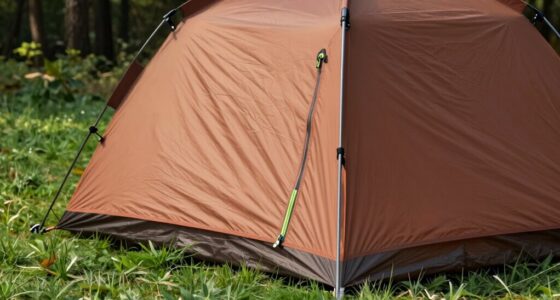
Adding guylines is equally important. These cords run from the tent’s rainfly or structural points to stakes anchored in the ground. Guylines distribute tension evenly, preventing the fabric from flapping in the wind or sagging when it’s wet. When you set up your tent, don’t overlook the importance of properly tensioned guylines—they dramatically improve your tent’s weather resistance. During storms or heavy rain, loose fabric can let water seep through seams or create puddles, which can lead to leaks and a soggy interior. Tightening your guylines helps maintain a taut surface, shedding water more effectively and reducing the risk of leaks. Plus, it keeps the tent’s shape intact, making it more comfortable and easier to move around inside. Proper pegging and guyline tension also help prevent unnecessary strain on your tent’s fabric and poles, prolonging their lifespan. correct tensioning techniques are crucial for maintaining overall tent stability and durability.
Proper tensioning of guylines prevents flapping, leaks, and sagging, ensuring your tent stays stable and weather-resistant.
Many campers underestimate the power of good pegging and guyline setup. They might think a tent is stable enough without extra stakes or tension, but that’s rarely the case, especially in windy or rainy weather. When you take the time to properly secure your tent with stakes and adjust your guylines, you’re actively improving its weather resistance. This means better protection against rain, wind, and even snow. It’s also worth noting that ground conditions can significantly influence your setup, so choosing the right stakes and techniques is essential for a secure shelter. It also prolongs the lifespan of your tent fabric and poles because it reduces unnecessary strain. It’s a simple step that pays off in the long run, giving you peace of mind and a more enjoyable camping experience.
In the end, mastering pegging and guyline setup isn’t just about keeping your tent upright; it’s about creating a safe, weather-resistant shelter. It takes a few extra minutes to stake your tent and tighten those guylines, but those moments make all the difference when you’re caught in unpredictable weather. By focusing on these basics, you’ll ensure your campsite remains dry, stable, and comfortable, no matter what Mother Nature throws your way. Additionally, understanding tent stability techniques can help you adapt your setup for different terrains and weather conditions, ensuring a secure shelter in any environment.
Products Worth Considering

Kindle Paperwhite Signature Edition 32GB (2024) – Auto-adjusting front light, wireless charging, weeks battery life – Metallic Jade

Samsonite Freeform Hardside Carry-On Luggage with Spinner Wheels, TSA Lock, and Expandable Shell – Navy

Travelpro Maxlite 5 Softside Rolling Underseat Tote, Black, 14-Inch
As an affiliate, we earn on qualifying purchases.
Frequently Asked Questions
How Do I Choose the Right Pegging Material for Different Terrains?
When choosing materials for pegging, consider the terrain’s stability and weather conditions. For soft ground, opt for lightweight aluminum or plastic pegs that easily grip. In rocky or hard soil, use steel or heavy-duty stakes for durability. Your pegging techniques should adapt accordingly—push stakes in firmly and angle them for better hold. Choosing the right materials guarantees your tent stays secure, no matter the terrain, making your camping experience smoother and safer.
What Are Common Mistakes When Setting up Guylines?
You often make mistakes with guylines by not securing enough anchor points or failing to properly tension adjust. Make certain each guyline is firmly anchored to stable points and check tension regularly to prevent sagging or flapping. Over-tightening can damage stakes or fabric, so aim for a snug fit that maintains stability without excessive tension. Regularly inspect your guylines for slack or weaknesses, and adjust tension as needed for ideal support.
How Can I Prevent Guyline Tangling During Setup?
To prevent guyline tangling during setup, you should keep your lines organized and untangled before attaching them. Use clips or tensioners to manage excess line and avoid crossing or twisting. Also, guarantee proper tent ventilation to reduce the need for tight guylines, which can cause tangling. Remember, practicing campfire safety and setting up lines carefully helps you stay safe and makes your campsite more comfortable.
What Tools Are Best for Installing Tent Pegs?
You should use the right tools for installing tent pegs, like a hammer or mallet, to make the process easier. For different tent stake types, a hammer works best for metal stakes, while a mallet is gentle on plastic or lightweight options. If you’re camping in tough soil, consider a stake puller or driving tool. Lightweight options like aluminum stakes are easy to handle, but make sure you have a sturdy tool for secure installation.
How Do Weather Conditions Affect Pegging and Guyline Setup?
Weather impact greatly influences pegging and guyline setup. Strong winds can cause tents to shift or collapse if your pegs aren’t secure, so you need sturdy stakes and proper tension. Rain or wet ground reduces peg stability, making it harder to keep stakes in place. In such conditions, choose longer, corrosion-resistant pegs and reinforce guylines to maintain tension, ensuring your tent remains stable despite changing weather.
Conclusion
By paying attention to pegging and guyline basics, you’re gently guiding your shelter into a steadfast cradle amidst the whispering trees. When you master these simple steps, your campsite becomes a cozy haven, a quiet sanctuary where the wind’s song softly hums around your setup. Remember, a well-secured tent is like a gentle hug from nature itself—offering peace and confidence as you drift into restful slumber under the starry sky.