
Tarp shelters are a versatile and lightweight alternative to tents, perfect for quick setup and minimal gear. You can customize them to fit different environments, adjusting shapes and sizes for best coverage. Made from waterproof materials, they withstand rain, wind, and snow with proper tensioning and anchoring. While they require some skill for best performance, these shelters are ideal for lightweight outdoor protection. If you want to explore how to maximize their potential, continue exploring the options and techniques available.
Key Takeaways
- Tarp shelters are quick to set up, lightweight, and require minimal equipment, making them ideal for backpacking and emergencies.
- They offer versatile configurations for shelter, shade, or rain protection, adaptable to various environments and weather conditions.
- Made from durable, waterproof materials, tarps provide effective weather resistance with proper tensioning and strategic coverage.
- Proper setup and tensioning are essential for optimal performance, stability, and durability in different outdoor scenarios.
- While lighter and more flexible than tents, tarp shelters are less enclosed and may need skillful setup for protection against wind and cold.
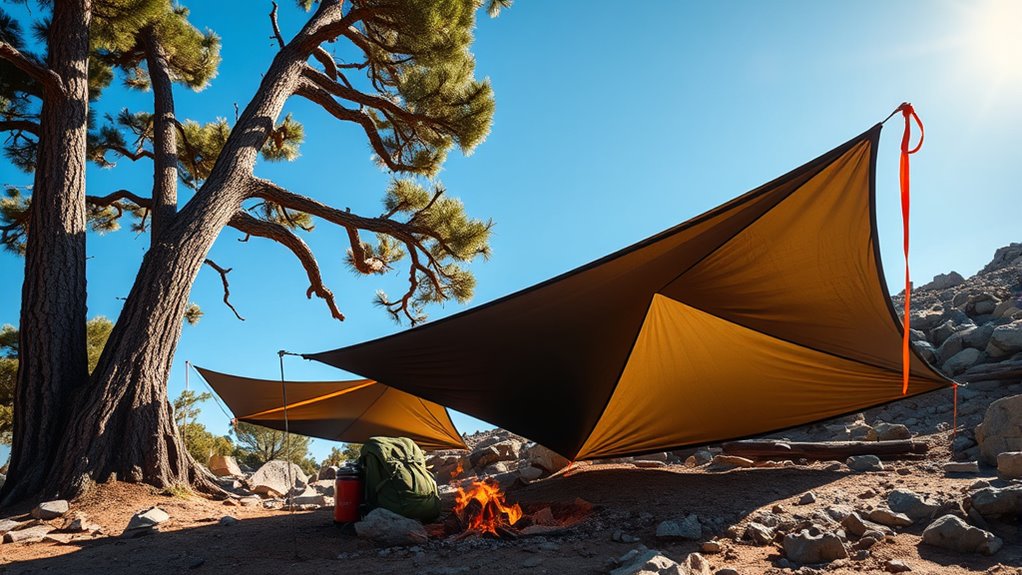
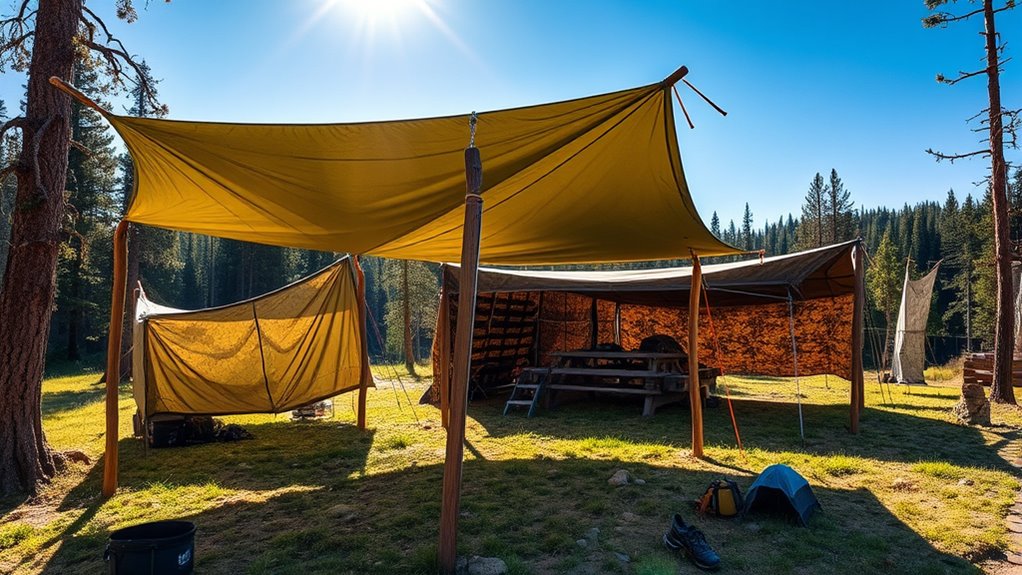
Are tarp shelters a reliable solution for quick, lightweight protection in outdoor settings? The answer depends on your needs for portability and weather resistance. Tarp shelters are designed to be easily set up and taken down, making them an excellent choice when you need a portable setup that doesn’t weigh you down. Unlike traditional tents, tarps require minimal equipment—usually just a tarp, some cords, and stakes—and can be arranged in various configurations to suit different environments. This flexibility allows you to adapt rapidly to changing conditions, guaranteeing you’re protected without carrying bulky gear. Their lightweight nature means you can pack them into a small bag, making them ideal for backpacking, hiking, or emergency situations where every ounce counts.
Weather resistance is another key factor that makes tarp shelters appealing. Many tarps are made from durable, waterproof materials that can withstand rain, wind, and even snow if properly configured. When set up correctly with strategic tensioning and appropriate anchoring, a tarp can create a dependable barrier against the elements. You can angle it to shed rain efficiently or extend it to cover more ground, providing a versatile shield from unpredictable weather. The ability to customize the shelter’s shape and size means you can maximize its weather resistance for specific conditions, whether you’re seeking protection from a passing storm or simply a shaded spot on a hot day.
Additionally, understanding data management and proper setup techniques can significantly enhance the tarp’s effectiveness in adverse weather. However, the effectiveness of a tarp shelter in adverse weather depends heavily on your setup. Proper tensioning and the right placement are vital to prevent pooling of water or sagging under wind pressure. Reinforcing the edges and using high-quality stakes can improve stability. In addition, selecting a tarp with a high waterproof rating and UV resistance guarantees it maintains its protective qualities over time, even with frequent use or exposure to sunlight. While tarps excel at providing quick, lightweight protection, they do require some skill to set up effectively, especially in challenging conditions.
Frequently Asked Questions
How Do I Secure a Tarp in High Wind Conditions?
To secure a tarp in high wind, focus on proper grommet placement and effective tie-down techniques. Attach sturdy stakes or anchors at all grommet points, ensuring they’re tight and stable. Use reflective or heavy-duty guy lines, tying them to solid anchors or trees, and double knot for security. Adjust tension to prevent flapping, and reinforce corners with additional stakes if necessary. Regularly check and tighten your setup to maintain stability.
What Are the Best Tarp Materials for Extreme Weather?
For extreme weather, opt for tarps made from durable, high-denier polyethylene or laminated polyester, which resist tearing and withstand heavy rain and wind. These sturdy materials keep your shelter intact, even in fierce storms. Choose eco-friendly options like recycled nylon or biodegradable polyethylene to reduce environmental impact. Regular tarp maintenance, such as cleaning and inspecting for damage, prolongs their life and guarantees reliable protection when nature’s fury strikes.
Can Tarp Shelters Be Used Long-Term?
Yes, tarp shelters can be used long-term if you focus on tarp durability and shelter customization. Choose heavy-duty, waterproof tarps designed for extended outdoor use, and reinforce seams for added strength. Regular maintenance, like inspecting for tears and ensuring proper drainage, helps prolong their lifespan. Customizing your tarp shelter with additional supports, guy lines, and ventilation can improve stability and comfort, making it a practical long-term solution for outdoor living or temporary setups.
How Do I Choose the Right Size Tarp for My Needs?
When selecting the right size tarp, consider your space needs, weather conditions, and setup style. Tarp size selection involves matching the tarp to your intended shelter area, ensuring ample coverage without excess material. Use tarp sizing tips like measuring your gear and intended use, then add extra inches for overlap and durability. Visualize your shelter’s footprint, and choose a tarp that provides sufficient coverage while remaining manageable for your setup.
Are Tarp Shelters Suitable for All Camping Environments?
Tarp shelters are quite adaptable for various camping environments, but they might not suit every setting. Your tarp setup offers camping versatility, making it ideal in open spaces, forests, or mountain areas. However, in harsh weather or rocky terrain, additional protection may be needed. Consider your environment’s conditions to determine if a tarp shelter provides enough shelter or if you should combine it with other gear for ideal comfort and safety.
Conclusion
With a tarp shelter, you could turn any outdoor area into your personal fortress, weather-proof fortress, or even a cozy retreat amid a storm of chaos. It’s the ultimate versatile solution—lighter than a feather, stronger than steel, and more adaptable than your favorite Swiss Army knife. When you need a shelter that’s practically magic, a tarp can do it all. Trust me, once you try it, you’ll wonder how you ever camped without it.