To leave stealth camping spots in five minutes, stay organized with hidden storage for easy access, and keep noise to a minimum by using soundproofing and quiet closures. Pack essentials in soft pouches, prioritize lightweight tools, and practice your routine so packing becomes quick and smooth. Double-check that everything is secure, turn off electronics silently, and finish with safety checks. Want to master this stealthy escape? Keep going for all the tips you need.
Key Takeaways
- Prepare and pack essential gear the night before, organizing in soundproof, quick-access containers for rapid loading.
- Use silent closures, soft padding, and discreet techniques to minimize noise during packing and departure.
- Conduct a quick final check of vehicle security, lights, and supplies, ensuring all is in order for a stealthy exit.
- Set an early alarm and pre-arranged clothing to streamline morning actions and prevent delays.
- Maintain a calm, organized routine, verifying all safety and stealth measures before slipping away quietly within five minutes.
How to Get Your Van Ready for a Fast, Stealthy Exit
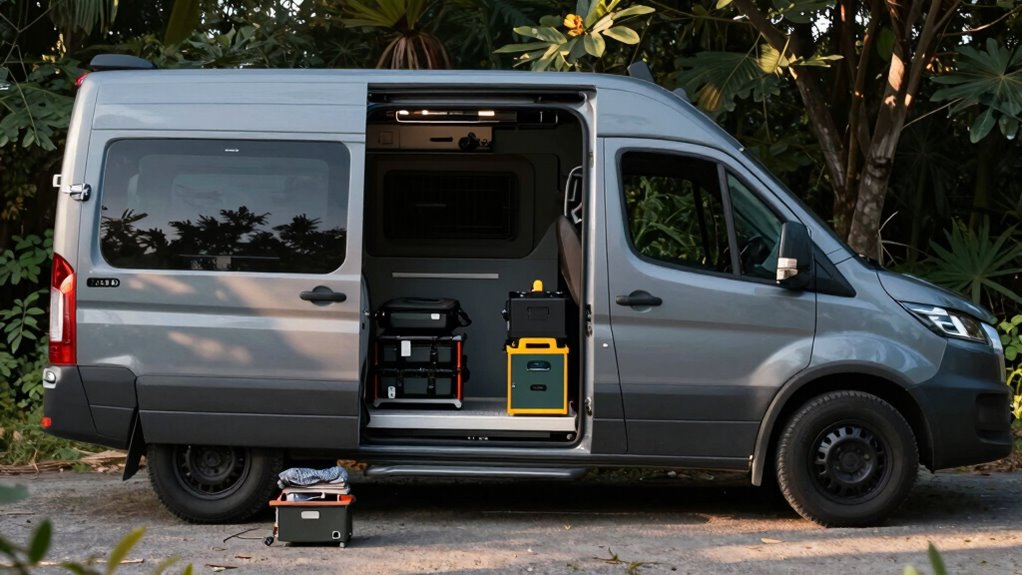
To guarantee a quick and silent departure, start by organizing your van so everything is in its place. Use hidden storage solutions to keep clutter out of sight, making your vehicle look normal and unassuming. This not only enhances stealth but also prevents noise from rattling items during movement. Implement soundproofing techniques, such as adding foam panels or sealing gaps around doors and windows, to minimize any sounds that might draw attention. Keep essential tools and supplies tucked away in discreet compartments, ready for quick access if needed. The goal is to create a tidy, quiet space that blends into your surroundings and allows you to leave unnoticed. Incorporate specialized gear designed for soundproofing and organization to optimize your setup. With everything in order and properly soundproofed, you’ll be able to hit the road swiftly and silently whenever you need.
Must-Have Quiet Tools and Supplies for Stealthy Packing
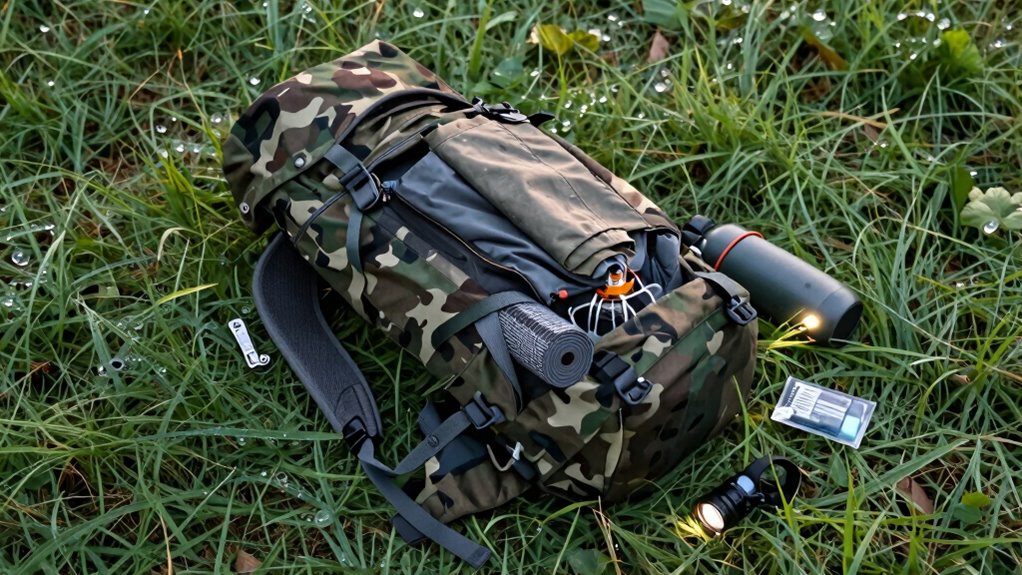
Having the right quiet tools and supplies is essential for stealthy packing, ensuring your preparations don’t make any noise that could give you away. Use soundproof containers to store your gear, keeping sounds minimal when handling sensitive items. Choose compact tools that are lightweight and easy to stow, like foldable knives, small flashlights, or silent multi-tools. These help you work quickly without clattering or rattling, which could alert nearby residents or security. Opt for soft cloth pouches or quiet zip bags to organize smaller items, reducing noise during packing. Keep your tools and supplies in a designated, discreet spot so you can access them swiftly without rummaging or making noise. Staying quiet and organized with these supplies ensures a fast, stealthy exit every time. Additionally, incorporating free floating techniques can help minimize noise by allowing gear to move smoothly without creating sounds.
Organize Your Gear for Rapid Loading and Unloading
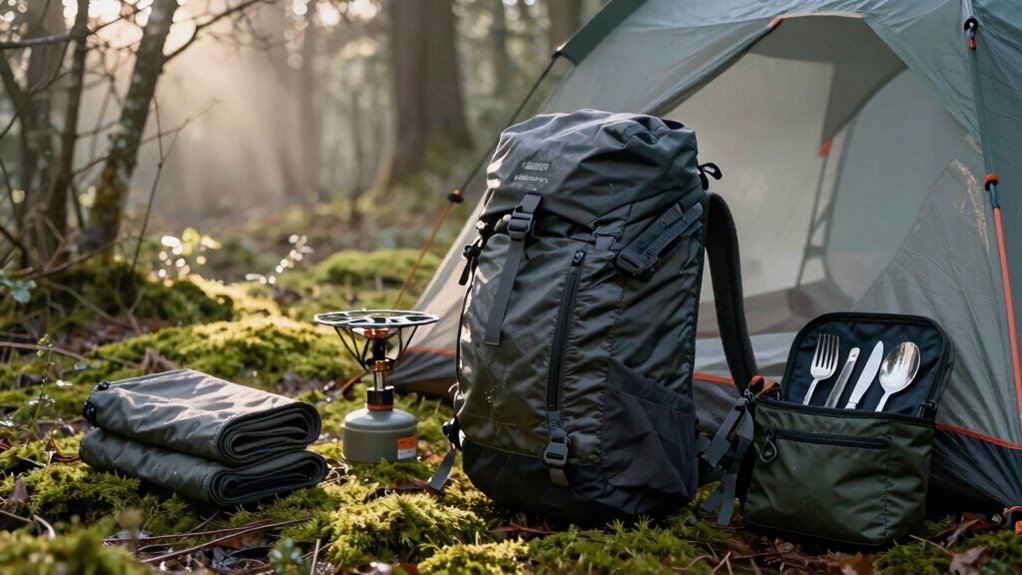
Efficiently organizing your gear is essential for quick loading and unloading during stealth camping. Focus on gear organization by grouping similar items together and storing them in easily accessible containers or compartments. Use color-coded bags or labels to identify essentials at a glance, reducing search time. Prioritize packing efficiency by arranging your gear in a consistent order so you can quickly grab what you need without rummaging. Keep frequently used items near the top or in quick-reach spots, and store less-used gear separately. Practice your packing routine until it becomes second nature, ensuring you can load and unload swiftly. Incorporating safety and seamanship fundamentals into your routine helps prevent overlooked items and ensures a smooth departure. With well-thought-out gear organization, you’ll minimize time spent preparing in the morning, making your stealth exit seamless and rapid.
Follow This Step-by-Step Routine to Leave in 5 Minutes

To leave quickly, start by packing your essential gear so nothing is overlooked. Power down your electronics to save time and guarantee everything is off. Finally, do a quick final check before you’re ready to go in just five minutes. Incorporating digital content management can streamline your packing process, ensuring all necessary items are accounted for efficiently.
Pack Essential Gear
When it’s time to pack your essential gear for stealth camping, focus on gathering only what you need for quick and quiet departure. Use hidden compartments in your backpack or vehicle to store sensitive items, keeping them out of sight. Prioritize gear that’s lightweight and easy to carry, such as a compact flashlight, a small first aid kit, and a multi-tool. Be mindful of covert signals—avoid items or movements that might draw attention or suggest your presence. Keep your gear organized and ready to go, so nothing gets left behind or causes delays. By streamlining your packing process and concealing anything that could reveal your campsite, you ensure a silent, swift exit without unnecessary rummaging or noise. Incorporating smart home safety tips, like discreet alarms or monitoring devices, can further enhance your stealth and security.
Power Down Electronics
Powering down your electronics quickly is essential for a stealthy exit, especially when time is tight. Efficient electronics shutdown helps conserve power and reduces noise that could attract attention. To streamline this process, follow these steps:
| Step | Action | Tip |
|---|---|---|
| 1 | Save any important data | Avoid losing info later |
| 2 | Turn off devices completely | Prevent ghost power draw |
| 3 | Disconnect chargers | Save power and avoid heat |
Additionally, understanding digital safety can help you ensure all devices are properly secured before leaving. This routine ensures your gadgets are off and silent, supporting power conservation. Keep a mental checklist handy to speed through each step, minimizing noise and flash. Rapidly shutting down electronics keeps your campsite discreet and ready for a quick departure.
Final Check & Leave
As your final step before leaving, quickly verify that everything is in place and ready to go. Practice a moment of early morning mindfulness to center yourself and ensure you’re calm and focused. Check that your stealthy gear maintenance is complete—tighten straps, close zippers, and tuck away loose items to prevent noise or movement. Confirm that your campsite is tidy, with no trash or signs of your presence. Make sure your lighting is turned off, and double-check your route to avoid any unexpected delays. This quick, deliberate final check helps you leave quietly and efficiently. When everything feels in order, take one last deep breath, and slip away smoothly, knowing you’ve maintained stealth and respect for your surroundings. Puppy Care is essential to ensure your overall well-being and happiness.
Quiet Packing Tips to Avoid Waking Others or Drawing Attention

To keep your packing quiet, choose gear that’s designed for silent use. Use discreet packing techniques like wrapping items in soft cloths or placing them gently in your bag. This approach also minimizes sound transmission, allowing you to pack quickly without disturbing others or attracting unwanted attention.
Silent Gear Selection
Choosing the right gear is essential for silent camping, especially when you want to avoid waking others or attracting unwanted attention. Use soundproof containers to store noisy items like utensils, flashlights, and batteries. These containers minimize sound during movement and opening. When packing, employ silent opening techniques such as gently prying lids or using soft cloths to dampen noise. Opt for gear with quiet zippers or magnetic closures instead of noisy clasps. Keep all items organized in a way that allows quick, silent access—pre-packed and ready to go. Test your setup before your trip to identify any potential noise sources. Small adjustments, like wrapping gear in cloth or foam, can make a big difference in maintaining stealth while packing. Additionally, selecting trusted brands known for quality and reliability can help prevent unexpected noise issues during your stealth camping routine.
Discreet Packing Techniques
When packing your gear for stealth camping, paying attention to quiet techniques can make all the difference in avoiding wake-ups or unwanted attention. Discreet packing involves organizing your gear so that sounds are minimized during movement. Use stealthy organization to keep essentials tight and silent. To achieve this, consider these tips:
- Wrap fragile items in clothing to reduce noise
- Avoid plastic bags; opt for soft fabric containers
- Pack slowly to prevent rustling
- Use silent closures like Velcro or magnetic fasteners
- Place items carefully, avoiding slamming or loud contact
- Incorporate soundproofing techniques to further dampen noise during packing.
Troubleshooting Common Morning Delays and How to Avoid Them
Morning delays can quickly derail your stealth camping routine, but identifying common issues and planning ahead makes a big difference. One frequent problem is alarm timing—set your alarm early enough to avoid rushing. Use a subtle sound that won’t wake others nearby. Your clothing choices also matter; pick versatile, quick-drying layers the night before. Avoid last-minute rummaging by laying out your outfit in advance, ensuring everything is ready to go. Double-check that your clothes are suitable for the weather, so you don’t waste time adjusting or searching for alternatives. Also, keep essentials like shoes and keys close by. Addressing these small details helps prevent delays, allowing you to leave quietly and efficiently without drawing attention or feeling hurried.
Final Safety Checks Before Hitting the Road
Before hitting the road, it’s crucial to perform a quick but thorough safety check to guarantee your stealth camping setup remains secure and your vehicle is ready. Follow your security protocols to ensure nothing is overlooked. Check that all windows and doors are locked, and valuables are hidden. Confirm your lights and signals work properly, and the tires are in good condition. Review your emergency preparedness kit—fire extinguisher, first aid supplies, and tools—to handle unexpected situations. Finally, confirm your fuel is sufficient, and the vehicle’s fluids are topped off. Remember, a swift safety sweep minimizes surprises and keeps your stealth approach intact. Incorporate these steps into your routine to stay prepared and confident before hitting the road.
Frequently Asked Questions
How Can I Discreetly Dispose of Waste Before Leaving?
To discreetly dispose of waste, you should first securely bag your trash to prevent leaks and odors. Look for hidden or less obvious trash concealment spots nearby, like dense bushes or trash bins in public areas. Use biodegradable bags for easy disposal, and always leave no trace behind. Remember, quick and quiet waste disposal helps you maintain stealth and avoid drawing attention as you leave.
What Are the Best Ways to Minimize Noise During Packing?
To minimize noise during packing, use soundproof containers for fragile items and whisper quiet gear for your essentials. Move slowly and deliberately, avoiding sudden movements that create sound. Keep zippers and Velcro sections covered or muffled, and organize your gear beforehand to reduce rummaging. By staying calm and controlled, you’ll keep noise levels down, making your departure discreet and seamless.
How Do I Handle Last-Minute Weather Changes Silently?
Handling last-minute weather changes is like catching a gust of wind—you need quick, quiet action. When weather alerts warn of rain, silently grab your rain gear and pack it efficiently. Keep your gear near the exit for instant access, and stay calm to avoid noise. Use soft movements, and if possible, pre-prepare some items, so you’re ready to adapt without drawing attention.
What’s the Most Efficient Way to Check for Security or Police?
You should perform quick security checks by casually observing your surroundings, looking for patrols or any activity that signals police presence. Keep your head on a swivel, listen for footsteps or voices, and use reflections or windows to scan nearby areas discreetly. Avoid obvious signs of surveillance, stay calm, and move smoothly if you spot security or police. This approach helps with police avoidance while maintaining stealth and safety.
How Can I Quickly Find a Safe, Legal Spot to Park Overnight?
You can quickly find a safe, legal spot to park overnight by checking parking permits and local regulations online before your trip. Many cities have designated RV or overnight parking areas, often free or inexpensive. Avoid illegal spots by researching rules in advance, so you won’t get fined or asked to leave. This prep saves you time and stress, ensuring a smooth, stealthy night’s rest without worries.
Conclusion
With practice, your morning routine becomes a silent song, each step a whisper in the dawn. Your van, a shadow slipping through the quiet streets, moves smoothly like a well-tuned instrument. As you close the door, feel the rhythm of readiness—peaceful and swift. Leaving unnoticed isn’t just about speed, but about blending into the dawn’s gentle embrace. Trust your routine, and let the morning’s hush carry you safely into the day ahead.