To start paddleboarding on lakes and rivers, make sure your equipment is in good shape — check your board for cracks, use a secure leash, and wear a PFD. Learn proper paddling techniques like maintaining good posture and using your core. Always be aware of water conditions, paddle with a buddy, and stay relaxed. With proper preparation and practice, you’ll gain confidence and enjoy your time on the water—keep exploring to discover more tips and tricks.
Key Takeaways
- Inspect and select suitable equipment, including a paddleboard, paddle, leash, and PFD, considering water conditions and activity level.
- Practice proper paddling techniques, maintaining good posture and engaging core muscles for efficiency and safety.
- Always wear a personal flotation device and paddle with a buddy or inform someone of your plans for safety.
- Rinse equipment after saltwater use and store in a shaded, cool area to extend lifespan and performance.
- Develop skills gradually through practice, focusing on balance, turning, stopping, and fall recovery to build confidence on lakes and rivers.
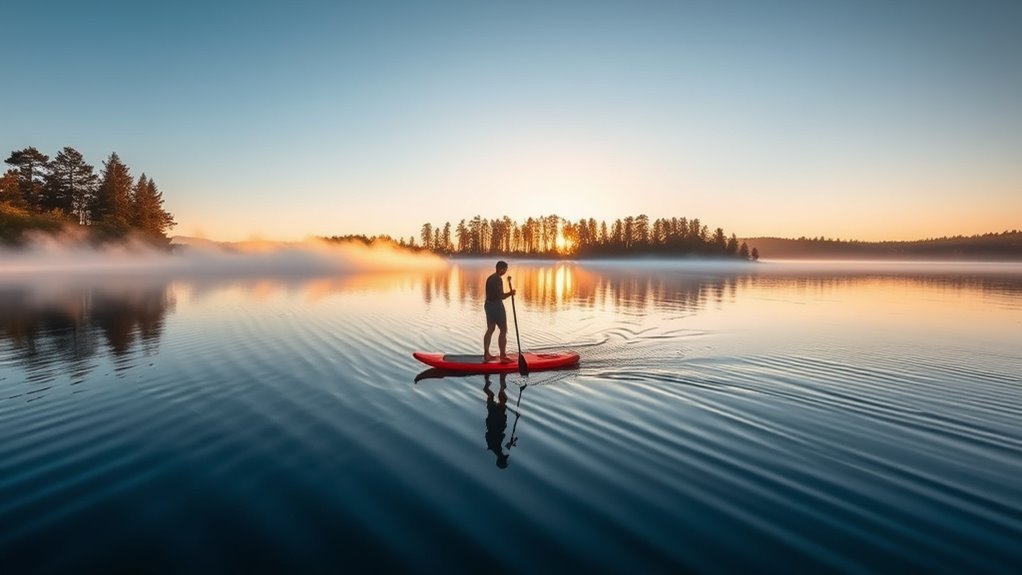
Stand-up paddleboarding, often called SUP, is an exciting water activity that combines balance, strength, and relaxation. As you get started, it’s essential to prioritize paddleboard safety to guarantee a fun and secure experience. Before hitting the water, take time to inspect your equipment thoroughly. Check that your paddleboard is free from cracks and damage, and ensure your leash is in good condition and securely attached. Wearing a personal flotation device (PFD) is always recommended, especially if you’re new to SUP or paddling in unfamiliar waters. Understanding the local conditions, such as water currents, wind, and weather, is equally important for safe paddling adventures. Additionally, choosing a suitable paddleboard type designed for your activity and skill level can enhance safety and performance.
Once you’re prepared with the right equipment, focus on equipment maintenance. Proper care extends the life of your paddleboard and keeps it performing at its best. Rinse your board with fresh water after each use, especially if you’ve been in saltwater, to prevent corrosion and buildup of salt. Store your board in a cool, shaded area away from direct sunlight, which can weaken the material over time. Regularly inspect your paddle for cracks or splinters, and tighten any loose parts, such as the paddle handle or adjustable sections. Maintaining your gear ensures it remains reliable and safe for every outing.
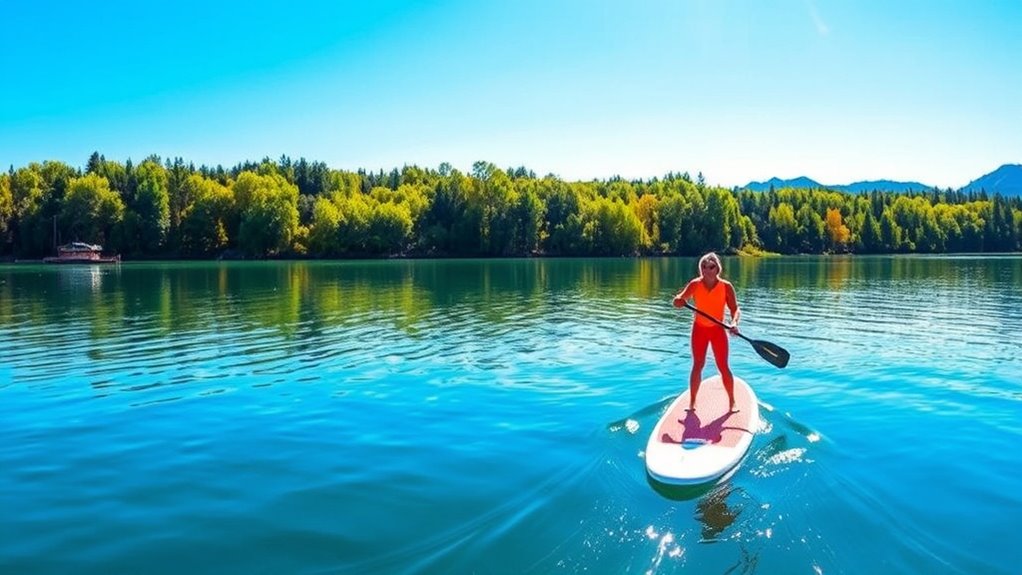
When you’re on the water, practice proper paddling techniques to maximize safety and efficiency. Keep your posture upright with a slight bend in your knees, and use your core muscles to power your strokes rather than relying solely on your arms. Be mindful of your surroundings, watching for boats, swimmers, and wildlife. Staying aware helps you avoid accidents and navigates you safely through lakes and rivers.
As you gain confidence, continue to develop your skills by practicing turning, stopping, and balancing on the board. Remember, falling into the water is part of the learning process—stay relaxed and use it as a chance to improve your technique. Always paddle with a buddy or let someone know your plans and expected return time, especially when venturing onto open water. This safety measure can be vital in case of emergencies.
Frequently Asked Questions
What’s the Best Time of Day to Paddleboard?
You should paddleboard early in the morning or late afternoon when the water’s calm and the weather is cooler, making your experience safer and more enjoyable. During these times, you can follow paddleboard etiquette by staying aware of other watercraft and maintaining a steady pace. Also, choose the right paddle to match your height and strength, ensuring better control and less fatigue as you explore lakes and rivers.
How Do I Stay Safe in Cold Water?
Brace against the brisk, biting water by dressing diligently in damp-proof dry suits and thermal layers. To prevent hypothermia, always wear appropriate cold water gear, including a wetsuit or drysuit, and keep moving to generate warmth. Stay aware of weather changes, paddle with a buddy, and carry safety gear like a whistle and throw bag. Prioritize personal protection, practice preparedness, and you’ll confidently conquer cold waters with caution and courage.
Can I Paddleboard Alone or Should I Go With a Group?
You can paddleboard alone, but it’s safer to go with a group, especially for beginners. Follow paddleboarding etiquette by staying aware of others and maintaining a safe distance. Always check your equipment maintenance before heading out to verify your board and paddle are in good condition. Going with others helps in case of emergencies, and it makes the experience more enjoyable. Stay cautious, have fun, and respect your environment!
What Should I Wear for Different Weather Conditions?
You should wear clothing layers and weather gear suited to the conditions. For warm weather, opt for quick-drying shorts and a tank top, adding a hat and sunscreen for sun protection. In cooler weather, layer with a wetsuit or thermal top and leggings to stay warm. Don’t forget waterproof jackets during rain or wind. Dressing properly keeps you comfortable, confident, and safe while paddleboarding in varying weather.
How Do I Transport a Paddleboard to Remote Locations?
To transport your paddleboard to remote locations, you should use a roof rack or a sturdy trailer designed for paddleboard transportation. Secure your board with straps, ensuring it’s tightly fastened to prevent movement during transit. Consider a padded cover for extra protection. With proper gear, accessing remote spots becomes easier and safer, allowing you to enjoy your paddleboarding adventures even in the most isolated settings.
Conclusion
Getting started with stand-up paddleboarding is an exciting adventure that connects you with nature and boosts your confidence on the water. Did you know that paddleboarding is one of the fastest-growing water sports, with a 21% annual increase? So, don’t hesitate—grab your board, stay safe, and enjoy the peaceful serenity of lakes and rivers. With a little practice, you’ll soon be gliding effortlessly and making unforgettable memories on the water.