

A sleeping pad’s R-value measures how well it resists heat transfer, which directly impacts your warmth during sleep. The higher the R-value, the better it insulates and keeps your body heat from escaping. For cold conditions, look for an R-value of 4 or higher, while lower values suit warmer weather. Understanding your environment helps you pick the right pad, and if you keep exploring, you’ll discover tips to maximize your warmth and comfort.
Key Takeaways
- R-value measures a sleeping pad’s resistance to heat transfer, indicating its insulation effectiveness.
- Higher R-values mean better warmth, suitable for colder outdoor conditions.
- R-value alone doesn’t determine warmth; material quality, design, and layering also influence comfort.
- Selecting the right R-value depends on expected outdoor temperatures and personal warmth needs.
- Combining a high R-value pad with proper setup and layering maximizes overall sleep warmth.
What Is Sleeping Pad R-Value and Why Is It Important?

Have you ever wondered how to stay warm on your camping trip? The answer lies in understanding sleeping pad R-value, which measures insulation effectiveness. R-value depends on the materials used and the manufacturing processes behind the pad. High-quality sleeping pad materials, like foam or specialized synthetic fabrics, trap more air and provide better insulation. Manufacturing processes also influence R-value; well-designed production techniques guarantee consistent density and insulating properties. A higher R-value means your pad resists heat transfer better, keeping you warmer in cold weather. Additionally, insulation effectiveness is affected by both material quality and manufacturing precision. Knowing this helps you select the right sleeping pad for your needs, whether you’re camping in winter or mild conditions. By paying attention to R-value, you ensure a more comfortable, restful night outdoors.
How Does R-Value Measure Insulation and Cold Transfer?

R-Value directly measures how well your sleeping pad insulates you from the cold. It relates to how effectively the material resists heat transfer through conduction and convection. Understanding these mechanisms helps you choose the right pad for staying warm in different conditions. Additionally, heat transfer mechanisms play a vital role in determining insulation performance.
R-Value and Insulation
Understanding how insulation works starts with knowing what R-Value measures. Essentially, R-Value indicates how well your sleeping pad resists heat flow, which depends on insulation thickness and material density. Thicker insulation generally has a higher R-Value because it provides more material to slow heat transfer. Similarly, higher material density improves insulation by reducing air gaps and increasing thermal resistance. When you choose a sleeping pad, a higher R-Value means better warmth, especially in colder conditions. It’s important to balance insulation thickness and material density to get the right level of warmth without adding unnecessary weight. material density plays a crucial role in enhancing thermal resistance and overall insulation performance. By understanding how these factors influence R-Value, you can select a pad that keeps you warm and comfortable during your outdoor adventures.
Heat Transfer Mechanisms
Heat transfer is the core process that R-Value measures, revealing how well your sleeping pad resists the flow of heat from your body to the colder environment. It occurs through three mechanisms: conduction, convection, and radiation. Thermal conductivity describes how easily heat passes through materials; a lower value means less heat transfer. When you lie on your pad, heat flux—the rate of heat transfer—determines how quickly warmth escapes. The R-Value quantifies this resistance, indicating how well the insulation slows heat flow. A higher R-Value signifies better resistance, meaning your body retains heat more effectively. Understanding these heat transfer mechanisms helps you choose a sleeping pad that keeps you warmer by minimizing heat loss through conduction and other pathways. Heat transfer mechanisms are fundamental to how insulating materials perform in cold environments.
Which R-Value Do You Need for Cold or Warm Weather?

Choosing the right R-value depends on the weather you’ll face. For cold conditions, you’ll want a higher R-value to stay warm and comfortable. In warmer weather, a lower R-value keeps you cool without trapping excess heat. Additionally, understanding the indoor gardening environment can help you select the most effective insulation for your sleeping pad.
Cold Weather R-Values
Wondering how to select the right sleeping pad R-value for cold weather? Your choice depends on understanding thermal conductivity—the measure of how well heat passes through a material—and material density. A higher R-value indicates better insulation, which reduces heat transfer from your body to the cold ground. For cold conditions, look for pads with an R-value of 4 or higher; these typically feature dense materials that trap more air and resist heat flow. Denser materials have lower thermal conductivity, meaning they’re more effective at keeping you warm. If you plan to camp in freezing temperatures, consider an R-value of 5 or above for ideal warmth. Additionally, insulation effectiveness varies based on material composition, so selecting the right material can further enhance your warmth. Matching your R-value to the coldness of your environment ensures you stay comfortable and safe through the night.
Warm Weather R-Values
Are you planning to camp in warm weather? For these conditions, a lower R-value—around 1 to 2—is sufficient. Sleeping pad materials like lightweight foam or thin air mattresses with minimal insulating layers are common. Manufacturing processes focus on creating pads that are breathable and comfortable, prioritizing packability and weight reduction. These pads trap less heat, ideal for warmer nights. Here’s a quick comparison:
| R-Value | Ideal Use |
|---|---|
| 1–2 | Warm weather camping |
| 3–4 | Mild to cool nights |
| 5+ | Cold conditions |
Choosing the right R-value depends on your sleep comfort, but in warm weather, less insulation means less bulk and more comfort.
The Best R-Values for Different Camping Conditions
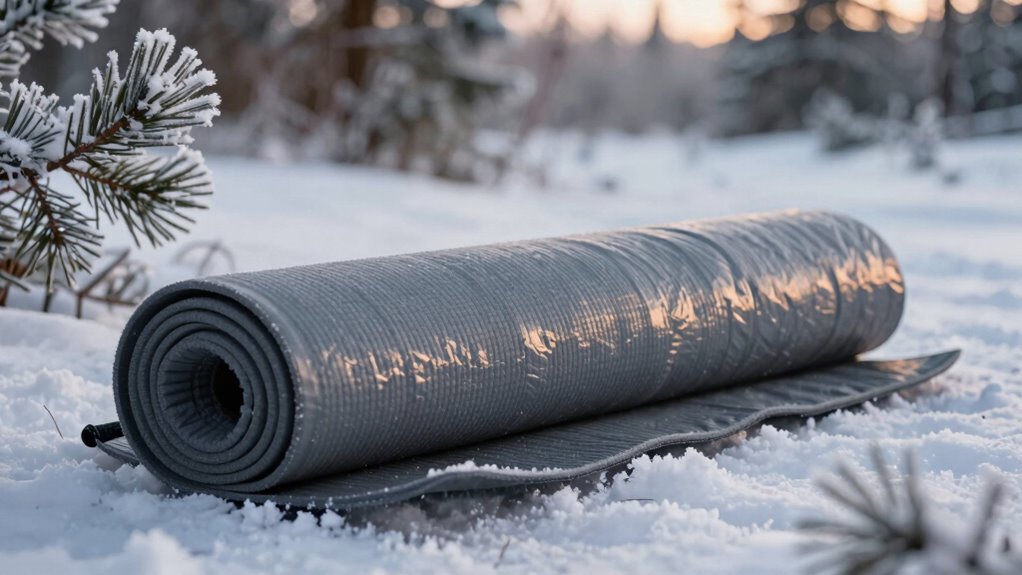
Selecting the right R-value for your sleeping pad depends heavily on the camping conditions you’ll face. For cold weather, aim for an R-value of 4 or higher to guarantee adequate insulation. In milder conditions, an R-value between 2 and 3 provides enough warmth without adding unnecessary weight. Your choice also depends on sleeping pad materials; foam pads often have higher R-values naturally, while inflatable pads may require thicker or additional layers for insulation. Consider pad weight, too—if you’re backpacking, lighter options with moderate R-values might be best. For car camping or backyard setups, you can opt for higher R-values for extra comfort. Matching your R-value to your environment assures you stay warm without carrying extra weight or sacrificing comfort. Choosing the right R-value ensures optimal warmth and efficiency based on your specific outdoor scenario.
How to Choose a Sleeping Pad Based on R-Value
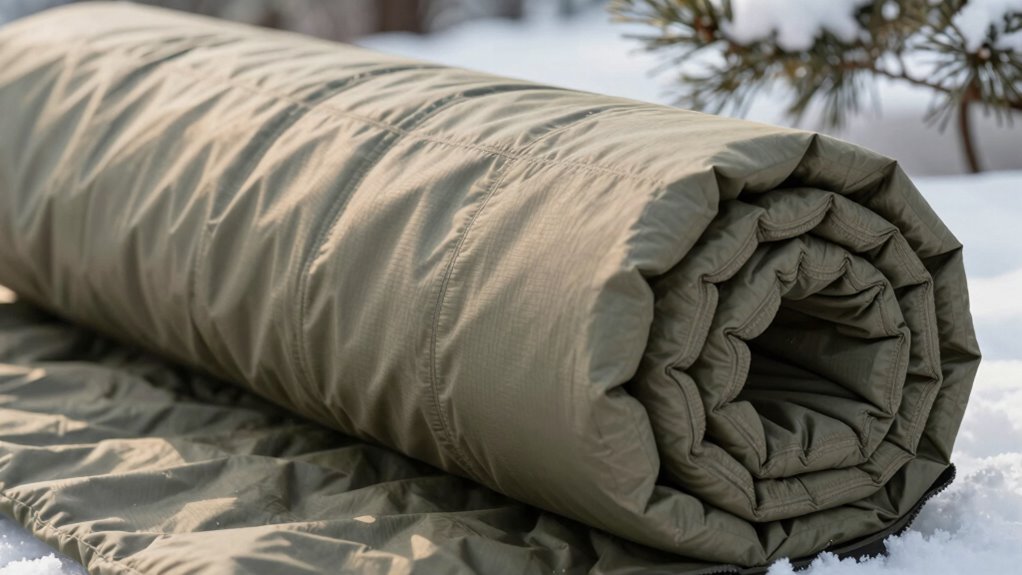
Choosing the right sleeping pad based on R-value starts with evaluating the conditions you’ll encounter during your trip. Consider the expected temperatures and how much insulation you’ll need. For colder environments, select a pad with a higher R-value; for milder conditions, a lower R-value suffices. Also, think about sleeping pad materials, as they influence both warmth and durability, and sleeping pad weight, which affects portability. Heavier pads often have better insulation but may be less convenient to carry. Here’s a quick guide:
| R-Value Range | Ideal Conditions | Material & Weight Considerations |
|---|---|---|
| 1-2 | Summer camping in warm weather | Lightweight, foam or thin inflatable |
| 3-4 | 3-season camping | Durable materials, moderate weight |
| 5+ | Winter camping | Heavy-duty, high-insulation materials |
Matching your needs _guarantees_ warmth without unnecessary bulk. Proper insulation ensures you stay comfortable in varying conditions.
Key Factors That Affect Your Sleeping Pad’s Warmth

Several factors influence how warm your sleeping pad will keep you throughout the night. Your sleeping pad design plays a vital role; features like insulation placement, shape, and thickness determine how effectively heat is retained. A well-designed pad minimizes heat loss by reducing gaps and drafts. Material durability also matters—high-quality fabrics resist compressing or wearing down over time, maintaining insulation properties and ensuring consistent warmth. The construction influences how well the pad retains its shape and insulating ability, even after repeated use. Additionally, the overall weight and packability can impact your choice, but always prioritize durable materials and thoughtful design to maximize warmth. Furthermore, advancements in AI tools can enhance the design process by simulating heat retention, helping manufacturers develop more efficient sleeping pads. Understanding these key factors helps you select a sleeping pad that keeps you comfortable and warm in various conditions.
Comparing R-Value and Other Insulation Features
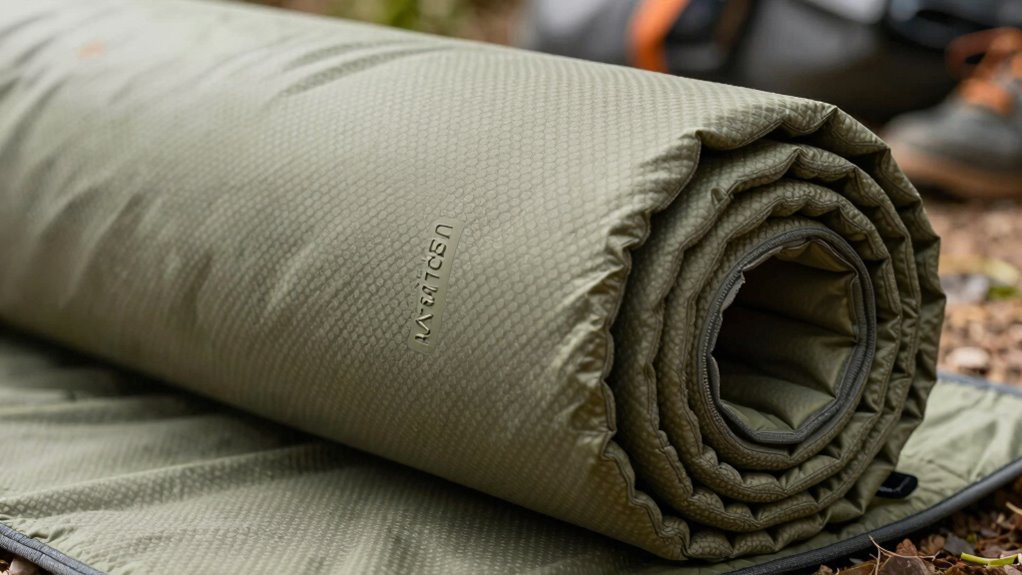
While R-value is a widely used measure of a sleeping pad’s insulation effectiveness, it’s important to understand how it compares to other insulation features. Sleeping pad materials, such as foam or air chambers, influence warmth beyond just R-value. Some materials trap heat better or provide more consistent insulation regardless of compression. Insulation layering also plays a role; combining different layers can improve overall warmth by adding redundancy and minimizing heat loss. For example, a pad with a high R-value but poorly designed materials might underperform compared to one with smarter insulation layering. Additionally, understanding the material composition helps in assessing how well a sleeping pad maintains its insulating properties over time. Ultimately, R-value is a helpful guideline, but evaluating the quality of sleeping pad materials and how they work together gives you a clearer picture of a pad’s true warmth potential.
Tips to Maximize Warmth With Your R-Value
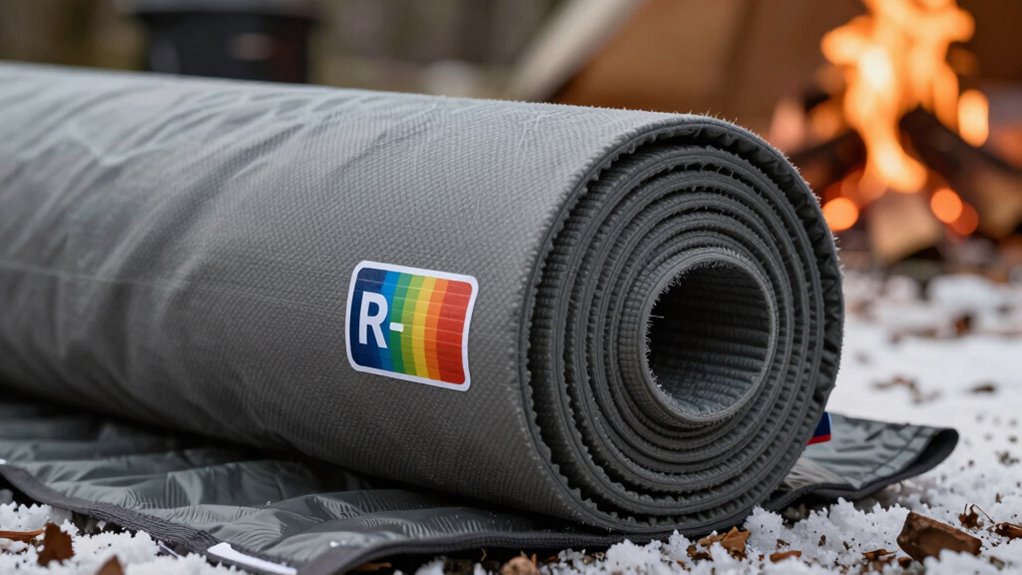
To get the most warmth out of your sleeping pad with a given R-value, you should focus on proper setup and usage techniques. Make certain your pad is clean and in good condition through regular sleeping pad maintenance, as dirt or damage can compromise insulation. Use an effective insulation material like a sleeping bag liner or a sleeping bag with a high R-value to boost warmth. Position the pad on a flat, debris-free surface to prevent cold spots. Inflate it properly to avoid gaps or compression that reduce insulation efficiency. Additionally, consider layering with a sleeping bag or wearing thermal clothing to enhance warmth. Properly maintaining your sleeping pad and selecting the right insulation materials maximize your R-value’s effectiveness and keep you warmer in cold conditions.
How R-Value Fits Into Your Overall Sleep System

Understanding how R-value fits into your overall sleep system helps you make smarter choices for staying warm. Your sleeping pad’s R-value is just one piece of the puzzle; layering strategies play a vital role in trapping heat. Combining a high R-value pad with insulating layers like sleeping bags or liners boosts warmth and comfort. Remember, pad durability matters too—selecting a durable pad ensures consistent insulation over multiple trips. A well-integrated system considers how each component interacts, so you don’t rely solely on R-value. By balancing your pad’s insulation with proper layering and choosing gear that stands up to rough conditions, you create a reliable sleep setup. This approach helps you stay warm, regardless of the environment, and maximizes your investment in quality gear.
Frequently Asked Questions
How Does R-Value Relate to Sleeping Pad Thickness or Material?
Your sleeping pad’s R-value measures its warmth, influenced by foam density and insulation layering. Thicker pads with higher foam density provide better insulation, increasing R-value. The material type also matters; denser, more insulating layers trap more air, boosting R-value. So, when choosing a pad, consider both thickness and material composition because these factors directly affect its R-value and your warmth during cold nights.
Can You Combine Multiple Sleeping Pads to Increase R-Value?
Yes, you can combine multiple sleeping pads to boost insulation properties and increase R-value. Layering pads enhances warmth, providing better insulation against cold ground. When you pad layer, you create additional barriers that trap heat and improve overall warmth. Just guarantee the pads are compatible, stay secure, and don’t compromise comfort. This simple strategy effectively boosts your sleeping system’s insulation, making cold nights more bearable.
Does R-Value Influence the Weight and Packability of a Sleeping Pad?
Yes, R-value influences the weight and packability of your sleeping pad because higher R-values often mean thicker insulation, which can add weight and bulk. While increased insulation efficiency keeps you warmer, it may reduce material durability and make packing less convenient. If you’re backpacking, balance R-value with weight and packability to find a pad that offers warmth without sacrificing comfort or portability.
Are Higher R-Values Always Better for Winter Camping?
While higher R-values offer better thermal insulation for winter camping, they’re not always the best choice. You’ll want to balance warmth with material durability and weight to suit your adventure. Think of it as choosing cozy layers—more isn’t always better if it hampers your comfort or mobility. For extremely cold conditions, a higher R-value can be beneficial, but for milder winter nights, a moderate one might do just fine.
How Does R-Value Affect Overall Sleep Comfort and Quality?
A higher R-value enhances sleep comfort and quality by providing better insulation from the cold ground. You stay warmer, which helps you relax and fall asleep faster. When your body maintains a stable temperature, your sleep becomes deeper and more restorative. So, choosing a sleeping pad with the right R-value ensures you wake up refreshed, especially in colder conditions, making your overall camping experience more comfortable and enjoyable.
Conclusion
So, next time you’re choosing a sleeping pad, remember R-value is your cozy secret weapon—like a warm hug in a winter storm or a thin sheet in summer. Ignore it, and you’ll end up tossing and turning on ice or sweating through your sheets. Think of R-value as your sleep’s insurance policy—without it, you might as well be camping in a snowdrift with a paper bag. Stay warm, stay smart!