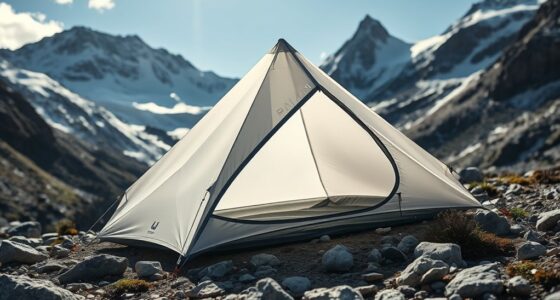


When setting up a tent on sand, snow, or rocky ground, you need to modify your methods for stability. Clear debris, create trenches in sand, pack snow, or level rocky terrain with rocks or logs. Use specialized stakes like sand stakes, snow anchors, or sturdy metal stakes driven at an angle for better hold. For extra security, bury rocks or create trenches. Mastering these techniques guarantees your tent remains secure—more detailed tips await as you continue.
Key Takeaways
- Clear debris and level the ground, using rocks or logs on rocky terrain for added stability.
- Use specialized stakes like sand stakes or snow anchors suited for each terrain type.
- Drive stakes at an angle away from the tent to improve holding power and stability.
- Bury heavy objects or create trenches in snow and sand to enhance anchoring.
- Ensure stakes are deeply embedded in compacted snow or firm ground for maximum security.
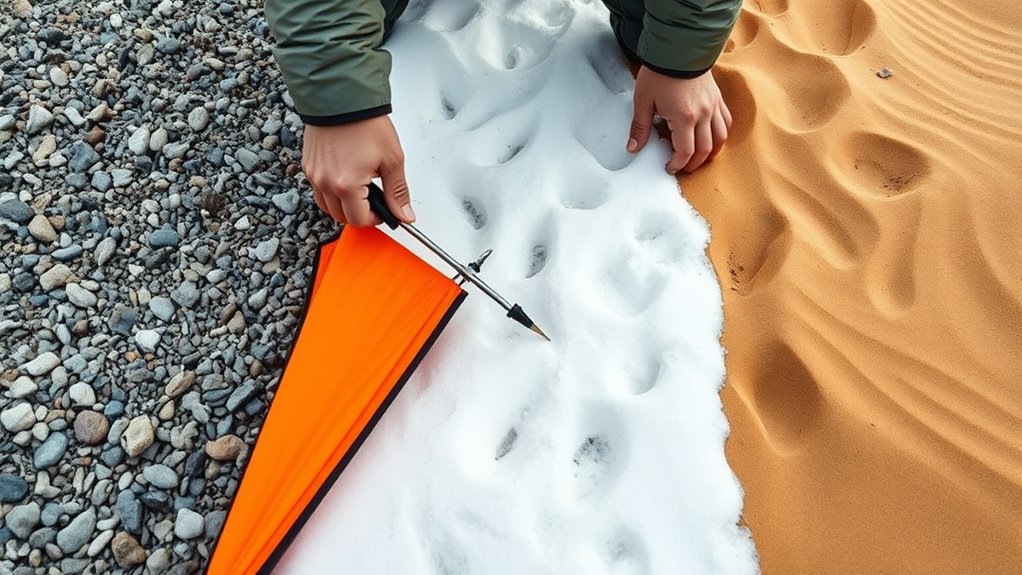
Setting up a tent on different terrains requires careful preparation to guarantee stability and comfort. No matter where you’re camping—be it sand, snow, or rocky ground—you need to adapt your setup process accordingly. Your first step involves proper ground preparation, which ensures your tent stays secure and maintains its shape throughout the night. Selecting the right tent stakes is vital, as they are the primary anchors holding your shelter in place.
On sandy terrains like beaches or dunes, ground preparation starts with clearing away loose sand or debris to create a firm surface. Dig small trenches where your tent stakes will go, which helps prevent the stakes from pulling out under wind pressure. Use specialized sand stakes or heavy-duty stakes, which are often broader or have a flared design to distribute the holding force better. When driving stakes into loose sand, angle them slightly away from the tent to increase holding power. You might also consider using additional anchors like rocks or burying some heavy objects near the stakes to add extra stability.
For snowy terrains, ground preparation involves clearing a flat, firm area free of loose snow or ice. If the snow is fresh and fluffy, pack it down by walking over it or stamping it with your boots to create a solid surface. In colder conditions, consider using snow stakes or ice screws designed specifically for snow camping. These stakes often have a spiral shape or are made from durable materials that grip icy or compacted snow effectively. When staking into snow, angle the stakes similarly to sandy terrain, and ensure they are driven deep into the snow to avoid pulling out under wind or movement. Shovel a small trench or notch for the stakes to sit in, which helps prevent slippage.
Rocky or uneven ground demands careful ground preparation to prevent damage to your tent and stakes. Clear away loose stones, twigs, and sharp objects that could puncture your tent or loosen the stakes. Use rocks or logs to create a level sleeping area if the terrain is uneven. For staking, choose sturdy, pointed stakes made of metal or other durable materials that can penetrate hard surfaces. Drive stakes at a slight angle, aiming away from the tent, to maximize their hold. If the ground is too hard, consider using a hammer or a rock to gently tap the stakes in place, but avoid forcing them, which could break the stakes or damage the ground.
Frequently Asked Questions
How Do I Prevent My Tent From Sliding on Icy Surfaces?
To prevent your tent from sliding on icy surfaces, use ice grips or crampons on your stakes for better traction. Incorporate snow anchors or deadman anchors buried in the snow to hold your tent securely. Make sure to angle stakes at 45 degrees and tighten guy lines to maintain stability. Regularly check your stakes and adjust as needed, especially after wind or temperature changes, ensuring your tent stays firmly in place.
What Gear Is Best for Securing a Tent on Loose Sand?
Think of securing your tent on loose sand like anchoring a ship in calm waters. Use long, sturdy tent stakes to penetrate the sandy ground deeply, preventing slipping. Add weight bags filled with rocks or sand to press down the tent’s edges, especially in gusty conditions. Distribute the weight evenly around the perimeter, ensuring stability. These tools work together to keep your shelter grounded amid shifting sands.
How Can I Anchor a Tent on Uneven Rocky Ground?
To anchor a tent on uneven rocky ground, focus on rock stability and anchor techniques. Use heavy-duty stakes or specialized rock anchors that grip irregular surfaces securely. Drive stakes at different angles for better hold, and consider using natural features like large rocks to stabilize guy lines. If needed, pack extra weight around stakes for added stability, ensuring your tent remains secure despite the uneven terrain.
Are Special Tents Needed for Snow Camping?
Yes, you’ll want a snow-specific tent for snow camping. These tents feature better tent insulation and sturdier frames designed to withstand heavy snow and wind. They often have a lower profile to reduce snow accumulation and include features like reinforced poles and snow flaps. Using a regular tent in snow can lead to cold drafts and collapse, so investing in a snow-specific tent guarantees safety, warmth, and comfort.
How Do Weather Conditions Affect Tent Setup on Different Terrains?
Weather impact considerably influences your tent setup across terrains, so don’t assume all conditions are manageable with the same approach. You adapt your setup to terrain and weather, like anchoring stakes deeper on rocky ground or using snow anchors in winter. Strong winds or rain demand extra guy lines or a waterproof tarp. By tailoring your approach, you guarantee stability and protection regardless of weather, making your camping experience safer and more comfortable.
Conclusion
No matter if you’re anchoring your tent on shifting sand, icy snow, or rugged rock, your preparation determines your comfort and safety. While sand demands deep stakes and extra guy lines, snow requires reinforced anchors and careful snow wall construction. Rock terrain, though solid, calls for specialized gear like climbing anchors. Each surface challenges you differently, but with the right techniques, you’ll create a secure shelter. Adaptability and attention to detail turn unpredictable terrains into reliable, cozy refuges.