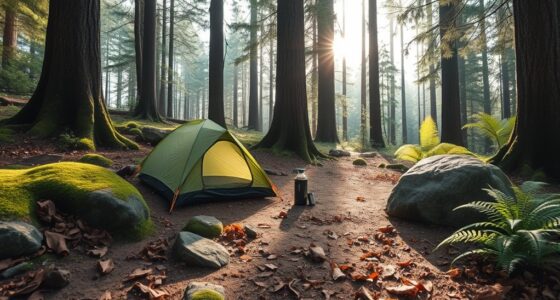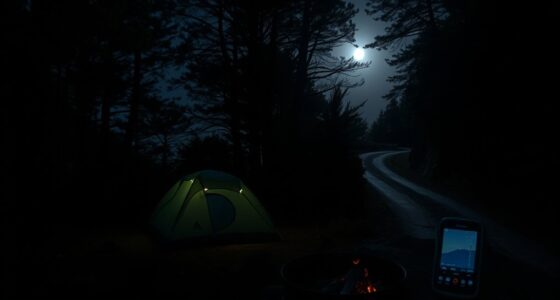
To choose a safe overnight spot, research trusted sites with good reviews, clear signage, and proper maintenance. Look for well-lit areas, secure access, and nearby help centers. Watch out for hazards like unstable ground, wildlife, or environmental risks such as flooding. Use a safety checklist to evaluate lighting, accessibility, and surroundings. Prepare your vehicle and gear for quick exits and emergencies. Stay alert to changes, and if you keep exploring, you’ll discover even more tips to stay safe overnight.
Key Takeaways
- Research reputable sites with good signage, lighting, and maintained facilities, ensuring overnight stays are permitted and safe.
- Assess environmental hazards like unstable terrain, flooding risk, wildlife activity, and signs of decay or damage.
- Check weather forecasts and choose flat, well-drained areas away from water bodies and low-lying flood-prone zones.
- Inspect the site for security features, accessibility, nearby emergency services, and avoid isolated or poorly lit locations.
- Prepare and carry emergency supplies, secure your vehicle, and stay vigilant during your stay to promptly address potential risks.
What Makes a Safe Overnight Spot?
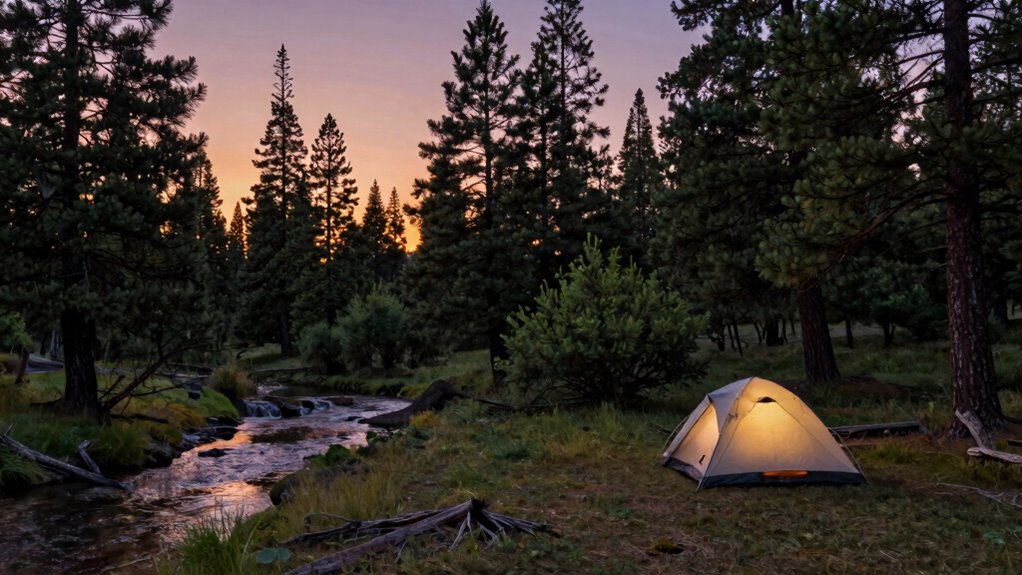
A safe overnight spot provides a secure environment where you and your belongings are protected from potential threats. Look for campgrounds that offer good amenities such as well-lit areas, secure access points, and maintained facilities, which enhance safety. Familiarize yourself with local regulations to guarantee the site complies with safety standards and legal requirements. Respect posted rules about quiet hours, fire safety, and parking, as they help prevent accidents and disturbances. Check if the area has surveillance, security patrols, or nearby help centers. Avoid isolated or poorly maintained sites, as they pose higher risks. By choosing a location with reliable amenities and adhering to local regulations, you markedly reduce your vulnerability to dangers while ensuring a safer overnight stay. Additionally, considering Free Floating options can provide more flexible and safer alternative locations for overnight stays.
How to Find and Choose Trusted Camping or Parking Areas

To find trusted camping or parking areas, start by researching reputable sources like official park websites, trusted camping apps, and guidebooks. These sources provide accurate information on site safety, amenities, and rules. Always check local regulations beforehand to assure the area permits overnight stays and that you’re compliant with any restrictions. Use trusted sources to gather details about the area’s reputation, recent user reviews, and safety features. Avoid spots with poor reviews or reports of trouble. Look for well-maintained sites with clear signage, good lighting, and accessible facilities. Trust your research and instincts; if something feels off, consider alternatives. By relying on reputable sources and understanding local regulations, you considerably reduce risks and find safer, more reliable overnight spots. Additionally, consider the quality of audio equipment available at the site, as proper sound management can enhance your experience and safety during overnight stays.
What Red Flags and Hazards Should You Watch For?

Watch out for surroundings that seem unsafe, like unstable structures or areas prone to flooding. Stay alert for environmental hazards such as uneven ground, falling branches, or nearby wildlife that could pose a threat. Recognizing these red flags helps you choose a spot that keeps you safe through the night. Additionally, home safety considerations are crucial, as a safe resting area should minimize risks like tripping hazards or poor lighting.
Unsafe Surroundings and Structures
Unsafe surroundings and structures can pose serious risks when choosing an overnight spot. Abandoned structures might seem intriguing, but they often lack stability and could collapse unexpectedly. Keep an eye out for signs of decay or damage, like broken walls or sagging roofs. Unstable terrain is another hazard—avoid areas with loose soil, steep slopes, or loose rocks that could shift or cause falls. Falling debris from unstable structures can also threaten your safety. Additionally, watch for signs of recent activity, such as garbage or makeshift camps, which might indicate potential conflicts or hazards. Always prioritize solid, well-maintained ground and avoid locations that seem structurally compromised or prone to erosion. Recognizing projector technology limitations and vulnerabilities helps you select a safer, more secure overnight spot. Staying alert to these red flags helps you select a safer, more secure overnight spot.
Environmental and Wildlife Hazards
Environmental and wildlife hazards can turn an otherwise ideal overnight spot into a dangerous situation if you’re not alert. Watch for signs of wildlife encounters, such as animal tracks, droppings, or sounds, which indicate nearby animals. Approaching or startling wildlife can lead to aggressive behavior or attacks, so maintain a safe distance. Be mindful of environmental damage, like dead trees or unstable ground, that could pose collapse risks. Avoid camping near food sources or water bodies that attract animals, increasing the chance of unwanted wildlife encounters. Also, check for signs of nesting sites or burrows, which indicate the presence of potentially defensive animals. Staying vigilant helps prevent conflicts and minimizes impact on the environment, ensuring a safer and more responsible overnight stay. Additionally, understanding storm-anxiety routines can help keep pets calm and safe if weather suddenly worsens during your stay.
How to Use a Checklist to Evaluate Location Safety?
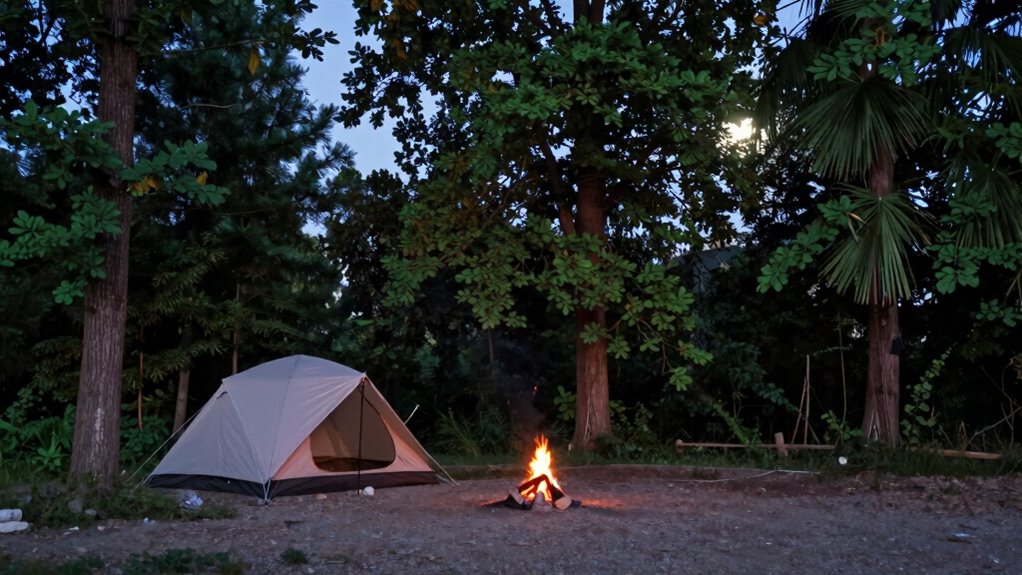
Using a checklist is one of the most effective ways to assess the safety of a potential overnight spot. It helps you systematically evaluate risks and identify security tips to stay safe. Start by reviewing key factors like lighting, accessibility, and nearby emergency services. Use the table below to guide your risk assessment:
| Safety Factor | Evaluation |
|---|---|
| Lighting | Is the area well-lit at night? |
| Accessibility | Can you easily access and exit? |
| Local Crime Rates | Is the area known for safety? |
| Natural Hazards | Are there environmental risks? |
| Emergency Services | How close are they? |
This structured approach guarantees you don’t overlook vital safety elements, making your risk assessment thorough and effective. Additionally, staying informed about current market trends can help you make better decisions about location safety and security.
How to Prepare Your Vehicle and Gear for a Safe Night
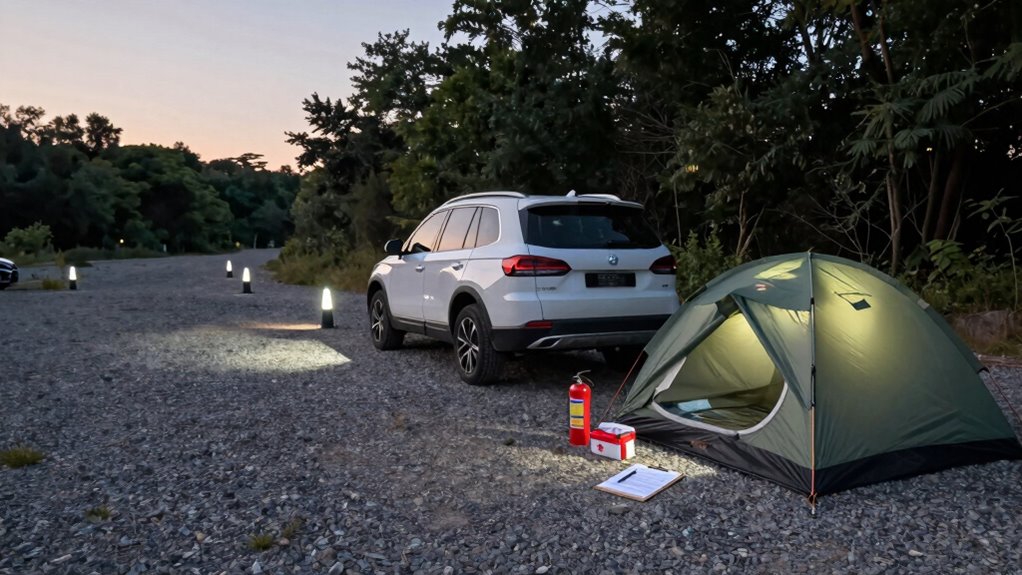
To guarantee your safety throughout the night, it’s essential to properly prepare your vehicle and gear before settling in. Start by securing vehicle security—lock all doors, windows, and any valuables out of sight. Ensure your parking brake is engaged and your engine is off. Organize your gear efficiently, keeping essentials like a flashlight, first-aid kit, and water within easy reach. Use storage compartments or bins to prevent clutter that could cause accidents or make noise at night. Double-check that your fuel and tire pressure are adequate for the journey ahead. Additionally, essential oils for safety can help create a calming environment inside your vehicle, reducing stress and promoting alertness. Keeping your vehicle secure and your gear well-organized minimizes risks and helps you stay alert and prepared, ensuring a safe and comfortable overnight stay.
How Can You Be Ready for Emergencies?
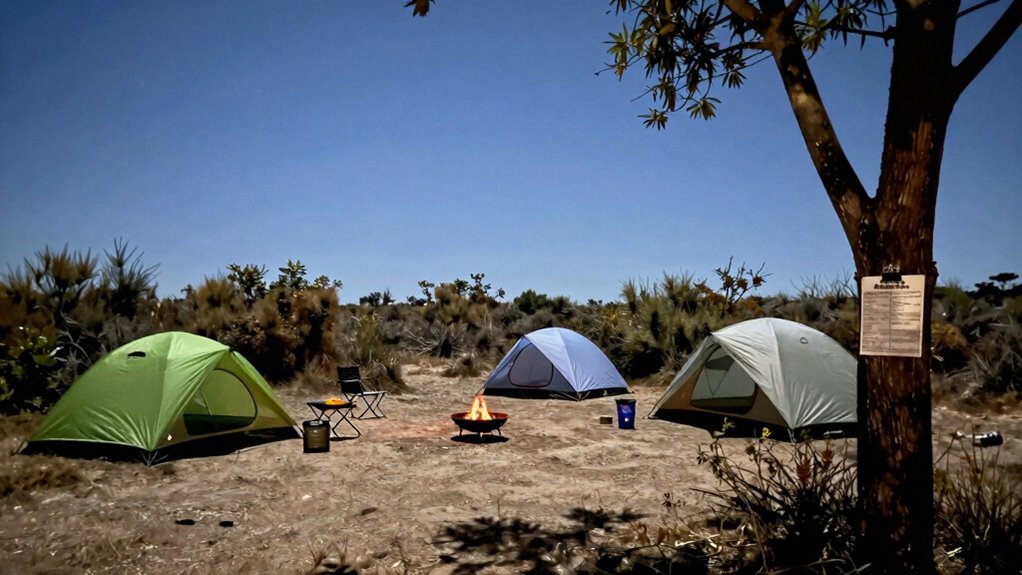
Being prepared for emergencies is crucial when staying overnight in unfamiliar or remote areas. You should pack essential emergency supplies like a flashlight, first aid kit, extra food, and water. These items can make a difference if conditions suddenly change or you face unexpected challenges. Additionally, establish clear communication plans with someone outside your location. Share your itinerary, including your planned arrival and departure times, and guarantee you have reliable ways to contact help, such as a fully charged cell phone or satellite device. Practice using your emergency supplies so you know how to access them quickly. Being proactive with your communication plan and having the right supplies on hand ensures you’re better equipped to handle emergencies confidently and stay safe during your overnight stay. Understanding the power capabilities of your gear can also help you manage your energy needs effectively in case of extended stays or unforeseen circumstances.
Frequently Asked Questions
How Do Weather Conditions Influence Safety When Choosing an Overnight Spot?
Weather conditions greatly influence safety when choosing an overnight spot. You need to watch out for weather hazards like storms, heavy rain, or high winds that can threaten your safety. Temperature considerations are vital too—extreme cold can cause hypothermia, while excessive heat increases dehydration risks. Always check the forecast, seek shelter from severe weather, and choose a location that offers protection from changing conditions to stay safe overnight.
What Local Regulations Should I Be Aware of for Overnight Parking?
Don’t let local restrictions catch you off guard. Before parking overnight, check for parking permits and local regulations that could get you in hot water. Some areas have designated zones, time limits, or permit requirements you must follow. Always research local ordinances online or ask nearby authorities to avoid fines or towing. Staying informed helps you stay one step ahead and guarantees a smooth, hassle-free night stay.
How Can I Ensure My Privacy and Security at the Site?
To guarantee your privacy and security at the site, you should take proactive security measures like parking in well-lit areas and avoiding crowded spots. Use window covers or curtains to protect your privacy and keep valuables out of sight. Consider setting up portable alarms or cameras for added security. Trust your instincts; if something feels off, move to a different location. Your awareness and preparedness can considerably enhance your safety.
Are There Specific Signs Indicating a Unsafe or Risky Area?
Yes, certain signs indicate an unsafe area. You should watch for poor neighborhood visibility and dim lighting conditions, especially at night. If the area feels deserted, has broken or no streetlights, or looks rundown, it’s a red flag. Avoid spots where you can’t easily see surroundings or where there’s little activity. Trust your instincts—if something feels off, it’s better to find a safer, well-lit location.
What Are the Best Resources for Real-Time Safety Updates?
Your safety could depend on it—so don’t rely on guesswork! Use real-time safety updates from mobile safety apps like Waze, Google Maps, or specialized travel safety tools. Always keep emergency contacts handy, and enable location sharing for quick assistance. Social media platforms and local news websites also provide timely info on safety concerns. Staying connected and aware guarantees you’re prepared for any unexpected risks during your overnight stay.
Conclusion
So, after all that planning and checking, you might think finding a safe spot is foolproof. But remember, even the best checklist can’t predict every surprise—like that friendly-looking campground hiding a noisy, rowdy crowd. Stay alert, trust your instincts, and keep safety gear handy. Because the real secret to a peaceful night isn’t just choosing the perfect spot, but knowing you’re prepared for the unexpected—just in case, or just to keep things interesting.