


To make your tent floor last longer, always check the ground for dampness and avoid soggy areas. Use ground covers like a tarp or groundsheet underneath your tent for extra protection against moisture and abrasions. Regularly clean and inspect your tent for signs of wear, and dry it thoroughly before storing. Proper ground preparation, combined with careful maintenance, extends your tent’s durability. Keep going to discover more tips on how to protect your gear and enjoy longer-lasting outdoor adventures.

Get travel and outdoor gear delivered free with Prime
- Fast, free delivery on millions of items
- Prime Video, Amazon Music and more included
- Member-only deals all year
Key Takeaways
- Use ground cover like a groundsheet or tarp to protect the tent floor from moisture and abrasion.
- Regularly inspect the tent floor for tears, worn spots, or damage, and repair promptly.
- Clean dirt and debris off the tent floor after each trip to prevent fabric deterioration.
- Ensure the tent floor is completely dry before packing to prevent mold and weaken the material.
- Choose tents with reinforced, high-quality materials designed to withstand wear and environmental stress.
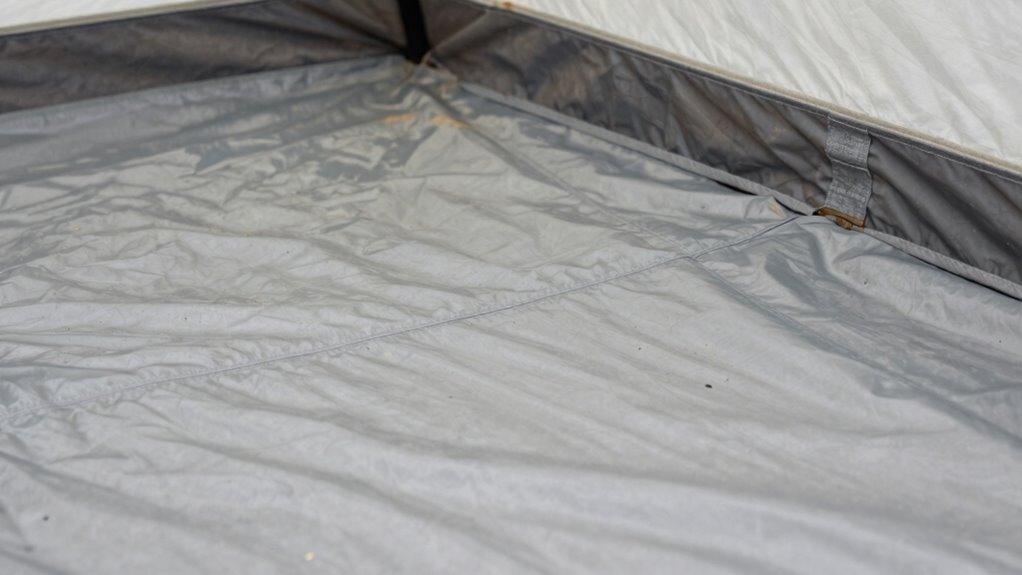
When camping, how you treat your tent floor can make a big difference in its longevity and your overall comfort. One of the most important habits is paying attention to ground moisture. Before setting up your tent, check the terrain for dampness or areas prone to water accumulation. If the ground is wet or soggy, it’s wise to choose a different spot or use additional ground cover. Moisture from the ground can seep through even the most durable materials, leading to quicker wear and potential damage. Using a groundsheet or tarp underneath your tent creates a barrier against ground moisture, preventing it from seeping into the main tent fabric. This extra layer not only keeps your tent dry but also reduces abrasion on the tent floor, extending its lifespan over time. Proper material selection plays an essential role in how well your tent withstands the elements and regular use. When picking a tent, opt for high-quality materials that are designed to resist water, tears, and punctures. Look for tents with reinforced corners and seams, as these are common weak points that can deteriorate faster if not properly constructed. A sturdy, waterproof material such as ripstop nylon or polyester coated with durable water repellent (DWR) treatment offers better protection against ground moisture and rough terrain. Remember, the right material can considerably reduce the need for frequent repairs and keep your tent in good shape longer. Another habit that helps prolong your tent’s life is removing dirt and debris after each trip. Dirt particles and gravel can wear down the fabric over time, especially if left to sit on the tent floor. Gently shake out or sweep away loose dirt, and wipe down the interior with a damp cloth if needed. This prevents abrasive particles from causing small tears or weakening the fabric. Regular inspection and maintenance of your tent can also identify early signs of wear, allowing you to address minor issues before they become major problems. A thorough cleaning process can remove contaminants that might degrade the fabric over time, further preserving your investment. Additionally, taking the time to air out the tent after each trip helps prevent mold and mildew growth, which can weaken materials over time. When packing up, allow the tent to dry completely if it’s damp, as storing it while wet accelerates material degradation and promotes mold growth. Proper storage of your tent is equally important; keeping it in a breathable bag or container helps prevent moisture buildup. Finally, always store your tent properly when not in use. Fold it loosely and keep it in a cool, dry place away from direct sunlight. Proper storage prevents unnecessary stress on the material and avoids exposure to elements that could weaken the fabric. By adopting these habits—paying attention to ground moisture, selecting quality materials, cleaning thoroughly, and storing correctly—you set your tent up for a longer, more reliable life, ensuring it’s ready for many adventures to come.
As an affiliate, we earn on qualifying purchases.
Frequently Asked Questions
How Often Should I Replace My Tent Floor Tarp?
You should replace your tent floor tarp every 2-3 years or sooner if you notice significant damage. Regular tent maintenance, like inspecting for tears and wear, helps prolong its lifespan. Keep the tarp clean and avoid dragging it on rough surfaces. Proper tent care enhances camping safety by preventing leaks and trips. Replacing your tarp at the right time guarantees your tent remains durable, comfortable, and safe for every adventure.
What Are the Best Materials for Tent Floor Protection?
You’d think choosing a tent floor protection material would be simple, but nope—it’s all about durable tent materials that can handle your adventures. For premium tent floor maintenance, go for PVC, polyethylene, or polyester with a waterproof coating. These materials resist tears, abrasions, and moisture, making your tent last longer. Irony? The fanciest fabrics might be overkill, but your tent’s longevity depends on picking the right, durable tent materials.
Can I Repair a Torn Tent Floor Easily?
Yes, you can repair a torn tent floor easily. First, clean the area thoroughly to remove dirt and debris, ensuring good adhesion. Then, use a tent repair patch or adhesive designed for outdoor fabrics. For added protection, consider tent seam sealing around the repair to prevent further damage. Regular tent floor cleaning and sealing help keep your tent in good shape, making repairs more effective and lasting longer.
How Does Climate Affect Tent Floor Durability?
Climate plays a big role in your tent floor’s durability. In humid or rainy conditions, you need to focus on climate adaptation and moisture resistance to prevent damage. Make sure your tent has a waterproof coating, and consider using a ground tarp for extra protection. By adjusting your setup for the climate, you’ll extend your tent’s lifespan, keeping it in good shape regardless of weather changes.
Are There Eco-Friendly Options for Tent Floor Maintenance?
Think of maintaining your tent floor like tending a garden—using eco-friendly solutions nurtures its longevity. You can opt for sustainable materials like recycled rubber or biodegradable sealants that protect without harming nature. These eco-friendly options reduce your environmental impact while preserving your tent’s durability. By choosing sustainable solutions, you guarantee your gear lasts longer, and you contribute to a healthier planet, making your outdoor adventures even more meaningful.
Conclusion
By cultivating these simple tent floor habits, you guarantee your shelter remains strong and reliable through countless adventures. But remember, neglecting these small acts could quietly erode your sanctuary’s integrity over time. So, as you pack up and prepare for your next journey, ask yourself—are you truly giving your tent the care it deserves? Sometimes, the tiniest habits hold the greatest power to keep you protected when it matters most. Will you take that extra step?
Halloween Picks
halloween
As an affiliate, we earn on qualifying purchases.