
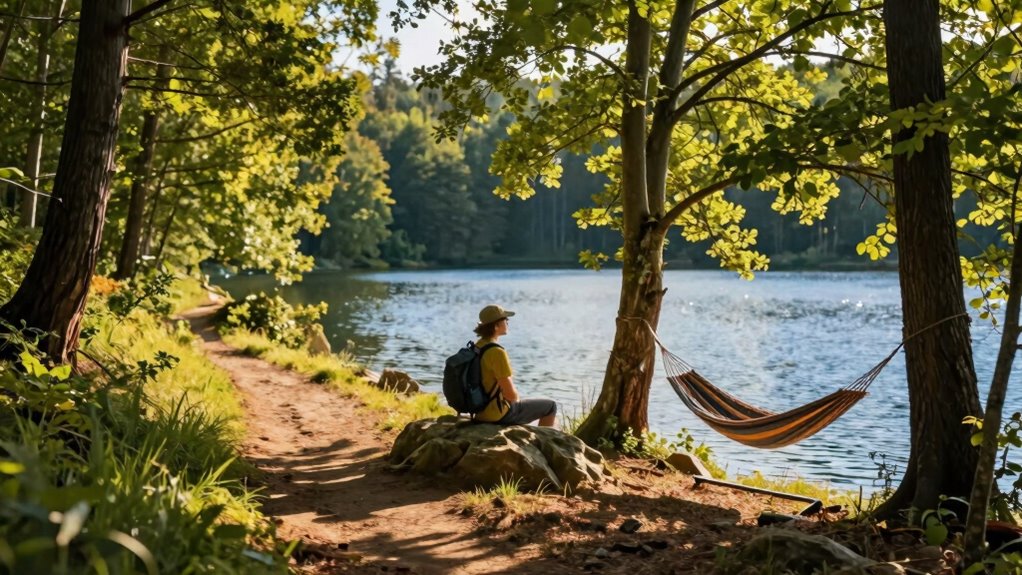
To recharge on outdoor trips instead of just staying busy, focus on intentional activities that promote relaxation and mindfulness. Take time to notice details in your surroundings, breathe deeply, and connect with nature or urban textures. Set small goals like spotting wildlife or exploring new alleyways, and avoid rushing. By embracing curiosity and presence, you’ll refresh your mind and body more deeply. Keep exploring these mindful approaches to make your outdoor outings truly restorative.

Get travel and outdoor gear delivered free with Prime
- Fast, free delivery on millions of items
- Prime Video, Amazon Music and more included
- Member-only deals all year
Key Takeaways
- Set intentional, relaxing goals like nature observation or mindful breathing to focus on rejuvenation rather than activity.
- Practice mindfulness by fully engaging your senses and surroundings during outdoor exploration.
- Incorporate wildlife photography or quiet reflection to slow down and deepen your connection with nature.
- Use outdoor trips as dedicated mental breaks, avoiding distractions and routine worries.
- Prioritize enjoyment over perfection, allowing yourself to relax and recharge rather than just staying busy.
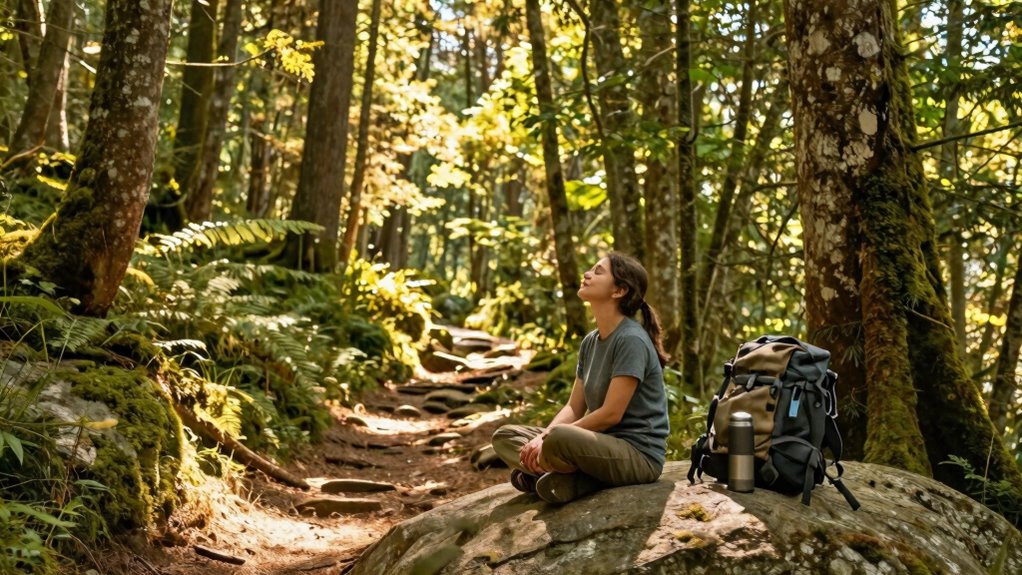
Spending time outdoors can be a powerful way to recharge both your mind and body, especially when life feels overwhelming. Instead of filling your days with endless tasks and distractions, use outdoor trips as opportunities to reconnect with nature and yourself. Whether you’re wandering through city streets during urban exploration or venturing into the wilderness for wildlife photography, these activities can refresh your perspective and reduce stress. The key is to approach your outdoor time intentionally, focusing on the experience rather than just ticking off a checklist of activities.
Recharging your mind and body through intentional outdoor exploration reconnects you with nature and yourself.
When you engage in urban exploration, you open yourself to discovering hidden corners of your city that often go unnoticed. It’s about more than just sightseeing; it’s about immersing yourself in the environment, noticing the details, and appreciating the contrasts between urban life and natural beauty. As you explore abandoned buildings, alleyways, or rooftops, you’re giving your mind a break from routine worries. Capture moments with your camera, especially when photographing wildlife or street scenes, to deepen your engagement. Wildlife photography, in particular, encourages patience and observation, pulling you into the present moment. Waiting for the right shot forces you to slow down and pay attention to your surroundings, which can be incredibly grounding.
Both activities remind you that stepping outside doesn’t mean escaping your problems, but rather shifting your focus and gaining clarity. As you walk through a park or a city neighborhood, take time to breathe deeply and absorb the environment. Notice the sounds, the textures, and the colors. When you’re out there with your camera, you’re not just taking pictures—you’re training your eye to see beauty in small details, which helps distract your mind from stressors. This focused attention fosters mindfulness, allowing you to clear mental clutter and return home with a renewed sense of calm. Engaging with nature-based activities during outdoor trips can amplify these mental health benefits by connecting you with a natural environment, even in urban settings. Incorporating intentional mindfulness practices into your outdoor excursions can further enhance relaxation and mental clarity. Research shows that outdoor exposure can significantly decrease levels of anxiety and depression, making your trips even more beneficial. Recognizing the impact of nature on mental health can motivate you to spend more time outside intentionally.
Use your outdoor trips as intentional breaks, not chores. Set small goals, like capturing a specific wildlife moment or discovering a new alleyway, and then genuinely enjoy the process. Remember, the purpose isn’t to achieve perfection but to immerse yourself in the experience. Over time, these moments outside become an essential part of your self-care routine, helping you stay grounded amid life’s chaos. By approaching outdoor trips with curiosity and purpose, you’ll find yourself feeling more energized, centered, and ready to face whatever comes next.
Products Worth Considering

DJI Osmo Action 4 Essential Combo Waterproof 4K Action Camera

Samsonite Paralux Global Expandable Carry-On Luggage with Removable Packing Cubes

Amazon Kindle Paperwhite Signature Edition (12th Generation, 2024), 32 GB, Metallic Black
As an affiliate, we earn on qualifying purchases.
Frequently Asked Questions
What Are the Best Outdoor Activities for Mental Relaxation?
You can boost mental relaxation with activities like nature therapy and mindful hiking. Nature therapy involves immersing yourself in natural surroundings, helping reduce stress and improve mood. Mindful hiking encourages you to focus on your senses, breathing, and the landscape, calming your mind. Both activities promote presence and tranquility, making them perfect for recharging your mental health outdoors. Remember to disconnect from technology and embrace the natural world around you.
How Often Should I Plan Outdoor Trips for Optimal Recharging?
You should plan outdoor trips every 4 to 6 weeks for maximum recharging. Ironically, the more you try to squeeze in adventures, the more you’ll need them! Seasonal planning helps you stay ahead, while considering your budget guarantees these trips remain fun and sustainable. Regular escapes refresh your mind and body, so don’t wait until burnout hits—schedule these mini-getaways now, and enjoy the benefits year-round.
Can Outdoor Trips Improve My Overall Mental Health?
Yes, outdoor trips can substantially improve your mental health. Engaging in nature therapy and mindful hiking helps reduce stress, boost mood, and increase feelings of well-being. By immersing yourself in natural surroundings, you allow your mind to relax and reset. Regular outdoor adventures promote emotional resilience, clarity, and a sense of connection, making them a powerful tool for maintaining overall mental health.
What Should I Pack to Ensure a Restorative Outdoor Experience?
You should pack camping essentials like a sturdy tent, sleeping bag, and enough food and water. Don’t forget a good camera for wildlife photography, which helps you connect with nature and relax. Bring comfortable clothing suited for the weather, a first aid kit, and a flashlight. These items guarantee you’re prepared, allowing you to fully enjoy the restorative benefits of your outdoor trip and reconnect with nature.
How Can I Disconnect From Technology During Outdoor Trips?
Ever wonder what it’s like to truly unplug? To enjoy a digital detox, turn off your devices and leave them behind, allowing yourself to fully immerse in nature. Embrace the sights, sounds, and smells around you—whether it’s the rustling leaves or bird songs. Focus on your surroundings, breathe deeply, and let nature’s rhythm guide you. This simple act restores your mind and deepens your connection to the outdoors.
Conclusion
So, next time you feel drained, don’t just fill your day with busyness—escape into the outdoors. Let nature be your sanctuary, a place where your worries can melt away like snow under the spring sun. Recharging isn’t about doing more; it’s about reconnecting with what truly fuels your soul. Step outside, breathe deeply, and watch as your energy blooms anew, ready to carry you forward like a river carving its path through the landscape.