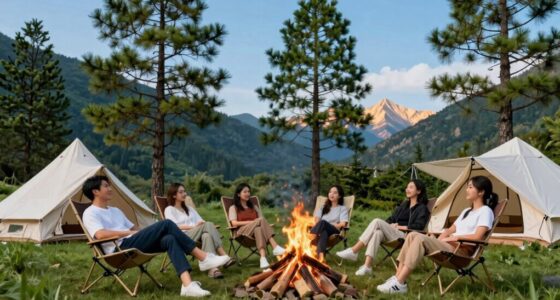

Escape travel is all about seeking adventure, excitement, and a quick break from routine, often involving physical challenges and thrill-seeking activities. Restorative travel, on the other hand, focuses on nurturing your inner peace, healing, and emotional well-being through peaceful retreats, cultural experiences, and reflection. If you’re looking to energize or challenge yourself, escape travel is ideal. If you want to unwind and find balance, restorative travel suits you best. Keep exploring to discover which approach fits your personal goals.

Get travel and outdoor gear delivered free with Prime
- Fast, free delivery on millions of items
- Prime Video, Amazon Music and more included
- Member-only deals all year
Key Takeaways
- Escape travel emphasizes adventure, novelty, and physical challenges for excitement and adrenaline, while restorative travel focuses on relaxation and emotional healing.
- Escape travel involves impulsive, energetic activities, whereas restorative travel promotes mindfulness, reflection, and inner peace.
- Cultural engagement in escape travel is secondary to thrill-seeking; in restorative travel, it deepens relaxation and personal growth.
- Escape travel pushes physical and mental limits through active pursuits; restorative travel slows down to nurture mental and emotional well-being.
- The choice depends on whether one seeks stimulation and challenge or tranquility and healing, aligning with personal needs and goals.

Have you ever wondered what truly sets escape travel apart from restorative travel? The key difference lies in their core intentions and the experiences they offer. Escape travel is all about breaking free from your daily routine, seeking out adventure activities that thrill you or offer a quick adrenaline rush. It’s about the thrill of new environments, whether that’s climbing a mountain, exploring bustling city streets, or diving into water sports. When you engage in escape travel, you crave excitement and novelty, often pushing yourself physically and mentally. It’s impulsive, energetic, and designed to give you that burst of exhilaration you might not find at home.
Escape travel offers adrenaline-fueled adventures and spontaneous thrills, pushing your limits in exciting new environments.
Restorative travel, on the other hand, focuses on healing, renewal, and inner peace. It’s less about adrenaline and more about slowing down. Instead of chasing thrills, you seek experiences that promote mental and emotional well-being. You might find yourself in quiet retreats, wellness centers, or serene countryside settings. The experience often involves cultural immersion—learning about local traditions, participating in mindful practices, or connecting with nature in a meaningful way. It’s about creating space for reflection, relaxation, and personal growth. Engaging in mindful engagement with the environment and local communities can deepen your journey and amplify the restorative benefits. Recognizing the importance of intentional travel can help travelers better align their journeys with their inner needs.
While both types of travel can include cultural immersion, their purpose differs. In escape travel, cultural experiences might be secondary to adventure activities, like zip-lining through a rainforest or hiking rugged trails. The focus is on the thrill of discovery and the physical challenge. Conversely, in restorative travel, cultural immersion becomes a crucial part of the healing process. You might participate in local cooking classes, meditation sessions, or traditional ceremonies that deepen your understanding of the place and its people. These experiences promote mindfulness and help you reconnect with yourself while appreciating the local culture.
Ultimately, your choice depends on what you’re seeking. If you crave excitement, challenge, and quick escapes that fill your days with adventure, escape travel is your go-to. If your goal is to unwind, reflect, and nurture your well-being, restorative travel will serve you better. Both paths offer valuable benefits, but understanding their differences helps you align your trip with your current needs and desires. Recognizing that some travelers seek a mindful approach to their journeys can help you make more intentional choices. Whether you want to energize your spirit or soothe your soul, recognizing what sets these travel styles apart will help you plan more fulfilling journeys.
Products Worth Considering

Samsonite Tour Deluxe Hard-Sided Golf Travel Case

Kindle Paperwhite Signature Edition 32GB (2024) – Auto-adjusting front light, wireless charging, weeks battery life – Metallic Jade

Travelpro Maxlite 5 Softside International Carry-On Luggage, Green, 20-Inch
As an affiliate, we earn on qualifying purchases.
Frequently Asked Questions
How Do I Determine Which Travel Type Suits My Needs Best?
To determine which travel type suits your needs best, start by considering your travel planning goals and personal preferences. If you crave adventure, exploration, and excitement, escape travel might be ideal. However, if you seek relaxation, healing, or mental rejuvenation, restorative travel is better. Reflect on what you want to gain from your trip, and choose the style that aligns with your desired experience and your current lifestyle needs.
Can Escape and Restorative Travel Overlap in Experiences?
Like two rivers converging, escape and restorative travel often overlap in your journey. You might seek adventure pursuits that also nurture wellness activities, blending thrill and healing. For example, climbing a mountain can energize you while offering meditative solitude. Such experiences fuse excitement with restoration, proving that your travel can be both an adventure and a deep renewal. Embrace this harmony to craft a trip that revitalizes your body and spirit simultaneously.
What Are Common Destinations for Escape Versus Restorative Travel?
For escape travel, you often choose lively destinations like luxury resorts in tropical beaches or vibrant city hotspots, perfect for adventure and entertainment. Restorative travel, on the other hand, takes you to peaceful spots like wellness retreats, serene countryside, or cultural immersions in tranquil villages. Both types may overlap, but escape focuses on excitement, while restorative travel emphasizes healing and inner peace, each offering unique, rejuvenating experiences.
How Long Should Each Type of Trip Ideally Last?
Think of your journey as a delicate seed needing time to grow. For escape travel, a quick burst of 3-5 days with luxury accommodations and vibrant cultural immersion often suffices to recharge. Restorative trips, like nurturing a sapling, benefit from 7-14 days, allowing deep reflection and healing. Prioritize your needs, and let your trip’s length mirror the growth you seek, blending luxury and cultural richness seamlessly.
Are There Specific Costs Associated With Escape or Restorative Travel?
Costs vary for escape and restorative travel, depending on your budget planning and destination choices. Escape trips often involve higher expenses for activities like luxury accommodations and vibrant city experiences. Restorative trips may be more budget-friendly, focusing on peaceful retreats and cultural immersion, which can be affordable with careful planning. Both require considering transportation, lodging, and activities, but customizing your trip to your financial comfort ensures a fulfilling experience.
Conclusion
So, next time you pack your bags, remember: escape travel is like a wildfire rushing through your routine, igniting adventure and thrill. Restorative travel, on the other hand, is a gentle stream, soothing your soul and filling your well of calm. Both paths lead somewhere special—one sparks your spirit, the other mends it. Choose wisely, and let your journey be the melody that your heart longs to sing, whether it roars or hums.