TL;DR

Get travel and outdoor gear delivered free with Prime
- Fast, free delivery on millions of items
- Prime Video, Amazon Music and more included
- Member-only deals all year
Outdoor camping gear works best as a trip-specific system: shelter, sleep setup, clothing, food and water, lighting, navigation, and safety equipment must fit your weather, terrain, group, and transport. Car campers can favor space and comfort, while backpackers balance weight, packability, and durability; test your setup before leaving and check current local rules for water, fires, and wildlife.
A tent can say “two-person” on the label and still leave two people sleeping shoulder to shoulder beside their packs. That small mismatch is the difference between a cozy night under the pines and an evening spent negotiating over every inch of floor.
Outdoor camping gear is easier to choose when you think of it as one working system, not a pile of exciting products. Your shelter, sleep setup, clothes, cooking kit, water treatment, lighting, navigation, and safety supplies all need to match the weather, terrain, group size, and way you travel.
This guide will help you choose what matters for a first trip, distinguish car-camping comfort from backpacking priorities, and spot the details that product labels leave out. You’ll also get a practical way to check your kit before you trade your kitchen light for a headlamp and a darkening trail.
Choose shelter, sleep gear, clothing, food and water, lighting, navigation, and safety supplies as one trip-specific system.
Treat a tent’s listed capacity as a basic fit guide; allow extra room if you want to keep bags inside.
Pair your sleeping bag with a suitable pad, since the pad cushions and insulates against the ground.
For backpacking, weigh food, water, fuel, and worn clothing along with the advertised base kit.
Check local water, fire, and wildlife rules before you travel, then test your equipment at home.
Build a complete kit before you buy another gadget
Outdoor camping gear is a connected set of equipment for shelter, sleep, clothing, food and water, lighting, navigation, and safety. The right kit fits your specific trip, because a roomy car-camping tent and a featherweight backpacking shelter solve different problems.
Think of your kit as a small traveling home: the tent is the roof, the sleep system is the bed, and the cooking and water gear keep the household running. If one part doesn’t match the others, the whole setup feels harder. A powerful stove won’t help much if you forgot fuel, and a warm sleeping bag won’t rescue you if rain soaks your dry clothes.
For a beginner’s one-night campsite, start with a tent and stakes, a sleeping bag suited to the forecast, a sleeping pad, layered clothing, water and a suitable treatment method, meals, a headlamp, a map or reliable navigation device, and basic first aid. Borrow or rent specialized equipment, such as a bear-resistant container or a winter-rated shelter, until you know you need it.
Camping gear is best chosen as a system, and the system starts with the trip rather than a shopping list. For example, a family driving to a maintained campground may prioritize a larger tent and lantern; a solo hiker carrying every item may prioritize packed size and total weight. Write down destination, forecast, nights, group, transport, and planned activities before you shop.
As an affiliate, we earn on qualifying purchases.
Choose a tent that gives you room and suits the weather
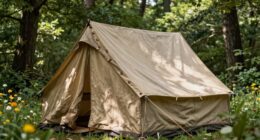
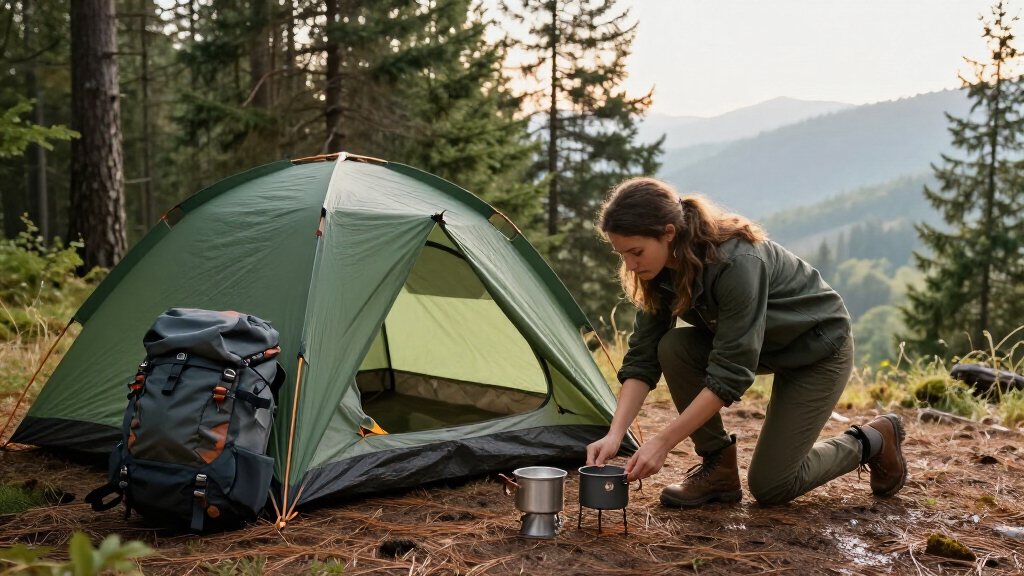
Outdoor camping gear starts with a shelter that fits your occupants, equipment, campsite, and likely weather. Tent capacity usually counts people lying inside, not the elbow room or storage space you may want, so a “two-person” tent can feel snug when two adults bring backpacks indoors.
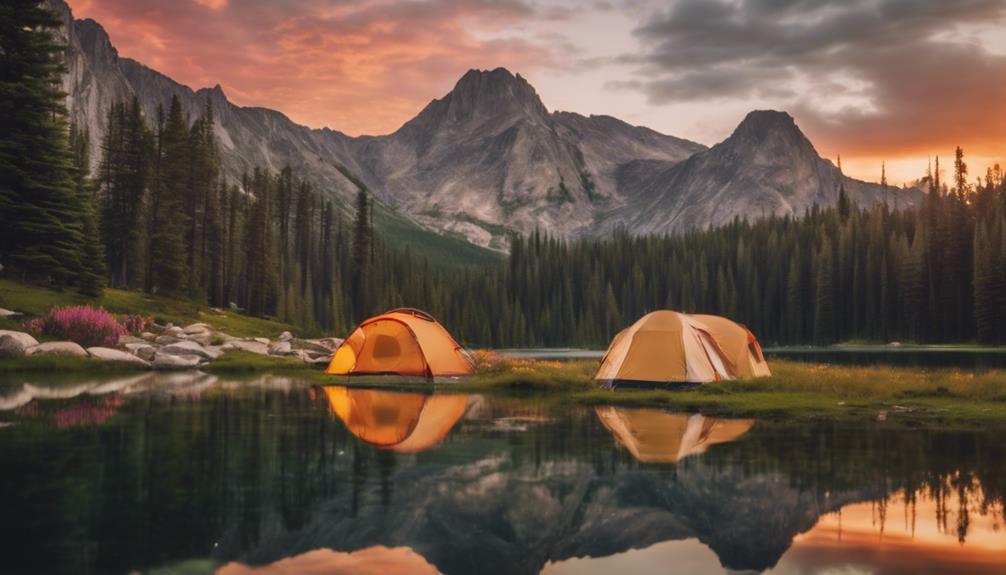
Picture arriving at a damp campground as evening light turns the trees blue. You need space to pitch the tent, a rainfly that handles the expected conditions, stakes suited to the ground, and enough ventilation to limit condensation. Check packed dimensions and setup style too: a freestanding tent may feel straightforward on firm ground, while a tarp or hammock setup depends on suitable trees and local rules.
Use this quick sequence before choosing:
- Count people and gear. Decide what must stay inside, especially in rain or wildlife country.
- Check the forecast and season. Match the shelter’s design to expected wind, rain, or cold, and leave room for conditions to change.
- Check the site. Look at ground type, tree availability, campsite restrictions, and whether a footprint or groundsheet makes sense.
- Practice at home. Pitch the tent once in daylight, then check poles, seams, zippers, and stakes.
Capacity labels and waterproof claims can vary across products, so read the specifications and testing details rather than shopping by a single big number. A weekend car camper may accept a heavier, taller tent for standing room; a backpacker may prefer less weight and fewer packed inches, even if that means less space. If buying used, inspect the pole joints, seam tape, zippers, and fabric coating before handing over money.
Stay warmer by pairing your bag with the right pad
Outdoor camping gear for sleeping needs both a suitable bag or quilt and a pad that cushions and insulates you from the ground. A sleeping bag rating is a starting point, not a promise that every sleeper will feel comfortable at that temperature.
The ground can steal warmth while you sleep, especially when your bag is compressed under your body. A pad fills two jobs at once: it softens the rocky, root-knuckled ground and slows heat loss underneath you. That’s why a thick-looking sleeping bag alone can leave you shivering on a cold surface.
Choose a bag with the expected nighttime low in mind, then check the rating standard and how the product describes comfort. Your sleepwear, pad warmth, and tendency to sleep hot or cold all affect the result. For example, if a mountain forecast calls for a chilly night near freezing, relying on a summer bag and a thin pad may feel fine at bedtime but miserable before dawn.
Before the trip, test the whole setup on a backyard or living-room floor: pad, bag, and the clothes you expect to sleep in. Pack a separate dry sleep layer and protect it from rain inside a waterproof bag or liner. This small routine pays off when your hiking clothes are damp and the air smells of wet leaves; you can change into warm, dry fabric instead of crawling into bed cold.
Pack clothes that adapt when the forecast changes
Outdoor camping gear includes clothing that manages sweat and shields you from wind, rain, sun, and cold. Layers give you more control than one bulky coat: you can add warmth when resting and remove it when a steep climb warms your back.
Start with clothes that suit the forecast and activity, then bring a dry set reserved for sleeping. Avoid relying on cotton in cold or wet conditions; when it gets soaked, it can feel clammy against your skin and dry slowly. A synthetic or wool base layer, insulating mid-layer, and rain shell give you a practical mix for many trips, though the right choices still depend on season and terrain.
Say you hike under a bright afternoon sun, then stop at a breezy lakeside campsite as the temperature drops. A breathable shirt and sun protection help on the trail, while a warm layer and rain jacket help when you stop moving. Put your spare socks and sleep layer in a waterproof bag, and keep rainwear easy to reach instead of burying it under dinner supplies.
Pack for plausible changes, not just the prettiest part of the forecast. Useful items can include a brimmed hat, warm hat, extra socks, gloves, insect protection, and sunscreen, depending on the place and season. A compact set of dry clothes can feel more valuable than another novelty tool when the tent is rattling in a gust and your sleeves are damp.
Balance comfort and weight with this trip-by-trip comparison
Outdoor camping gear changes with how you carry it: car camping allows more space and weight, while backpacking puts every item on your shoulders. Neither style is automatically better; your trip decides whether a roomy chair or a lighter pack deserves priority.
| Gear choice | Car camping | Backpacking |
|---|---|---|
| Shelter | More floor space and easier living | Lower packed weight and compact size |
| Sleep setup | Thicker pad or larger bedding can work | Weight, pack size, and warmth all matter |
| Cooking | Room for a larger stove and cookware | Compact stove, fuel, and simple meals |
| Comfort extras | Camp chair, lantern, and extra layers | Bring only extras worth carrying |
A family driving to a campground might pack a big tent, folding table, and lantern because the car carries the load. A hiker covering several miles to a lake weighs the complete setup, not just the tent: food, water, fuel, and worn clothing all affect what goes in the pack. Advertised “base weight” often leaves out some of those items, so don’t treat one number as the full burden you’ll carry.
Set your priorities before comparing product features. If you’ll carry the kit for hours, a lighter item may earn its cost through easier travel; if your car parks beside the site, extra floor space may matter more. Ultralight fabrics can need gentler handling, and bulky comfort can feel wonderful until you have to carry it uphill. Your best pick is the one that suits the trip you actually plan.
Keep water, meals, and food storage safe
Outdoor camping gear for meals and water includes the cooking equipment you need, containers for drinking, and a treatment plan suited to local water sources. The right method depends on where the water comes from and current local guidance; a clear stream is not automatically safe to drink.
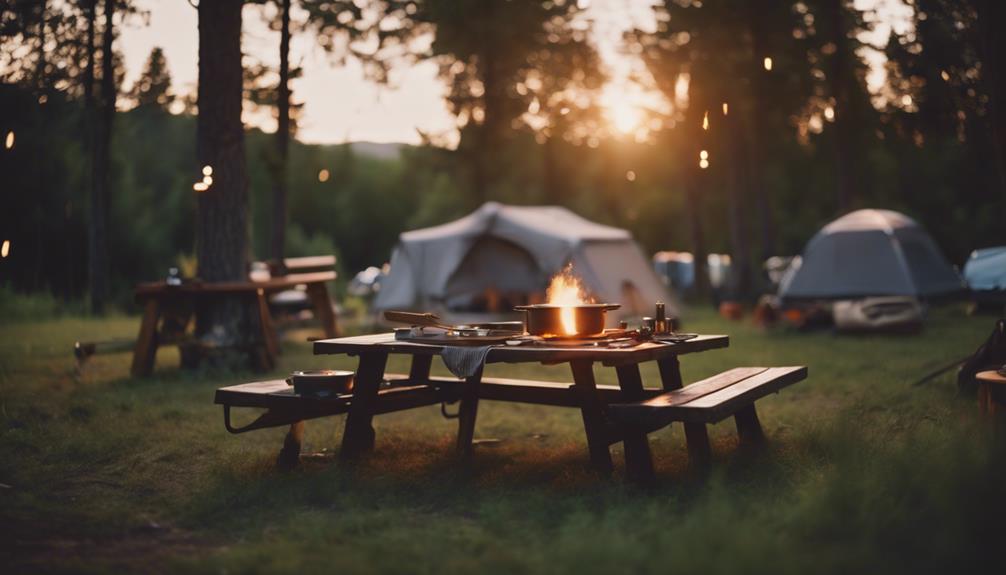
Match the stove, fuel, cookware, and meals before setting out. For a short car-camping trip, a larger stove may make hot breakfast easier; on a hike, a compact stove and simple meal can save pack space. Check fire restrictions before using a stove or lighting a campfire, since rules can change with location, season, and conditions.
For water, carry enough for your plan and know how you’ll treat additional supplies if needed. Filters, purifiers, and chemical treatments have different uses and limits, so follow the product instructions and local advice. A filter that works for one type of risk may not address every concern, which makes guessing a poor substitute for checking the source.
Food storage protects both your dinner and wildlife. Follow the campground or land manager’s rules: depending on the area, you may need a bear-resistant container, a provided locker, or another approved method. Imagine arriving hungry to the smell of pine smoke and unpacking pasta; you’ll be glad the stove has fuel, the water plan is clear, and tonight’s food is stored as required rather than left in the tent.
Make navigation, lighting, and first aid work together
Outdoor camping gear for safety should help you find your way, see after dark, handle small injuries, and call for help when possible. A phone is useful, but its battery and signal can fail, so it should not be your only plan for navigation or communication.
Carry a map and compass or a GPS device appropriate to the route, and save offline maps if your phone supports them. Bring a headlamp with spare batteries or a charging plan; hands-free light makes it easier to pitch a tent, cook, or find a zipper after sunset. A lantern can help a group around camp, but it doesn’t replace a headlamp on a dark path.
Pack basic first aid, sun and insect protection, toiletries, and small repair supplies suited to the trip. Check whether the route calls for activity-specific equipment, and tell someone your plan and expected return. For example, if a family takes a short trail after dinner, each person having a light and staying together is more useful than discovering one shared flashlight has dimmed.
Rechargeable lamps and power stations can make camp convenient, but batteries need charging and may add weight. Newer compact designs are useful when they fit your habits; they aren’t automatically a better choice for every trip. Test lights and charging cables at home, keep a backup power plan where appropriate, and check current product details, warranty terms, and repair options before you buy.
Save money by borrowing, checking used gear, and practicing
Outdoor camping gear doesn’t have to be expensive to work well; for occasional trips, borrowing, renting, or buying reliable used items can make more sense than purchasing a full premium kit. Spend first on equipment that fits your conditions and protects you from cold, wet weather, or other meaningful risks.
Suppose you’re planning your first two-night campground visit. Borrow a tent and stove from a friend, rent anything specialized, and buy a suitable sleep setup or clothing you can use again. After the trip, you’ll know whether you hated sleeping on a thin pad, wanted more space to cook, or barely used the extra lantern. That experience is better evidence than a long feature list.
When you inspect used equipment, check tent seams, zippers, poles, and coatings; look over sleeping-pad valves and fabric; and ask about a bag’s storage and care. A bargain with a sticky zipper or a pad that leaks overnight can become an expensive lesson. If a company offers replacement parts, repairs, or resale, check the current terms rather than assuming every product qualifies.
After each trip, clean and dry equipment fully before storing it, follow the manufacturer’s care instructions, and repair small problems early. Put the tent away dry, test the headlamp, and check stove fuel and repair supplies before the next outing. Gear care is like sharpening a kitchen knife: a few minutes of upkeep at home can prevent a frustrating mess when the weather turns or daylight runs out.
Frequently Asked Questions
What camping gear do I need for a beginner trip?
Start with shelter, a sleep system, layers, food and water, lighting, navigation, and basic first aid. Match the sleep gear and clothing to the forecast, and borrow or rent specialized items until you know you need them.
How do I choose the right tent size?
Count the people and decide what needs to stay inside, including packs in wet or wildlife-prone areas. A tent labeled for two may fit two people lying down but feel tight once you add bags and muddy shoes.
Do I need a sleeping pad if I already have a sleeping bag?
Usually, yes. A pad cushions you and helps insulate you from cold ground, while the sleeping bag is compressed underneath your body and provides limited warmth there.
What is the difference between car-camping and backpacking gear?
Car-camping gear can be heavier and roomier because a vehicle carries it. Backpacking gear needs to fit in your pack, so you weigh comfort against weight, durability, and packed size.
Can I drink water from a stream after filtering it?
Use a treatment method suited to the source and follow the product instructions and local advice. Filters, purifiers, and chemical treatments have different limits, and clear water is not proof that it is safe.
Conclusion
Choose outdoor camping gear for the trip you’re actually taking, not the imaginary trip suggested by a product page. Start with shelter, a warm and comfortable sleep system, practical layers, water and food plans, light, navigation, and safety; then adjust for weather, terrain, group, and transport.
Practice with your kit before you leave, and check current local rules for fire, water, and wildlife. A well-chosen setup doesn’t make the forest feel like home. It helps you sleep well enough to enjoy the first pale light slipping between the trees.
Halloween Picks
halloween
As an affiliate, we earn on qualifying purchases.