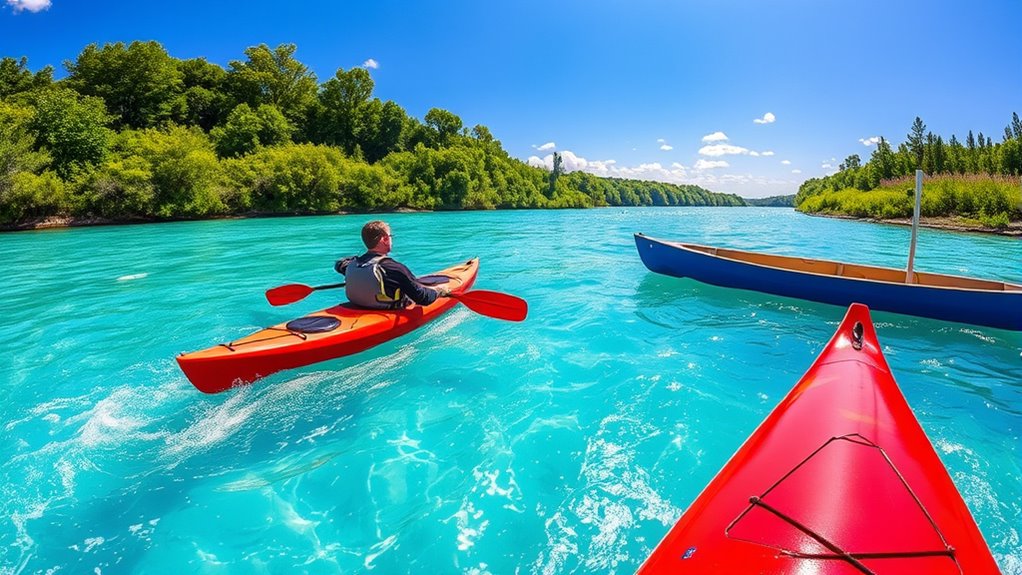

When choosing a kayak or canoe, assess your environment, skill level, and adventure goals. For calm lakes, a sit-on-top kayak offers stability and easy access, while longer touring kayaks excel on open water for extended trips. Consider vessel buoyancy, maneuverability, and safety features like buoyancy chambers and stability. Proper gear, such as life jackets and waterproof devices, enhances safety. To optimize your experience and learn how to select the ideal craft for your needs, explore further guidance.
Key Takeaways
- Match watercraft type to environment, water conditions, and your skill level for optimal safety and performance.
- Choose sit-on-top kayaks for calm lakes and touring kayaks for longer distances or open water adventures.
- Prioritize vessels with buoyancy and stability features to handle unexpected currents or waves safely.
- Consider your adventure goals and watercraft maneuverability when selecting between kayaks and canoes.
- Ensure proper gear, like life jackets and waterproof communication devices, to enhance safety during your trip.
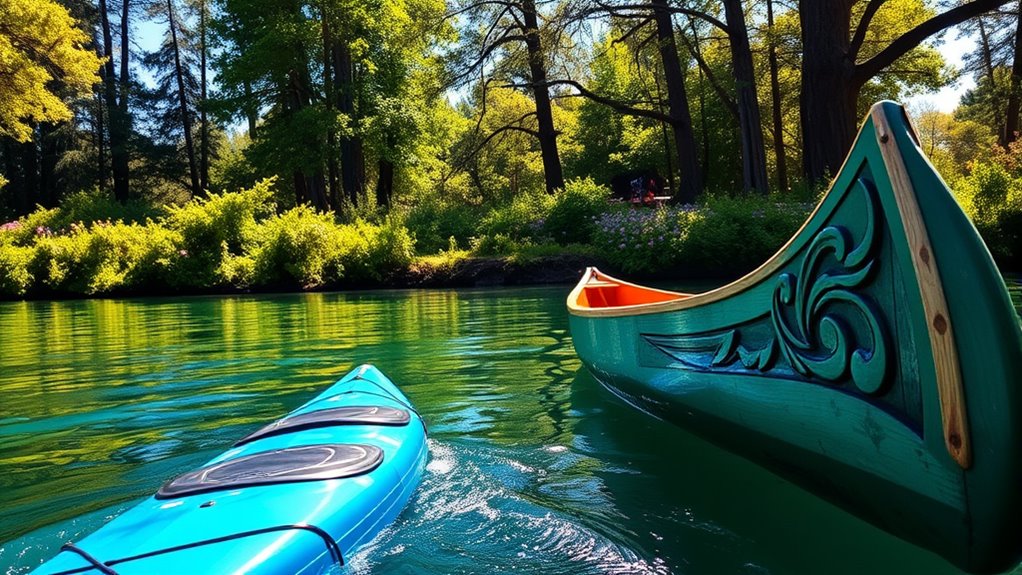
Have you ever wondered what it takes to navigate waterways with precision and control? Effective kayaking and canoeing demand a thorough understanding of water safety and refined paddle techniques. When selecting your watercraft, consider the environment you’ll encounter; for instance, a sit-on-top kayak offers stability on calm lakes, whereas a touring kayak provides more efficiency for longer distances. Your choice should align with your skill level, the water conditions, and your adventure goals. Prioritize water safety by choosing a vessel that offers adequate buoyancy, stability, and the ability to handle unexpected currents or waves. Proper gear, such as life jackets and waterproof communication devices, complements your craft and enhances safety.
Mastering paddle techniques is essential for smooth navigation and conserving energy, especially when dealing with varying water dynamics. The fundamental paddle stroke involves a combination of reach, rotation, and pull. In practice, you extend your arm fully forward, submerge the blade near your toes, and rotate your torso to generate power, ensuring the paddle remains close to the boat to maintain balance. The pull phase drives the boat forward, while controlled feathering of the paddle minimizes wind resistance. For maneuvering, edging your vessel slightly and executing sweep strokes allows for sharp turns or directional changes. These techniques require precise timing and consistent application to maintain course and stability, particularly in turbulent or narrow waterways.
A key aspect often overlooked is the importance of water safety when practicing paddle techniques. Always assess water conditions before setting out—look for signs of strong currents, debris, or unstable weather—since these factors influence how you should execute your strokes. Wearing a properly fitted life jacket is non-negotiable, and understanding how to perform self-rescue or assist others is crucial. As you develop your paddle skills, focus on maintaining a steady rhythm and avoid excessive force, which can lead to fatigue or loss of control. Proper paddle grip, relaxed shoulders, and efficient stroke mechanics not only improve your maneuverability but also reduce the risk of injury.
Frequently Asked Questions
What Are the Maintenance Tips for Kayaks and Canoes?
To maintain your kayak or canoe, follow proper cleaning routines by rinsing with fresh water after each use, especially if exposed to salt or mud. Regularly inspect for cracks or damage and apply appropriate repair kits. Use secure storage solutions, like racks or padded cradles, to prevent warping or dents. Store your watercraft in a cool, dry place away from direct sunlight to protect the material and prolong its lifespan.
How Do I Choose the Right Paddle Size?
Choose the right paddle size by considering paddle length, height, and boat width, ensuring ideal power and control. For sizing considerations, measure from your chin to your nose, then add 8-12 inches for a comfortable paddle length. A properly sized paddle reduces fatigue, improves efficiency, and enhances your paddling experience. Always test different lengths if possible, and remember that a paddle that’s too long or too short can hinder performance.
Are There Specific Safety Gear Recommendations?
You should always wear a properly fitted life jacket that meets safety standards and consider a helmet if you’re paddling in whitewater or rocky areas. Make sure your gear is specifically designed for water sports, with reflective elements for visibility. Carry a whistle or signaling device, and bring a first aid kit. Regularly inspect your safety gear for damage, and adapt your equipment based on water conditions and your skill level for maximum safety.
How Do I Transport Watercraft Safely?
You should secure your watercraft with proper trailer towing techniques, ensuring straps are tight and evenly distributed to prevent shifting. Use durable storage solutions like waterproof racks or padded cradles to protect your boat during transport. Double-check hitch connections, balance the load for stability, and drive cautiously. Regularly inspect your trailer and storage setup for wear or damage, maintaining safety and preventing accidents on your journey.
What Are Beginner-Friendly Watercraft Options?
As a beginner, inflatable kayaks are ideal due to their stability and portability, making them easier to handle and transport. A beginner canoe offers a stable platform for learning basic paddling techniques. Follow beginner canoeing tips such as maintaining proper posture, using correct paddle strokes, and practicing balance. These options provide a safe, manageable entry point, enabling you to develop confidence and skills before progressing to more advanced watercraft.
Conclusion
Choosing between kayaking and canoeing ultimately depends on your specific needs and skill level. While some might think a kayak’s closed cockpit limits accessibility, it actually offers better protection and control in rough waters. Both crafts can be highly durable if properly maintained. Remember, investing in the right watercraft tailored to your environment guarantees safety and enjoyment. With careful consideration and proper technique, you’ll maximize your adventure and experience water sports confidently.