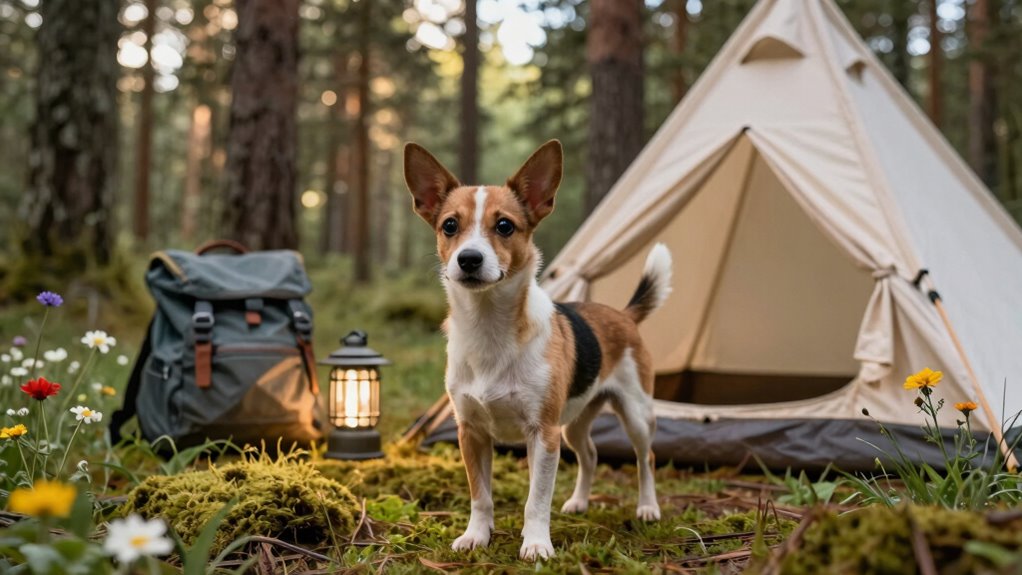
To introduce your nervous dog to camping, start by familiarizing them with the gear at home or in your yard, using positive reinforcement. Gradually expose them to the camping environment, keeping things quiet and calm, and create a safe space with familiar items. Maintain routines, use calming tones, and give your dog time to adjust at their own pace. With patience and gentle exposure, you’ll help your dog feel more confident—there’s more to account for when making a smooth shift.

Get travel and outdoor gear delivered free — and shop member deals
- Fast, free delivery on millions of items
- Access to Prime Big Deal Days deals on October 6–7
- Prime Video, Amazon Music and more included
Key Takeaways
- Gradually introduce camping gear and environment at home using positive reinforcement to build familiarity and reduce anxiety.
- Choose a quiet, safe camping spot and gradually expose your dog to new sights, sounds, and smells.
- Maintain routines and use calm communication to help your dog feel secure during the transition.
- Bring familiar items like your dog’s bed or favorite toy to provide comfort and emotional anchors.
- Practice patience, allowing your dog to explore at their own pace and addressing signs of stress early.
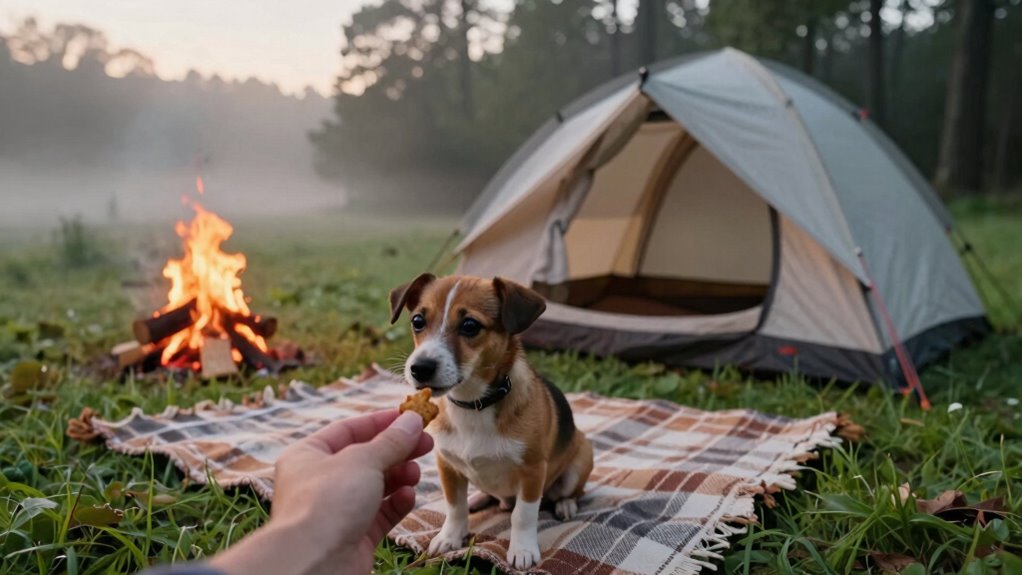
Introducing a nervous dog to camping can seem intimidating, but with the right approach, you can help your furry friend feel safe and comfortable in new surroundings. The key is understanding dog anxiety and gradually introducing your dog to the camping environment. Start by familiarizing your dog with their camping gear before you hit the trail. Let your dog sniff and explore the tent, sleeping bag, and other equipment in a familiar setting like your backyard. This helps reduce surprises and gives your dog a sense of familiarity with the items they’ll encounter in the wild. Using positive reinforcement during these sessions encourages your dog to associate camping gear with good things, easing anxiety.
When you set up camp, aim for a quiet spot away from busy trails or loud noises. Keep your dog close initially, allowing them to observe and acclimate at their own pace. Avoid overwhelming them with too much new stimuli at once; instead, introduce the sights and sounds gradually. If your dog is prone to dog anxiety, you might consider bringing along familiar items like their bed or a favorite toy. These familiar items can serve as anchors, providing comfort amid unfamiliar surroundings. Establishing a designated safe space—like a corner of the tent with their bed and some of their favorite gear—gives your dog a retreat when they feel overwhelmed.
During the first few days, keep routines consistent. Feed, walk, and play at regular times to provide a sense of stability. Use calm, reassuring tones to communicate and avoid sudden movements that could startle your dog. If your dog shows signs of stress, give them space and time to relax, and don’t force interactions. Instead, let them come to you when they’re ready. Remember, patience is essential; pushing your dog too quickly can worsen anxiety. Incorporating familiar digital marketing tools into your preparation routine can help streamline the process and reduce overall stress. Additionally, understanding dog anxiety can help you recognize and address specific behaviors that indicate distress, making the experience more positive for both of you. Recognizing these signs early allows you to adapt your approach and prevent escalation of their stress.
Carrying some of your dog’s favorite camping gear, such as a blanket or a piece of clothing with your scent, can also help soothe them. These familiar smells act as emotional anchors, reducing feelings of insecurity. These items can also be used to create a calming environment inside the tent, further easing their nerves. As your dog begins to associate camping gear with positive experiences, their confidence will grow. Over time, with patience and gentle exposure, your nervous dog can learn to enjoy camping adventures alongside you. The goal is to make the environment feel less intimidating, transforming the experience into one of exploration and bonding rather than fear.
As an affiliate, we earn on qualifying purchases.
Frequently Asked Questions
How Can I Tell if My Dog Is Truly Comfortable Camping?
You can tell your dog is comfortable camping when they relax around your camping gear, show curiosity rather than fear, and happily explore the environment. During dog training sessions, observe their body language—loose tail, relaxed ears, and calm demeanor indicate comfort. If they sleep peacefully and approach new experiences confidently, they’re truly at ease. Keep monitoring their behavior, and make certain they have familiar items to help them feel secure in the outdoor setting.
What Are Signs of Stress in a Nervous Dog During Camping?
Signs of stress in your nervous dog during camping include dog anxiety behaviors like pacing, trembling, or lip licking. You might notice excessive barking, yawning, or avoiding eye contact, which are common stress signals. If your dog seems clingy or tries to hide, these are additional indicators of discomfort. Pay close attention to these cues, and provide reassurance to help ease their stress and make the camping experience more comfortable.
Should I Bring My Dog’s Familiar Bedding or Toys?
Bringing your dog’s familiar bedding or toys acts as a beacon of comfort, much like a lighthouse guiding a ship through fog. It provides a sense of security amid unfamiliar surroundings, easing anxiety. When packing, include their favorite items alongside your camping gear. This approach supports dog training by reinforcing calm behaviors and helps your nervous dog feel safer, making the experience more enjoyable for both of you.
How Do I Handle a Dog That Refuses to Settle Down?
To handle a dog that refuses to settle down, start with gentle dog training to encourage calm behavior. Use positive reinforcement when your dog relaxes, and try anxiety management techniques like deep pressure or calming scents. Creating a consistent routine and providing a safe space can help your dog feel more secure. Patience is key—over time, your dog will learn to settle more easily, especially with your calm, reassuring presence.
Is It Safe to Let My Dog Off-Leash in Camping Areas?
Like a bird leaving its nest, you should only let your dog off-leash in camping areas if you’re confident in their recall skills. For dog leash safety, always keep a sturdy leash nearby, and use camping gear essentials like a harness for better control. Never assume your dog will stay close; in unfamiliar territory, it’s safer to keep them leashed until you’re sure they won’t wander off.
Conclusion
By gradually introducing your nervous dog to camping, you help build their confidence and trust in new environments. For example, start with short, familiar trips and bring along their favorite blanket or toy. Over time, they’ll associate camping with positive experiences, reducing their anxiety. Remember to be patient and attentive to their cues. With consistent, gentle exposure, you’ll both enjoy relaxing outdoor adventures together, making camping a fun and safe experience for your furry friend.
Fall Picks
fall essentials
As an affiliate, we earn on qualifying purchases.